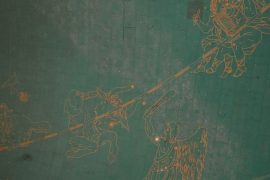
There are 88 official constellations. The International Astronomical Union (IAU) adopted the list in 1922 and fixed the border of each one in 1930, so together they cover the whole sky with no gaps. Every star you can see belongs to exactly one of them.
This list shows all 88 in alphabetical order. Each entry has a star chart drawn from real star positions, the meaning of the name, how to say it, its size, the best month to see it and the story behind it. You can filter the list by hemisphere, season or zodiac, switch to a pictures-only view, or download the whole list as a free PDF.
- Total: 88 constellations, recognized by the IAU since 1922.
- Largest: Hydra, the Water Snake, at 1,303 square degrees (3.2% of the sky).
- Smallest: Crux, the Southern Cross, at 68 square degrees.
- Oldest: 48 come from the list the Greek astronomer Ptolemy wrote around 150 AD. One of them, the ship Argo Navis, was later split into three, so 50 of today’s constellations trace back to him.
- Zodiac: 12 constellations lie along the Sun’s path. The Sun also crosses a 13th, Ophiuchus.
List of the 88 constellations with pictures and meanings
Each chart is drawn with north at the top and east to the left, the way the sky looks when you face it. Bigger dots are brighter stars, and the gold lines join the stars into the traditional figure. The dashed outline is the constellation’s official IAU boundary. “Best month” is when the constellation sits highest in the sky at about 9 pm, and “size” ranks all 88 by area, from #1 Hydra to #88 Crux.

Andromeda
an-DROM-eh-duh
The Chained Princess
- Abbr.
- And
- Genitive
- Andromedae
- Size
- #19 of 88
- Best month
- November
- Sky
- Northern
- Brightest star
- Alpheratz
Andromeda was the daughter of King Cepheus and Queen Cassiopeia, chained to a rock as a sacrifice to the sea monster Cetus until Perseus rescued her. It holds the Andromeda Galaxy, the most distant object most people can see without a telescope.
Stars in Andromeda →
Antlia
ANT-lee-uh
The Air Pump
- Abbr.
- Ant
- Genitive
- Antliae
- Size
- #62 of 88
- Best month
- April
- Sky
- Southern
- Brightest star
- Alpha Antliae
Lacaille named it after the vacuum pump invented by Denis Papin and improved by Robert Boyle. It is one of several southern constellations he named after scientific instruments.
Stars in Antlia →
Apus
AY-pus
The Bird of Paradise
- Abbr.
- Aps
- Genitive
- Apodis
- Size
- #67 of 88
- Best month
- July
- Sky
- Southern
- Brightest star
- Alpha Apodis
The name comes from the Greek for "footless", because early European traders believed birds of paradise had no feet. Dutch navigators saw the birds' skins in the East Indies, where the feet had been removed.
Stars in Apus →
Aquarius
uh-KWAIR-ee-us
The Water Bearer Zodiac
- Abbr.
- Aqr
- Genitive
- Aquarii
- Size
- #10 of 88
- Best month
- October
- Sky
- Equatorial
- Brightest star
- Sadalsuud
Aquarius pours water from a jar. The Greeks linked him to Ganymede, the young cup-bearer of the gods, and the Babylonians to a god of water and the annual floods.
Stars in Aquarius →
Aquila
AK-will-uh
The Eagle
- Abbr.
- Aql
- Genitive
- Aquilae
- Size
- #22 of 88
- Best month
- August
- Sky
- Equatorial
- Brightest star
- Altair
Aquila is the eagle that carried Zeus's thunderbolts and flew Ganymede up to Mount Olympus. Its brightest star, Altair, is one corner of the Summer Triangle.
Stars in Aquila →
Ara
AIR-uh
The Altar
- Abbr.
- Ara
- Genitive
- Arae
- Size
- #63 of 88
- Best month
- July
- Sky
- Southern
- Brightest star
- Beta Arae
Ara is the altar where the Greek gods swore an oath of loyalty before their war against the Titans. The Milky Way rising above it was said to be the smoke from the altar fire.
Stars in Ara →
Aries
AIR-eez
The Ram Zodiac
- Abbr.
- Ari
- Genitive
- Arietis
- Size
- #39 of 88
- Best month
- December
- Sky
- Northern
- Brightest star
- Hamal
Aries is the ram with the Golden Fleece that Jason and the Argonauts later sailed to find. About 2,000 years ago the Sun stood in Aries at the March equinox, which is why that point is still called the First Point of Aries.
Stars in Aries →
Auriga
oh-RYE-guh
The Charioteer
- Abbr.
- Aur
- Genitive
- Aurigae
- Size
- #21 of 88
- Best month
- January
- Sky
- Northern
- Brightest star
- Capella
Auriga is usually linked to Erichthonius, a king of Athens said to have invented the four-horse chariot. The charioteer carries a she-goat, marked by the bright star Capella, whose name means "little goat".
Stars in Auriga →
Boötes
bo-OH-teez
The Herdsman
- Abbr.
- Boo
- Genitive
- Bootis
- Size
- #13 of 88
- Best month
- June
- Sky
- Northern
- Brightest star
- Arcturus
Boötes follows the Great Bear around the pole, so he was seen as a herdsman driving the bear or the oxen of the Big Dipper. Its star Arcturus, "guardian of the bear", is the brightest star in the northern half of the sky.
Stars in Boötes →
Caelum
SEE-lum
The Chisel
- Abbr.
- Cae
- Genitive
- Caeli
- Size
- #81 of 88
- Best month
- January
- Sky
- Southern
- Brightest star
- Alpha Caeli
Lacaille named it after an engraver's chisel. It is one of the faintest constellations, with no star brighter than magnitude 4.
Stars in Caelum →
Camelopardalis
kuh-MEL-oh-PAR-duh-lis
The Giraffe
- Abbr.
- Cam
- Genitive
- Camelopardalis
- Size
- #18 of 88
- Best month
- January
- Sky
- Northern
- Brightest star
- Beta Camelopardalis
The name is Greek for giraffe, an animal Europeans described as a "camel with leopard spots". Plancius drew it in 1612 to fill a large dim area between the Big Dipper and Perseus.
Stars in Camelopardalis →
Cancer
KAN-sur
The Crab Zodiac
- Abbr.
- Cnc
- Genitive
- Cancri
- Size
- #31 of 88
- Best month
- March
- Sky
- Northern
- Brightest star
- Tarf
Cancer is the crab that Hera sent to pinch Hercules while he fought the Hydra. He crushed it, and Hera placed it among the stars. It holds the Beehive Cluster, a star cluster visible without a telescope from dark sites.
Stars in Cancer →
Canes Venatici
KAY-neez veh-NAT-ih-sy
The Hunting Dogs
- Abbr.
- CVn
- Genitive
- Canum Venaticorum
- Size
- #38 of 88
- Best month
- May
- Sky
- Northern
- Brightest star
- Cor Caroli
Hevelius drew two hunting dogs held on a leash by Boötes as he chases the Great Bear. Its brightest star, Cor Caroli, means "heart of Charles", in honor of King Charles I of England.
Stars in Canes Venatici →
Canis Major
KAY-nis MAY-jur
The Great Dog
- Abbr.
- CMa
- Genitive
- Canis Majoris
- Size
- #43 of 88
- Best month
- February
- Sky
- Southern
- Brightest star
- Sirius
Canis Major is one of Orion's two hunting dogs. Its star Sirius, the Dog Star, is the brightest star in the night sky.
Stars in Canis Major →
Canis Minor
KAY-nis MY-nur
The Little Dog
- Abbr.
- CMi
- Genitive
- Canis Minoris
- Size
- #71 of 88
- Best month
- February
- Sky
- Equatorial
- Brightest star
- Procyon
Canis Minor is Orion's smaller hunting dog. It has only two bright stars, Procyon and Gomeisa. Procyon means "before the dog" because it rises shortly before Sirius.
Stars in Canis Minor →
Capricornus
kap-rih-KOR-nus
The Sea Goat Zodiac
- Abbr.
- Cap
- Genitive
- Capricorni
- Size
- #40 of 88
- Best month
- September
- Sky
- Southern
- Brightest star
- Deneb Algedi
Capricornus is a goat with the tail of a fish. The Greeks linked it to the god Pan, who turned partly into a fish to escape the monster Typhon. The image itself goes back to the Babylonian god Ea.
Stars in Capricornus →
Carina
kuh-RYE-nuh
The Keel
- Abbr.
- Car
- Genitive
- Carinae
- Size
- #34 of 88
- Best month
- March
- Sky
- Southern
- Brightest star
- Canopus
Carina is the keel of the Argo, the ship of Jason and the Argonauts. Lacaille split the huge ancient constellation Argo Navis into three parts. Canopus, the second brightest star in the night sky, sits here.
Stars in Carina →
Cassiopeia
kas-ee-oh-PEE-uh
The Seated Queen
- Abbr.
- Cas
- Genitive
- Cassiopeiae
- Size
- #25 of 88
- Best month
- November
- Sky
- Northern
- Brightest star
- Schedar
Queen Cassiopeia boasted that she was more beautiful than the sea nymphs, and Poseidon sent the monster Cetus as punishment. She sits on her throne near the North Star, and her five main stars form a W.
Stars in Cassiopeia →
Centaurus
sen-TAR-us
The Centaur
- Abbr.
- Cen
- Genitive
- Centauri
- Size
- #9 of 88
- Best month
- May
- Sky
- Southern
- Brightest star
- Rigil Kentaurus
Centaurus is usually identified with Chiron, the wise centaur who taught Achilles, Jason and Asclepius. It holds Alpha Centauri, the closest star system to the Sun, and Omega Centauri, the largest globular cluster in our galaxy.
Stars in Centaurus →
Cepheus
SEE-fee-us
The King
- Abbr.
- Cep
- Genitive
- Cephei
- Size
- #27 of 88
- Best month
- October
- Sky
- Northern
- Brightest star
- Alderamin
Cepheus was the king of Aethiopia, husband of Cassiopeia and father of Andromeda. His stars form a shape like a simple house. Delta Cephei gave its name to Cepheid variable stars, which astronomers use to measure distances to galaxies.
Stars in Cepheus →
Cetus
SEE-tus
The Sea Monster
- Abbr.
- Cet
- Genitive
- Ceti
- Size
- #4 of 88
- Best month
- December
- Sky
- Equatorial
- Brightest star
- Diphda
Cetus is the sea monster Poseidon sent to destroy Aethiopia, killed by Perseus before it could eat Andromeda. Later star atlases often drew it as a whale. Its star Mira was the first variable star discovered, apart from novae.
Stars in Cetus →
Chamaeleon
kuh-MEE-lee-un
The Chameleon
- Abbr.
- Cha
- Genitive
- Chamaeleontis
- Size
- #79 of 88
- Best month
- April
- Sky
- Southern
- Brightest star
- Alpha Chamaeleontis
Dutch navigators named it after the lizard that changes color, an animal they saw on their voyages. It sits close to the south celestial pole, next to Musca, the fly it seems to be chasing.
Stars in Chamaeleon →
Circinus
SUR-sih-nus
The Compass
- Abbr.
- Cir
- Genitive
- Circini
- Size
- #85 of 88
- Best month
- June
- Sky
- Southern
- Brightest star
- Alpha Circini
Circinus is the drafting compass used to draw circles, named by Lacaille. It sits beside Norma, the carpenter's square, and is the fourth smallest constellation.
Stars in Circinus →
Columba
kuh-LUM-buh
The Dove
- Abbr.
- Col
- Genitive
- Columbae
- Size
- #54 of 88
- Best month
- February
- Sky
- Southern
- Brightest star
- Phact
Plancius drew Columba in 1592 as the dove Noah released from the ark to find dry land. It sits just south of Lepus, the hare at Orion's feet.
Stars in Columba →
Coma Berenices
KOH-muh bair-uh-NY-seez
Berenice's Hair
- Abbr.
- Com
- Genitive
- Comae Berenices
- Size
- #42 of 88
- Best month
- May
- Sky
- Northern
- Brightest star
- Beta Comae Berenices
Queen Berenice II of Egypt cut off her hair as an offering for her husband's safe return from war. When it vanished from the temple, the court astronomer said the gods had placed it in the sky. Only Coma Berenices and Scutum honor real people.
Stars in Coma Berenices →
Corona Australis
kuh-ROH-nuh aw-STRAY-lis
The Southern Crown
- Abbr.
- CrA
- Genitive
- Coronae Australis
- Size
- #80 of 88
- Best month
- August
- Sky
- Southern
- Brightest star
- Meridiana
Corona Australis is a curved arc of stars at the feet of Sagittarius. The Greeks saw it as a wreath, sometimes linked to the archer or to Dionysus.
Stars in Corona Australis →
Corona Borealis
kuh-ROH-nuh bor-ee-AL-is
The Northern Crown
- Abbr.
- CrB
- Genitive
- Coronae Borealis
- Size
- #73 of 88
- Best month
- July
- Sky
- Northern
- Brightest star
- Alphecca
Corona Borealis is the crown Dionysus gave to Ariadne when they married, later placed in the sky. Its seven main stars form a neat semicircle. It holds T Coronae Borealis, a recurrent nova that flared up in 1866 and 1946.
Stars in Corona Borealis →
Corvus
KOR-vus
The Crow
- Abbr.
- Crv
- Genitive
- Corvi
- Size
- #70 of 88
- Best month
- May
- Sky
- Southern
- Brightest star
- Gienah
Apollo sent a crow to fetch water in a cup. The crow stopped to eat figs and returned late with a water snake as its excuse. Apollo threw all three into the sky, where Corvus, Crater and Hydra sit side by side.
Stars in Corvus →
Crater
KRAY-tur
The Cup
- Abbr.
- Crt
- Genitive
- Crateris
- Size
- #53 of 88
- Best month
- April
- Sky
- Southern
- Brightest star
- Delta Crateris
Crater is the cup Apollo gave to the crow in the same story as Corvus. It sits on the back of Hydra, just out of the crow's reach.
Stars in Crater →
Crux
KRUKS
The Southern Cross
- Abbr.
- Cru
- Genitive
- Crucis
- Size
- #88 of 88
- Best month
- May
- Sky
- Southern
- Brightest star
- Acrux
Ancient Greeks counted these stars as part of Centaurus. European navigators made it a separate constellation in the 1500s and 1600s. Crux is the smallest constellation and appears on the flags of Australia, New Zealand, Brazil, Papua New Guinea and Samoa.
Stars in Crux →
Cygnus
SIG-nus
The Swan
- Abbr.
- Cyg
- Genitive
- Cygni
- Size
- #16 of 88
- Best month
- September
- Sky
- Northern
- Brightest star
- Deneb
Cygnus is often the swan that Zeus became to visit Leda. It flies along the Milky Way with outstretched wings, and its brightest stars form the Northern Cross. Deneb, its tail, is part of the Summer Triangle.
Stars in Cygnus →
Delphinus
del-FYE-nus
The Dolphin
- Abbr.
- Del
- Genitive
- Delphini
- Size
- #69 of 88
- Best month
- September
- Sky
- Equatorial
- Brightest star
- Rotanev
Poseidon sent a dolphin to find the sea nymph Amphitrite and persuade her to marry him. As a reward he placed the dolphin among the stars. Two of its stars, Sualocin and Rotanev, spell the name of astronomer Niccolò Cacciatore backwards in Latin.
Stars in Delphinus →
Dorado
doh-RAH-doh
The Dolphinfish
- Abbr.
- Dor
- Genitive
- Doradus
- Size
- #72 of 88
- Best month
- January
- Sky
- Southern
- Brightest star
- Alpha Doradus
Dorado is the mahi-mahi, a golden fish Dutch sailors saw chasing flying fish in tropical waters. It holds most of the Large Magellanic Cloud, a small galaxy that orbits the Milky Way.
Stars in Dorado →
Draco
DRAY-ko
The Dragon
- Abbr.
- Dra
- Genitive
- Draconis
- Size
- #8 of 88
- Best month
- July
- Sky
- Northern
- Brightest star
- Eltanin
Draco is Ladon, the dragon that guarded the golden apples of the Hesperides until Hercules killed it. Its star Thuban was the pole star around 2,800 BC, when the Egyptians built the first pyramids.
Stars in Draco →
Equuleus
eh-KWOO-lee-us
The Little Horse
- Abbr.
- Equ
- Genitive
- Equulei
- Size
- #87 of 88
- Best month
- September
- Sky
- Equatorial
- Brightest star
- Kitalpha
Equuleus is a small horse's head next to Pegasus, sometimes said to be Celeris, the brother of Pegasus. It is the second smallest constellation.
Stars in Equuleus →
Eridanus
eh-RID-uh-nus
The River
- Abbr.
- Eri
- Genitive
- Eridani
- Size
- #6 of 88
- Best month
- January
- Sky
- Southern
- Brightest star
- Achernar
Eridanus is the river that Phaethon fell into after losing control of his father Helios's sun chariot. It winds from Orion's foot far into the southern sky and ends at the bright star Achernar, "the river's end".
Stars in Eridanus →
Fornax
FOR-naks
The Furnace
- Abbr.
- For
- Genitive
- Fornacis
- Size
- #41 of 88
- Best month
- December
- Sky
- Southern
- Brightest star
- Dalim
Lacaille named it the Chemical Furnace, after the small furnaces chemists used in their experiments. The Hubble Ultra Deep Field, one of the deepest images of the universe, was taken in Fornax.
Stars in Fornax →
Gemini
JEM-ih-nye
The Twins Zodiac
- Abbr.
- Gem
- Genitive
- Geminorum
- Size
- #30 of 88
- Best month
- February
- Sky
- Northern
- Brightest star
- Pollux
Gemini shows the twin brothers Castor and Pollux. When mortal Castor died, Pollux shared his immortality with him, and Zeus placed them side by side in the sky. Their names belong to the constellation's two brightest stars.
Stars in Gemini →
Grus
GROOS
The Crane
- Abbr.
- Gru
- Genitive
- Gruis
- Size
- #45 of 88
- Best month
- October
- Sky
- Southern
- Brightest star
- Alnair
Dutch navigators named this long-necked bird after the crane. Its stars were once counted as part of Piscis Austrinus, the southern fish.
Stars in Grus →
Hercules
HER-kyoo-leez
Hercules, the Hero
- Abbr.
- Her
- Genitive
- Herculis
- Size
- #5 of 88
- Best month
- July
- Sky
- Northern
- Brightest star
- Kornephoros
Hercules is the Greek hero who completed twelve labors. The ancient Greeks called the figure only "the kneeler" before linking it to Hercules. Its four central stars form the Keystone, which holds the globular cluster M13.
Stars in Hercules →
Horologium
hor-oh-LOH-jee-um
The Pendulum Clock
- Abbr.
- Hor
- Genitive
- Horologii
- Size
- #58 of 88
- Best month
- January
- Sky
- Southern
- Brightest star
- Alpha Horologii
Lacaille named it after the pendulum clock, the most accurate timekeeper of his day and an essential tool for astronomers measuring star positions.
Stars in Horologium →
Hydra
HY-druh
The Water Snake
- Abbr.
- Hya
- Genitive
- Hydrae
- Size
- #1 of 88
- Best month
- April
- Sky
- Southern
- Brightest star
- Alphard
Hydra is the water snake from the story of the crow and the cup. It is often linked to the many-headed monster Hercules fought. Hydra is the largest constellation, stretching more than a quarter of the way around the sky.
Stars in Hydra →
Hydrus
HY-drus
The Male Water Snake
- Abbr.
- Hyi
- Genitive
- Hydri
- Size
- #61 of 88
- Best month
- December
- Sky
- Southern
- Brightest star
- Beta Hydri
Hydrus is a small southern water snake, named by Dutch navigators so it would not be confused with the much bigger Hydra. It lies between the two Magellanic Clouds.
Stars in Hydrus →
Indus
IN-dus
The Indian
- Abbr.
- Ind
- Genitive
- Indi
- Size
- #49 of 88
- Best month
- September
- Sky
- Southern
- Brightest star
- Persian
Indus shows a native person, drawn with arrows and a spear. The early atlases do not say which people it represents. It lies near Pavo, Tucana and Grus, other birds and figures the Dutch navigators added.
Stars in Indus →
Lacerta
luh-SUR-tuh
The Lizard
- Abbr.
- Lac
- Genitive
- Lacertae
- Size
- #68 of 88
- Best month
- October
- Sky
- Northern
- Brightest star
- Alpha Lacertae
Hevelius placed a small lizard in the faint gap between Cygnus and Andromeda. Its stars form a zigzag line like a lizard's body.
Stars in Lacerta →
Leo
LEE-oh
The Lion Zodiac
- Abbr.
- Leo
- Genitive
- Leonis
- Size
- #12 of 88
- Best month
- April
- Sky
- Northern
- Brightest star
- Regulus
Leo is the Nemean lion, whose skin no weapon could pierce, strangled by Hercules as his first labor. The backwards question mark of stars called the Sickle forms the lion's head and mane, with Regulus at its base.
Stars in Leo →
Leo Minor
LEE-oh MY-nur
The Little Lion
- Abbr.
- LMi
- Genitive
- Leonis Minoris
- Size
- #64 of 88
- Best month
- April
- Sky
- Northern
- Brightest star
- Praecipua
Hevelius created Leo Minor from faint stars between Leo and Ursa Major. It has no myth of its own.
Stars in Leo Minor →
Lepus
LEE-pus
The Hare
- Abbr.
- Lep
- Genitive
- Leporis
- Size
- #51 of 88
- Best month
- January
- Sky
- Southern
- Brightest star
- Arneb
Lepus is the hare hiding at Orion's feet, hunted by the hunter and his dogs. In one Greek story it honors the hares that overran the island of Leros.
Stars in Lepus →
Libra
LEE-bruh
The Scales Zodiac
- Abbr.
- Lib
- Genitive
- Librae
- Size
- #29 of 88
- Best month
- June
- Sky
- Southern
- Brightest star
- Zubeneschamali
Libra is the scales of justice, often held by Astraea, the goddess linked to Virgo next door. The Greeks first saw these stars as the claws of Scorpius, which is why its two brightest stars have names meaning "southern claw" and "northern claw".
Stars in Libra →
Lupus
LOO-pus
The Wolf
- Abbr.
- Lup
- Genitive
- Lupi
- Size
- #46 of 88
- Best month
- June
- Sky
- Southern
- Brightest star
- Alpha Lupi
The Greeks saw Lupus as a wild animal held by Centaurus, perhaps as a sacrifice at the altar of Ara. It became a wolf in later Latin translations.
Stars in Lupus →
Lynx
LINKS
The Lynx
- Abbr.
- Lyn
- Genitive
- Lyncis
- Size
- #28 of 88
- Best month
- March
- Sky
- Northern
- Brightest star
- Alpha Lyncis
Hevelius said you would need the eyes of a lynx to see this faint constellation, and named it for that reason.
Stars in Lynx →
Lyra
LYE-ruh
The Lyre
- Abbr.
- Lyr
- Genitive
- Lyrae
- Size
- #52 of 88
- Best month
- August
- Sky
- Northern
- Brightest star
- Vega
Lyra is the lyre of Orpheus, whose music could charm animals, trees and even stones. Its star Vega is the fifth brightest star in the night sky and one corner of the Summer Triangle.
Stars in Lyra →
Mensa
MEN-suh
The Table Mountain
- Abbr.
- Men
- Genitive
- Mensae
- Size
- #75 of 88
- Best month
- January
- Sky
- Southern
- Brightest star
- Alpha Mensae
Lacaille named it after Table Mountain near Cape Town, where he made his southern star survey. Part of the Large Magellanic Cloud sits in it, like the cloud that often caps the real mountain.
Stars in Mensa →
Microscopium
my-kro-SKOH-pee-um
The Microscope
- Abbr.
- Mic
- Genitive
- Microscopii
- Size
- #66 of 88
- Best month
- September
- Sky
- Southern
- Brightest star
- Gamma Microscopii
Lacaille named it after the microscope, one of several scientific instruments he placed in the southern sky. None of its stars is brighter than magnitude 4.
Stars in Microscopium →
Monoceros
moh-NOS-er-us
The Unicorn
- Abbr.
- Mon
- Genitive
- Monocerotis
- Size
- #35 of 88
- Best month
- February
- Sky
- Equatorial
- Brightest star
- Beta Monocerotis
Plancius drew a unicorn in the faint area between Orion and Canis Minor in 1612. The Milky Way runs through it, so it is rich in star clusters and nebulae, including the Rosette Nebula.
Stars in Monoceros →
Musca
MUSS-kuh
The Fly
- Abbr.
- Mus
- Genitive
- Muscae
- Size
- #77 of 88
- Best month
- May
- Sky
- Southern
- Brightest star
- Alpha Muscae
The Dutch navigators called it the Fly. Johann Bayer renamed it the Bee in 1603, and Lacaille restored the Fly in 1756. It is the only insect among the 88 constellations and sits just south of the Southern Cross.
Stars in Musca →
Norma
NOR-muh
The Carpenter's Square
- Abbr.
- Nor
- Genitive
- Normae
- Size
- #74 of 88
- Best month
- July
- Sky
- Southern
- Brightest star
- Gamma² Normae
Lacaille named it after the set square used by carpenters and draftsmen to draw right angles. Its original Alpha and Beta stars were later moved into Scorpius.
Stars in Norma →
Octans
OK-tunz
The Octant
- Abbr.
- Oct
- Genitive
- Octantis
- Size
- #50 of 88
- Best month
- August
- Sky
- Southern
- Brightest star
- Nu Octantis
Lacaille named it after the octant, a navigation instrument invented by John Hadley in 1730. It contains the south celestial pole. Its nearest visible star to the pole, Sigma Octantis, is very faint.
Stars in Octans →
Ophiuchus
off-ee-YOO-kus
The Serpent Bearer
- Abbr.
- Oph
- Genitive
- Ophiuchi
- Size
- #11 of 88
- Best month
- July
- Sky
- Equatorial
- Brightest star
- Rasalhague
Ophiuchus is Asclepius, the healer who learned to bring the dead back to life, placed in the sky by Zeus holding a snake. The Sun passes through Ophiuchus from late November to mid December, but it is not one of the twelve zodiac signs.
Stars in Ophiuchus →
Orion
oh-RYE-un
The Hunter
- Abbr.
- Ori
- Genitive
- Orionis
- Size
- #26 of 88
- Best month
- January
- Sky
- Equatorial
- Brightest star
- Rigel
Orion was a giant hunter who boasted he could kill every animal on Earth, so Gaia sent a scorpion to kill him. He and Scorpius sit on opposite sides of the sky, so one sets as the other rises. His belt of three stars is one of the easiest patterns to find.
Stars in Orion →
Pavo
PAY-voh
The Peacock
- Abbr.
- Pav
- Genitive
- Pavonis
- Size
- #44 of 88
- Best month
- August
- Sky
- Southern
- Brightest star
- Peacock
Dutch navigators named it after the green peacock they saw in the East Indies. Its brightest star is simply called Peacock.
Stars in Pavo →
Pegasus
PEG-uh-sus
The Winged Horse
- Abbr.
- Peg
- Genitive
- Pegasi
- Size
- #7 of 88
- Best month
- October
- Sky
- Northern
- Brightest star
- Enif
Pegasus sprang from the neck of Medusa when Perseus cut off her head. The hero Bellerophon later rode him. Its body is the Great Square of Pegasus, one of the main landmarks of the autumn sky.
Stars in Pegasus →
Perseus
PUR-see-us
The Hero Perseus
- Abbr.
- Per
- Genitive
- Persei
- Size
- #24 of 88
- Best month
- December
- Sky
- Northern
- Brightest star
- Mirfak
Perseus killed Medusa and rescued Andromeda from the sea monster Cetus. He holds Medusa's head, marked by the star Algol, the "demon star", which dims every 2.87 days. The Perseid meteor shower seems to come from here each August.
Stars in Perseus →
Phoenix
FEE-niks
The Phoenix
- Abbr.
- Phe
- Genitive
- Phoenicis
- Size
- #37 of 88
- Best month
- November
- Sky
- Southern
- Brightest star
- Ankaa
The phoenix is the mythical bird that burns itself and is reborn from its ashes. Dutch navigators named this southern constellation after it.
Stars in Phoenix →
Pictor
PIK-tor
The Painter's Easel
- Abbr.
- Pic
- Genitive
- Pictoris
- Size
- #59 of 88
- Best month
- February
- Sky
- Southern
- Brightest star
- Alpha Pictoris
Lacaille called it the Painter's Easel. Its star Beta Pictoris was one of the first stars found with a disk of dust and debris around it, where planets have since been discovered.
Stars in Pictor →
Pisces
PY-seez
The Fishes Zodiac
- Abbr.
- Psc
- Genitive
- Piscium
- Size
- #14 of 88
- Best month
- November
- Sky
- Equatorial
- Brightest star
- Alpherg
Pisces shows two fish tied together by their tails. In Greek myth they are Aphrodite and her son Eros, who turned into fish to escape the monster Typhon. The March equinox point now lies in Pisces.
Stars in Pisces →
Piscis Austrinus
PY-sis aw-STRY-nus
The Southern Fish
- Abbr.
- PsA
- Genitive
- Piscis Austrini
- Size
- #60 of 88
- Best month
- October
- Sky
- Southern
- Brightest star
- Fomalhaut
Piscis Austrinus is a fish drinking the water poured by Aquarius. Its bright star Fomalhaut, "mouth of the fish", is the only first-magnitude star in that part of the autumn sky.
Stars in Piscis Austrinus →
Puppis
PUP-is
The Stern
- Abbr.
- Pup
- Genitive
- Puppis
- Size
- #20 of 88
- Best month
- February
- Sky
- Southern
- Brightest star
- Naos
Puppis is the stern, or poop deck, of the Argo. It is the largest of the three pieces Lacaille made from Argo Navis.
Stars in Puppis →
Pyxis
PIK-sis
The Compass Box
- Abbr.
- Pyx
- Genitive
- Pyxidis
- Size
- #65 of 88
- Best month
- March
- Sky
- Southern
- Brightest star
- Alpha Pyxidis
Pyxis is a mariner's magnetic compass, named by Lacaille. It sits next to the old Argo Navis, as if it were the ship's compass, although the ancient Greeks had no magnetic compass.
Stars in Pyxis →
Reticulum
reh-TIK-yoo-lum
The Reticle
- Abbr.
- Ret
- Genitive
- Reticuli
- Size
- #82 of 88
- Best month
- January
- Sky
- Southern
- Brightest star
- Alpha Reticuli
Lacaille named it after the grid of crossed wires in a telescope eyepiece, the reticle he used to measure star positions.
Stars in Reticulum →
Sagitta
suh-JIT-uh
The Arrow
- Abbr.
- Sge
- Genitive
- Sagittae
- Size
- #86 of 88
- Best month
- September
- Sky
- Northern
- Brightest star
- Gamma Sagittae
Sagitta is an arrow, said to be the one Hercules used to kill the eagle that tormented Prometheus, or Apollo's arrow. It is the third smallest constellation.
Stars in Sagitta →
Sagittarius
saj-ih-TAIR-ee-us
The Archer Zodiac
- Abbr.
- Sgr
- Genitive
- Sagittarii
- Size
- #15 of 88
- Best month
- August
- Sky
- Southern
- Brightest star
- Kaus Australis
Sagittarius is a centaur drawing a bow, aimed at Scorpius. The center of the Milky Way lies in this direction. Its brightest stars form the Teapot asterism, with the Milky Way rising like steam from the spout.
Stars in Sagittarius →
Scorpius
SKOR-pee-us
The Scorpion Zodiac
- Abbr.
- Sco
- Genitive
- Scorpii
- Size
- #33 of 88
- Best month
- July
- Sky
- Southern
- Brightest star
- Antares
Scorpius is the scorpion that killed Orion. The two were placed on opposite sides of the sky. Its red star Antares means "rival of Mars" because of its color.
Stars in Scorpius →
Sculptor
SKULP-tor
The Sculptor
- Abbr.
- Scl
- Genitive
- Sculptoris
- Size
- #36 of 88
- Best month
- November
- Sky
- Southern
- Brightest star
- Alpha Sculptoris
Lacaille named it the Sculptor's Workshop. It contains the south galactic pole, so looking toward it you see out of the Milky Way's disk and into deep space, with many distant galaxies.
Stars in Sculptor →
Scutum
SKOO-tum
The Shield
- Abbr.
- Sct
- Genitive
- Scuti
- Size
- #84 of 88
- Best month
- August
- Sky
- Equatorial
- Brightest star
- Alpha Scuti
Hevelius named it Scutum Sobiescianum, the shield of Sobieski, in honor of the Polish king John III Sobieski after his victory at Vienna in 1683. It holds the Wild Duck Cluster, M11.
Stars in Scutum →
Serpens
SUR-penz
The Serpent
- Abbr.
- Ser
- Genitive
- Serpentis
- Size
- #23 of 88
- Best month
- July
- Sky
- Equatorial
- Brightest star
- Unukalhai
Serpens is the snake held by Ophiuchus. It is the only constellation split in two parts: Serpens Caput, the head, and Serpens Cauda, the tail, on either side of the serpent bearer. The Eagle Nebula with the Pillars of Creation is in Serpens Cauda.
Stars in Serpens →
Sextans
SEKS-tunz
The Sextant
- Abbr.
- Sex
- Genitive
- Sextantis
- Size
- #47 of 88
- Best month
- April
- Sky
- Equatorial
- Brightest star
- Alpha Sextantis
Hevelius named it after the astronomical sextant he used to measure star positions, an instrument he lost when a fire destroyed his observatory in 1679.
Stars in Sextans →
Taurus
TOR-us
The Bull Zodiac
- Abbr.
- Tau
- Genitive
- Tauri
- Size
- #17 of 88
- Best month
- January
- Sky
- Equatorial
- Brightest star
- Aldebaran
Taurus is the white bull that Zeus became to carry off the princess Europa. Its red eye is Aldebaran. It holds two famous star clusters, the Pleiades and the Hyades, and the Crab Nebula.
Stars in Taurus →
Telescopium
tel-eh-SKOH-pee-um
The Telescope
- Abbr.
- Tel
- Genitive
- Telescopii
- Size
- #57 of 88
- Best month
- August
- Sky
- Southern
- Brightest star
- Alpha Telescopii
Lacaille named it after the long aerial telescopes of his time. Later astronomers moved several of its stars into neighboring constellations, which left it with few bright stars.
Stars in Telescopium →
Triangulum
try-ANG-gyoo-lum
The Triangle
- Abbr.
- Tri
- Genitive
- Trianguli
- Size
- #78 of 88
- Best month
- December
- Sky
- Northern
- Brightest star
- Beta Trianguli
The Greeks called it Deltoton because its three stars look like the letter delta. It holds the Triangulum Galaxy, M33, a member of our Local Group of galaxies.
Stars in Triangulum →
Triangulum Australe
try-ANG-gyoo-lum aw-STRAY-lee
The Southern Triangle
- Abbr.
- TrA
- Genitive
- Trianguli Australis
- Size
- #83 of 88
- Best month
- July
- Sky
- Southern
- Brightest star
- Atria
Dutch navigators named this bright triangle of stars near Alpha Centauri. It is brighter and easier to see than its northern twin, Triangulum.
Stars in Triangulum Australe →
Tucana
too-KAY-nuh
The Toucan
- Abbr.
- Tuc
- Genitive
- Tucanae
- Size
- #48 of 88
- Best month
- October
- Sky
- Southern
- Brightest star
- Alpha Tucanae
Tucana is the toucan, a South American bird the Dutch navigators heard about. It holds the Small Magellanic Cloud and the bright globular cluster 47 Tucanae.
Stars in Tucana →
Ursa Major
UR-suh MAY-jur
The Great Bear
- Abbr.
- UMa
- Genitive
- Ursae Majoris
- Size
- #3 of 88
- Best month
- April
- Sky
- Northern
- Brightest star
- Alioth
Zeus loved the nymph Callisto, and she was turned into a bear and placed in the sky. Seven of its stars form the Big Dipper, or the Plough, the best-known star pattern in the northern sky. Its pointer stars lead to the North Star.
Stars in Ursa Major →
Ursa Minor
UR-suh MY-nur
The Little Bear
- Abbr.
- UMi
- Genitive
- Ursae Minoris
- Size
- #56 of 88
- Best month
- June
- Sky
- Northern
- Brightest star
- Polaris
Ursa Minor is often Callisto's son Arcas, placed beside his mother in the sky. Its seven main stars form the Little Dipper, with Polaris, the North Star, at the end of the handle.
Stars in Ursa Minor →
Vela
VEE-luh
The Sails
- Abbr.
- Vel
- Genitive
- Velorum
- Size
- #32 of 88
- Best month
- March
- Sky
- Southern
- Brightest star
- Regor
Vela is the sails of the Argo, the third piece of Argo Navis. With Carina it shares the False Cross, a star pattern often mistaken for the Southern Cross.
Stars in Vela →
Virgo
VUR-go
The Maiden Zodiac
- Abbr.
- Vir
- Genitive
- Virginis
- Size
- #2 of 88
- Best month
- May
- Sky
- Equatorial
- Brightest star
- Spica
Virgo is usually Astraea, the goddess of justice, or Demeter's daughter Persephone, holding an ear of wheat marked by the star Spica. It is the second largest constellation and the largest in the zodiac. The Virgo Cluster of galaxies lies here.
Stars in Virgo →
Volans
VOH-lunz
The Flying Fish
- Abbr.
- Vol
- Genitive
- Volantis
- Size
- #76 of 88
- Best month
- March
- Sky
- Southern
- Brightest star
- Gamma Volantis
Volans is a flying fish, a sight Dutch sailors saw leaping across tropical seas. On old charts it is chased by Dorado, the dolphinfish next to it.
Stars in Volans →
Vulpecula
vul-PEK-yoo-luh
The Little Fox
- Abbr.
- Vul
- Genitive
- Vulpeculae
- Size
- #55 of 88
- Best month
- August
- Sky
- Northern
- Brightest star
- Anser
Hevelius drew a little fox carrying a goose in its jaws. It sits inside the Summer Triangle and holds the Dumbbell Nebula, M27, the first planetary nebula ever discovered.
Stars in Vulpecula →No constellation matches.
Free printable constellations list (PDF)
All five printables use the same star charts as the list above. They are sized for US Letter paper and print on A4 with “Fit to page” turned on. The ink-saver edition is the best choice for a classroom set. The flash cards line up when printed double-sided with “flip on long edge”.

The 88 Constellations with Pictures and Meanings
PDF · 23 pages · 6.3 MB · US Letter
All 88 constellations, four to a page, each with its star chart, meaning, pronunciation, key facts and the story behind the name. Dark night-sky pages for screens and color printers.
Download PDF
The 88 Constellations with Pictures and Meanings (Ink Saver)
PDF · 23 pages · 4.3 MB · US Letter
The same 23 pages on white paper with dark stars and blue lines. Uses a fraction of the ink, so it is the one to print for a class.
Download PDF
Constellations List and Observing Checklist
PDF · 3 pages · 607 KB · US Letter
Every constellation on three pages with its meaning, sky, best month and size, plus a box to tick and a line for the date when you spot it.
Download PDF
Constellation Flash Cards (All 88)
PDF · 23 pages · 3.9 MB · US Letter
Eighty-eight cards, eight per sheet: the star chart on the front, the name, pronunciation and meaning on the back. Print double-sided and cut.
Download PDF
The Zodiac Constellations
PDF · 1 page · 850 KB · US Letter
One page with the 12 zodiac constellations in the order the Sun crosses them, with their meanings and best viewing months.
Download PDFAll 88 constellations at a glance
The same list as a table, for a quick lookup. Click a name to jump to its picture.
| Constellation | Abbr. | Meaning | Sky | Best month | Area (sq deg) |
|---|---|---|---|---|---|
| Andromeda | And | The Chained Princess | Northern | November | 722 |
| Antlia | Ant | The Air Pump | Southern | April | 239 |
| Apus | Aps | The Bird of Paradise | Southern | July | 206 |
| Aquarius | Aqr | The Water Bearer | Equatorial | October | 980 |
| Aquila | Aql | The Eagle | Equatorial | August | 652 |
| Ara | Ara | The Altar | Southern | July | 237 |
| Aries | Ari | The Ram | Northern | December | 441 |
| Auriga | Aur | The Charioteer | Northern | January | 657 |
| Boötes | Boo | The Herdsman | Northern | June | 907 |
| Caelum | Cae | The Chisel | Southern | January | 125 |
| Camelopardalis | Cam | The Giraffe | Northern | January | 757 |
| Cancer | Cnc | The Crab | Northern | March | 506 |
| Canes Venatici | CVn | The Hunting Dogs | Northern | May | 465 |
| Canis Major | CMa | The Great Dog | Southern | February | 380 |
| Canis Minor | CMi | The Little Dog | Equatorial | February | 183 |
| Capricornus | Cap | The Sea Goat | Southern | September | 414 |
| Carina | Car | The Keel | Southern | March | 494 |
| Cassiopeia | Cas | The Seated Queen | Northern | November | 598 |
| Centaurus | Cen | The Centaur | Southern | May | 1,060 |
| Cepheus | Cep | The King | Northern | October | 588 |
| Cetus | Cet | The Sea Monster | Equatorial | December | 1,231 |
| Chamaeleon | Cha | The Chameleon | Southern | April | 132 |
| Circinus | Cir | The Compass | Southern | June | 93 |
| Columba | Col | The Dove | Southern | February | 270 |
| Coma Berenices | Com | Berenice's Hair | Northern | May | 386 |
| Corona Australis | CrA | The Southern Crown | Southern | August | 128 |
| Corona Borealis | CrB | The Northern Crown | Northern | July | 179 |
| Corvus | Crv | The Crow | Southern | May | 184 |
| Crater | Crt | The Cup | Southern | April | 282 |
| Crux | Cru | The Southern Cross | Southern | May | 68 |
| Cygnus | Cyg | The Swan | Northern | September | 804 |
| Delphinus | Del | The Dolphin | Equatorial | September | 189 |
| Dorado | Dor | The Dolphinfish | Southern | January | 179 |
| Draco | Dra | The Dragon | Northern | July | 1,083 |
| Equuleus | Equ | The Little Horse | Equatorial | September | 72 |
| Eridanus | Eri | The River | Southern | January | 1,138 |
| Fornax | For | The Furnace | Southern | December | 398 |
| Gemini | Gem | The Twins | Northern | February | 514 |
| Grus | Gru | The Crane | Southern | October | 366 |
| Hercules | Her | Hercules, the Hero | Northern | July | 1,225 |
| Horologium | Hor | The Pendulum Clock | Southern | January | 249 |
| Hydra | Hya | The Water Snake | Southern | April | 1,303 |
| Hydrus | Hyi | The Male Water Snake | Southern | December | 243 |
| Indus | Ind | The Indian | Southern | September | 294 |
| Lacerta | Lac | The Lizard | Northern | October | 201 |
| Leo | Leo | The Lion | Northern | April | 947 |
| Leo Minor | LMi | The Little Lion | Northern | April | 232 |
| Lepus | Lep | The Hare | Southern | January | 290 |
| Libra | Lib | The Scales | Southern | June | 538 |
| Lupus | Lup | The Wolf | Southern | June | 334 |
| Lynx | Lyn | The Lynx | Northern | March | 545 |
| Lyra | Lyr | The Lyre | Northern | August | 286 |
| Mensa | Men | The Table Mountain | Southern | January | 153 |
| Microscopium | Mic | The Microscope | Southern | September | 210 |
| Monoceros | Mon | The Unicorn | Equatorial | February | 482 |
| Musca | Mus | The Fly | Southern | May | 138 |
| Norma | Nor | The Carpenter's Square | Southern | July | 165 |
| Octans | Oct | The Octant | Southern | August | 291 |
| Ophiuchus | Oph | The Serpent Bearer | Equatorial | July | 948 |
| Orion | Ori | The Hunter | Equatorial | January | 594 |
| Pavo | Pav | The Peacock | Southern | August | 378 |
| Pegasus | Peg | The Winged Horse | Northern | October | 1,121 |
| Perseus | Per | The Hero Perseus | Northern | December | 615 |
| Phoenix | Phe | The Phoenix | Southern | November | 469 |
| Pictor | Pic | The Painter's Easel | Southern | February | 247 |
| Pisces | Psc | The Fishes | Equatorial | November | 889 |
| Piscis Austrinus | PsA | The Southern Fish | Southern | October | 245 |
| Puppis | Pup | The Stern | Southern | February | 673 |
| Pyxis | Pyx | The Compass Box | Southern | March | 221 |
| Reticulum | Ret | The Reticle | Southern | January | 114 |
| Sagitta | Sge | The Arrow | Northern | September | 80 |
| Sagittarius | Sgr | The Archer | Southern | August | 867 |
| Scorpius | Sco | The Scorpion | Southern | July | 497 |
| Sculptor | Scl | The Sculptor | Southern | November | 475 |
| Scutum | Sct | The Shield | Equatorial | August | 109 |
| Serpens | Ser | The Serpent | Equatorial | July | 637 |
| Sextans | Sex | The Sextant | Equatorial | April | 314 |
| Taurus | Tau | The Bull | Equatorial | January | 797 |
| Telescopium | Tel | The Telescope | Southern | August | 252 |
| Triangulum | Tri | The Triangle | Northern | December | 132 |
| Triangulum Australe | TrA | The Southern Triangle | Southern | July | 110 |
| Tucana | Tuc | The Toucan | Southern | October | 295 |
| Ursa Major | UMa | The Great Bear | Northern | April | 1,280 |
| Ursa Minor | UMi | The Little Bear | Northern | June | 256 |
| Vela | Vel | The Sails | Southern | March | 500 |
| Virgo | Vir | The Maiden | Equatorial | May | 1,294 |
| Volans | Vol | The Flying Fish | Southern | March | 141 |
| Vulpecula | Vul | The Little Fox | Northern | August | 268 |
Where the constellation names come from
The 88 names come from six main sources. The northern sky was mapped by ancient astronomers, while most of the far southern sky was invisible from Europe and the Mediterranean until sailors started crossing the equator in the 1500s.
| Source | When | Constellations | Examples |
|---|---|---|---|
| Ptolemy’s Almagest | c. 150 AD | 47, plus 3 from Argo Navis | Orion, Ursa Major, Leo, Cygnus |
| Dutch navigators Pieter Keyser and Frederick de Houtman | 1597 to 1603 | 12 | Pavo, Tucana, Musca, Phoenix |
| Petrus Plancius | 1592 to 1613 | 4 | Columba, Monoceros, Camelopardalis, Crux |
| Caspar Vopel and Tycho Brahe | 1536 to 1602 | 1 | Coma Berenices |
| Johannes Hevelius | 1687 | 7 | Lynx, Lacerta, Vulpecula, Scutum |
| Nicolas-Louis de Lacaille | 1756 | 14 | Telescopium, Microscopium, Fornax, Pyxis |
The ancient names are mostly people, creatures and objects from Greek myth: heroes like Perseus and Hercules, the royal family of Cepheus, Cassiopeia and Andromeda, and animals like the lion, the bull and the scorpion. Many of these figures are older than the Greeks and go back to Babylonian star lore.
The Dutch navigators named the southern stars after the exotic animals they saw or heard about on their voyages to the East Indies: a toucan, a peacock, a chameleon and a flying fish. Lacaille, who mapped the southern sky from the Cape of Good Hope in 1751 and 1752, took a different approach. He honored the tools of science and art, which is why the southern sky has an air pump, a microscope, a pendulum clock and a painter’s easel. He also split the huge ancient ship Argo Navis into Carina (the keel), Puppis (the stern) and Vela (the sails).
The names are in Latin because that was the language of European science when the star atlases were made. The IAU kept the Latin names and assigned each a three-letter abbreviation, such as Ori for Orion. Star names use the Latin genitive form of the constellation, so the brightest star in Centaurus is Alpha Centauri.
The eight constellation families
The American astronomer Donald Menzel grouped the 88 constellations into eight families of neighbors that share a theme or a region of sky. The families are a handy way to learn the sky one region at a time.
- Ursa Major family (10): the Great Bear and its neighbors around the north celestial pole, including Ursa Minor, Draco, Boötes and Corona Borealis.
- Zodiac family (12): the 12 constellations along the Sun’s yearly path.
- Perseus family (9): the characters of the Perseus and Andromeda myth and their neighbors, such as Pegasus, Cetus and Auriga.
- Hercules family (19): the largest family, from Hercules and the summer birds Cygnus and Aquila to Hydra, Centaurus and Crux.
- Orion family (5): Orion, his two dogs, the hare Lepus and the unicorn Monoceros.
- Heavenly Waters (9): the sea and river constellations, including the three pieces of the Argo, Eridanus and Delphinus.
- Bayer family (11): the southern birds and animals added by the Dutch navigators and published by Johann Bayer in 1603.
- La Caille family (13): Lacaille’s scientific instruments in the far southern sky.
Constellations and asterisms
A constellation is one of the 88 official regions of the sky. An asterism is a well-known star pattern that is not one of the 88. The Big Dipper is an asterism made of the seven brightest stars of Ursa Major. The Summer Triangle joins Vega in Lyra, Deneb in Cygnus and Altair in Aquila. The Teapot is the brightest part of Sagittarius. If you want to learn the sky, asterisms are the best place to start, because they are easier to spot than the full constellations around them.
Where the star charts come from
The charts on this page and in the PDFs are drawn from the Hipparcos star catalog, with every star down to magnitude 6, the faintest you can see from a dark site without binoculars. Star colors follow each star’s measured color, so red giants like Antares and Betelgeuse show orange and hot stars like Rigel show blue-white. The stick figures and boundaries come from the open-source d3-celestial project by Olaf Frohn (BSD license), which uses the official IAU boundaries. Areas are the IAU’s official values.
To test yourself on the shapes, try the constellation quiz, which draws the same star patterns and asks you to name them. For the stars inside each constellation, open the “Stars in” link on any card or see the list of stars per constellation.
Frequently asked questions
How many constellations are there?
There are 88 official constellations. The International Astronomical Union adopted the list in 1922, and the Belgian astronomer Eugène Delporte drew the official boundaries, published in 1930. Together the 88 cover the entire sky with no gaps or overlaps.
What is the largest constellation?
Hydra, the Water Snake, is the largest constellation. It covers 1,303 square degrees, about 3.2% of the sky, and stretches more than a quarter of the way around it. Virgo and Ursa Major are second and third.
What is the smallest constellation?
Crux, the Southern Cross, is the smallest constellation at 68 square degrees. Equuleus, the Little Horse, is second smallest and Sagitta, the Arrow, is third.
What do the constellation names mean?
The names are Latin. About half come from Greek myths and name heroes, monsters and animals, such as Orion the Hunter, Cetus the Sea Monster and Leo the Lion. Most southern constellations were named after 1590 and honor exotic animals, like Tucana the Toucan, or scientific instruments, like Microscopium the Microscope. The list on this page gives the English meaning of all 88.
How many zodiac constellations are there?
There are 12 zodiac constellations: Aries, Taurus, Gemini, Cancer, Leo, Virgo, Libra, Scorpius, Sagittarius, Capricornus, Aquarius and Pisces. With the official IAU boundaries the Sun also passes through a 13th constellation, Ophiuchus, from about November 29 to December 17.
Is the Big Dipper a constellation?
No. The Big Dipper is an asterism, a star pattern that is not one of the 88 official constellations. Its seven stars form the back and tail of Ursa Major, the Great Bear. The Little Dipper is the same kind of pattern inside Ursa Minor.
Who named the constellations?
The 48 oldest come from the Greek astronomer Ptolemy, who listed them around 150 AD from older Greek and Babylonian traditions. Dutch navigators added 12 southern constellations in the 1590s, Johannes Hevelius added 7 in 1687 and Nicolas-Louis de Lacaille added 14 in 1756. A few more came from Petrus Plancius and Tycho Brahe.
Which constellations can you see all year?
It depends on your latitude. From 40 degrees north, which runs through Madrid, New York and Beijing, Ursa Minor, Draco and Cepheus never set, and neither do the five main stars of Cassiopeia or almost all of the Big Dipper in Ursa Major. From the far south, Crux, the pointer stars of Centaurus and the constellations around the south celestial pole stay up all night.
What is the easiest constellation to find?
Orion is the easiest. Its three belt stars in a short straight line are visible from almost everywhere on Earth in the evening sky from December to March. In the northern sky the Big Dipper in Ursa Major and the W of Cassiopeia are easy to find all year. In the southern sky, start with Crux and the two bright pointer stars of Centaurus beside it.
Is there a printable list of constellations?
Yes. This page has five free PDFs: the full illustrated list of all 88 in a night-sky edition and an ink-saver edition, a three-page list with an observing checklist, a set of 88 flash cards and a one-page zodiac sheet. All are free for home and classroom use.
More about the constellations
- Constellation Identification Quiz: name the star pattern, three levels.
- What Constellation Am I?: a personality quiz, plus the constellation the Sun was in on your birthday.
- Northern hemisphere constellations and equatorial constellations.
- Modern constellations: how the IAU list of 88 was made and how the boundaries were drawn.
- How to identify constellations in the night sky.
- More free space printables.