Table of contents
- TL;DR
- Do all stars have planets?
- Famous stars with planets
- Stars with planets you can actually see
- Which types of stars host planets
- Why metallicity matters
- How astronomers find planets around other stars
- FAQ
TL;DR
- Most stars probably have at least one planet. Nobody has counted them all, but the best statistical estimates point to roughly one or more planets per star in the Milky Way.
- NASA’s Exoplanet Archive passed 6,000 confirmed planets in September 2025, spread across roughly 4,500 stars. The number grows every month, so check the archive for the current figure.
- The Sun and Kepler-90 tie for the most confirmed planets (8 each). TRAPPIST-1 has 7. Proxima Centauri, at 4.2 light-years, is the closest star known to host a planet.
- A handful of stars with planets are visible to the naked eye, including Pollux and Epsilon Eridani.
Do all stars have planets?
Almost certainly not all, but most. The strongest evidence comes from microlensing, a method that catches planets by how their gravity bends light from a background star. A 2012 analysis in Nature concluded that the Milky Way averages at least one bound planet per star. Kepler’s transit data, corrected for the planets it couldn’t see, points the same way. Red dwarfs, the most common stars in the galaxy, look especially well stocked.
The confirmed count is far smaller than the real population because of detection bias. A transit survey only sees a planet if its orbit lines up edge-on with us. For an Earth-like orbit around a Sun-like star, that happens about 0.5% of the time. Wobble searches favor heavy planets on tight orbits. So the catalog skews toward big, close-in worlds, and the quiet majority of small, distant ones is mostly missing.
The honest answer to “what share of stars have planets” is a range, not a number. Depending on the star type and planet size, published estimates run from a few tens of percent to more than one per star.
Famous stars with planets
Six stars cover most of what makes this topic interesting. Distances are approximate.
| Star | Distance | Spectral type | Confirmed planets | The hook |
|---|---|---|---|---|
| The Sun | 0 | G2V | 8 | The only star known to host a living world |
| Proxima Centauri | 4.2 ly | M5.5V | 2 | Closest star with a planet; Proxima b sits in the habitable zone |
| Barnard’s Star | 6 ly | M4V | 4 | Four planets, all smaller than Earth, found in 2024 and 2025 |
| 51 Pegasi | 50 ly | G2IV | 1 | First Sun-like star found with a planet, in 1995 |
| TRAPPIST-1 | 40 ly | M8V | 7 | Seven rocky planets packed inside Mercury’s orbit |
| Kepler-90 | ~2,500 ly | G0V | 8 | Ties the Sun; its eighth planet was spotted with machine learning |
The Sun. It has eight planets and, so far, the only confirmed life. Every other number on this list gets compared to it.
Proxima Centauri. The nearest star to the Sun is a dim red dwarf with at least two confirmed planets. Proxima b, found in 2016, orbits in 11 days and receives about the same energy as Earth, but a red dwarf’s flares make its habitability an open question. Proxima d, a much smaller world on a 5-day orbit, was added in 2022. A third signal remains unconfirmed.
Barnard’s Star. The second-closest star system to the Sun is a red dwarf that astronomers watched for decades. In 2025, a team using the Gemini North telescope confirmed four planets, each less than Earth’s mass, all on orbits of under seven days. They’re too hot for liquid water, but they show how many tiny worlds hide around small stars.
51 Pegasi. In October 1995, Michel Mayor and Didier Queloz announced a Jupiter-mass planet circling a Sun-like star every 4.2 days. Nobody expected a giant that close to its star. They shared the 2019 Nobel Prize in Physics for it, and the era of exoplanet discovery started there. Strictly speaking, the first confirmed planets anywhere came three years earlier, around a pulsar.
TRAPPIST-1. This ultracool dwarf, about the size of Jupiter, hosts seven Earth-sized planets. All seven orbit closer than Mercury does to the Sun, and several sit in or near the habitable zone. The James Webb Space Telescope is testing whether any of them kept an atmosphere.
Kepler-90. The system looks like a miniature solar system, with small planets inside and gas giants outside. Its eighth planet, Kepler-90 i, was identified in 2017 by a neural network that dug through faint signals in Kepler data humans had missed. It’s the reason “stars with the most planets” is a tie, not a trophy.
Stars with planets you can actually see
Most guides skip this part. A few host stars are bright enough that you can look at them tonight and know a planet is circling them.
- Pollux (Beta Geminorum) is the brighter of the Gemini twins, magnitude 1.1, and an orange giant about 34 light-years away. Its planet, Pollux b, is at least 2.3 times the mass of Jupiter and orbits every 590 days.
- Epsilon Eridani is a magnitude 3.7 star in Eridanus, just 10.5 light-years away. It’s a young, Sun-like cousin with a Jupiter-class planet on a roughly seven-year orbit, plus a debris disk.
- Gamma Cephei (Errai) is a magnitude 3.2 star in Cepheus with a planet confirmed in 2003. It helped settle one of the early arguments over whether the wobble signals were planets at all.
- Beta Pictoris is a magnitude 3.9 star visible from the Southern Hemisphere. Astronomers have directly photographed two giant planets orbiting inside its debris disk.
- 51 Pegasi and 55 Cancri sit near the naked-eye limit, at magnitudes 5.5 and 5.95. Under a properly dark sky you can see them, and 55 Cancri has five known planets, including a lava world called 55 Cancri e.
Binoculars make the dimmer ones easy. None of the planets themselves are visible, since they’re lost in their star’s glare. The point is knowing what’s out there.
Which types of stars host planets
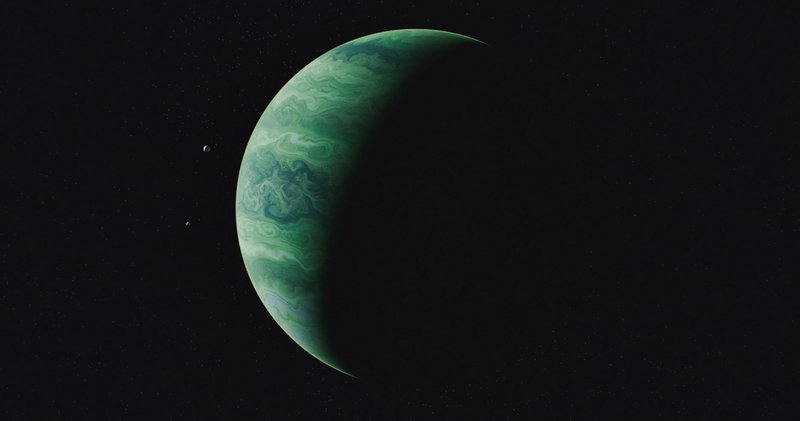
Planets turn up around nearly every kind of star, but the mix changes with the star.
- Red dwarfs (M stars). The most common stars in the galaxy, and rich in small rocky planets. They tend to have fewer hot Jupiters than Sun-like stars. Proxima Centauri, Barnard’s Star and TRAPPIST-1 are all red dwarfs.
- Sun-like stars (F, G, K). The classic hosts. This is where Kepler found most of its planets, and where astronomers hope to find true Earth analogs.
- Giant stars. Evolved stars like Pollux can host planets, though close-in worlds are often swallowed as the star swells. Giant hosts also tend to be more massive than the Sun.
- Pulsars. In 1992, Aleksander Wolszczan and Dale Frail found three planets around the pulsar PSR B1257+12, the first confirmed planets outside the solar system. They formed after, or survived, a supernova.
- Binary stars. Planets can orbit one star of a pair, or circle both. Kepler-16b, found in 2011, orbits two stars and sees a double sunset, much like Luke Skywalker’s Tatooine.
Why metallicity matters
To an astronomer, “metals” means every element heavier than hydrogen and helium. Stars with more of them have, on average, more giant planets. A well-known study by Debra Fischer and Jeff Valenti found that the share of stars with giant planets rises from a few percent at solar metallicity to around 25% for stars with more than twice the Sun’s heavy-element content.
The leading explanation is that planet cores need solid material to grow quickly enough to capture gas before the young star’s disk disperses. More metals means more dust and ice to build with. Small planets show a much weaker link, which is why red dwarfs and metal-poor stars still host rocky worlds.
How astronomers find planets around other stars
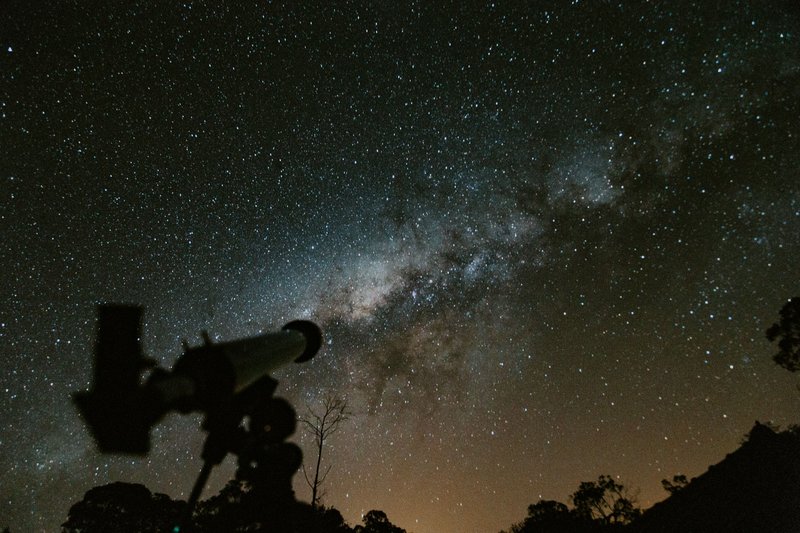
Four methods account for nearly everything in the catalog.
- Transit. A planet crossing the face of its star dims the light by a fraction of a percent. Kepler and TESS found thousands of planets this way.
- Radial velocity (wobble). A planet’s gravity tugs its star back and forth, shifting its light slightly toward red and blue. This is how 51 Pegasi b was found.
- Direct imaging. Block the star’s glare and photograph the planet itself. It works best for young, hot, massive planets far from their stars, like those around Beta Pictoris.
- Microlensing. A foreground star’s gravity magnifies a background star, and a planet around the foreground star adds a short extra blip. It reaches planets thousands of light-years away, and it’s the method behind the one-planet-per-star estimate.
Each method sees a different slice of the population, so no single catalog gives the full picture. NASA’s exoplanet program keeps a running tally and explains each technique.
FAQ
Do all stars have planets? Probably most do, but not all. Microlensing studies suggest an average of at least one planet per star in the Milky Way. Some stars, such as those in very dense clusters, may lose or never form them.
Which star has the most planets? The Sun and Kepler-90 each have eight confirmed planets. Some systems have candidates that could push a count higher, but none has a confirmed ninth planet.
What is the closest star with planets? Proxima Centauri, 4.2 light-years away, with two confirmed planets. The Alpha Centauri system next door has candidate planets but no confirmed ones.
How many stars have confirmed planets? Roughly 4,500, according to the NASA Exoplanet Archive, which passed 6,000 confirmed planets in September 2025. The count rises with each new discovery.
What was the first star found with planets? The pulsar PSR B1257+12 in 1992. The first planet around a Sun-like star was 51 Pegasi b in 1995.
Can I see a star with planets without a telescope? Yes. Pollux, Epsilon Eridani and Gamma Cephei are all visible to the naked eye, and each has a confirmed planet.