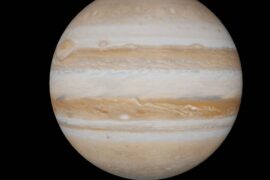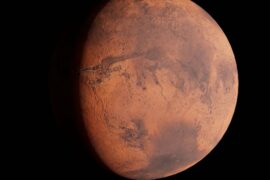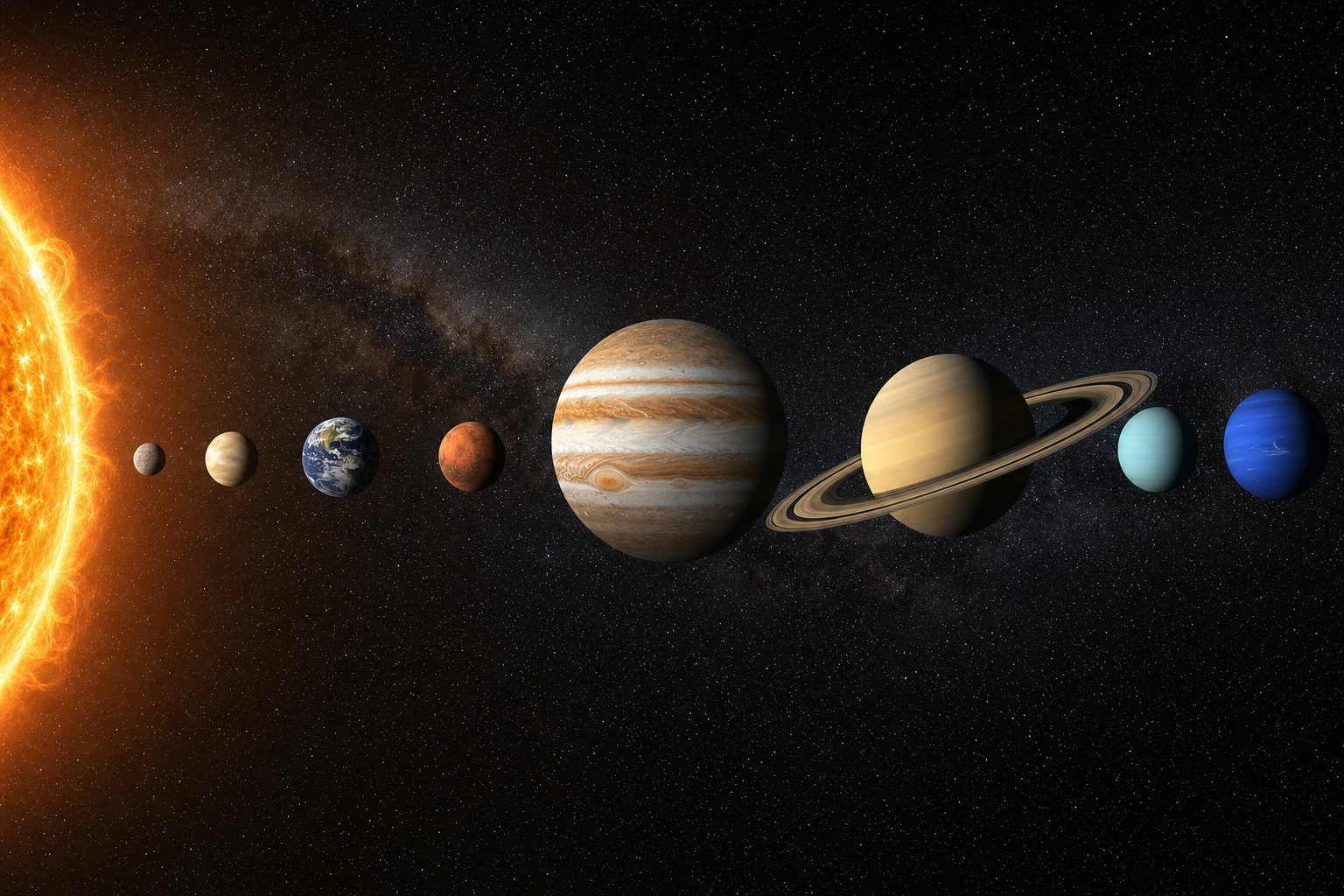
The eight planets in order from the Sun are Mercury, Venus, Earth, Mars, Jupiter, Saturn, Uranus and Neptune. The first four are small rocky worlds packed close to the Sun. The last four are giants spread across billions of miles of space, and the gap between Mars and Jupiter is wider than the whole inner solar system.
This page lists the planets in order from the Sun, then re-sorts them by size, mass, temperature, number of moons, length of year and density. It also covers the easiest ways to memorize the order and where Pluto and the other dwarf planets fit.
The planets in order
| # | Planet | Type |
|---|---|---|
| 1 | Mercury | Rocky |
| 2 | Venus | Rocky |
| 3 | Earth | Rocky |
| 4 | Mars | Rocky |
| 5 | Jupiter | Gas giant |
| 6 | Saturn | Gas giant |
| 7 | Uranus | Ice giant |
| 8 | Neptune | Ice giant |
To remember it: My Very Educated Mother Just Served Us Nachos.
Planets in order from the Sun, with distances
Distances below are each planet’s average distance from the Sun. One astronomical unit (AU) is Earth’s average distance, about 93 million miles. The last column is how long sunlight takes to reach each planet.
| Planet | Distance (AU) | Million miles | Million km | Sunlight takes |
|---|---|---|---|---|
| Mercury | 0.39 | 36.0 | 57.9 | 3.2 minutes |
| Venus | 0.72 | 67.2 | 108.2 | 6.0 minutes |
| Earth | 1.00 | 93.0 | 149.6 | 8.3 minutes |
| Mars | 1.52 | 141.7 | 228.0 | 12.7 minutes |
| Jupiter | 5.20 | 483.7 | 778.5 | 43 minutes |
| Saturn | 9.57 | 889.8 | 1,432 | 1 hour 20 minutes |
| Uranus | 19.16 | 1,781 | 2,867 | 2 hours 39 minutes |
| Neptune | 30.18 | 2,806 | 4,515 | 4 hours 11 minutes |
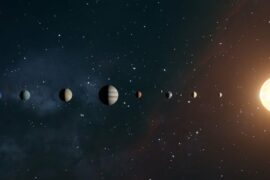
Drawn to scale, the spacing looks lopsided. All four rocky planets fit inside the first 1.5 AU, while Neptune sits 30 AU out. Past Mars the gaps keep growing: Saturn is about twice as far out as Jupiter, and Uranus is twice as far out as Saturn.
For the distance between any two planets, and between each planet and Earth, see how far away each planet is.
1. Mercury
The smallest planet and the fastest, circling the Sun every 88 days. Mercury has almost no atmosphere, so its daytime surface reaches about 430°C (800°F) and its nights fall to about -180°C (-290°F). Explore its craters on the Mercury 3D map.
2. Venus
Nearly Earth’s twin in size, Venus is buried under a carbon dioxide atmosphere with a surface pressure about 90 times Earth’s. The trapped heat makes it the hottest planet, even though Mercury is closer to the Sun. Venus also spins backward, so the Sun rises in the west there.
3. Earth
The densest planet and the only one known to have liquid water on its surface and life. Earth is the largest of the four rocky planets and has one large moon. The Earth 3D model shows today’s day and night line live.
4. Mars
Mars is about half Earth’s width, with a thin atmosphere and iron-rich red dust. It holds Olympus Mons (the largest volcano in the solar system) and Valles Marineris, a canyon system as long as the United States is wide. Mars has two small moons, Phobos and Deimos.
5. Jupiter
The largest planet. Jupiter is wider than 11 Earths side by side and holds more than twice the mass of all the other planets combined. Its Great Red Spot is a storm larger than Earth. The Jupiter 3D model places the four Galilean moons where they are right now.
6. Saturn
Saturn’s rings are made of countless pieces of water ice, from grains to boulders, spread more than 170,000 miles wide but often only about 30 feet thick. Saturn is the least dense planet. It has more known moons than any other planet.
7. Uranus
Uranus is tipped 98 degrees on its side, so it rolls around the Sun like a ball. Each pole gets about 42 years of daylight followed by 42 years of darkness. William Herschel discovered it in 1781, making it the first planet found with a telescope.
8. Neptune
The farthest planet, Neptune takes 165 years to orbit the Sun once. It has the fastest winds measured in the solar system, above 1,200 miles per hour. Neptune was found in 1846 after mathematicians predicted its position from the way it tugged on Uranus.
How to remember the order of the planets
A mnemonic turns the first letters of each planet (M, V, E, M, J, S, U, N) into a sentence. The most common one is:
My Very Educated Mother Just Served Us Nachos.
Other sentences that work:
- My Very Easy Method Just Speeds Up Naming.
- Many Very Elegant Mice Jump Sideways Under Newspapers.
- My Very Excellent Mom Just Sent Us Noodles.
- With dwarf planets: My Very Exciting Magic Carpet Just Sailed Under Nine Palace Elephants. This adds Ceres after Mars and Pluto and Eris after Neptune. It won a 2008 National Geographic contest for a new planet mnemonic.
The old version, “My Very Educated Mother Just Served Us Nine Pizzas”, ended with Pluto. It went out of date in 2006.
Three more tricks help when the sentence slips:
- The two M planets. Mercury is first and Mars is fourth. Mercury is the closest to the Sun, and the Roman god Mercury was the fast messenger, so it gets the fast, inside lane.
- Earth is third. Count out from Earth: Venus is the bright “evening star” inside our orbit and Mars is the red planet just outside it.
- The giants go big to small. Jupiter, Saturn, Uranus, Neptune runs largest to smallest by width. Learn the giants as one group and the rocky planets as another.
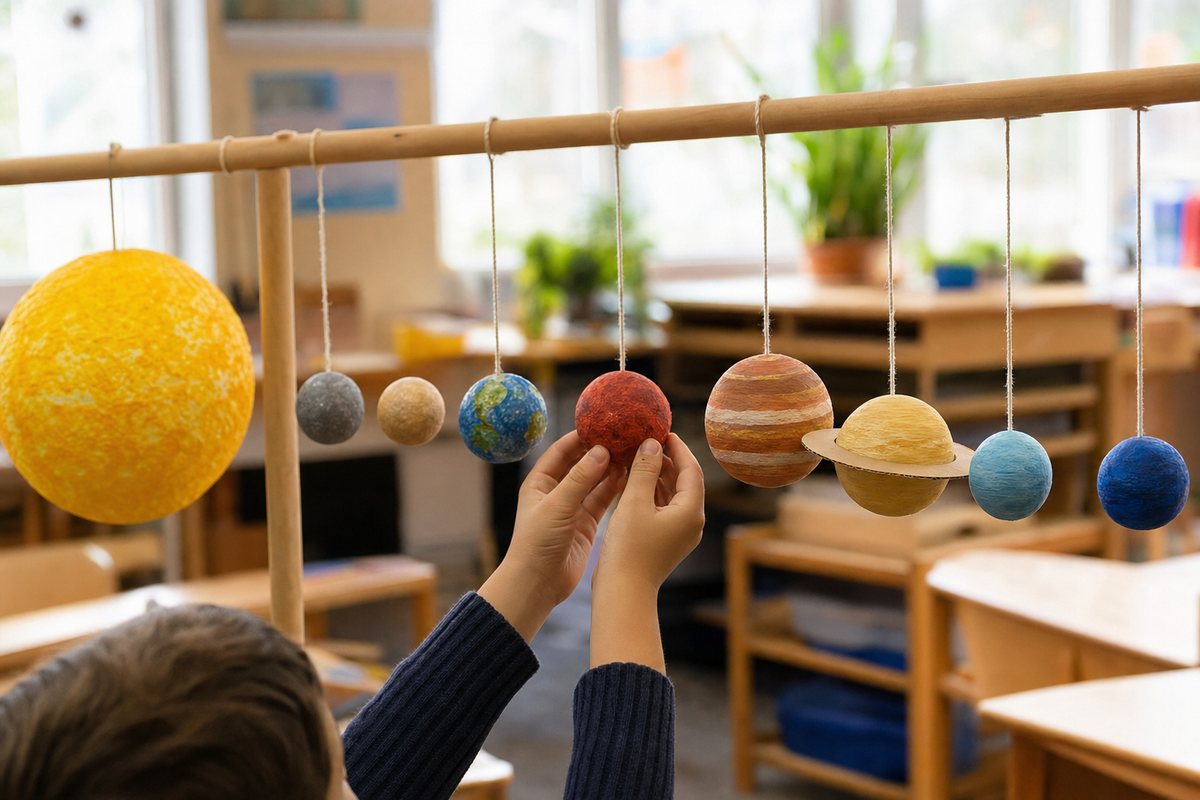
For a classroom check afterward, the printable space quiz has grade-level versions with answer keys.
Planets in order by size
From largest to smallest by diameter: Jupiter, Saturn, Uranus, Neptune, Earth, Venus, Mars and Mercury.
| Rank | Planet | Diameter (miles) | Diameter (km) | Compared to Earth |
|---|---|---|---|---|
| 1 | Jupiter | 88,846 | 142,984 | 11.2 times wider |
| 2 | Saturn | 74,898 | 120,536 | 9.4 times wider |
| 3 | Uranus | 31,763 | 51,118 | 4.0 times wider |
| 4 | Neptune | 30,775 | 49,528 | 3.9 times wider |
| 5 | Earth | 7,926 | 12,756 | 1 |
| 6 | Venus | 7,521 | 12,104 | 0.95 |
| 7 | Mars | 4,220 | 6,792 | 0.53 |
| 8 | Mercury | 3,032 | 4,879 | 0.38 |
Uranus and Neptune are close to the same width, and Earth is only slightly larger than Venus. To see which objects in the solar system beat Earth for size, including the Sun, see objects larger than Earth.
Planets in order by mass
From heaviest to lightest: Jupiter, Saturn, Neptune, Uranus, Earth, Venus, Mars and Mercury.
The order matches the size ranking except for one swap. Neptune is slightly smaller than Uranus but about 17% more massive, because it is denser. Jupiter alone weighs 318 Earths. Mercury weighs about one eighteenth of an Earth.
| Planet | Mass (Earth = 1) | Surface gravity (Earth = 1) |
|---|---|---|
| Jupiter | 318 | 2.53 |
| Saturn | 95 | 1.07 |
| Neptune | 17.1 | 1.14 |
| Uranus | 14.5 | 0.90 |
| Earth | 1 | 1 |
| Venus | 0.82 | 0.90 |
| Mars | 0.11 | 0.38 |
| Mercury | 0.055 | 0.38 |
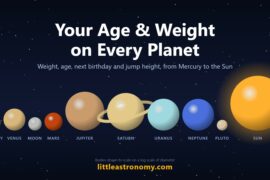
Gravity at the cloud tops of Saturn, Uranus and Neptune is close to Earth’s, because their mass is spread over a huge volume. Enter your weight in the age and weight on other planets calculator to see what you would weigh on each.
Planets in order by temperature
From hottest to coldest by average temperature: Venus, Mercury, Earth, Mars, Jupiter, Saturn, Uranus and Neptune.
| Planet | Average temperature |
|---|---|
| Venus | 464°C (867°F) |
| Mercury | 167°C (333°F) |
| Earth | 15°C (59°F) |
| Mars | -65°C (-85°F) |
| Jupiter | -110°C (-166°F) |
| Saturn | -140°C (-220°F) |
| Uranus | -195°C (-319°F) |
| Neptune | -200°C (-328°F) |
Venus breaks the pattern. Its thick atmosphere traps heat so well that its surface is hotter than the dayside of Mercury, and it stays that hot day and night. The giant planet values are measured where the pressure equals Earth’s sea level, since they have no solid surface. Uranus holds the record for the coldest temperature measured in a planet’s atmosphere, about -224°C (-371°F), even though Neptune is colder on average. More on that in the coldest places in the solar system.
Planets in order by number of moons
From most moons to fewest: Saturn, Jupiter, Uranus, Neptune, Mars, Earth, then Mercury and Venus with none.
| Planet | Known moons | Largest moon |
|---|---|---|
| Saturn | 285 | Titan |
| Jupiter | 101 | Ganymede |
| Uranus | 28 | Titania |
| Neptune | 16 | Triton |
| Mars | 2 | Phobos |
| Earth | 1 | The Moon |
| Venus | 0 | None |
| Mercury | 0 | None |
Counts are the Minor Planet Center totals as of March 2026, when 11 new Saturn moons and 4 new Jupiter moons were announced. Jupiter passed 100 for the first time with that batch. Most of the new finds are small irregular moons a few miles across, and the totals keep rising as telescopes find more. Ganymede is the largest moon in the solar system and is wider than Mercury.
Planets in order by length of year and day
A planet’s year is one trip around the Sun, so years get longer in the same order as distance. Days follow no pattern at all.
| Planet | Length of year | Length of day (sunrise to sunrise) |
|---|---|---|
| Mercury | 88 Earth days | 176 Earth days |
| Venus | 225 Earth days | 117 Earth days |
| Earth | 365.25 days | 24 hours |
| Mars | 687 Earth days (1.9 years) | 24 hours 40 minutes |
| Jupiter | 11.9 years | 9 hours 56 minutes |
| Saturn | 29.4 years | 10 hours 42 minutes |
| Uranus | 84 years | 17 hours 14 minutes |
| Neptune | 165 years | 16 hours 6 minutes |
On Mercury, one sunrise to the next takes two of its years. On Venus, a full spin (243 Earth days) takes longer than an orbit around the Sun. Jupiter has the shortest day of any planet. The full ranking is in the longest days in the solar system.
Planets in order by density
From densest to least dense: Earth, Mercury, Venus, Mars, Neptune, Jupiter, Uranus and Saturn.
The rocky planets have iron cores and come out at 3.9 to 5.5 grams per cubic centimeter. The giants are mostly hydrogen, helium and ices. Saturn averages 0.69 grams per cubic centimeter, less than water.
Inner planets and outer planets
The asteroid belt between Mars and Jupiter splits the planets into two groups.
- Inner planets: Mercury, Venus, Earth and Mars. They are small and rocky with solid surfaces, few or no moons and no rings. Astronomers call them the terrestrial planets.
- Outer planets: Jupiter, Saturn, Uranus and Neptune. They are giants with no solid surface, dozens of moons and ring systems (all four have rings, though only Saturn’s are bright). Jupiter and Saturn are gas giants. Uranus and Neptune are ice giants, made largely of water, methane and ammonia. Together they are the Jovian planets.
The split goes back to how the planets formed. Close to the young Sun it was too hot for ice to survive, so only rock and metal could clump together. Beyond the “frost line,” ice was plentiful and the planets grew large enough to pull in huge envelopes of gas.
Where Pluto and the dwarf planets fit
Pluto was the ninth planet from its discovery in 1930 until August 24, 2006. That day, the International Astronomical Union defined a planet as a body that orbits the Sun, is round from its own gravity and has cleared its orbit of other objects. Pluto shares its orbit with many other Kuiper Belt objects, so it failed the third test and became a dwarf planet. The difference between a planet and a dwarf planet comes down to that third rule.
The IAU recognizes five dwarf planets. In order from the Sun:
| Dwarf planet | Average distance (AU) | Where it orbits |
|---|---|---|
| Ceres | 2.8 | Asteroid belt, between Mars and Jupiter |
| Pluto | 39.5 | Kuiper Belt, beyond Neptune |
| Haumea | 43 | Kuiper Belt |
| Makemake | 45 | Kuiper Belt |
| Eris | 68 | Scattered disk |
Put everything together and the full lineup from the Sun is: Mercury, Venus, Earth, Mars, Ceres, Jupiter, Saturn, Uranus, Neptune, Pluto, Haumea, Makemake and Eris. Pluto’s orbit is so stretched that it came closer to the Sun than Neptune from 1979 to 1999. See types of dwarf planets for the dozens of other candidates.
Do the planets ever line up in the sky?
Not in a straight row from the Sun outward. The planets all orbit in nearly the same flat plane, so from Earth they appear along one curved path across the sky called the ecliptic. When several of them gather on the same side of the Sun at once, they form a “planet parade” along that line, as happened in late February 2025 when all seven other planets were above the horizon after sunset.
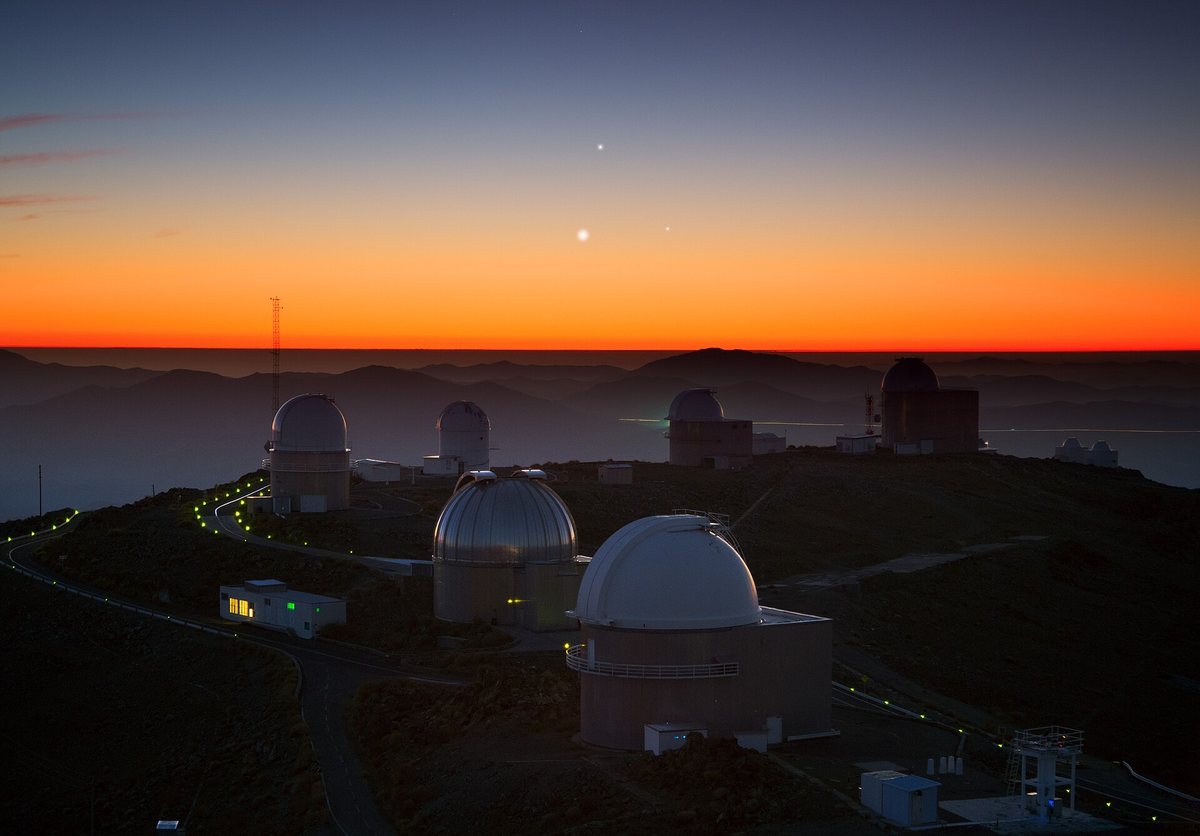
The order you see in the sky has nothing to do with the order from the Sun. In the photo above, Jupiter (fifth planet) sits above Venus (second) and Mercury (first), because all three happened to lie in the same direction from Earth.
Five planets are easy to see without a telescope: Mercury, Venus, Mars, Jupiter and Saturn. Uranus is barely visible from a very dark site if you know exactly where to look. Neptune always needs binoculars or a telescope. What planets are visible from Earth explains how to tell them from stars.
Which planet is closest to Earth?
It depends on how you measure. Venus makes the closest approach, coming within about 24 million miles (38 million km). Averaged over time, though, Mercury is closest. Venus spends long stretches on the far side of the Sun, up to 160 million miles away, while Mercury never strays far from the Sun and so never gets very far from us. A 2019 analysis in Physics Today showed that Mercury is the closest planet on average to every other planet in the solar system, Neptune included.
FAQ
What are the 8 planets in order?
From the Sun outward: Mercury, Venus, Earth, Mars, Jupiter, Saturn, Uranus and Neptune. The first four are rocky planets and the last four are giant planets.
What is the easiest way to remember the order of the planets?
Use the sentence “My Very Educated Mother Just Served Us Nachos.” The first letter of each word matches a planet in order from the Sun: Mercury, Venus, Earth, Mars, Jupiter, Saturn, Uranus, Neptune.
What are the planets in order of size?
From largest to smallest: Jupiter, Saturn, Uranus, Neptune, Earth, Venus, Mars and Mercury. Jupiter is about 11 times wider than Earth, and Mercury is about a third of Earth’s width.
Is Pluto still a planet?
No. The International Astronomical Union reclassified Pluto as a dwarf planet on August 24, 2006, because it has not cleared its orbit of other objects. It would be tenth in line from the Sun if you count Ceres, which lies between Mars and Jupiter.
Which planet is the hottest?
Venus, with an average surface temperature of about 464°C (867°F). Its thick carbon dioxide atmosphere traps heat, making it hotter than Mercury even though Mercury is closer to the Sun.
Which planet has the most moons?
Saturn, with 285 known moons as of March 2026. Jupiter is second with 101.
What is the third planet from the Sun?
Earth. Mercury is first, Venus is second and Mars is fourth.
Why is there a big gap between Mars and Jupiter?
The asteroid belt fills that gap. Jupiter’s strong gravity stirred up the material there while the planets were forming, so it never came together into a single planet. Ceres, the largest object in the belt, is a dwarf planet.
Keep going: find your planet match in the What Planet Are You? quiz, spin each world in the 3D models collection or try the space calculators. For younger readers, solar system facts for kids covers the basics.
Planet data: NASA Planetary Fact Sheet (average distance, diameter, mass, density, mean temperature, orbital and day lengths). Moon counts: IAU Minor Planet Center, March 2026. Header and classroom images are illustrations made for this article.