TL;DR
A short-period comet is any comet whose orbit around the Sun takes less than 200 years. That’s the whole definition — everything else is detail. Inside that group, there are two families: Jupiter-family comets (under 20 years, flat orbits, seeded from the Kuiper Belt) and Halley-type comets (20 to 200 years, steep or backward orbits, likely reshaped Oort Cloud material). Both kinds lose a little of themselves every time they pass the Sun, and eventually they fragment, go dormant, or disintegrate outright — which is exactly what happened to Comet Biela in the 1850s.
Table of Contents
- What Actually Makes a Comet “Short-Period”
- Jupiter-Family vs. Halley-Type Comets
- Where Short-Period Comets Come From
- Famous Short-Period Comets to Know
- Why Short-Period Comets Eventually Fall Apart
- Can You Actually See One Right Now?
What Actually Makes a Comet “Short-Period”
The label has nothing to do with size, brightness, or how long a comet is visible in the sky. It’s purely about the clock: a short-period comet completes one orbit around the Sun in under 200 years. Cross that line and you’re in long-period territory, where orbits stretch into the thousands or millions of years and the comet effectively shows up once per human civilization, if that.
The 200-year cutoff is a convention, not a law of physics, and it exists for a practical reason: an orbit shorter than that can, in principle, be confirmed by watching the same comet return more than once within recorded astronomical history. That’s exactly how Edmond Halley made his name — by realizing that comets seen in 1531, 1607, and 1682 were the same object on a repeating loop, according to NASA’s overview of comet orbits.
Most named short-period comets fall well under that 200-year ceiling. Some take just a few years. Astronomers technically classify them using something called the Tisserand parameter — a number that captures how much Jupiter’s gravity has bent a comet’s path — rather than period alone, but the simple time-based split works fine for everyday purposes.
Jupiter-Family vs. Halley-Type Comets
Short-period comets aren’t one uniform group. They split cleanly into two families with different orbital habits and, most likely, different birthplaces.
| Jupiter-family comets | Halley-type comets | |
|---|---|---|
| Orbital period | Under 20 years | 20–200 years |
| Orbital inclination | Low, usually under 30° | High, often above 30°, sometimes retrograde |
| Likely origin | Kuiper Belt / scattered disk, orbit reshaped by Jupiter | Oort Cloud or deep trans-Neptunian space, orbit reshaped by giant-planet encounters |
| Example | 67P/Churyumov-Gerasimenko, 2P/Encke | 1P/Halley, 109P/Swift-Tuttle |
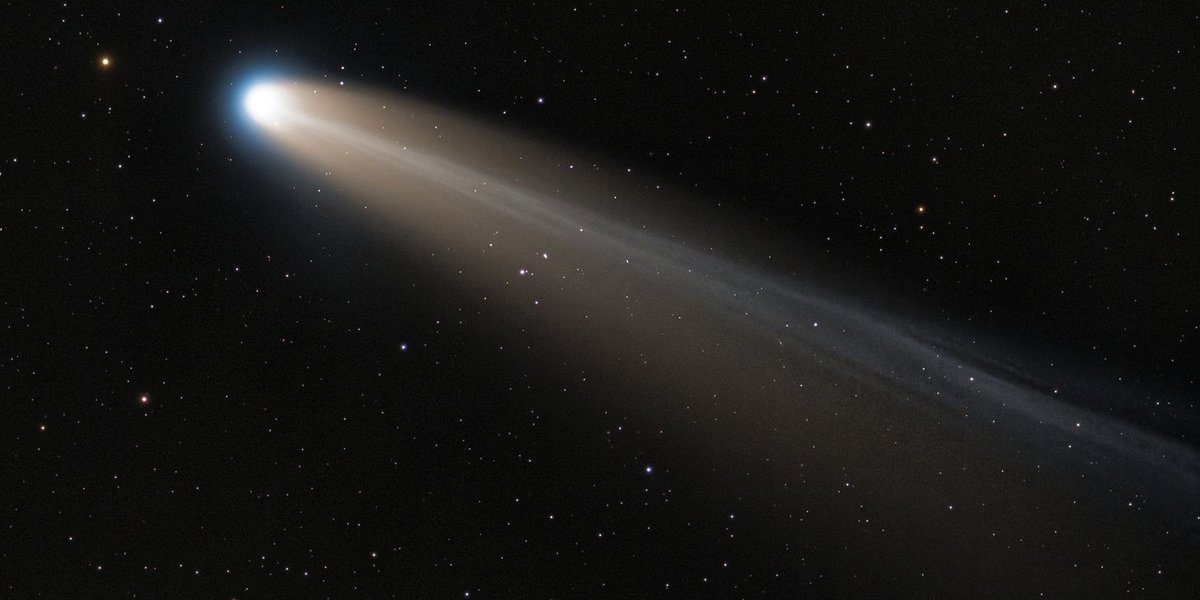
The inclination column is the tell. Jupiter-family comets tend to orbit in roughly the same flat plane as the planets, moving the same direction everything else does. Halley-type comets don’t play by that rule. Halley itself orbits backward relative to the planets, tilted 162 degrees — a dead giveaway that it didn’t form in the same flattened disk as Earth or Jupiter. See its nucleus, coma and tails in our comet 3D model.
Where Short-Period Comets Come From
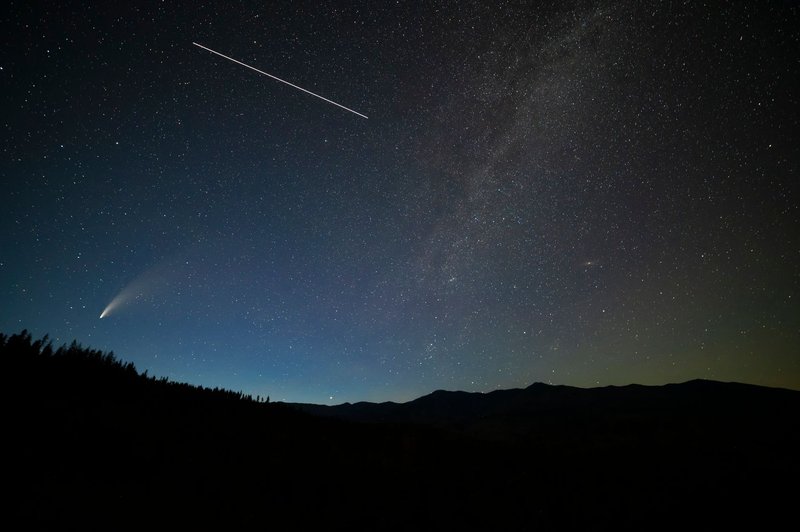
Jupiter-family comets have a fairly well-mapped origin story. They start out in the Kuiper Belt or the scattered disk beyond Neptune — a flat, donut-shaped swarm of icy bodies orbiting in roughly the same plane as the planets. Neptune’s gravity occasionally nudges one out of place, and from there Jupiter takes over, tugging the object through a series of close encounters that shrink its orbit and pull it into the inner solar system. It’s a multi-step demotion: Kuiper Belt object, then wandering “Centaur,” then eventually a short, tame, Jupiter-dominated loop, as described in Las Cumbres Observatory’s overview of the Kuiper Belt and Oort Cloud.
Halley-type comets are murkier. Their steep, often backward orbits look nothing like the flat Kuiper Belt, which points instead to the Oort Cloud — a roughly spherical shell of icy bodies extending tens of thousands of AU from the Sun, thrown into that shape by billions of years of gravitational shoving from the planets and passing stars. A Halley-type comet, in this picture, started as an Oort Cloud object on a long, slow, million-year loop, then got its orbit violently shortened by a close pass near Jupiter or Saturn. The short period is a side effect of a cosmic near-miss, not a sign of a nearby origin.
Famous Short-Period Comets to Know
Four names come up again and again in short-period comet discussions, and each one illustrates a different piece of the picture above. You can explore a comprehensive list of periodic comets for even more examples and their orbital data.
| Comet | Orbital period | Family | Next perihelion |
|---|---|---|---|
| 1P/Halley | ~76 years | Halley-type | July 28, 2061 |
| 2P/Encke | ~3.3 years | Jupiter-family | February 2027 |
| 109P/Swift-Tuttle | ~133 years | Halley-type | July 12, 2126 |
| 67P/Churyumov-Gerasimenko | ~6.4 years | Jupiter-family | April 9, 2028 |
Halley needs no introduction, but the number worth remembering is 2061 — the year it returns to perihelion, meaning most people reading this will get exactly one shot at seeing it.
Encke holds the shortest confirmed period of any well-observed comet, looping the Sun in about 3.3 years. It’s been tracked through more returns than almost any other comet in history, which makes it a workhorse for studying how repeated solar heating wears a nucleus down.
Swift-Tuttle is the parent body of the Perseid meteor shower — the debris Earth plows through every August is material this comet shed on past visits, decades or centuries ago.
67P became a household name in comet science after the European Space Agency’s Rosetta mission rendezvoused with it in 2014 and rode along as it swung past the Sun, giving scientists the closest look yet at how a Jupiter-family comet actually behaves up close, as chronicled on ESA’s Rosetta blog.
Why Short-Period Comets Eventually Fall Apart
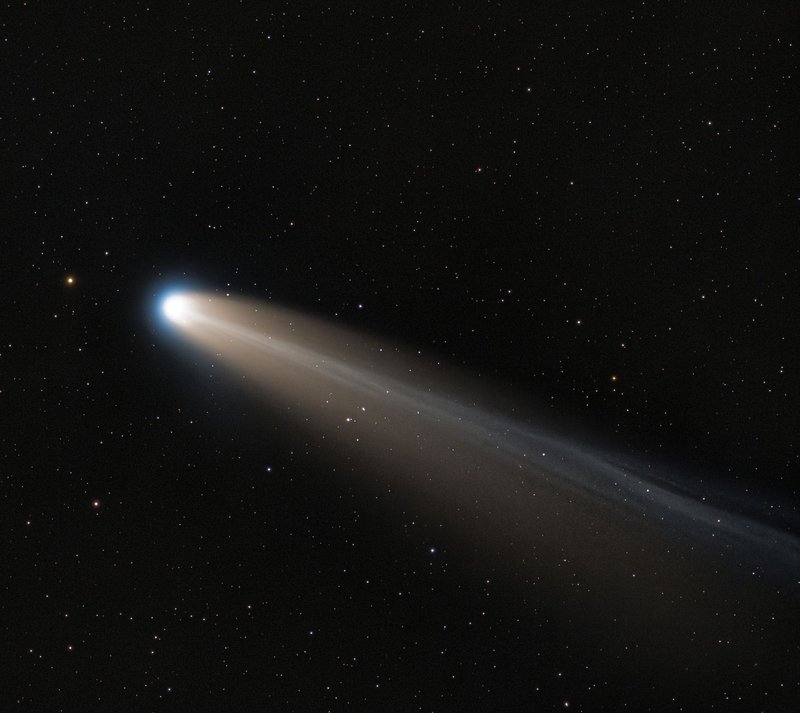
Here’s the part most comet explainers skip: short-period comets don’t orbit forever. Every perihelion passage bakes a little more ice off the nucleus, and a comet that swings by the Sun every few years runs through that budget fast. A long-period comet might make one close pass per millennium and stay largely intact for its entire visible history. A Jupiter-family comet on a six-year clock doesn’t get that luxury.
The wear shows up in a few ways. Sometimes it’s slow fading — a nucleus loses its most volatile ices first, then increasingly needs a closer, hotter pass to produce the same coma and tail it once threw off easily. Sometimes it’s sudden. Comet 73P/Schwassmann-Wachmann 3 split into dozens of visible fragments during its 1995 return and kept shedding pieces on subsequent passes. Comet Biela did something similar in 1846, breaking into two nuclei that drifted apart, faded independently, and were never seen again after 1852. Biela’s debris didn’t just vanish — it spread into a stream that Earth still crosses every November, producing the Andromedid meteor shower from a comet that no longer exists.
There’s a quieter ending too. Some short-period comets don’t dramatically break up; they just stop acting like comets. Once the surface loses enough water ice, sublimation slows to nothing, the coma and tail disappear, and what’s left behaves like an ordinary rocky body — a dormant or “extinct” comet nucleus. Some near-Earth asteroids are suspected to be exactly this: burned-out comets wearing an asteroid’s disguise. 3200 Phaethon, the parent body of the Geminid meteor shower, is one of the leading candidates.
So a short-period comet isn’t just a comet on a short leash. It’s a comet on a countdown. The same repeat visits that make it so well-studied are the ones wearing it out.
Can You Actually See One Right Now?
Not with much fanfare, usually. Short-period comets are, almost by definition, the least dramatic comets in the sky — the Sun and planets have already stripped much of their easily vaporized material, so they tend to arrive faint, needing binoculars or a telescope rather than putting on a naked-eye show. Encke returns to perihelion in February 2027 and 67P follows in April 2028, both well within telescope range for backyard observers who know when and where to look. If you want an unpredictable, jaw-dropping tail stretched across the sky, that’s usually a long-period comet’s job — the ones making their first, and often only, close approach in recorded history.