Mars has two moons: Phobos and Deimos. That’s the whole answer to the question most people show up with. But “two” is where this story gets interesting, because these aren’t the round, cratered worlds you picture when you hear the word moon. They’re lumpy, potato-shaped rocks barely wide enough to deserve the title, one of them is slowly spiraling to its death, and astronomers still argue about where they came from.
Here’s everything worth knowing about the Martian moons, including a section most articles skip entirely: how to see them yourself through a backyard telescope.
Table of Contents
- Phobos and Deimos at a Glance
- Phobos: The Doomed Inner Moon
- Deimos: The Tiny Outer Drifter
- Who Discovered Mars’s Moons?
- Where Did They Come From?
- Why Phobos Is Crashing Into Mars
- How to See Mars’s Moons From Your Backyard
- Quick Answers
Phobos and Deimos at a Glance {#at-a-glance}
Before the deep cuts, here’s the side-by-side. The SERP is weirdly missing a clean comparison table for these two, so here you go.
| Phobos | Deimos | |
|---|---|---|
| Mean diameter | ~22.5 km (14 mi) | ~12.4 km (7.7 mi) |
| Shape | Irregular, potato-like | Irregular, smoother |
| Distance from Mars | ~9,376 km (center to center) | ~23,463 km |
| Orbital period | 7 hours 39 minutes | 30 hours 18 minutes |
| Rises in the | West | East |
| Tidally locked? | Yes | Yes |
| Standout feature | Stickney crater | Buried, dusty craters |
| Future | Crashing into Mars | Drifting away |
| Discovered | 1877 | 1877 |
For scale: Earth’s Moon is 3,474 km across. Phobos would fit inside it more than 150 times over. These are small even by moon standards, closer in size to a large asteroid than to anything you’d call a proper world. It’s worth noting that “moon” itself covers a lot of ground, from the lumpy captured rocks circling Mars to the phases and different types of moons we track from Earth.
Phobos: The Doomed Inner Moon {#phobos}
Phobos is the bigger of the two and by far the more dramatic. It orbits Mars at a blistering pace, completing a full lap in about 7 hours and 39 minutes. That’s faster than Mars itself rotates, which produces a genuinely strange effect: from the Martian surface, Phobos rises in the west and sets in the east, crossing the sky twice in a single Martian day.
The moon’s defining scar is Stickney crater, a 9-kilometer gouge that spans nearly half of Phobos’s width. The impact that carved it should, by most calculations, have shattered the moon entirely. It didn’t. Instead, Stickney left a network of grooves radiating across the surface that scientists still debate, some attributing them to the impact, others to tidal stress from Mars slowly pulling the moon apart.
Phobos is also dark. Really dark. It reflects only about 7 percent of the sunlight hitting it, which is part of why it stayed hidden until the late 19th century despite being so close to Mars. NASA’s data describes it as one of the least reflective bodies in the solar system, comparable to fresh asphalt.
Get this: Phobos orbits so close to Mars (about 6,000 km above the surface) that an astronaut standing on the right spot on Mars couldn’t see it at all, because it sits below their horizon. According to NASA’s Mars exploration program, it’s the closest moon to its planet anywhere in the solar system.
Deimos: The Tiny Outer Drifter {#deimos}
Deimos is the quiet one. Smaller, smoother, and much farther out, it takes a leisurely 30 hours to circle Mars and behaves like a moon should, rising in the east and setting in the west.
From the surface of Mars, Deimos would look less like a moon and more like a bright star, a tiny dot barely showing a disk at all. Its craters exist, but most are partly buried under a layer of fine regolith, the loose dust that has slowly filled in its surface features over billions of years. That gives Deimos a softer, sandblasted look compared to Phobos’s jagged grooves.
Where Phobos is racing toward its doom, Deimos is doing the opposite. It’s slowly drifting away from Mars, gaining a little altitude each year, the same way our own Moon is gradually leaving Earth. Given enough time, Deimos may eventually escape Martian gravity entirely.
Who Discovered Mars’s Moons? {#discovery}
Both moons were found in a single week of August 1877 by American astronomer Asaph Hall, working at the U.S. Naval Observatory in Washington during a close approach of Mars. Hall is one of many American astronomers who changed how we see the universe, and the story behind his discovery is a good one: he had nearly given up the search, and his wife Angeline Stickney reportedly talked him into trying one more night. Stickney crater on Phobos is named for her.
He spotted Deimos on August 12 and Phobos six nights later. The names came from a classics professor’s suggestion, drawn from Greek mythology, the twin sons of Ares (the Greek Mars) who personified Fear (Phobos) and Dread or Panic (Deimos). They rode into battle alongside their father, which is a fittingly grim pairing for two moons orbiting the war planet.
There’s an earlier wrinkle worth mentioning. In 1610, astronomer Johannes Kepler reasoned that since Earth had one moon and Jupiter had four (the ones Galileo had just found), Mars should logically have two, splitting the difference. He was right, but for entirely the wrong reasons, and pure coincidence. Jonathan Swift famously also referenced two Martian moons in Gulliver’s Travels in 1726, 150 years before anyone actually saw them.
Where Did They Come From? {#origin}
This is the genuinely unsolved part. There are two main camps, and the evidence cuts both ways.
The captured-asteroid theory. Phobos and Deimos look a lot like a class of dark, carbon-rich asteroids called D-type asteroids, common out in the outer asteroid belt. Their low reflectivity and lumpy shapes fit. The idea is that Mars, sitting right next to the asteroid belt, snagged two passing rocks with its gravity.
The problem: capturing an asteroid and parking it into a near-perfect circular orbit aligned with Mars’s equator is hard. Captured objects tend to end up in tilted, stretched-out orbits, not the tidy circular ones these two actually have.
The giant-impact theory. The alternative says a large object slammed into early Mars, blasting debris into orbit that later clumped together into two moons, similar to how Earth’s Moon is thought to have formed. This explains the neat orbits beautifully, but struggles to explain why the moons’ surface composition looks so asteroid-like.
The honest answer right now is that nobody is certain. Which is exactly why Japan’s space agency built a sample-return mission called MMX (Martian Moons eXploration) to fly to Phobos, grab a piece of it, and bring it home. Sample-return is just one of the many types of space missions we send across the solar system, and the composition of that sample should finally settle the argument. Until then, the origin of the Martian moons remains one of the better open questions in planetary science.
Why Phobos Is Crashing Into Mars {#crashing}
Phobos orbits too low and too fast, and Mars is reeling it in. Tidal forces between the planet and its close moon are stealing orbital energy, dropping Phobos by roughly 1.8 centimeters per year. That sounds trivial, and on human timescales it is. On geological timescales, it’s a countdown.
In something like 40 to 50 million years, one of two things happens. Either Phobos drops low enough that Mars’s gravity tears it apart, or it slams directly into the surface. The tearing-apart scenario is the interesting one, because the shredded debris wouldn’t just vanish. It would spread into a ring around Mars, giving the red planet its own Saturn-style ring system for a few million years before the rubble eventually rained down.
So Mars is, in a sense, a planet with a moon on borrowed time and a ring in its future. Deimos, meanwhile, just keeps drifting away. Same planet, two moons, two completely opposite fates.
How to See Mars’s Moons From Your Backyard {#observing}
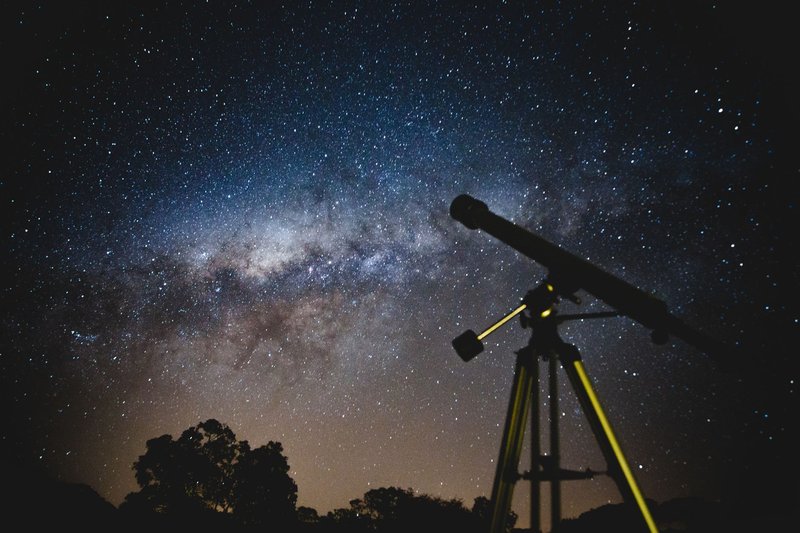
Here’s the part the authority sites and most articles leave out. Yes, you can see Phobos and Deimos yourself. No, it is not easy, but it’s a real and rewarding challenge for amateur astronomers. Here’s what it actually takes.
The problem is glare, not size. Both moons are bright enough in theory, around magnitude 11 to 12, which a modest scope can reach. The catch is that they orbit extremely close to Mars, and Mars is glaringly bright by comparison. The planet’s light drowns the moons the way a streetlight washes out a nearby firefly. Deimos, being farther from the planet, is actually the easier catch despite being smaller and dimmer.
Aperture you’ll need. Plan on at least a 6-inch (150mm) telescope, and 8 inches or more makes life much easier. Smaller scopes can technically reach the moons’ brightness but rarely separate them from the planet’s glow.
Time it to opposition. Your best window is around Mars opposition, when Mars is closest to Earth and at its brightest and largest, which happens roughly every 26 months. Near opposition the moons sit at their maximum apparent separation from the planet and are at their brightest. The next favorable oppositions are worth marking on a calendar; a planetarium app will show you exactly when the moons are at their widest from Mars on a given night.
Use the occulting-bar trick. This is the technique that actually makes it work. Position Mars itself just outside your field of view, or behind a thin bar placed across the eyepiece, so the planet’s glare is blocked while the space right next to it stays visible. Hiding the planet is the single biggest thing you can do to reveal the moons. Some observers simply nudge Mars to the very edge of the eyepiece field and let the eyepiece’s field stop do the job.
Manage your expectations. Phobos and Deimos will never look like anything more than faint points of light, like tiny stars hugging the planet. You won’t see Stickney crater or any surface detail; that’s spacecraft territory. The achievement is spotting them at all and watching their positions shift over a couple of hours as they orbit. For a backyard observer, that’s a genuine trophy.
A planetarium program like Stellarium will plot the exact positions of both moons for your location and date, which is essential. You need to know precisely where to look, because at the eyepiece you’re hunting for two specks against the glare of a planet 140 million kilometers away.
Quick Answers {#faq}
How many moons does Mars have? Two: Phobos and Deimos. No more have ever been found, and given how thoroughly Mars has been mapped, two is almost certainly the final count.
How big are Mars’s moons compared to Earth’s Moon? Tiny. Phobos is about 22.5 km across and Deimos about 12.4 km, while Earth’s Moon is 3,474 km. You could line up more than 150 Phoboses across the face of our Moon.
Why does Phobos rise in the west? Because it orbits Mars faster than Mars rotates, so it appears to move backward across the Martian sky, rising in the west and setting in the east.
Can you see Phobos and Deimos with a telescope? Yes, but you’ll want at least a 6-inch scope, a date near Mars opposition, and a way to block the planet’s glare. Both look like faint star-like points, not disks.
Will Mars ever lose its moons? Eventually, yes, on both ends. Phobos is spiraling inward and will crash or break into a ring in roughly 40 to 50 million years, while Deimos is slowly drifting away and may one day escape entirely.
Two moons, two opposite destinies, and an origin story still waiting on a sample to come home. For a planet we think we know well, Mars keeps its small companions surprisingly mysterious.