Little Astronomy earns a commission from qualifying Amazon purchases made through links on this page, at no extra cost to you.
Every December my astronomy club in Ontario holds an open house, and I run the kids’ table. The children who stay longest are rarely the ones standing at the biggest telescope. They are the ones who get to push a small scope around themselves, lose the Moon, find it again and shout when the craters slide into view. A space gift works the same way: the best ones give a kid something to do, not just something to look at.
Below are 33 Christmas gifts for kids who love space, sorted by age from preschoolers to teens. Each section mixes things to build, things to read and things that get a kid outside under the real sky. At the end there’s a short plan for Christmas night itself, stocking stuffers and the space gifts to skip.
Quick answer: for ages 3 to 5, the MAGNA-TILES Space set or a Stomp Rocket. For ages 6 to 8, a LEGO space set and the National Geographic Kids Space Encyclopedia. For ages 9 to 12, a real first telescope such as the Celestron FirstScope or the phone-guided StarSense Explorer LT 80AZ, plus a star wheel. For teens, the LEGO Technic NASA Artemis rocket or a Sega Homestar planetarium.
Quick picks
| Gift | Ages | Best for |
|---|---|---|
| MAGNA-TILES Space set | 3+ | Building rockets before they can read |
| Stomp Rocket Ultra | 5+ | Burning off Christmas energy outdoors |
| LEGO City Interstellar Spaceship | 6+ | A first space LEGO set |
| National Geographic Kids Space Encyclopedia | 6 to 10 | Kids who ask “why” about everything |
| Celestron FirstScope Signature Moon | 8+ | A first real telescope |
| Celestron StarSense Explorer LT 80AZ | 10+ | A telescope that finds targets with a phone |
| Estes Tandem-X rocket kit | 10+ | Building and launching real model rockets |
| LEGO Technic NASA Artemis rocket | 9 to teens | Older builders who follow NASA |
| Real meteorite set | 4+ | A stocking stuffer from space |
How to choose a space gift for a kid
Match the gift to how the kid plays. Space-loving kids tend to fall into three groups. Builders want rockets, rovers and anything with pieces. Readers want facts, and they will recite them at dinner. Watchers want to see the real thing: the Moon, Saturn, a meteor. Most kids are a mix, which is why a building set plus a book, or a telescope plus a star wheel, makes a strong pair under the tree.
Age labels on space toys are honest. A LEGO Technic rover marked 10+ has 1,132 pieces and a gearbox, and a seven-year-old will need an adult for most of it. A model rocket kit marked 10+ uses real rocket engines. Going one step below a kid’s age is fine; going two steps above usually means a parent builds it on Boxing Day.
A telescope is a gift for about age eight and up. Younger kids find it hard to keep one eye on the eyepiece and hold still, and they get more from binocular-free gifts like a floor puzzle, a projector or a Stomp Rocket. From around eight, a small, sturdy telescope with a low-power eyepiece shows the Moon’s craters and Saturn’s rings, and that first look at Saturn is something kids remember for years. Our guides to the best telescopes for 10 year olds and telescopes for kids 5 and under go deeper.
Kids ask hard questions, so give them something that answers. When my nephew was six he asked if he could see the American flag on the Moon through my telescope. He can’t, and no telescope on Earth can: the flag is about 4 feet wide and the Moon is about 239,000 miles away. He was happy with the craters, and then he wanted a book that explained why. A good space book next to a hands-on gift turns one question into twenty.
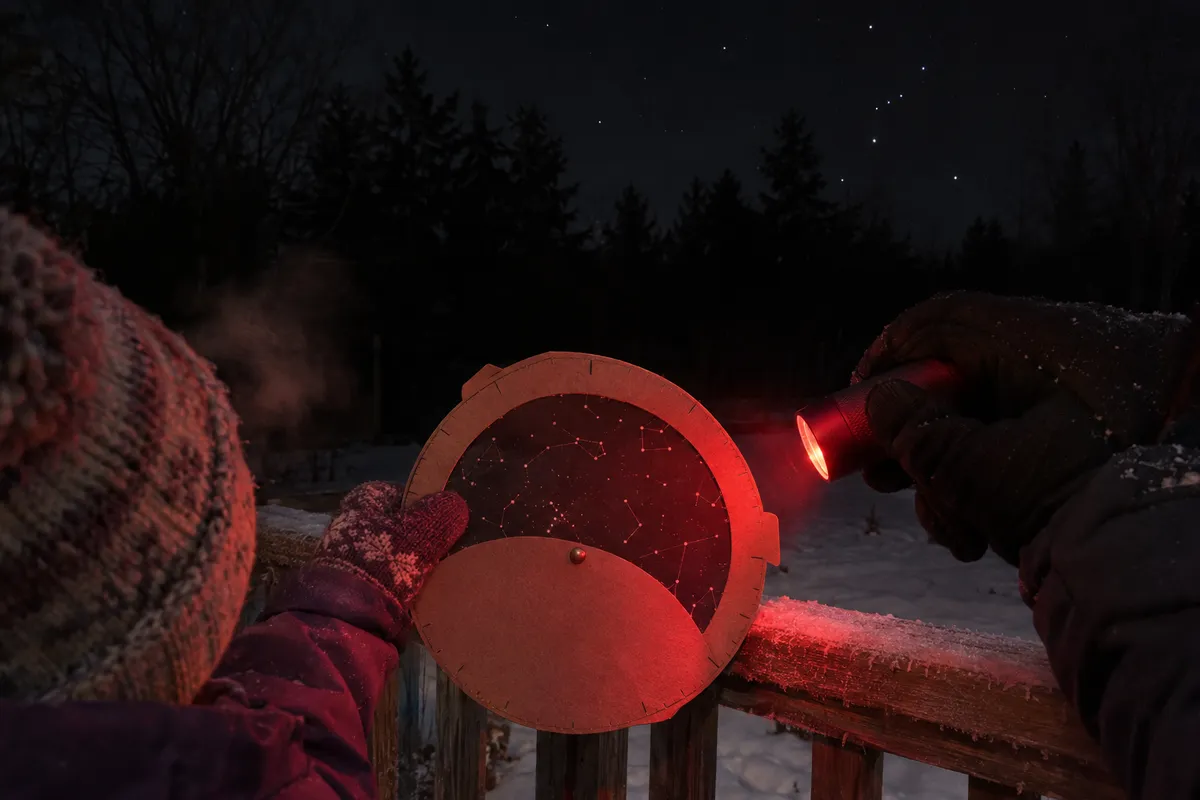
The red light rule: eyes need 20 to 30 minutes in the dark to adapt fully, and one flash of white light resets most of that. If you’re taking kids out to look at the sky, cover a flashlight with red cellophane or use a red flashlight, and keep phone screens dim.
Space gifts for ages 3 to 5
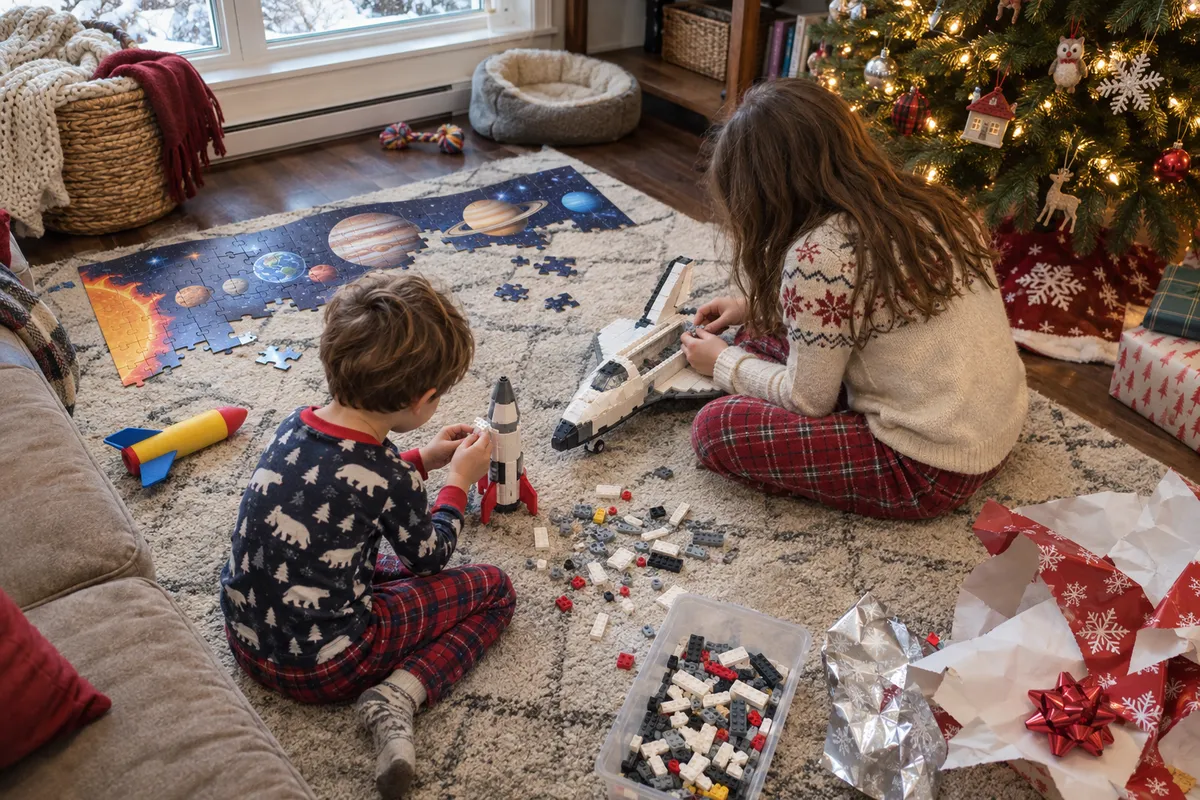
Preschoolers learn space by holding it: a rocket they can stack, planets they can put in order, a launch they cause by jumping. Keep pieces large and the rules simple.
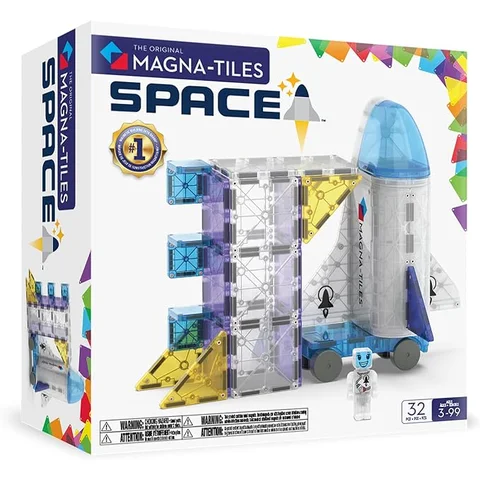
Best building gift for ages 3 to 5
1. MAGNA-TILES Space 32-Piece Set
Magnetic tiles are the building toy preschoolers can use without help, because the pieces click together from any side and don’t need fine finger pressure. The Space set adds a shuttle, a capsule with a window, a wheeled chassis for a rover and a space figure to the usual squares and triangles, so the first build is a rocket and not a box. The shuttle doubles as storage for the whole set.
It works with every other MAGNA-TILES set, so a kid who already has classic tiles can build a launch tower around the new rocket.
- 32 pieces, including shuttle, capsule, figure and chassis
- Ages 3 and up
- Compatible with MAGNA-TILES classic sets
Good: it gets played with long after the space phase ends. Not great: 32 pieces is a small set on its own; it shines as an add-on.
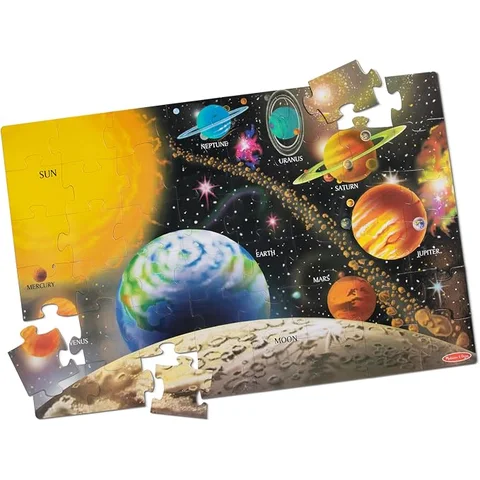
Best puzzle
2. Melissa & Doug Solar System Floor Puzzle
This 2 by 3 foot floor puzzle is the easiest way to teach a four-year-old the order of the planets: they build the solar system on the carpet, then lie on top of it and point. The 48 pieces are thick cardboard with a wipe-clean surface, sized for small hands. It is one of the most-reviewed kids’ space toys on Amazon.
Once it’s done, ask them which planet is biggest, which has rings and which one we live on. Our planet facts for kids page has the answers for the follow-up questions.
- 48 jumbo pieces, 2 x 3 feet finished
- Ages 3 to 6
Good: a group activity for siblings and cousins. Not great: the planets are not drawn to scale.
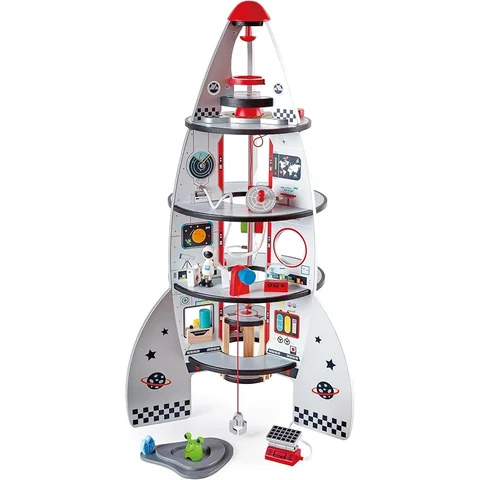
Best big-box gift for little kids
3. Hape Four Stage Rocket Ship
This wooden rocket stands almost two and a half feet tall and comes apart in four stages, each one a small play deck. Kids stack it, launch it, take it apart again and play out a mission at each level. It’s the kind of gift that sits by the tree on Christmas morning and is still in the playroom two years later.
- 20 pieces, wood with non-toxic finishes
- About 29 inches tall assembled
- Ages 3 and up
Good: sturdy, screen-free and shareable between siblings. Not great: it takes up floor space.
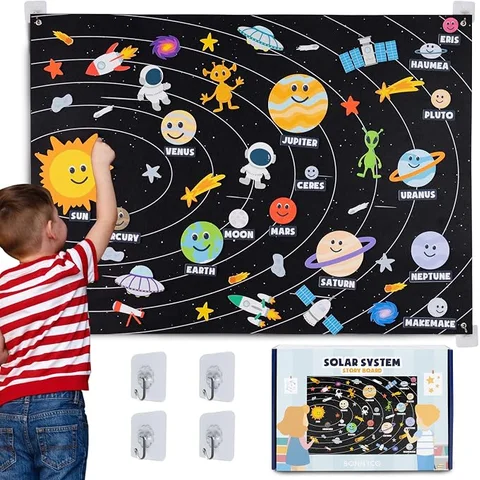
Best for learning the planets
4. BONNYCO Felt Solar System Board
A felt board that hangs on a bedroom wall, with 61 felt pieces: the Sun, Moon, eight planets, five dwarf planets including Pluto and Ceres, name labels, comets, rockets, astronauts and a telescope. Kids arrange and rearrange the solar system as often as they like, and the name labels help early readers match words to planets.
It’s quiet play, which makes it a good car-trip or bedtime option next to the louder gifts on this list.
- 61 felt pieces including 5 dwarf planets
- Wall hangers included
- Ages 3 and up
Good: includes the dwarf planets most toys leave out. Not great: felt pieces are small enough to get lost under beds.
Best outdoor gift for ages 3 to 5
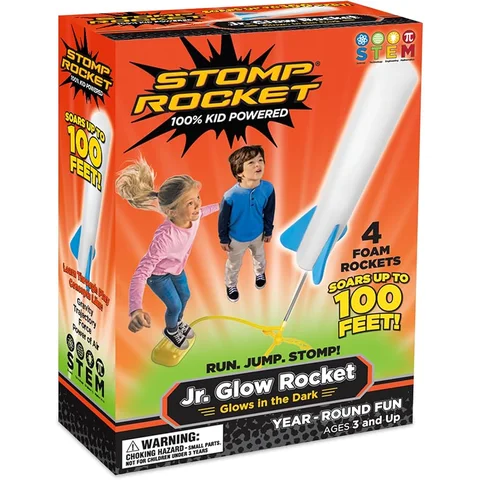
5. Stomp Rocket Jr. Glow
A kid jumps on the air pad and a foam rocket shoots up to 100 feet. There are no batteries, no engines and nothing to charge, and the junior version is sized and powered for preschoolers. The rockets glow in the dark after a few minutes under a light, so it works on early winter evenings too.
It’s also a first physics lesson: stomp harder and the rocket goes higher, tilt the launcher and it goes farther.
- 4 glow-in-the-dark rockets, launch stand and pad
- Launches up to 100 feet
- Ages 3 and up
Good: pure fun for a kid who can’t sit still. Not great: rockets end up on roofs and in trees; spare rockets are sold separately.
Best book for ages 3 to 6
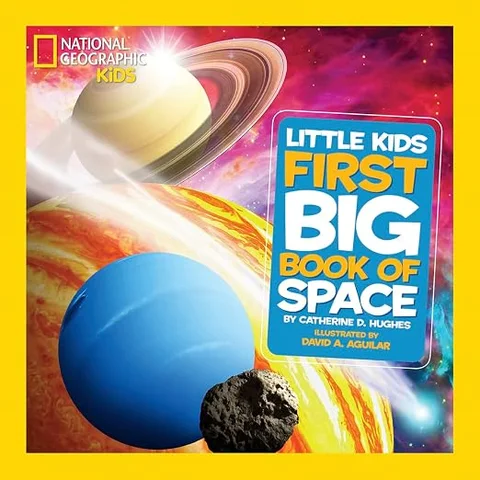
6. National Geographic Little Kids First Big Book of Space
Catherine D. Hughes’s book is the space book we recommend most often for preschoolers. Each page has one big photo or illustration and a few short sentences, written to be read aloud, plus simple questions that get kids talking. It covers the Sun, each planet, the Moon, stars and astronauts without talking down to them.
For more picks by reading level, see our best space books for kids by age.
- Hardcover
- Reading age 3 to 6
Good: real NASA photos and facts parents learn from too. Not great: kids past first grade outgrow it fast.
Best bedtime book
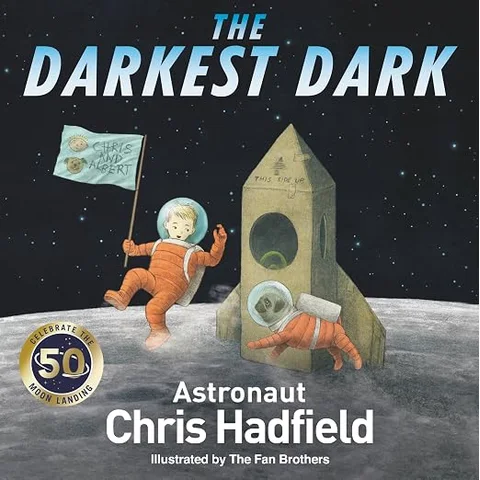
7. The Darkest Dark by Chris Hadfield
Canadian astronaut Chris Hadfield wrote this picture book about his own childhood: a boy who wants to be an astronaut but is afraid of the dark, until he watches the Apollo 11 Moon landing on a neighbor’s TV and sees that space is the darkest dark of all. It’s a good gift for a kid who loves rockets and still wants the hall light on.
- Hardcover picture book, illustrated by the Fan Brothers
- Reading age 4 to 8
Good: a real astronaut’s story, and it helps with bedtime fears. Not great: it’s a story, not a fact book; pair it with one.
Best for pretend play
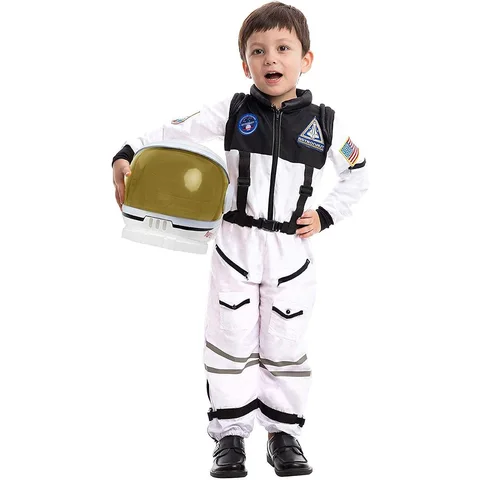
8. Spooktacular Creations Kids Astronaut Costume
A white zip-up jumpsuit with patches and a helmet with a tinted visor that flips up. Plenty of kids get it for Halloween and then wear it until spring. It turns the cardboard box from the other gifts into a space capsule.
If the costume already exists, the matching astronaut helmet on its own is a smaller gift.
- Jumpsuit and helmet with movable visor
- Toddler to kid sizes, ages 3 and up
Good: hours of make-believe. Not great: the helmet is warm and kids take it off after a while; check the size chart.
Space gifts for ages 6 to 8
From six, kids can follow building instructions, read short facts on their own and play games with real rules. This is the age when most kids pick a favorite planet and defend it.
Best first LEGO space set
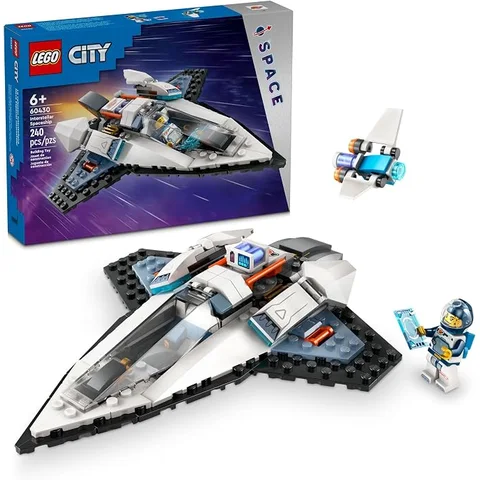
9. LEGO City Interstellar Spaceship
At 240 pieces this is a one-afternoon build for a six- or seven-year-old, with a spaceship whose main thrusters fold out, a drone bot that converts into a jetpack and an astronaut minifigure. It’s sized for play rather than display, so it survives being flown around the house.
The LEGO Builder app shows the steps in 3D, which helps kids who get lost in the paper instructions.
- 240 pieces, ages 6 and up
- Spaceship, drone bot and astronaut figure
Good: right size and difficulty for a first set. Not great: it’s science fiction, not a real NASA vehicle.
Best small LEGO set
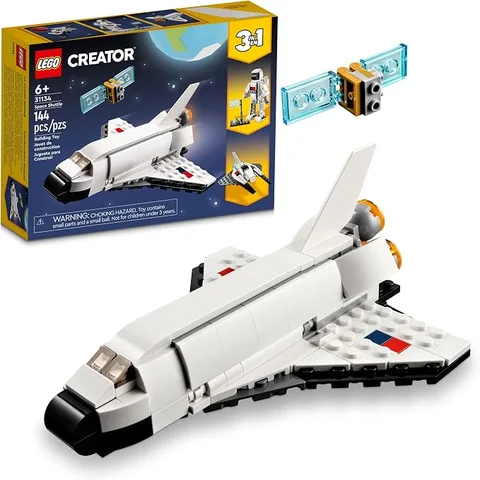
10. LEGO Creator 3-in-1 Space Shuttle
A small box with three builds: a space shuttle with an opening cargo bay and a satellite inside, a spaceship with moving wings, or a posable astronaut with a jetpack and a flag. At 144 pieces it fits in a stocking, and rebuilding it into the other two models stretches one small gift across the holidays. It’s one of the best-selling LEGO sets on Amazon right now.
- 144 pieces, ages 6 and up
- 3 models from one set of bricks
Good: three builds for one small gift. Not great: it’s small; a kid who builds a lot will finish all three in a day.
Best talking toy
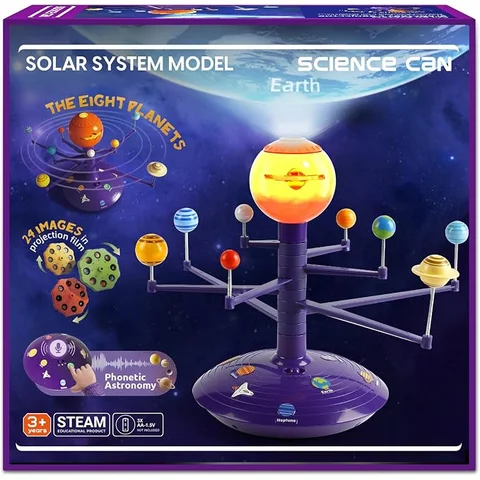
11. Science Can Talking Solar System
Kids build this solar system model themselves, then press a planet on the base to hear facts about it in English or Spanish. The base also projects the planets onto the ceiling, which makes it a nightlight at bedtime. It suits kids who are just starting to read and like hearing facts as much as reading them.
- Talking base with planet buttons, English and Spanish
- Ceiling projection mode
- Runs on batteries
Good: combines a build, facts and a nightlight. Not great: the projection is soft, not a real star field.
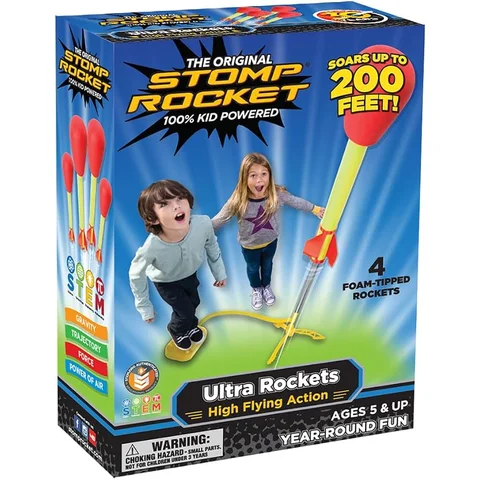
Best outdoor gift for ages 5 to 10
12. Stomp Rocket Ultra
The bigger version of the Stomp Rocket launches foam rockets up to 200 feet, about 20 stories, and the launcher tilts to change the angle. It has thousands of reviews and is consistently one of the best-selling outdoor toys on Amazon at Christmas. Take it to the park on Boxing Day and every kid in sight will want a turn.
- 4 rockets and an adjustable launcher
- Up to 200 feet, no batteries
- Ages 5 and up
Good: a real launch feeling with zero risk. Not great: it needs open space; a backyard with trees eats rockets.
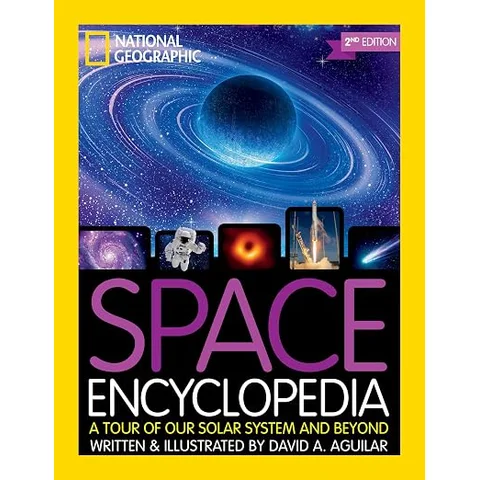
Best space book for ages 6 to 10
13. National Geographic Kids Space Encyclopedia
David A. Aguilar’s encyclopedia takes kids from the Sun out through the planets, moons, stars, galaxies and black holes, with large photos and short sections a second grader can read alone. The second edition is updated with recent missions. It’s the book a space kid carries around for months and quotes at dinner.
Our solar system facts for kids and Moon facts for kids pages make good companions.
- Hardcover, second edition
- Reading age 6 to 10
Good: deep enough to last several years. Not great: it’s heavy for small laps.
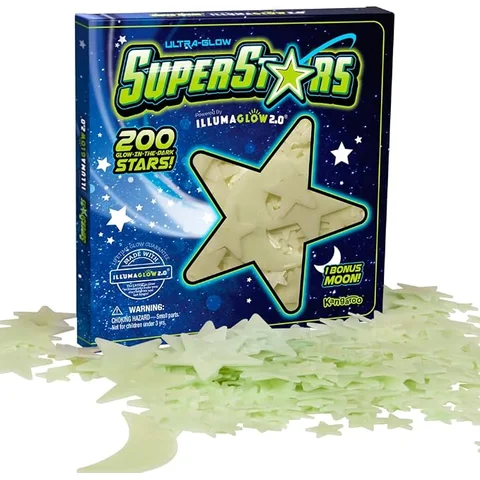
Best bedroom gift
14. Glow in the Dark Stars Ceiling Kit
Glow stars are the classic space-kid gift, and this set comes with installation putty and a constellation map. Instead of scattering them at random, use the map to put the Big Dipper or Orion on the ceiling, and the kid learns a real constellation before falling asleep.
Our Orion for kids and Ursa Major for kids pages have star patterns to copy.
- 200 stars with installation putty
- Constellation map included
Good: a bedtime routine and a constellation lesson in one. Not great: the glow fades within an hour of lights-out.
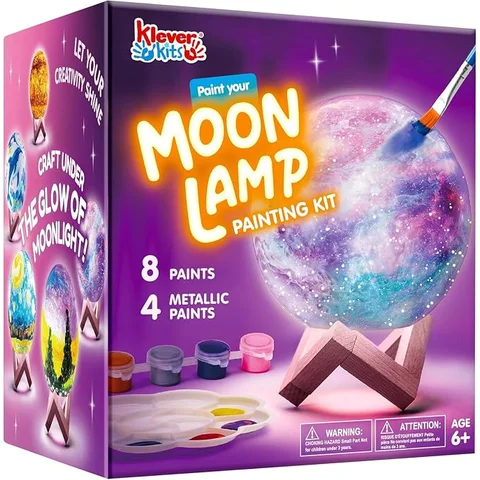
Best craft gift
15. Klever Kits Paint Your Own Moon Lamp
A plain 3D-printed Moon lamp with 12 paints and two brushes. Kids paint it however they like, real grey maria or rainbow stripes, and it becomes their own nightlight on a wooden stand. Show them a photo of the full Moon first and challenge them to paint the dark “seas” where they really are.
- Moon lamp, 12 paints, 2 brushes, wooden stand
- Batteries included, ages 6 to 12
Good: art and space in one gift. Not great: paint and carpets don’t mix; set up on a table.
Best family game
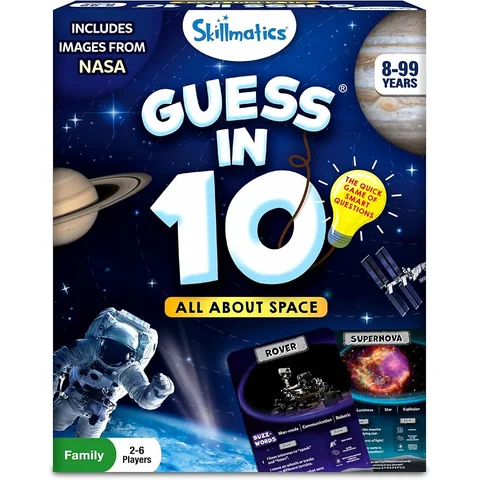
16. Skillmatics Guess in 10: NASA Space
Players ask up to ten yes-or-no questions to guess what’s on a card: Is it a planet? Does it make its own light? The cards use NASA images and cover planets, moons, missions and spacecraft. It plays in 20 minutes, works with mixed ages and teaches kids to think in categories without feeling like homework.
For longer family games, see our list of the best space board games.
- Card game for 2 or more players
- Ages 8 and up, younger kids can play on a team
Good: adults enjoy it too. Not great: kids who can’t read yet need a partner.
Space gifts for ages 9 to 12
This is the best age for a first real telescope. Kids can handle the equipment, stay up a little later and remember what they saw. It’s also the age for model rockets and complex LEGO Technic builds.
Best first telescope
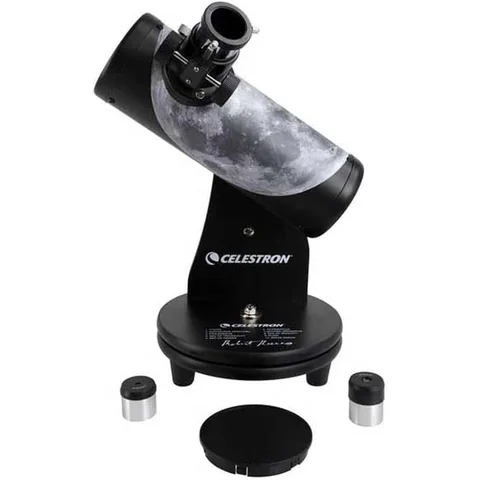
17. Celestron FirstScope Signature Moon
The FirstScope is a 76 mm reflector on a small tabletop base. A kid sets it on a picnic table or a sturdy box, points it at the Moon and looks. There are no tripod legs to wobble and no settings to get wrong. The 20 mm eyepiece shows the whole Moon with crisp craters along the shadow line, and the 4 mm eyepiece pushes in for a closer look. Jupiter’s four big moons and Saturn’s rings are visible on a steady night.
It weighs 4.3 pounds, so a ten-year-old can carry it outside alone, and that matters more than any spec. Our telescopes for 10 year olds guide compares it with six others.
- 76 mm reflector, tabletop Dobsonian base
- 20 mm and 4 mm eyepieces
- 4.3 pounds, 2-year US warranty
Good: nothing to assemble and nothing to break. Not great: it needs a table, and the 4 mm eyepiece gives a dim, shaky view; the 20 mm is the one kids will use.
Best telescope for ages 10 to 14
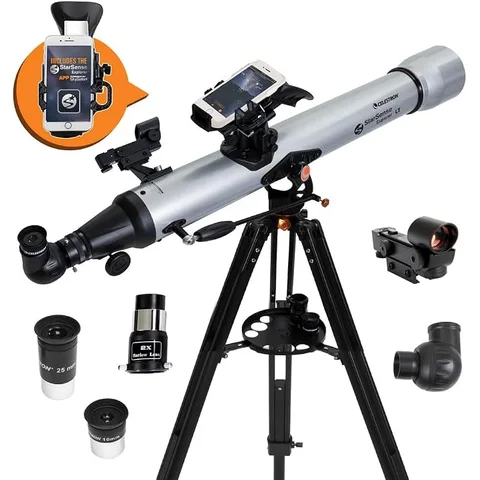
18. Celestron StarSense Explorer LT 80AZ
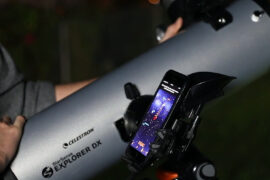
Most kids give up on a telescope because they can’t find anything with it. The StarSense Explorer docks a phone on the tube; the app recognizes the stars, works out where the scope is pointing and shows arrows to the target. When the bullseye turns green, Saturn is in the eyepiece. The app also lists the best targets for that night, which gives a kid a plan.
The 80 mm refractor stands on a full-height tripod, needs no mirror alignment and gives sharp views of the Moon and planets. It’s the telescope I’d pick for a tween who has outgrown toys and wants to find things on their own.
- 80 mm refractor on a manual altazimuth tripod
- 25 mm and 10 mm eyepieces
- StarSense phone app, 9.2 pounds
Good: kids find targets without an adult. Not great: it needs a parent’s phone, and cold drains the battery; keep a power bank in a pocket.
Best binoculars for kids
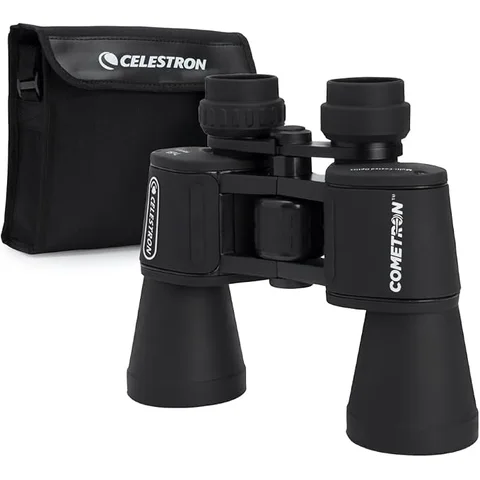
19. Celestron Cometron 7×50 Binoculars
Binoculars are the easiest way into the night sky: no setup, both eyes open and a wide view that makes things easy to find. At 7x the Cometron is steady enough to hand-hold, and the 50 mm lenses show the Moon’s maria, the Pleiades as a sparkling cluster and the Orion Nebula as a faint glow. They also go birding, to hockey games and on car trips.
- 7x magnification, 50 mm lenses, multi-coated optics
- About 1.7 pounds with neck strap
Good: useful day and night for years. Not great: sized for adult faces; younger kids may need the eyecups adjusted.
Best star chart
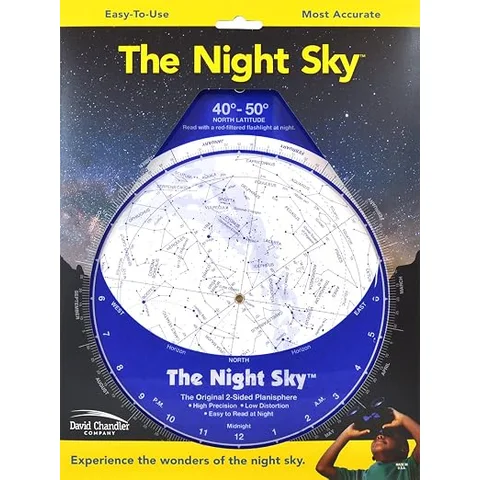
20. The Night Sky Planisphere (40 to 50 degrees north)
A planisphere is a round star chart that turns. Set the date against the time and it shows which constellations are up right now. I got a cardboard one at nine and it got me outside more than any toy did. This version from David Chandler is double-sided, so the horizon isn’t squashed, and it’s printed for 40 to 50 degrees north: most of the northern US and southern Canada. Families farther south should pick the 30 to 40 degree version.
Give it with a red flashlight such as the Celestron red LED flashlight so it can be read outside.
- Large size, about 8 x 10 inches
- Plastic, works for any date and time
Good: teaches the real sky, no battery. Not great: pick the right latitude band, or the horizon will be off.
Best solar system model
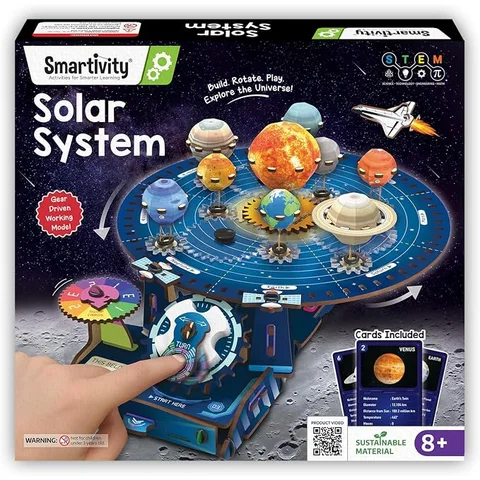
21. Smartivity Gear-Driven Solar System Kit
Kids build this solar system model themselves, then turn a crank and a set of gears moves the eight planets around the Sun. Building the gear train is the point: it shows why inner planets lap the outer ones. Nine planet fact cards come in the box.
For a glow-in-the-dark model to paint and hang instead, the 4M Solar System Planetarium and the National Geographic glow solar system model are both good.
- Hand-crank gear drive, 8 planets
- Ages 8 to 14
Good: engineering and astronomy in one build. Not great: planet sizes and distances are not to scale; no model this size can be.
Best rocket kit
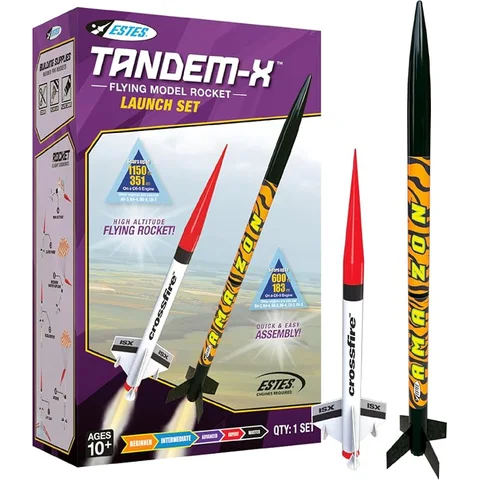
22. Estes Tandem-X Launch Set
This is a real model rocket kit: two rockets (the 30-inch Amazon and the smaller Crossfire ISX), parachutes, a launch pad and an electric launch controller. Kids build the rockets, a parent buys the engines, and the Amazon can climb about 600 feet on a C6-5 engine before the parachute opens. For a kid who loves rockets, the countdown and the first launch are better than anything else on this list.
Engines, igniters, recovery wadding and four AA batteries are sold separately. Launch in a big open field, away from trees and power lines, and follow the National Association of Rocketry’s model rocket safety code. Kids who want to know how real rockets work can read about the types of rockets and check our rocket launch schedule for the next real launch.
- 2 rockets, launch pad and controller
- Ages 10 and up, adult supervision
Good: the most exciting gift here for an older kid. Not great: it needs engines and a winter-friendly field; many families save the first launch for spring.
Best LEGO for ages 10 and up
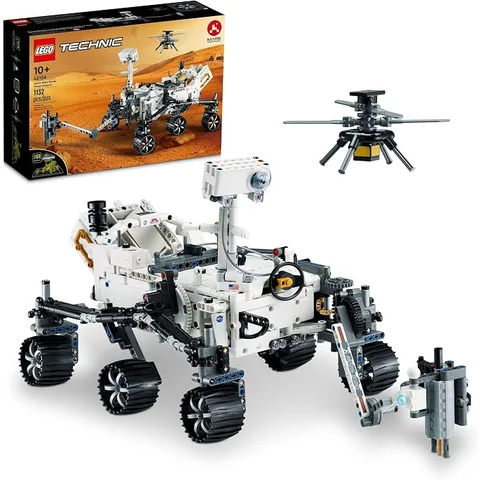
23. LEGO Technic NASA Mars Rover Perseverance
A 1,132-piece model of the rover that has been exploring Jezero Crater on Mars since 2021, with working rocker-bogie suspension, 360-degree steering, a movable robotic arm and a small Ingenuity helicopter. The suspension works the same way as the real rover’s, which kids can test by driving it over books. An AR app shows the mission on a phone.
After the build, our interactive 3D Mars map shows where Perseverance landed.
- 1,132 pieces, ages 10 and up
- Rocker-bogie suspension and Ingenuity helicopter
Good: a real NASA vehicle with real mechanics. Not great: a long build; plan for several sessions.
Best LEGO for display
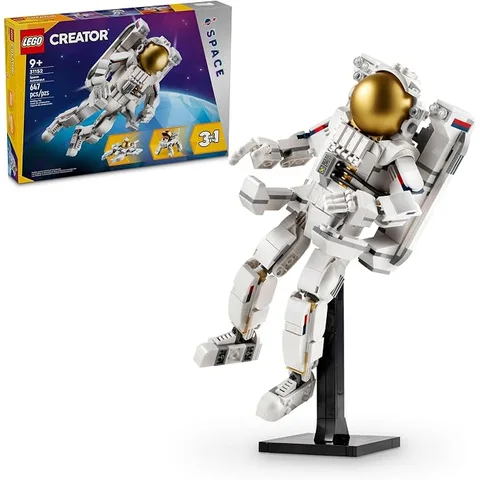
24. LEGO Creator 3-in-1 Space Astronaut
A big posable astronaut with movable arms, legs and fingers. The same 647 bricks rebuild into a space dog or a jet. All three come with stands, so the model ends up on a bedroom shelf rather than in a bin.
- 647 pieces, ages 9 and up
- Astronaut, space dog or space jet
Good: a satisfying build that looks good on display. Not great: once it’s on a shelf, kids rarely take it apart to build the other two.
Best reference book for ages 9 to 12
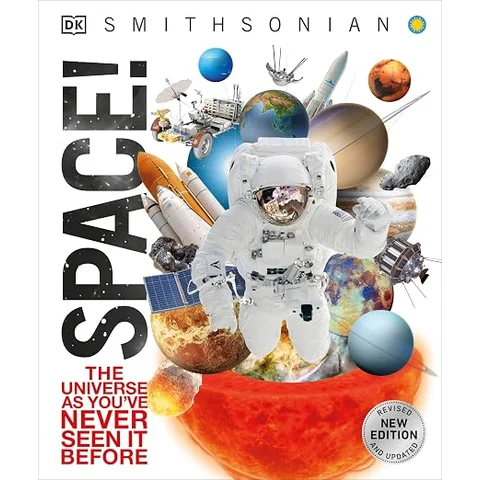
25. DK Knowledge Encyclopedia Space!
DK’s encyclopedia is built around 3D renderings: cutaways of the Sun, cross-sections of planets, exploded views of spacecraft. It suits an older kid who wants to know how things work inside, not just what they look like. It goes further than the National Geographic encyclopedia on stars, galaxies and the history of spaceflight.
- Hardcover, large format
- Reading age about 8 to 12
Good: the illustrations explain things photos can’t. Not great: the text is dense for younger readers.
Space gifts for teens
Teens want gifts that don’t look like toys. Display builds, a real planetarium and games they’d play with friends work best. For gifts closer to adult hobby gear, see our Christmas gifts for astronomy lovers.
Best LEGO for teens
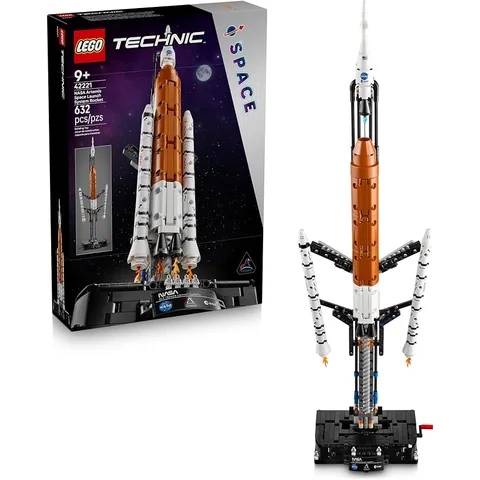
26. LEGO Technic NASA Artemis Space Launch System
NASA’s Artemis rocket is the one sending astronauts back to the Moon, and this 632-piece model was designed with NASA and ESA. Turn the hand crank and the rocket separates in three stages: solid boosters, core stage, then the upper stage with the Orion capsule. It’s one of the best-selling LEGO sets on Amazon this season.
- 632 pieces, ages 9 and up
- Crank-driven 3-stage separation
Good: a real, current NASA vehicle with a working mechanism. Not great: it’s a display model; the separation trick is the only play feature.
Best planetarium projector
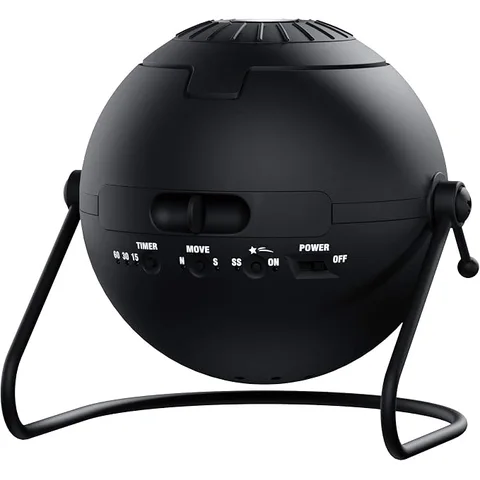
27. Sega Toys Homestar Flux
Most “galaxy projectors” throw colored blobs on the ceiling. The Homestar Flux projects 60,000 sharp stars through multi-element glass lenses from a disc of the real night sky, so a teen can trace actual constellations from bed. More than 30 extra discs are sold separately. It’s the projector serious planetarium fans buy.
Our star projector guide compares it with kid-friendly nightlight projectors such as the rotating star nightlight for younger children.
- 60,000-star projection, glass lenses
- 2 discs included, USB powered
Good: real star patterns, not decoration. Not great: it needs a fully dark room, and it’s sold by a third-party seller on Amazon.
Best game for teens
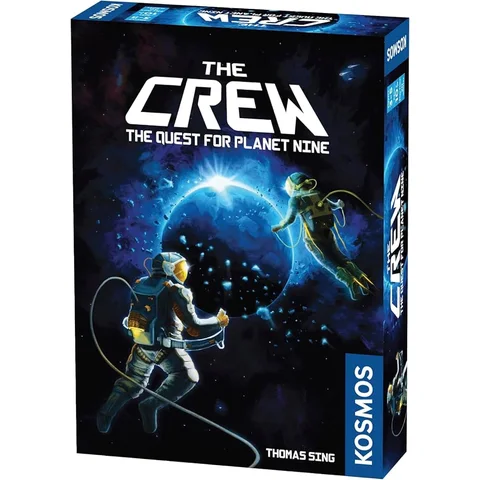
28. The Crew: The Quest for Planet Nine
A cooperative card game where players are astronauts searching for a ninth planet. It plays like a classic trick-taking game, but everyone wins or loses together, and the 50 missions get harder as the crew goes. Each mission takes 5 to 10 minutes, so it’s easy to say “one more.”
- 2 to 5 players, ages 10 and up
- 50 missions
Good: a real game teens and adults enjoy together. Not great: the space theme is light; it’s a card game first.
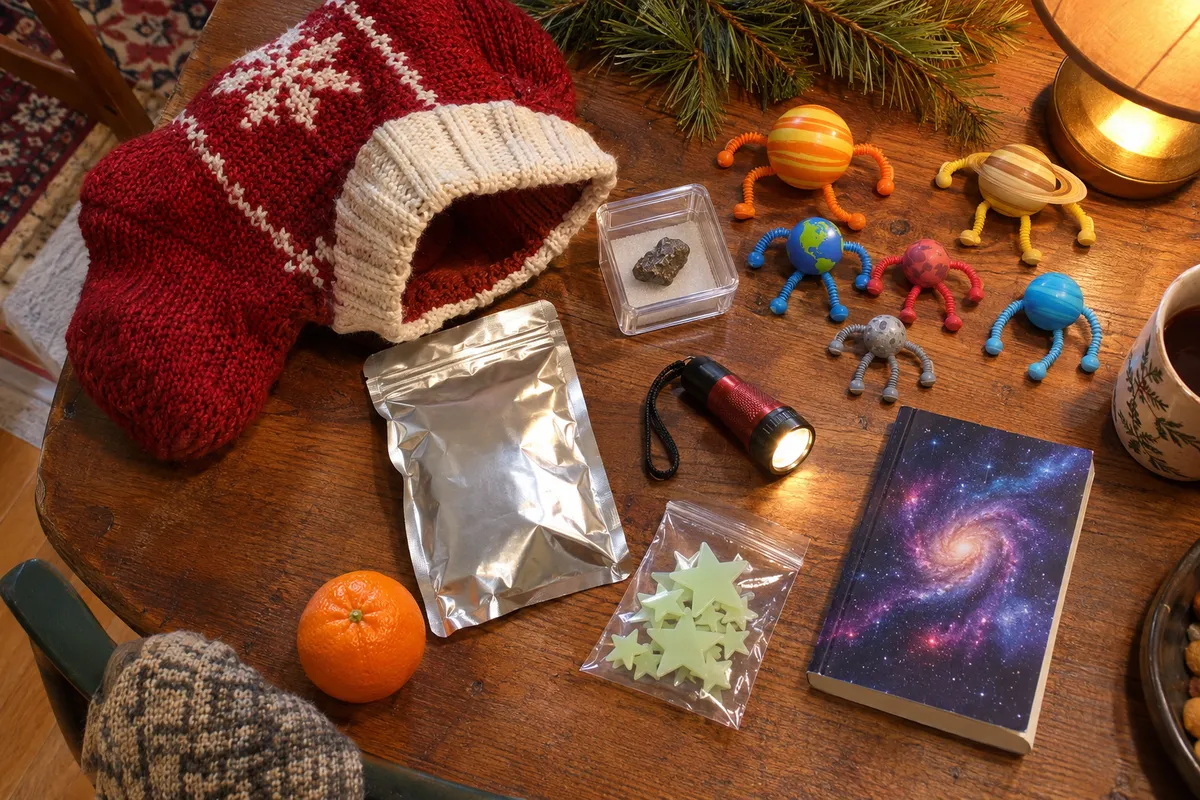
Space stocking stuffers for kids
Small gifts that fit in a stocking and still teach something.
Best stocking stuffer
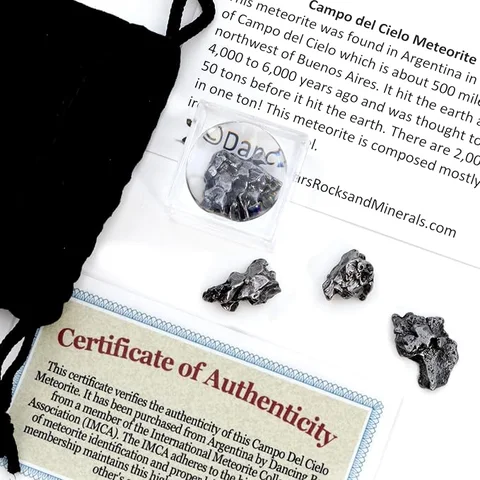
29. Real Meteorite Set (Campo del Cielo)
Three small pieces of a real iron meteorite that fell in Argentina about 4,000 to 6,000 years ago, in a magnifying box with an information card. Each piece is about half an inch. They’re mostly iron and nickel, heavier than they look, and a magnet sticks to them, which is the first thing every kid tests. Holding a rock from space is a better gift than most toys.
- 3 meteorite fragments, magnifier box, info card
- Ages 4 and up
Good: a real object from space. Not great: the pieces are small; kids who expect a fist-sized rock may be surprised.
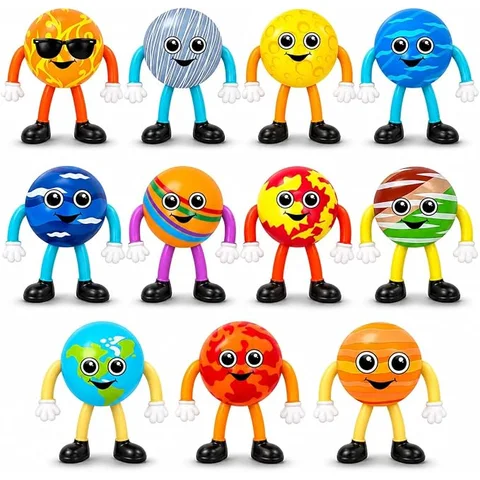
30. Bendable Planets (11-pack)
Eleven rubbery planet figures with faces: the Sun, Moon, eight planets and Pluto. Little kids line them up in order, bend them and take them everywhere. They also work as party favors if there’s a space birthday coming.
- 11 figures, ages 3 and up
Good: fills a stocking and teaches planet order. Not great: sizes aren’t to scale.
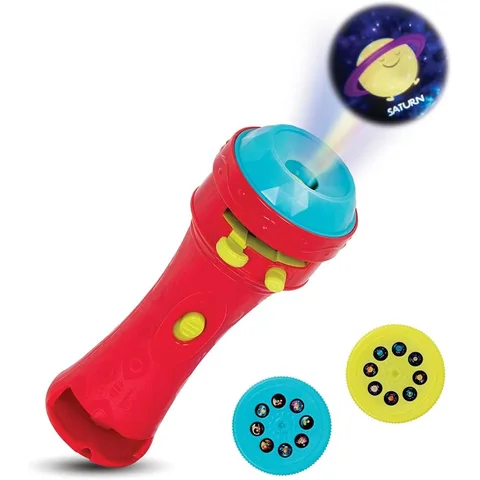
31. B. toys Light Me To The Moon Flashlight
A chunky flashlight with two image reels that project planets and friendly aliens on the wall. It’s a bedtime toy for ages 4 and up and a good way to make the dark less scary. Batteries are included.
- 2 image reels, 2 AAA batteries included
Good: easy for small hands. Not great: it’s a white light, so leave it inside on stargazing nights.
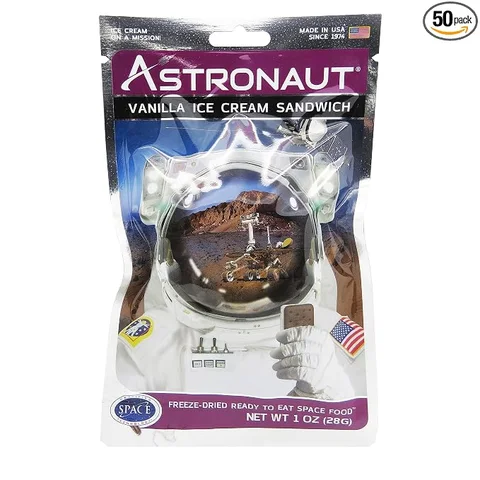
32. Astronaut Ice Cream
Freeze-dried ice cream sandwiches that crunch and never melt. Kids love the idea of eating like an astronaut. In reality, freeze-dried ice cream was developed for NASA but almost never flown, and astronauts on the International Space Station eat ordinary ice cream when a freezer is on board. That fact is half the gift.
- 1 vanilla sandwich, no refrigeration
- Also sold in a 6-pack
Good: fun to share on Christmas morning. Not great: chalky; most kids eat one for the novelty.
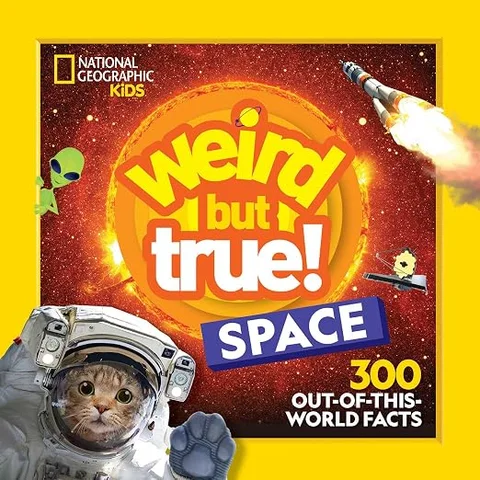
33. Weird But True! Space
Three hundred odd, short facts about space, one per page with bold graphics. It’s the book kids read in the car on the way to Grandma’s and then quiz everyone with. A small format that fits in a stocking.
- Paperback, reading age 8 to 12
Good: perfect for reluctant readers. Not great: facts without much explanation; pair it with an encyclopedia.
What to look at on Christmas night
A space gift is better when it ends with a look at the real sky. Here’s what December 2026 offers from North America.
- The full Moon on Christmas Eve. The Moon is full on December 24, 2026. It’s bright and easy for any kid to find, though a full Moon looks flat in a telescope. For craters, look a week earlier, around first quarter on December 17, when shadows along the edge make the mountains stand out. Our Moon phase today page shows the phase for any night.
- Saturn in the early evening. Saturn is in the southwest after sunset all through December. Even a small telescope like the FirstScope shows the rings, though they are tilted only a few degrees toward us this year and look like a thin bar through the planet.
- Jupiter later in the evening. Jupiter rises in the east during the evening and is the brightest point in that part of the sky. Binoculars show its four largest moons as tiny dots in a line.
- Orion. By mid-evening Orion is up in the southeast. The three belt stars are the easiest pattern in the sky for kids, and the fuzzy patch below them is the Orion Nebula, where new stars are forming.
- The Geminid meteor shower. The Geminids peak on the night of December 13 to 14, 2026, with a Moon only a few days past new, so the sky will be dark. It’s the best meteor shower of the year for kids because it’s active in the evening, not just before dawn. Our meteor shower tonight page tracks every shower.
- The International Space Station. The ISS looks like a bright, steady star crossing the sky in a few minutes. NASA’s Spot the Station lists passes for your town, and kids love waving at the astronauts.
For more ideas to keep the interest going after the holidays, read how to get kids interested in astronomy, try our space quizzes and print a free space quiz for kids for the long winter break.
Space gifts to skip
- Toy telescopes sold by magnification. A box that advertises “300x” or “500x” is a warning sign. Kids’ telescopes with tiny lenses and plastic tripods shake so much that the Moon won’t stay in view, and a kid who can’t see anything decides astronomy is boring. Look for at least 70 mm of aperture and a sturdy mount, like the telescopes above.
- Green laser pointers. Astronomers use them to point out stars, but powerful lasers can damage eyes and are dangerous near aircraft. They are not a kids’ gift.
- Solar filters for children to use alone. Looking at the Sun through a telescope or binoculars without a proper front filter causes instant eye damage. Leave Sun viewing to an adult with certified gear.
- “Name a star” certificates. The International Astronomical Union doesn’t recognize paid star names, and the name appears nowhere outside the seller’s database. A planisphere teaches a kid the real names.
For more ideas, see our space themed gifts for every age, space movies for kids for a holiday movie night and our 3D models of the planets and Moon for kids who want to explore on a screen.
FAQ
What is a good Christmas gift for a kid who loves space?
For ages 3 to 5, the MAGNA-TILES Space set, a Stomp Rocket or a solar system floor puzzle. For ages 6 to 8, a LEGO City or Creator space set and the National Geographic Kids Space Encyclopedia. For ages 9 to 12, a real first telescope such as the Celestron FirstScope with a planisphere, or an Estes model rocket kit. For teens, the LEGO Technic NASA Artemis rocket or a Sega Homestar planetarium.
What age is right for a first telescope?
Around 8 is the youngest age most kids can use a telescope well, and 9 to 12 is the best age for a first one. Pick a sturdy model with at least 70 mm of aperture, like the Celestron FirstScope or StarSense Explorer LT 80AZ. Younger kids get more from binoculars, a projector or hands-on space toys.
Are kids’ telescopes worth it?
Real beginner telescopes are worth it; toy telescopes usually are not. Avoid any telescope sold by its magnification number, with a small lens and a plastic tripod. A 76 mm tabletop reflector or an 80 mm refractor on a solid tripod shows the Moon’s craters, Jupiter’s moons and Saturn’s rings.
What LEGO space sets are good for kids?
For ages 6 to 8, the LEGO City Interstellar Spaceship and the Creator 3-in-1 Space Shuttle. For ages 9 and up, the Creator 3-in-1 Space Astronaut and the Technic NASA Artemis Space Launch System. For ages 10 and up, the Technic NASA Mars Rover Perseverance, a 1,132-piece model with working suspension.
What are good space stocking stuffers for kids?
A real meteorite fragment, bendable planet figures, glow-in-the-dark ceiling stars, astronaut ice cream, a space fact book such as Weird But True! Space and a small LEGO Creator space set all fit in a stocking.
What can kids see in the sky on Christmas night 2026?
The Moon is full on December 24, 2026. Saturn is in the southwest after sunset, Jupiter rises in the east during the evening, and Orion is up by mid-evening. The Geminid meteor shower peaks on December 13 to 14, and NASA’s Spot the Station site lists when the International Space Station passes over.
Is a model rocket safe for kids?
Model rocket kits such as the Estes Tandem-X are rated for ages 10 and up with adult supervision. Launch only in a large open field away from trees, buildings and power lines, use the electric launch controller, and follow the National Association of Rocketry’s model rocket safety code. Air-powered rockets such as the Stomp Rocket are safe for ages 3 and up.
Can you really buy a piece of a meteorite?
Yes. Campo del Cielo meteorites from Argentina are iron meteorites that fell thousands of years ago, and tons of fragments have been recovered, so small pieces are common and legal to sell. They contain iron and nickel, and a magnet sticks to them.
Sources
- NASA Science, Moon phases.
- NASA, Spot the Station.
- NASA Science, Mars 2020 Perseverance rover.
- National Association of Rocketry, Model rocket safety code.
- American Meteor Society, Meteor shower calendar.
- Smithsonian National Air and Space Museum, We all scream, even in space, for ice cream.
- Meteoritical Society, Meteoritical Bulletin: Campo del Cielo.
- International Astronomical Union, Frequently asked questions (buying star names).
- Product details from each Amazon listing, checked November 13, 2026.