Little Astronomy earns a commission from qualifying Amazon purchases made through links on this page, at no extra cost to you.
Quick answer: the best astrophysics book for beginners and non-scientists is Astrophysics for People in a Hurry by Neil deGrasse Tyson. It is about 200 pages in twelve short chapters with no math, and it covers the Big Bang, dark matter, dark energy and exoplanets. Read it first, then choose a second book by topic: A Brief History of Black Holes by Becky Smethurst for black holes, The End of Everything by Katie Mack for the Big Bang and the fate of the universe, or Welcome to the Universe if you want a full course in plain words.
Every public stargazing night our club runs in Ontario ends the same way. Someone steps back from the eyepiece after seeing Saturn’s rings and asks what they should read to understand what they just saw. Then they add, a little apologetically, that they haven’t done math since high school. That person is the reader this guide was written for. You don’t need equations to understand how stars made the calcium in your bones or why astronomers are sure a black hole sits at the center of the Milky Way. You need the right first book and a good second one.
Below are 32 astrophysics books for non-scientists, sorted by what you are curious about, with a math label on every pick. If you would rather take the math route, from algebra up to university textbooks, our guide to the best astronomy books for self study covers that path.
Quick picks
| Best for | Book | Math |
|---|---|---|
| Best first book | Astrophysics for People in a Hurry (Tyson) | No math |
| Best on black holes | A Brief History of Black Holes (Smethurst) | No math |
| Best on the Big Bang and the end of the universe | The End of Everything (Mack) | No math |
| Best illustrated | Universe: The Definitive Visual Guide (DK) | No math |
| Best by ear (audiobook) | Cosmos (Sagan) | No math |
| Best step toward the math | The Biggest Ideas in the Universe (Carroll) | Light algebra |
How we picked these books
We read the 13 book lists that rank on Bing for “astrophysics books for beginners” and “astrophysics books for non scientists”. Most mix popular science with university textbooks that need calculus. Only one gives the math level of each book, and none says which books work as audiobooks. Several are copies of the same five-book template, padded with self-published titles.
Then we tallied 355 Reddit threads where people asked for astrophysics, cosmology or black hole books as laypeople, in communities such as r/askastronomy, r/astrophysics, r/cosmology, r/Physics and r/booksuggestions. We counted how many threads name each book and read the complaints. A Brief History of Time is named in 103 threads, Astrophysics for People in a Hurry in 97 and Sagan’s Cosmos in 95. Katie Mack’s The End of Everything appears in 35, and 26 of those are from 2023 or later, the highest share of recent threads for any title.
Every pick on this page has a math label, so you know before you buy whether you will meet an equation. Every link goes to an edition sold by Amazon itself, checked in November 2026, not a third-party reseller. Several famous editions, including the illustrated A Brief History of Time, are only available from resellers right now, so we point to the closest edition you can get.
A 3-step reading ladder
You don’t need to read 32 books. Most readers need three, in this order.
- Step 1: Read one short overview. Astrophysics for People in a Hurry is the default. If you want something even shorter, try Becky Smethurst’s Space at the Speed of Light at 144 pages. If you want the most current overview, read Jo Dunkley’s Our Universe.
- Step 2: Pick a topic shelf. Notice which chapter of your first book you reread. If it was black holes, go to the black holes shelf. If it was the Big Bang or dark energy, go to the Big Bang shelf. If you want photos, go to the illustrated shelf.
- Step 3: Step up. Welcome to the Universe is the longest book here that still avoids algebra, and it is built from a university course. After that, the step toward the math shelf adds a few equations. When you want problem sets and textbooks, switch to our astronomy books for self study reading order.
Start here: short first books
These four books cover the whole universe in under 320 pages each, with no math. Pick one. Reading two of them back to back repeats a lot of material.
Best first book
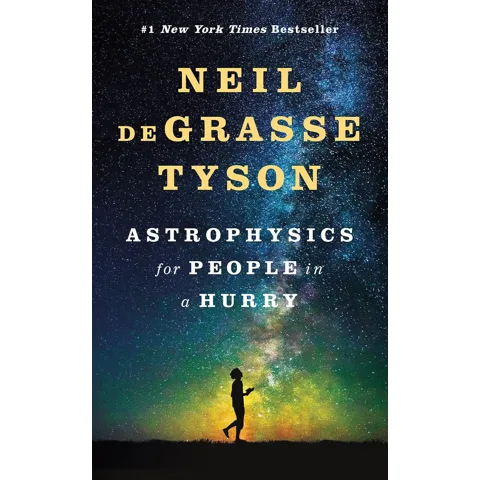
1. Astrophysics for People in a Hurry by Neil deGrasse Tyson
- Math: No math
- Hardcover, 224 pages (2017)
Tyson, director of the Hayden Planetarium in New York, wrote twelve chapters that each fit into a commute: the Big Bang, how the elements formed, dark matter, dark energy and why planets are round. It is the book Reddit names most often for a first read (97 threads), and one reader summed it up as giving “sufficient context and vocabulary to go down the rabbit hole.” Tyson reads the audiobook himself.
Keep in mind: it is a primer. It tells you what astronomers found more than how they found it, so plan on a second book.
Shortest overview
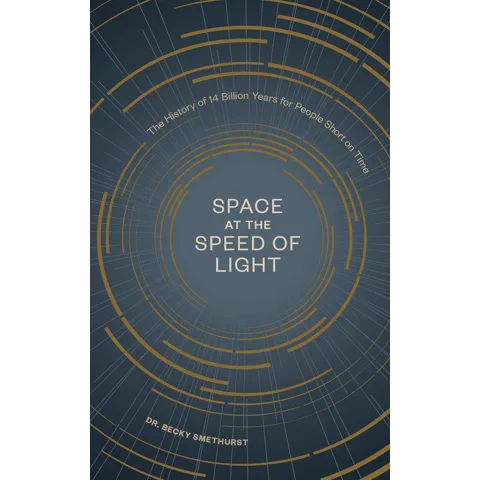
2. Space at the Speed of Light by Becky Smethurst
- Math: No math
- Hardcover, 144 pages (2020)
Smethurst is an astrophysicist at the University of Oxford who explains new research on her YouTube channel, Dr. Becky. This small book runs through 14 billion years of cosmic history in ten short chapters. It suits readers who want the big picture in two evenings.
Keep in mind: each topic gets only a few pages. Her black hole book, card 5, goes much deeper.
Most current overview
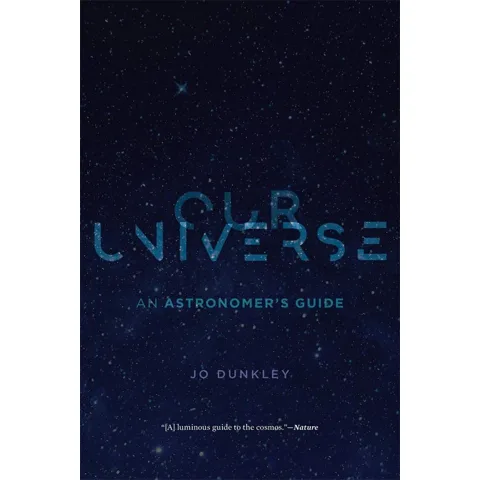
3. Our Universe: An Astronomer’s Guide by Jo Dunkley
- Math: No math
- Paperback, 312 pages (2020)
Dunkley is a cosmologist at Princeton. Her book travels outward from the Solar System to the Milky Way, other galaxies and the edge of the observable universe, and it explains how each distance and age was measured. It names the people behind the discoveries, including women such as Henrietta Leavitt and Vera Rubin whom older books leave out.
Keep in mind: Reddit barely mentions it, though UK magazine BBC Sky at Night recommends it. It moves faster than Tyson.
Best pocket-sized course
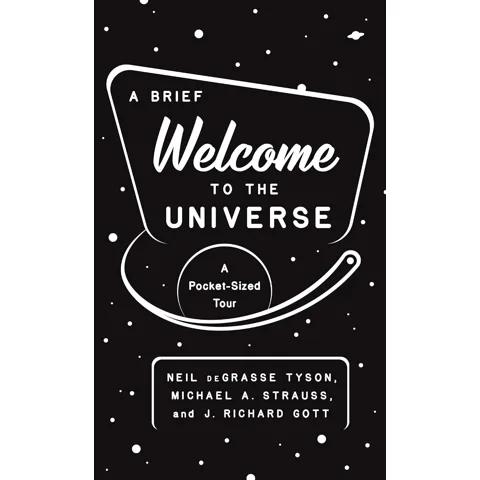
4. A Brief Welcome to the Universe by Neil deGrasse Tyson, Michael Strauss and J. Richard Gott
- Math: No math
- Paperback, 248 pages (2021)
This is the short version of Welcome to the Universe, card 19, which grew out of a Princeton course for students who were not science majors. It keeps the course structure (stars, galaxies, black holes, the expanding universe, the search for life) and drops most of the numbers. Choose it over Tyson’s Hurry if you like a book that builds one idea on the next.
Keep in mind: if you already know you will want more, skip it and go straight to the full 472-page edition.
Black holes
Black holes are the topic Reddit readers ask about most by name, and the newest books are the best place to start. Since 2015 gravitational wave detectors have recorded more than a hundred black hole mergers, and since 2019 astronomers have photographed two black holes. If you want a short primer first, read our explainer on why black holes exist.
Best on black holes
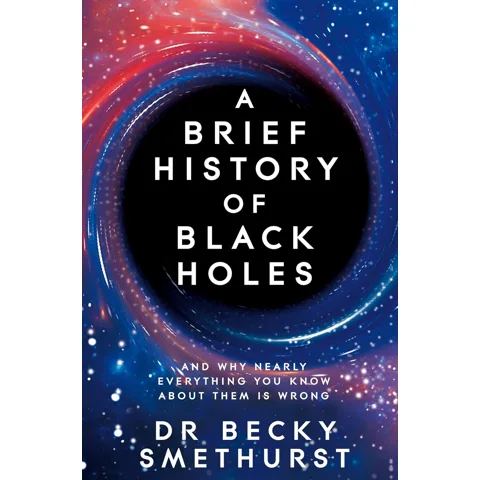
5. A Brief History of Black Holes by Becky Smethurst
- Math: No math
- Paperback, 288 pages (2023)
Smethurst studies how supermassive black holes grow, and her subtitle, “and why nearly everything you know about them is wrong,” sets the tone. She covers how black holes form, why they don’t suck everything in and how astronomers weigh them. In an r/Physics thread where physicists listed their favorite popular books, the comment recommending it drew 100 votes, and 10 of the 16 threads that name it are from 2023 or later.
Keep in mind: it stays on black holes. Read a general overview first if words like “galaxy cluster” are new to you.
Best for the big ideas behind black holes
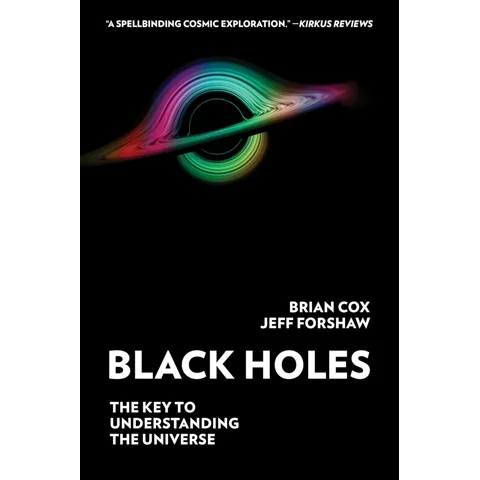
6. Black Holes: The Key to Understanding the Universe by Brian Cox and Jeff Forshaw
- Math: A little math
- Paperback, 288 pages (2024)
Cox and Forshaw, both physicists at the University of Manchester, use black holes to explain spacetime, Hawking radiation and the idea that the universe might work like a hologram. It was the first answer in a 2025 r/astrophysics thread asking for black hole books. Readers who liked Cox’s BBC series will recognize the voice.
Keep in mind: the second half is the hardest reading on this shelf. It leans on spacetime diagrams and a few scaling arguments, though you never have to solve anything.
Best short black hole book
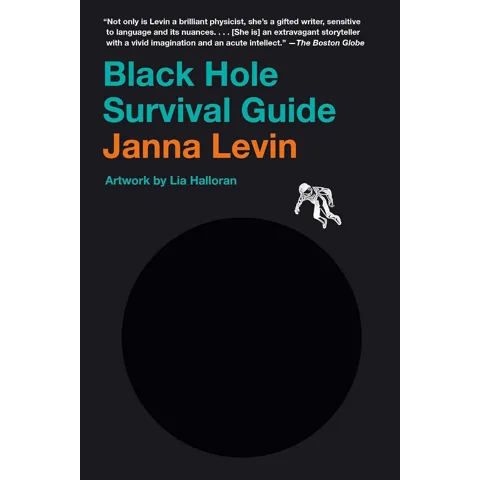
7. Black Hole Survival Guide by Janna Levin
- Math: No math
- Paperback, 160 pages (2022)
Levin, a physicist at Barnard College, Columbia University, walks you toward a black hole and explains what you would see and feel at each stage. The book is pocket-sized, with paintings by the artist Lia Halloran. Read it in an afternoon, before or after one of the longer books here.
Keep in mind: the writing is lyrical and gives you the feel more than the full explanation. Pair it with Smethurst or Cox and Forshaw.
Best long read on black holes
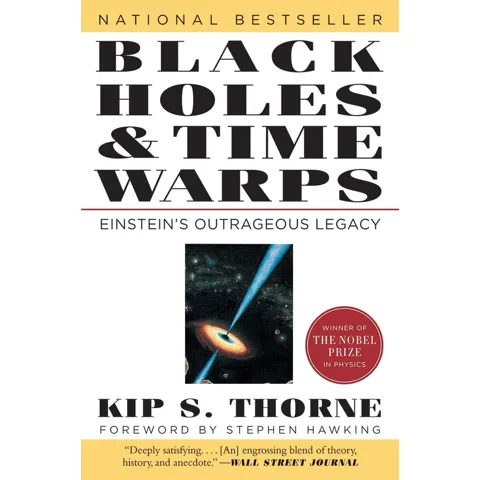
8. Black Holes and Time Warps: Einstein’s Outrageous Legacy by Kip Thorne
- Math: No math
- Paperback, 624 pages (1994)
Thorne won the 2017 Nobel Prize in Physics for the LIGO detection of gravitational waves, and this is his history of how physicists came to accept black holes, from Einstein to the early 1990s. Physicists on Reddit rate it above Hawking for explanation: “That book is three times longer, and it is BETTER as a result” (22 threads). It is the book for readers who enjoy the stories of the people as much as the science.
Keep in mind: it is long and dense, and it stops before the black hole images and gravitational wave detections. One reader advised starting “with something less dense.”
Best on the first black hole photo
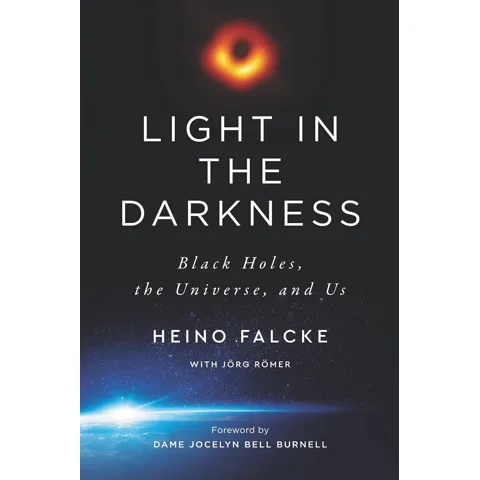
9. Light in the Darkness by Heino Falcke
- Math: No math
- Paperback, 368 pages (2022)
Falcke, an astrophysicist at Radboud University in the Netherlands, proposed in the late 1990s that a black hole’s shadow could be photographed. In 2019 the Event Horizon Telescope did it, and this is his first-hand account of how a planet-sized network of radio dishes made the image of the black hole in galaxy M87.
Keep in mind: the opening chapters are a history of astronomy before the black hole story starts, and the closing pages turn to faith. Reddit has not picked it up yet.
Once you have read one of these, our list of the most distant black holes ever discovered shows what the James Webb Space Telescope has found since these books went to print.
The Big Bang, dark matter and how it all ends
This shelf covers cosmology: where the universe came from, what most of it is made of and how it will end. It is also where the oldest famous books are most out of date, because dark energy was only discovered in 1998. For a short tour of the open questions, see our list of space phenomena that still challenge our understanding.
Best on the Big Bang and the end of the universe
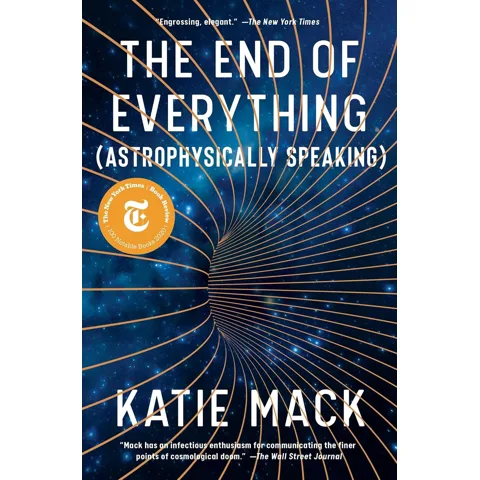
10. The End of Everything (Astrophysically Speaking) by Katie Mack
- Math: No math
- Paperback, 256 pages (2021)
Mack, a cosmologist at the Perimeter Institute in Waterloo, Ontario, tells the story of the universe through five ways it could end: the Big Crunch, heat death, the Big Rip, vacuum decay and a bounce. Along the way you learn the Big Bang, dark energy and the cosmic microwave background. It is the top answer when Reddit readers ask for books like Astrophysics for People in a Hurry, and readers call it “an easy read” and “very well-written.”
Keep in mind: the chapter on vacuum decay brings in particle physics and is the hardest stretch. The footnote jokes are not for everyone.
Easiest Hawking
11. Brief Answers to the Big Questions by Stephen Hawking
- Math: No math
- Hardcover, 256 pages (2018)
Hawking’s last book, published after his death in 2018, answers ten questions in short essays, including how the universe began, what is inside a black hole and whether time travel is possible. The question-and-answer format makes it the gentlest way into his ideas, and 5 of the 7 Reddit threads that name it are from 2023 or later.
Keep in mind: only about half the book is astrophysics. The rest covers God, artificial intelligence and humanity’s future.
Best way to read Hawking’s classic
12. A Briefer History of Time by Stephen Hawking and Leonard Mlodinow
- Math: No math
- Hardcover, 176 pages (2005)
Hawking and Mlodinow rewrote A Brief History of Time to be easier, with color illustrations and updated science. In an r/askastronomy thread comparing the two, one reply noted that Hawking himself knew where the original fell short. If you want to read Hawking’s famous book, this is the version to read.
Keep in mind: the last chapters on quantum gravity are still abstract, and the science stops in 2005.
Best history of the Big Bang idea
13. Big Bang: The Origin of the Universe by Simon Singh
- Math: No math
- Paperback, 532 pages (2005)
Singh tells how the Big Bang went from a fringe idea to accepted science, through Hubble’s galaxy measurements, the steady state rivalry and the accidental 1965 discovery of the cosmic microwave background. It reads like a detective story, and it shows how evidence settles a scientific argument, which few books on this list do.
Keep in mind: at 532 pages it is long, and it ends in the early 2000s, before most of what we know about dark energy.

Best on dark matter
14. The Disordered Cosmos by Chanda Prescod-Weinstein
- Math: No math
- Paperback, 352 pages (2022)
Prescod-Weinstein is a theoretical physicist at the University of New Hampshire who studies dark matter. The first half explains particle physics, spacetime and what dark matter might be. It appears on the BBC Sky at Night and Atlas Obscura lists.
Keep in mind: the second half is about race, gender and who gets to do science. Readers who want only the physics should know that going in.
Stars, light and the people who study them
Popular astrophysics leans toward black holes and the Big Bang, but most of what astronomers know comes from studying starlight. These four books show how that work is done. To go with them, our guides to the types of stars and the ways stars are born and die cover the basics in a few minutes each.
Best on how astronomers work
15. The Last Stargazers by Emily Levesque
- Math: No math
- Paperback, 400 pages (2022)
Levesque, an astronomer at the University of Washington who studies massive stars, collected stories from observatories around the world, from long nights on mountaintops to flights on an airborne telescope. It answers a question most books skip, which is how astronomers actually get their data.
Keep in mind: it is about the work more than the science. Read it alongside an overview, not instead of one.
Newest book on this list
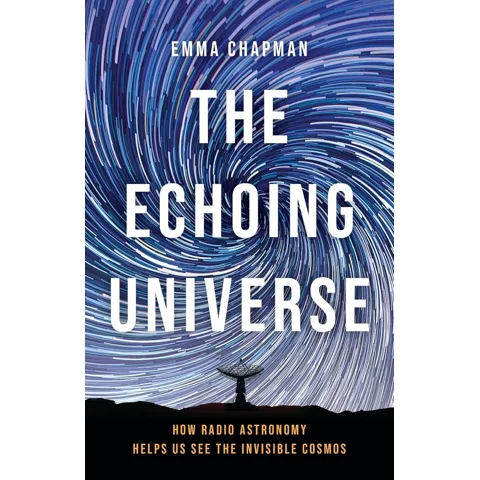
16. The Echoing Universe by Emma Chapman
- Math: No math
- Hardcover, 352 pages (May 2026)
Chapman, an astrophysicist whose first book First Light covered the universe’s first stars, explains how radio astronomy reveals what our eyes can’t see. Radio telescopes discovered pulsars, quasars and the cosmic microwave background, so this is the book for readers curious about how pulsars work and other objects that only show up at long wavelengths.
Keep in mind: it came out in 2026 and has few reviews so far.
Most fun to read
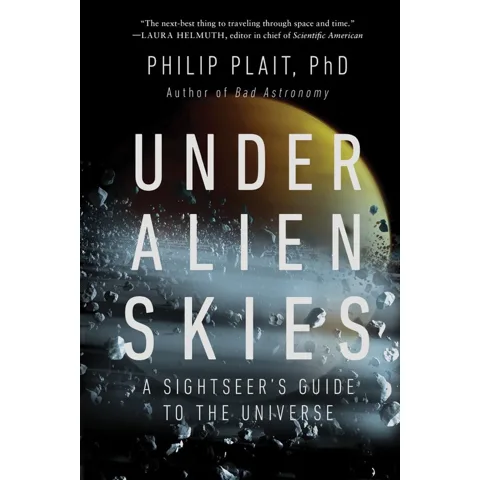
17. Under Alien Skies by Phil Plait
- Math: No math
- Paperback, 336 pages (2024)
Plait, who writes Bad Astronomy and hosted Crash Course Astronomy, imagines standing on other worlds and describes the sky you would see, starting with the Moon and Mars and moving out to some of the most extreme objects in the galaxy. Each chapter turns a scene into real astrophysics. For one of those extremes, our list of known neutron stars makes a good companion.
Keep in mind: it is a tour, not a course, and it spends more time on planets than on cosmology.
Best on gravitational waves
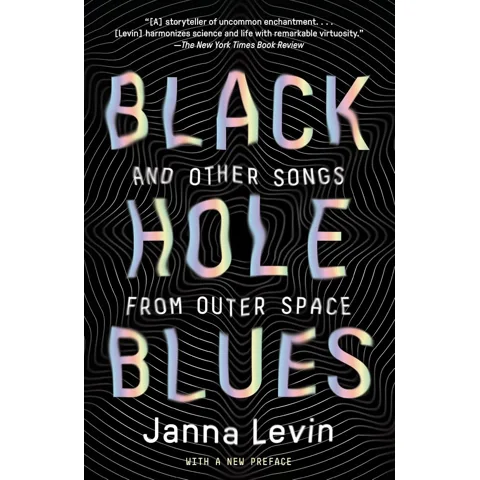
18. Black Hole Blues and Other Songs from Outer Space by Janna Levin
- Math: No math
- Paperback, 256 pages (2017)
Levin follows the scientists who spent four decades building LIGO, the detector that first heard two black holes collide in 2015. It is a story of rivalries, money and stubbornness as much as physics, and it explains why the detection mattered without a single equation.
Keep in mind: it covers the people more than the physics, and it was finished just as the first detection was announced.
Whole-universe tours and classics
These are longer books that cover everything, from the planets to the edge of the universe. Read one after your first short book, when you want more depth without picking a topic.
Best full course in plain words
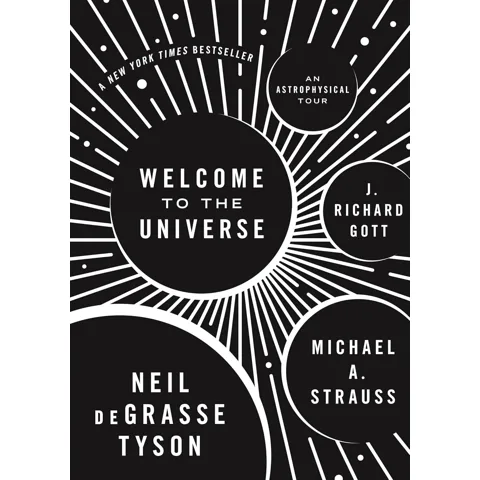
19. Welcome to the Universe: An Astrophysical Tour by Neil deGrasse Tyson, Michael Strauss and J. Richard Gott
- Math: A little math
- Hardcover, 472 pages (2016)
Three Princeton astrophysicists turned their course for non-science majors into a book. It explains how stars shine, how astronomers measure distances, what black holes are and why the universe is expanding, and it shows a few simple formulas along the way. Readers describe it as “pretty comprehensive without getting too technical.” It is the natural second book after Tyson’s Hurry.
Keep in mind: the hardcover is big and heavy. The 248-page Brief Welcome, card 4, is the portable version.
Best by ear
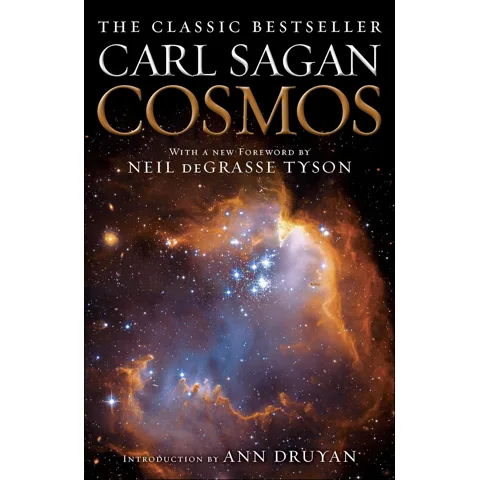
20. Cosmos by Carl Sagan
- Math: No math
- Paperback, 432 pages (1980; this edition 2013)
Sagan’s companion to his 1980 TV series tells the history of astronomy from ancient Greece to the Voyager probes, and it is the book readers most often credit with getting them hooked (95 threads). The 2013 paperback adds a foreword by Neil deGrasse Tyson. The unabridged audiobook, read by LeVar Burton, is a favorite on Reddit’s audiobook threads.
Keep in mind: it predates exoplanets and dark energy. As one reader said of the series, it is “outdated in some places,” but what it explains is still valid.
Best for the big perspective
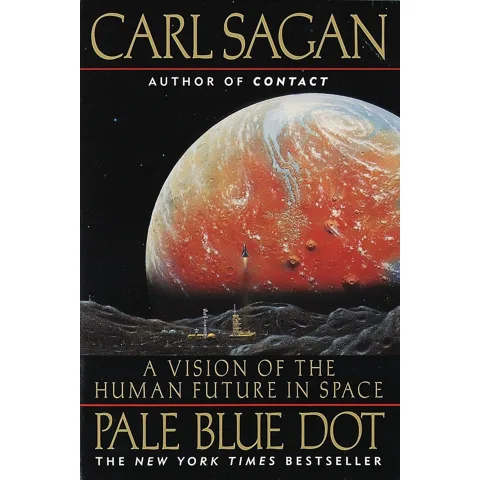
21. Pale Blue Dot by Carl Sagan
- Math: No math
- Paperback, 384 pages (1994)
Named after the 1990 Voyager 1 photo of Earth as a single pixel, this book covers the planets, the search for life and why humans may one day live beyond Earth. It is more reflective than Cosmos, and Reddit readers name it in 35 threads.
Keep in mind: it is mostly about the Solar System, with little on stars, galaxies or cosmology.
Best essay collection
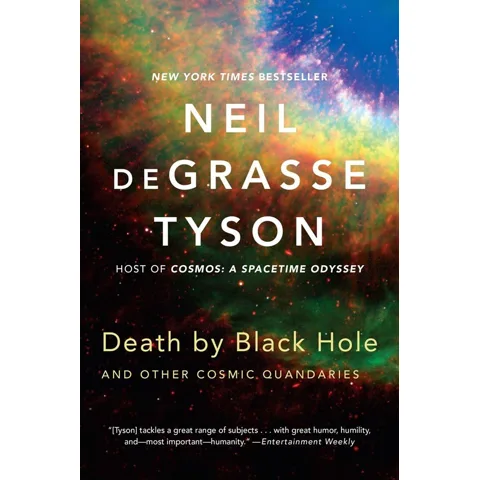
22. Death by Black Hole: And Other Cosmic Quandaries by Neil deGrasse Tyson
- Math: No math
- Paperback, 384 pages (2007; this edition 2014)
Tyson collected his essays from Natural History magazine, each a stand-alone piece on topics such as how we know what stars are made of or what would happen if you fell into a black hole. It is one of the usual answers when readers ask what to read after Hurry, and 36 threads name it.
Keep in mind: one reader called it “a little more intermediate” than Hurry, and because the essays stand alone, some ideas repeat.
When a library book club near me asked our astronomy club for a space title last winter, the real question was which book a room of non-scientists would finish. For a group, pick a book with short chapters that stand alone, so a member who missed a week can still join in. Death by Black Hole, The End of Everything and Brief Answers to the Big Questions all work that way.
Illustrated and picture-led books
Some readers learn better from pictures, and Reddit’s advice for dense books is consistent: “buy the illustrated version.” These five books lead with images, including the James Webb Space Telescope photos released since 2022. They also make the easiest gifts on this list; our Christmas gifts for astronomy lovers guide has more ideas.
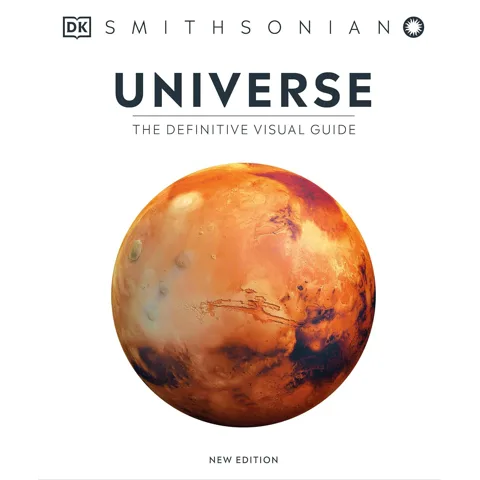
Best illustrated
23. Universe: The Definitive Visual Guide by DK (editor Martin Rees)
- Math: No math
- Hardcover, 528 pages (3rd edition, 2020)
This large reference book, edited by the UK Astronomer Royal Martin Rees, gives every topic a spread of photos and diagrams: the life cycle of stars, the structure of galaxies, the Big Bang timeline. The back section is a guide to the constellations. Use it as a companion to any narrative book above.
Keep in mind: it is a book to look things up in, not to read cover to cover, and it predates Webb’s images.
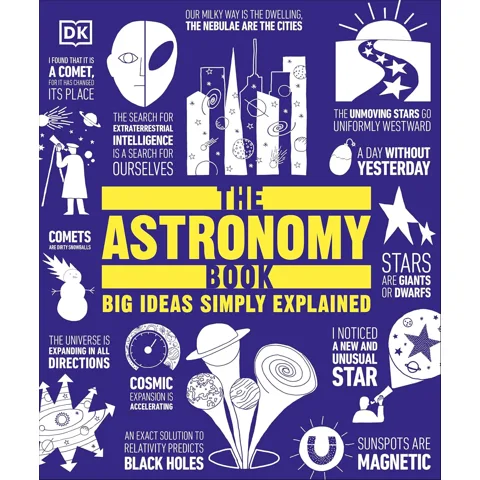
Best history of ideas in pictures
24. The Astronomy Book (Big Ideas Simply Explained) by DK
- Math: No math
- Paperback, 352 pages (2021)
Each spread explains one idea, from the ancient Greek measurement of the Earth to dark energy, with diagrams and a short biography of the scientist behind it. It is the illustrated title Reddit readers suggest when someone asks for astronomy “with lots of illustrations.”
Keep in mind: it moves through history in order, so the modern astrophysics sits in the last third.
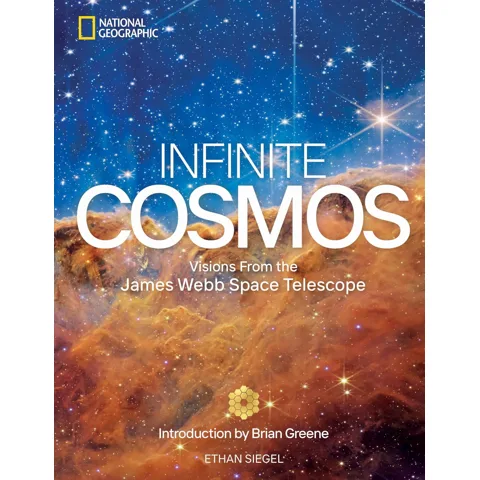
Best James Webb photo book
25. Infinite Cosmos: Visions From the James Webb Space Telescope by Ethan Siegel
- Math: No math
- Hardcover, 224 pages (2024)
Astrophysicist Ethan Siegel pairs Webb’s first images with plain explanations of what each one shows: young stars in dust clouds, galaxies from the early universe, a planet’s atmosphere. Brian Greene wrote the introduction, and National Geographic published it.
Keep in mind: the text is short. It explains each picture rather than teaching astrophysics from the ground up.
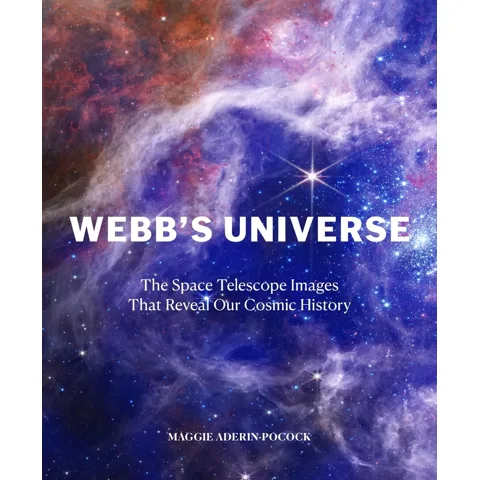
Best Webb book for the cosmic story
26. Webb’s Universe by Maggie Aderin-Pocock
- Math: No math
- Hardcover, 224 pages (2024)
Aderin-Pocock, a space scientist and co-presenter of the BBC’s The Sky at Night, uses Webb’s images to tell the history of the universe, from the first galaxies to planets forming around young stars today. That structure turns a photo book into a story you can follow from start to finish.
Keep in mind: it overlaps with Siegel’s book. Pick one of the two.
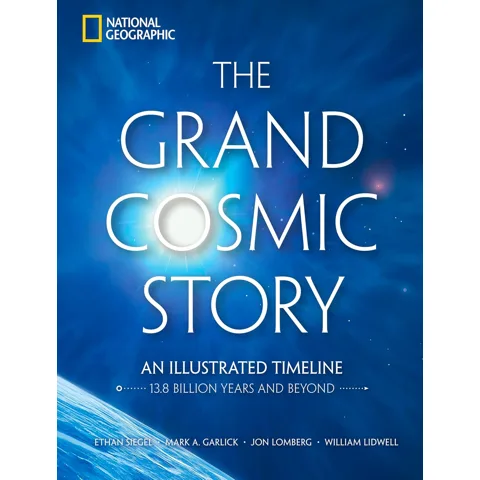
Best illustrated timeline
27. The Grand Cosmic Story: An Illustrated Timeline by Ethan Siegel and others
- Math: No math
- Hardcover, 320 pages (October 2025)
Siegel, astronomical artist Mark Garlick and space artist Jon Lomberg lay out 13.8 billion years as a single illustrated timeline, from the Big Bang through the first stars to the far future. It is the clearest way to see the order of cosmic events at a glance, and it suits readers who think in pictures.
Keep in mind: it is new, with few reviews so far, and it is large-format.
A small step toward the math
When popular books start to feel repetitive, the next step is a book that shows a few equations and explains them. Each of these needs no more than high school algebra. Past this point you are into textbooks, which our astronomy books for self study guide covers stage by stage.
Best step toward the math
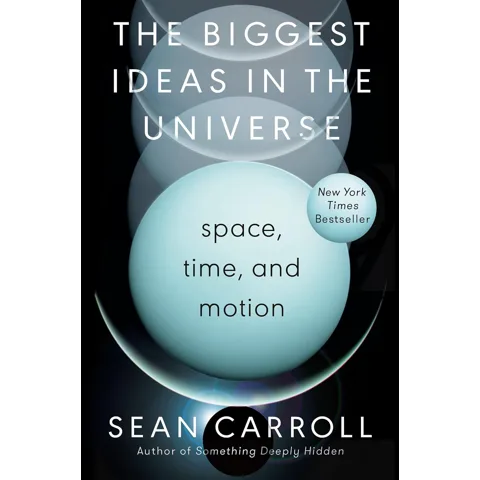
28. The Biggest Ideas in the Universe by Sean Carroll
- Math: Light algebra (real equations, explained)
- Hardcover, 304 pages (2022)
Carroll, a physicist at Johns Hopkins, wrote this first volume, subtitled Space, Time and Motion, for readers who want to see the actual equations of relativity, explained one symbol at a time. It is Reddit’s standard answer for “I’m not a physicist but can handle some math”: “It has some of the math but is written for a general audience.” After it, black holes and the expanding universe stop being metaphors.
Keep in mind: it is physics, not a tour of the sky, and it asks for patience with notation.
Best black hole step-up
29. The Little Book of Black Holes by Steven Gubser and Frans Pretorius
- Math: Light algebra
- Hardcover, 200 pages (2017)
Two Princeton physicists explain black holes with a handful of short calculations, such as working out how big a black hole is from its mass. It is the right book after Smethurst or Cox and Forshaw if you want to see where the numbers come from.
Keep in mind: it is more technical than the other short books here. Expect to reread some pages.
Best cosmology step-up
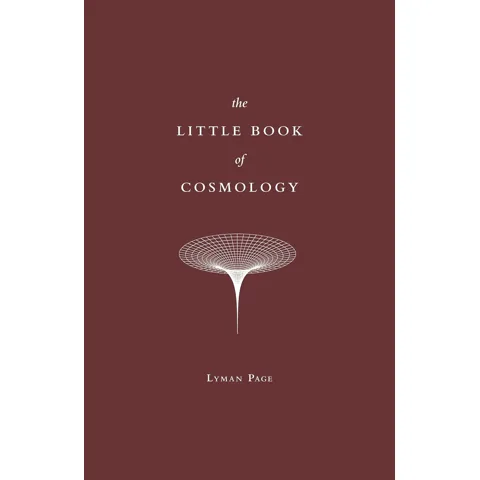
30. The Little Book of Cosmology by Lyman Page
- Math: Light algebra
- Hardcover, 152 pages (2020)
Page is a Princeton physicist who helped measure the cosmic microwave background with the WMAP satellite. His book explains how that faint glow tells us the age, shape and contents of the universe, with a few equations and graphs.
Keep in mind: read Mack or Singh first. It assumes you know what the Big Bang theory says.
Best textbook-style survey
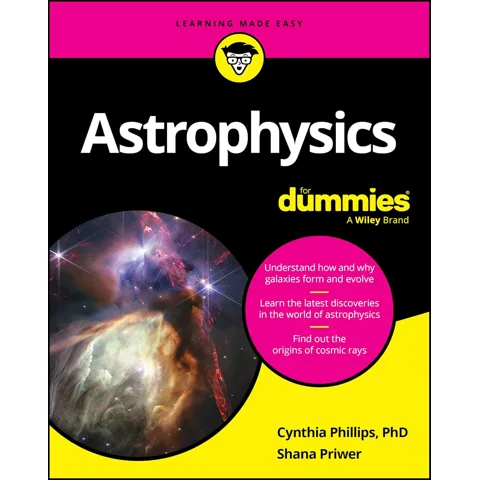
31. Astrophysics For Dummies by Cynthia Phillips and Shana Priwer
- Math: Light algebra
- Paperback, 400 pages (2024 edition)
Phillips, a planetary scientist, and Priwer cover stars, galaxies, black holes and cosmology in short sections you can read in any order, with simple worked examples. It is the one beginner-labeled astrophysics title from a major publisher; most of the others in Amazon search results are self-published.
Keep in mind: the writing is plainer than the narrative books, closer to a textbook than a story.
Most compact step-up
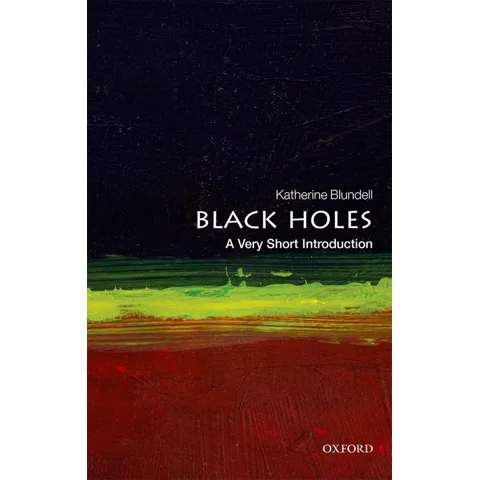
32. Black Holes: A Very Short Introduction by Katherine Blundell
- Math: A little math
- Paperback, 128 pages (2016)
Blundell, a professor of astrophysics at Oxford, covers how black holes form, how they are detected and how they shape galaxies in 128 small pages. Oxford’s Very Short Introductions series also has titles on cosmology and stars, and readers on Reddit suggest them as a bridge between popular books and textbooks.
Keep in mind: it is drier than the trade books, written more like lecture notes.
Audiobook or print?
We tallied 67 threads that discuss audiobooks for these subjects. The pattern is clear: narrative books work by ear, and books that depend on pictures or equations don’t.
Good by ear: Astrophysics for People in a Hurry, read by Tyson himself, was the top answer in an r/audiobooks thread on astronomy audiobooks. Becky Smethurst narrates A Brief History of Black Holes, and a 100-vote comment in an r/Physics thread praised that Audible version. LeVar Burton reads Cosmos. Outside this list, Carlo Rovelli’s The Order of Time is narrated by Benedict Cumberbatch and comes up often for physics listening.
Better in print: every book on the illustrated shelf, Welcome to the Universe (graphs and diagrams), Cox and Forshaw (spacetime diagrams) and everything on the math shelf. As one listener put it, “I always want to read these kinds of books but worry about diagrams and pictures that are important and I would miss them.”
Free option: most public libraries lend these audiobooks and e-books through the Libby app. Readers on Reddit also point to podcasts as the other audio route, especially StarTalk, Tyson’s show.
For teenagers
A teenager who already likes space can read the adult books. When a parent asked on r/space whether a 14-year-old needed the young people’s edition, the reply was that any 14-year-old interested in space “would be fine with” the adult Astrophysics for People in a Hurry. For younger or less confident readers, Astrophysics for Young People in a Hurry by Tyson and Gregory Mone keeps the same chapters with simpler language, photos and diagrams in 176 pages. StarTalk: Young Readers Edition from National Geographic Kids turns questions from Tyson’s StarTalk show into short, heavily illustrated sections. For under-12s, see our list of the best space books for kids.
Books to approach with care
These books appear on many lists. Each has a problem that matters for a non-scientist.
A Brief History of Time by Stephen Hawking is the most named book in our tally (103 threads) and also the most complained about: 21 threads call it hard, dense or confusing. One r/askastronomy reply put it this way: “the world’s most famous physicist is probably not the world’s best teacher.” Readers recommend the illustrated edition, but it is only sold by resellers on Amazon right now. Read A Briefer History of Time or Brief Answers to the Big Questions instead.
Parallel Worlds and Hyperspace by Michio Kaku appear on top-ranking lists, including the second Bing result for this search, but physicists on Reddit warn against them. “I would avoid anything by Kaku” drew 18 votes in a 2026 r/AskPhysics thread, because his books mix proven physics with speculation without saying which is which.
The First Three Minutes by Steven Weinberg is, in the words of one r/cosmology reader, “one of the best written science popularizations,” but it dates from 1977, with a 1993 afterword. Another notes that “some numbers are out of date,” and it predates dark energy. Read it after Mack, not before.
The Elegant Universe by Brian Greene is named in 48 threads, but it is about string theory, an unproven idea in physics, not astrophysics. Read it if string theory is what you are curious about.
A Universe from Nothing by Lawrence Krauss rests on a definition of “nothing” that many physicists and philosophers dispute. Read it as an argument, not a summary of settled science.
Self-published “astrophysics for beginners” titles fill Amazon search results and several ranking list pages. Most have unknown authors and a few dozen reviews at most. We left them all out.
All 32 books compared
| Book | Topic | Math | Length |
|---|---|---|---|
| Astrophysics for People in a Hurry | Whole universe | No math | 224 pages |
| Space at the Speed of Light | Whole universe | No math | 144 pages |
| Our Universe | Whole universe | No math | 312 pages |
| A Brief Welcome to the Universe | Whole universe | No math | 248 pages |
| A Brief History of Black Holes | Black holes | No math | 288 pages |
| Black Holes (Cox and Forshaw) | Black holes | A little math | 288 pages |
| Black Hole Survival Guide | Black holes | No math | 160 pages |
| Black Holes and Time Warps | Black holes, relativity | No math | 624 pages |
| Light in the Darkness | First black hole image | No math | 368 pages |
| The End of Everything | Fate of the universe | No math | 256 pages |
| Brief Answers to the Big Questions | Big questions | No math | 256 pages |
| A Briefer History of Time | Cosmology | No math | 176 pages |
| Big Bang (Singh) | History of the Big Bang | No math | 532 pages |
| The Disordered Cosmos | Dark matter, science and society | No math | 352 pages |
| The Last Stargazers | How astronomers work | No math | 400 pages |
| The Echoing Universe | Radio astronomy | No math | 352 pages |
| Under Alien Skies | Other worlds | No math | 336 pages |
| Black Hole Blues | Gravitational waves | No math | 256 pages |
| Welcome to the Universe | Whole universe | A little math | 472 pages |
| Cosmos | History of astronomy | No math | 432 pages |
| Pale Blue Dot | Planets, our future | No math | 384 pages |
| Death by Black Hole | Essays | No math | 384 pages |
| Universe (DK) | Visual reference | No math | 528 pages |
| The Astronomy Book (DK) | History of ideas | No math | 352 pages |
| Infinite Cosmos | Webb images | No math | 224 pages |
| Webb’s Universe | Webb images | No math | 224 pages |
| The Grand Cosmic Story | Illustrated timeline | No math | 320 pages |
| The Biggest Ideas in the Universe | Relativity | Light algebra | 304 pages |
| The Little Book of Black Holes | Black holes | Light algebra | 200 pages |
| The Little Book of Cosmology | Cosmology | Light algebra | 152 pages |
| Astrophysics For Dummies | Whole universe | Light algebra | 400 pages |
| Black Holes: A Very Short Introduction | Black holes | A little math | 128 pages |
FAQ
Which astrophysics book should I read first?
Read Astrophysics for People in a Hurry by Neil deGrasse Tyson first. It covers the Big Bang, stars, dark matter and dark energy in about 200 pages with no math. Then pick a second book by topic, such as A Brief History of Black Holes by Becky Smethurst or The End of Everything by Katie Mack.
Are astrophysics books good for beginners?
Yes, as long as you choose popular science books rather than textbooks. Books such as Astrophysics for People in a Hurry, The End of Everything and Welcome to the Universe are written for readers with no science background. Textbooks such as Carroll and Ostlie’s An Introduction to Modern Astrophysics need calculus and are not beginner books.
Do I need math to read astrophysics books?
No. Most popular astrophysics books use no equations at all. A few, such as Welcome to the Universe, show simple formulas you can skip. Books like The Biggest Ideas in the Universe by Sean Carroll and The Little Book of Black Holes use light algebra and explain every step.
Is A Brief History of Time hard to read?
Yes, harder than its reputation suggests. In our tally of 355 Reddit threads, 21 called it hard, dense or confusing, especially the later chapters on quantum gravity. A Briefer History of Time, the illustrated rewrite by Hawking and Leonard Mlodinow, and Brief Answers to the Big Questions are easier ways into Hawking’s ideas.
What should I read after Astrophysics for People in a Hurry?
Welcome to the Universe by Tyson, Strauss and Gott is the natural next step because it covers the same ground as a full course. Death by Black Hole, Tyson’s essay collection, and The End of Everything by Katie Mack are the other common answers on Reddit.
What is the difference between astronomy and astrophysics books?
Astronomy books describe what is in the sky and how to observe it. Astrophysics books explain the physics behind it: how stars shine, how black holes form and how the universe expanded. Popular books often mix both, and all of the picks in this guide lean toward astrophysics.
What is the best astrophysics book for teenagers?
Astrophysics for Young People in a Hurry by Neil deGrasse Tyson and Gregory Mone is written for ages 10 and up. Teenagers of about 14 who already like space can read the adult Astrophysics for People in a Hurry, and A Brief History of Black Holes by Becky Smethurst works well for older teens.
Are astrophysics books better as audiobooks or in print?
Narrative books work well as audiobooks. Tyson reads Astrophysics for People in a Hurry, Becky Smethurst reads A Brief History of Black Holes and LeVar Burton reads Cosmos. Picture books, Welcome to the Universe and anything with equations are better in print because the diagrams carry part of the explanation.
Is there a free astrophysics book for beginners?
Yes. OpenStax Astronomy 2e, written by Andrew Fraknoi, David Morrison and Sidney Wolff, is a full introductory textbook that is free to read online or download as a PDF from openstax.org. It covers stars, black holes and cosmology using algebra rather than calculus. Public libraries also lend most of the books in this guide through the Libby app.
What is the best book about black holes for beginners?
A Brief History of Black Holes by Becky Smethurst is the best first black hole book: it needs no math, it is current to 2023 and Reddit readers recommend it more than any other recent title. For a shorter read, try Black Hole Survival Guide by Janna Levin, and for more depth, Black Holes by Brian Cox and Jeff Forshaw.
Sources
- NASA Science, Black holes, The Big Bang, Dark matter, Dark energy and Stars.
- NASA, James Webb Space Telescope, and ESA, ESA/Webb.
- Caltech, LIGO Laboratory.
- OpenStax, Rice University, Astronomy 2e.
- Reddit: r/astrophysics, book recommendations about black holes; r/Physics, pop-sci books physicists recommend; r/cosmology, best books on cosmology for beginners; r/askastronomy, A Brief History of Time or A Briefer History of Time; r/audiobooks, best astronomy audiobooks; r/suggestmeabook, books like Astrophysics for People in a Hurry; r/AskPhysics, is Hyperspace by Michio Kaku worth reading.
- Book details (pages, year, format) from each Amazon listing, checked November 11, 2026.