
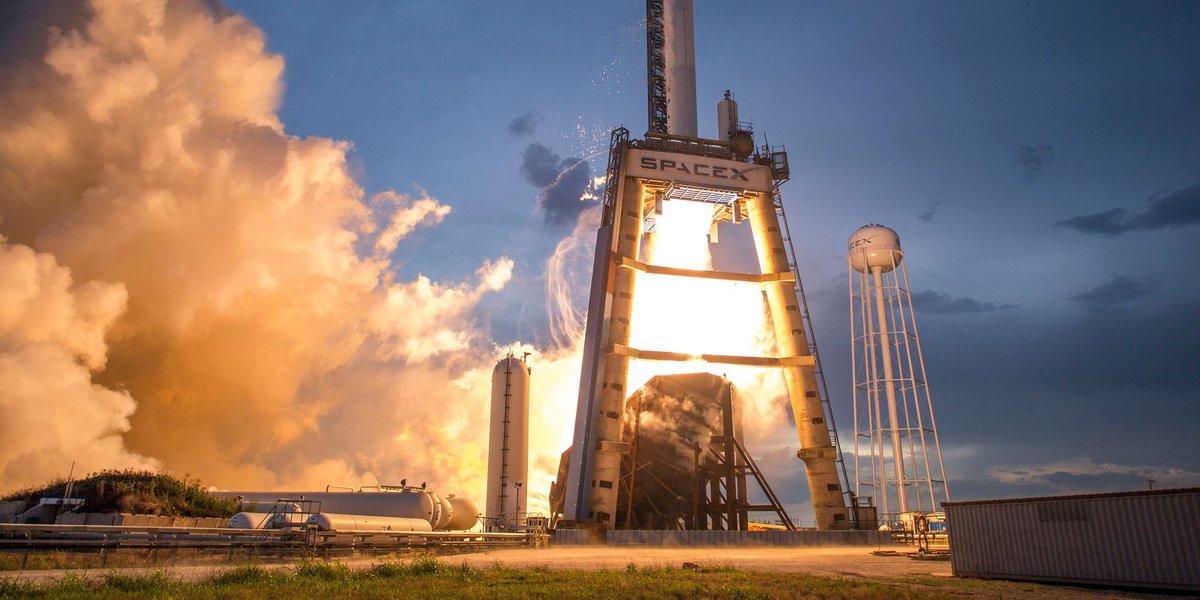
TLDR
Rockets are sorted two ways: by what they burn and by what they do. By propellant, the main types are solid, liquid, hybrid, electric (ion) and nuclear thermal. By job, they’re sounding rockets, orbital launch vehicles, missiles and model rockets. Solid rockets are simple and powerful but can’t be switched off. Liquid rockets are complex but controllable, and they launch almost everything that reaches orbit. Hybrids sit between the two. Ion engines are feeble but absurdly efficient, so they only work in space.
Contents
- How rockets are classified
- Solid rockets
- Liquid rockets
- Hybrid rockets
- Electric and ion rockets
- Nuclear thermal rockets
- Types of rockets by job
- Staging and reusability
- Comparison table
- Rocket size ladder
- Which type is best for what
- FAQ
How rockets are classified
Every rocket works the same way. It throws mass out the back, and the push on that mass makes the rocket move the other way, as NASA’s Glenn Research Center explains. The differences are in what gets thrown and how it’s made to go.
That gives two natural ways to sort them. The first is propellant: what the engine burns or accelerates. The second is purpose: what the rocket is built to do. A single rocket belongs to both categories. The Saturn V was a liquid-propellant launch vehicle. A backyard Estes rocket is a solid-propellant model.
Propellant is the more useful lens, because it decides thrust, cost, and whether you can turn the engine off. We’ll start there.
Solid rockets
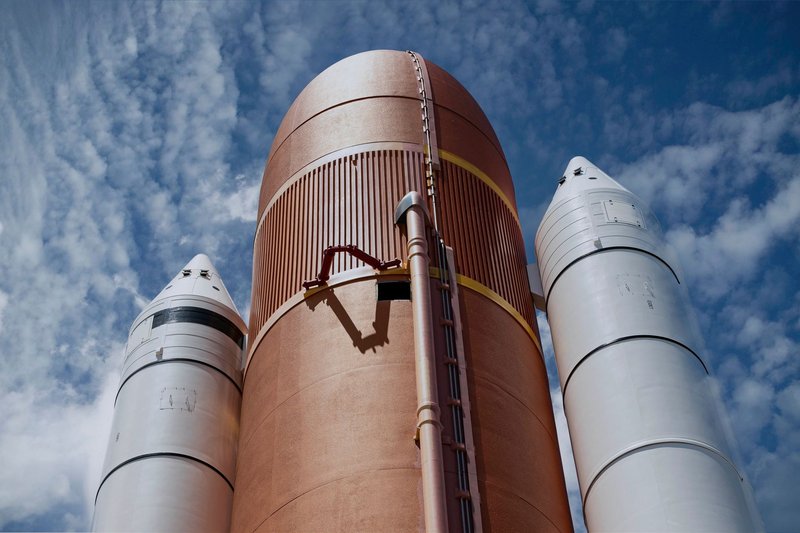
A solid rocket packs fuel and oxidizer into one rubbery block called the grain. A hollow channel runs down its center. Light it, and the whole surface of that channel burns at once, pushing hot gas out the nozzle.
How it works: There are almost no moving parts. The case is the fuel tank, the combustion chamber and the structure, all in one.
Pros: Cheap, simple, storable for years, and brutally strong. Solids deliver huge thrust the instant they ignite.
Cons: You can’t throttle them or shut them down. Once the grain is lit, it burns until it’s gone. Efficiency is also lower than liquid engines.
Real example: Each of the Space Shuttle’s two solid rocket boosters produced roughly 3 million pounds of thrust at liftoff, more than the shuttle’s own main engines combined. The boosters burned for about two minutes and then dropped away. The same design logic carries into the boosters on NASA’s Space Launch System. The downside showed up in 1986, when a failed joint seal in a booster destroyed Challenger. A solid can’t be shut off mid-failure.
Liquid rockets
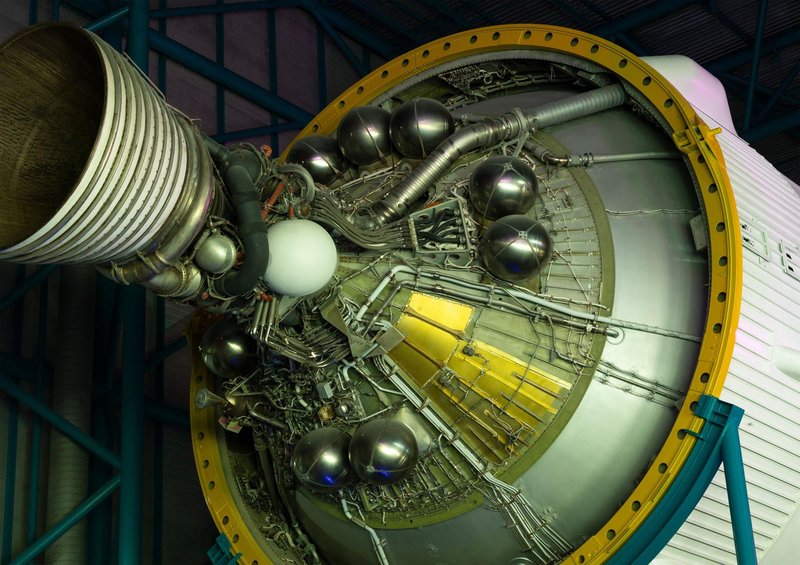
Liquid rockets store fuel and oxidizer in separate tanks and pump them into a combustion chamber, where they burn. Robert Goddard flew the first one on March 16, 1926, in a Massachusetts field. It rose about 40 feet.
How it works: Powerful turbopumps force propellant into the chamber at high pressure. Valves control the flow, so the engine can throttle, shut down and, in many designs, restart.
Pros: Higher efficiency than solids, controllable thrust, and the ability to stop the burn on command.
Cons: Plumbing is complicated. Cryogenic propellants like liquid oxygen and liquid hydrogen boil off and can’t sit in a tank for months. More parts means more ways to fail.
Real examples: The Saturn V’s first stage used five F-1 engines burning kerosene and liquid oxygen. Each made about 1.5 million pounds of thrust, for roughly 7.5 million pounds total. The SpaceX Falcon 9 uses nine Merlin engines on its first stage, burning refined kerosene (RP-1) and liquid oxygen. Those Merlins relight in flight, which is what lets the booster fly back and land—a major milestone in reusable rocket technology.
The newer fuel: methane
Many new engines burn liquid methane instead of kerosene. SpaceX’s Raptor (Starship) and Blue Origin’s BE-4 (used on the Vulcan and New Glenn rockets) both run on it. Methane burns cleaner than kerosene, leaving less soot inside the engine, which helps with reuse. It’s also a plausible fuel to make on Mars.
Hybrid rockets
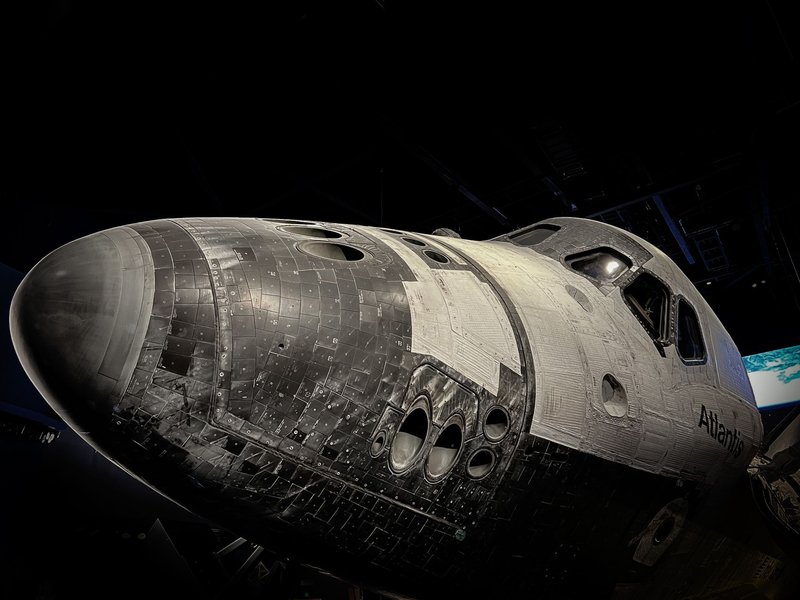
A hybrid rocket mixes the two designs: the fuel is solid, the oxidizer is liquid or gas. The fuel sits in the chamber as a solid grain, and the oxidizer is fed in from a tank.
How it works: Valves control the oxidizer flow, so you can throttle the engine or shut it off, which a pure solid can’t do.
Pros: Safer to handle than a liquid rocket. The fuel and oxidizer are stored apart, so they can’t detonate by accident. Throttling and shutdown are possible.
Cons: Lower thrust per size, and the burn can be uneven. Scaling hybrids up to orbital-class engines has proven hard, which is why few exist.
Real example: Virgin Galactic’s SpaceShipTwo, including its VSS Unity, burned a rubber-like solid fuel (HTPB) with liquid nitrous oxide. It’s the best-known crewed hybrid, and it flew to the edge of space rather than into orbit.
Electric and ion rockets
Ion thrusters don’t burn anything. They ionize a gas, usually xenon, and use electric fields to fire the ions out the back at extreme speed.
How it works: Solar panels (or a nuclear source) supply electricity. The engine charges the gas atoms and accelerates them. The exhaust is faster than any chemical rocket’s, so very little propellant does a lot of work.
Pros: Efficiency is roughly ten times that of the best chemical engines. A small tank of xenon can run for years.
Cons: The thrust is tiny, so these engines can’t lift anything off the ground. They only work in the vacuum of space, and they build speed slowly.
Real example: NASA’s Dawn spacecraft used xenon ion thrusters to reach, orbit and leave two different bodies: the asteroid Vesta and the dwarf planet Ceres. A chemical rocket couldn’t have done both on the fuel Dawn carried. At full power, each Dawn thruster pushed with about the force of a sheet of paper resting on your hand. Over years, that was enough to change the probe’s speed by more than 25,000 mph.
Nuclear thermal rockets
A nuclear thermal rocket uses a fission reactor to heat a propellant, typically liquid hydrogen, then expels it through a nozzle. No combustion. The reactor is the heat source.
How it works: Hydrogen flows through the reactor core, gets extremely hot, and rushes out. Because hydrogen is the lightest gas, the exhaust speed is roughly double that of a good chemical engine.
Pros: Roughly twice the efficiency of chemical rockets while still delivering serious thrust. That combination makes it attractive for crewed trips to Mars.
Cons: Reactor safety, cost, and politics. None has ever flown.
Real example: The NERVA program tested nuclear thermal engines on the ground in the 1960s and early 1970s, then was cancelled. DARPA’s DRACO demonstration was meant to revive the idea in orbit, but it was shelved in 2025.
Types of rockets by job
The propellant tells you how an engine works. Purpose tells you what the rocket is for.
Sounding rockets fly straight up and come straight back down without reaching orbit. They carry instruments for a few minutes to about 20 minutes of data collection in the upper atmosphere or the edge of space. They’re typically solid-fueled and cheap. NASA runs them from Wallops Island in Virginia and other sites.
Orbital launch vehicles are what most people picture. They carry satellites, crews and probes to orbit or beyond. They’re almost always multistage, and the big ones are liquid-fueled, sometimes with solid strap-on boosters.
Missiles are rockets (or jet-powered vehicles) that carry a warhead. The German V-2 of 1944 was the first rocket to reach space, and it was a weapon. Many early space rockets were adapted from missiles.
Model rockets are small hobby rockets with commercial solid motors. They’re graded by letter (see the next section).
Model rocket engine classes
Model rocket motors are labeled A through O. The letter shows total impulse, and each letter has twice the impulse of the one before it. An A motor holds 1.26 to 2.5 newton-seconds. Motors from A to G are low-power model rockets. H through O are high-power rockets, which in most countries require certification and a license for larger motors.
Staging and reusability
Rockets drop weight as they climb. A multistage rocket carries several engines stacked or strapped together, and discards each one after its fuel runs out. Once the empty tank is gone, the remaining engine doesn’t have to push dead weight. This is why almost every orbital rocket has two or more stages.
An expendable rocket throws the stages away. A reusable rocket recovers some or all of them. The Space Shuttle reused its orbiter and recovered its boosters from the ocean, though refurbishment cost more than hoped. Falcon 9 landed a first stage for the first time in December 2015, and boosters have since flown many times. Starship is designed so that both stages return.
Reuse needs engines that can relight, which usually means liquid propellant. That’s one reason liquid engines dominate new launch vehicles.
Comparison table
| Type | Thrust | Throttle / restart | Cost and complexity | Storage | Typical use |
|---|---|---|---|---|---|
| Solid | Very high | No | Low | Years, ready to fire | Boosters, missiles, sounding rockets, models |
| Liquid | High | Yes | High | Short for cryogenic fuels | Main launch stages, upper stages |
| Hybrid | Moderate | Yes | Moderate | Good, parts stored separately | Suborbital craft, small launchers |
| Ion / electric | Tiny | Yes | Moderate | Excellent | Deep-space probes, satellite positioning |
| Nuclear thermal | High (planned) | Yes (planned) | Very high | Unproven | Proposed crewed Mars missions |
Rocket size ladder
Class matters as much as type. Roughly, from smallest to biggest:
- Model rockets: a few ounces, a few hundred feet high.
- Sounding rockets: a few hundred to a few thousand pounds, reaching suborbital altitudes.
- Small launchers: Rocket Lab’s Electron lifts around 300 kg to orbit.
- Medium launchers: The Falcon 9 puts over 17 tonnes into low Earth orbit with a booster landing.
- Heavy-lift: The Saturn V could send about 140 tonnes to low Earth orbit. NASA’s SLS Block 1 manages about 95 tonnes.
Bigger rockets burn more fuel and cost more, but the payload fraction (how much of the rocket’s launch mass reaches orbit) stays small, usually only a few percent.
Which type is best for what
- Getting off the ground: liquid, often with solid boosters for extra kick.
- Cheap, ready-to-fire, storable: solid. This is why missiles and boosters use them.
- Reusable launch: liquid, ideally methane or kerosene.
- Space tourism or low-cost suborbital flights: hybrid is possible, though only one company has flown it with passengers.
- Long-duration deep-space probes: ion.
- Fast crewed trips to Mars: nuclear thermal, if it’s ever built.
No single type wins. Real rockets combine them. Ariane 5 and the SLS use liquid core stages with solid boosters, and a probe like Dawn rides a chemical rocket to orbit before its ion engines take over.
FAQ
What are the main types of rockets?
By propellant: solid, liquid, hybrid, electric (ion) and nuclear thermal. By purpose: sounding rockets, orbital launch vehicles, missiles and model rockets.
What is the difference between solid and liquid fuel rockets?
Solid rockets burn a pre-mixed fuel block and can’t be stopped once lit. Liquid rockets pump fuel and oxidizer from separate tanks, so they can throttle, shut down and restart. Liquids are more efficient but more complex.
Which type of rocket is most powerful?
By thrust per engine, large solid boosters and big liquid engines like the F-1 are in the same league. For total launch power, the Saturn V’s liquid first stage, at around 7.5 million pounds of thrust, is the benchmark.
Why don’t ion thrusters launch rockets from Earth?
Their thrust is far too weak to overcome gravity. They only work after a conventional rocket has already put the spacecraft in space.
What is a sounding rocket?
A sounding rocket flies a suborbital arc, carries scientific instruments, and falls back to Earth after a few minutes of data collection.
Are reusable rockets better than expendable ones?
For frequent launches, reuse cuts cost because the most expensive hardware flies again. For rare, specialized missions, a one-off expendable rocket can still make sense.