Little Astronomy earns a commission from qualifying Amazon purchases made through links on this page, at no extra cost to you.
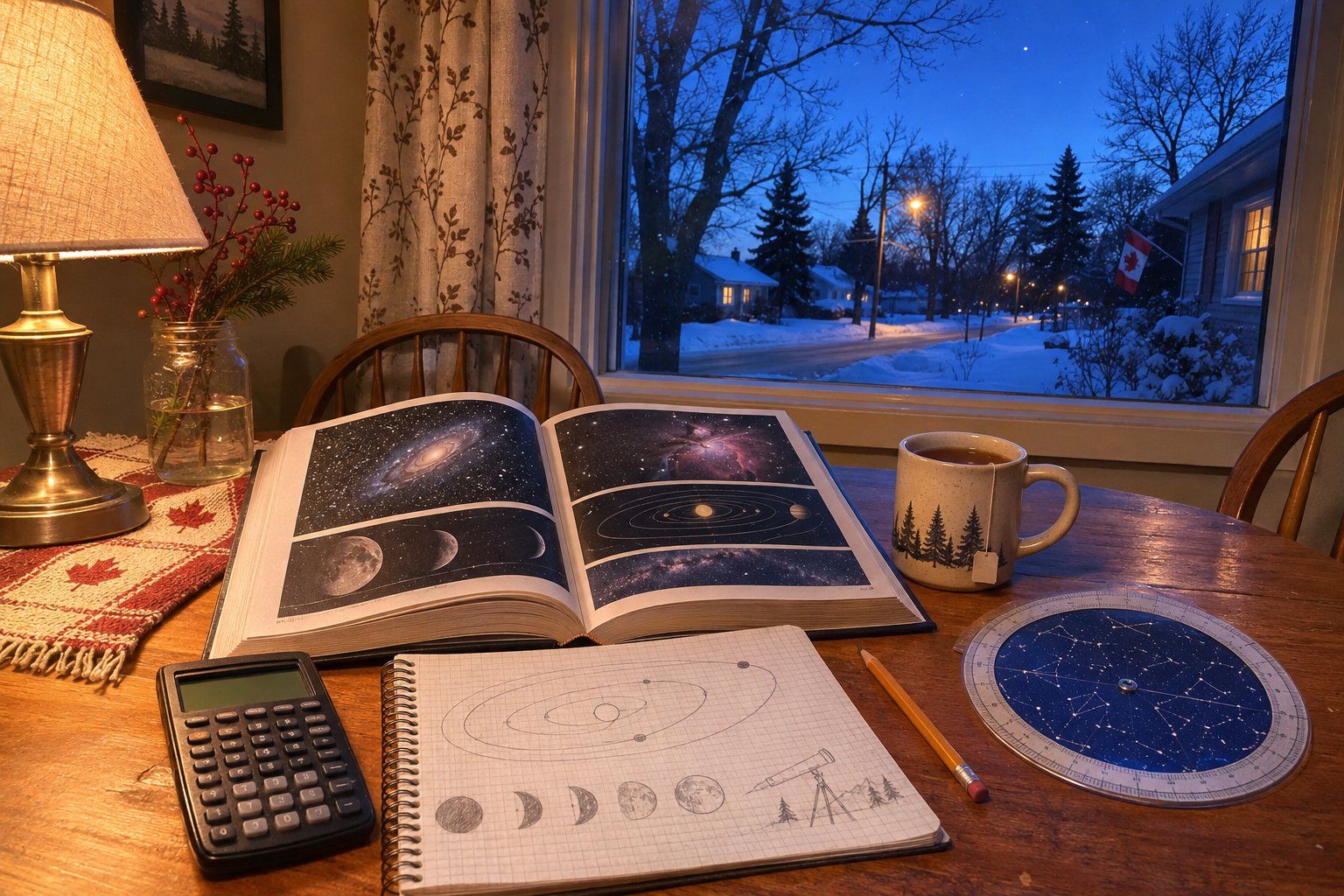
The first astronomy textbook I tried to learn from on my own was the wrong one. I was in my twenties, working full time in Ontario, and I borrowed the thickest astrophysics book the library had. By chapter three every page was calculus I had never taken. I returned it two weeks early, a little embarrassed. The next month I borrowed an introductory survey text instead, bought a graph-paper notebook and worked through one chapter a week at the kitchen table. That one I finished.
The lesson stuck: the best astronomy books for self study are the ones that match your math and your goal, read in the right order. Below are 27 picks sorted into six stages, from popular science that needs no math to the calculus-based textbooks used in university astrophysics courses. Each card says what math the book expects, so you can start at your level and move up.
Quick answer: if you want one book to teach yourself astronomy, get Astronomy: A Self-Teaching Guide by Dinah Moche, which has objectives and self-tests with answers in every chapter. For a full course, read the free OpenStax Astronomy 2e or Bennett’s The Cosmic Perspective. If you know calculus and want real astrophysics, Carroll and Ostlie’s An Introduction to Modern Astrophysics is the standard.
Quick picks
| Book | Best for | Math |
|---|---|---|
| Astronomy: A Self-Teaching Guide | Best overall for self study | Arithmetic |
| Astrophysics for People in a Hurry | A first read | None |
| Welcome to the Universe | A university course in popular form | Very little |
| NightWatch | Learning the real sky | None |
| Astronomy 2e (OpenStax) | A full intro course, free online | Algebra |
| The Cosmic Perspective | The best intro textbook | Algebra |
| Astronomy: A Physical Perspective | The bridge to real astrophysics | Some calculus |
| An Introduction to Modern Astrophysics | Undergraduate astrophysics | Calculus |
| Introduction to Cosmology | Self-studying cosmology | Calculus |
How to choose an astronomy book for self study
Astronomy covers three different kinds of learning, and most book lists mix them together. Popular science explains what is out there and why it matters. Observing guides teach you to find things in the sky. Textbooks teach the physics that explains how stars, galaxies and the universe work, and they come with problems to solve. A good self-study plan uses all three, but you only need to buy the ones that fit your goal.
Know your math. This is the question that decides which textbook you can use. Introductory astronomy textbooks for non-science majors use algebra, scientific notation and unit conversion, the level of a good high school course. Undergraduate astrophysics books expect a year of calculus and a year of calculus-based physics. Nothing in between is labeled clearly on the cover, so each card below states the math.
Pick a goal. If you want to understand the news about black holes and the James Webb Space Telescope, two or three popular books are enough. If you want to find the Andromeda Galaxy from your backyard, start with an observing guide. If you want the knowledge of a first-year astronomy course, you need a textbook and you need to do the problems at the end of each chapter. If you are preparing for a physics or astronomy degree, go straight to Stage 5.
Older editions are fine. Intro astronomy textbooks are revised every three or four years, mostly to update photos and recent discoveries. The physics of how a star shines has not changed. For self study, the previous edition of Bennett, Seeds or Freedman teaches you the same material, and your public library probably has one. Use the current edition only if you want the newest exoplanet and cosmology results, and fill those gaps from NASA’s websites.
We checked these picks against the books self-learners actually recommend to each other. In 398 Reddit threads where people asked how to learn astronomy or which book to read, Carroll and Ostlie was the most named textbook, Turn Left at Orion the most named observing guide, and Tyson, Sagan and Hawking the most named popular authors. Nearly one thread in four also recommended the library or a used older edition.
The reading order at a glance
You don’t have to read every stage. Start at the first stage that feels slightly too easy and move up when the books there stop teaching you something new.
| Stage | Read this | Math needed | You will be able to |
|---|---|---|---|
| 1. Popular science | Tyson, Sagan, Hawking, Dunkley | None | Follow astronomy news and know the big ideas |
| 2. The night sky | NightWatch, Turn Left at Orion, Rey | None | Find constellations, planets and deep-sky objects |
| 3. Self-teaching guides | Moche, Astronomy For Dummies | Arithmetic | Explain how astronomers measure the universe |
| 4. Intro textbooks | OpenStax, Bennett, Freedman, Seeds | Algebra | Solve problems from a first-year astronomy course |
| 5. The bridge | Kutner, Karttunen, Schutz | Some calculus | Derive results instead of memorizing them |
| 6. University level | Carroll and Ostlie, Ryden, Maoz | Calculus and physics | Work at the level of an astrophysics undergraduate |
Stage 1: Popular science to start
These books explain the universe in plain language. Read one or two before a textbook: they give you the big picture, so the details in later chapters have somewhere to land. If you like the space photography side, our list of space coffee table books pairs well with this stage, and for younger readers see our best space books for kids.
Best first read
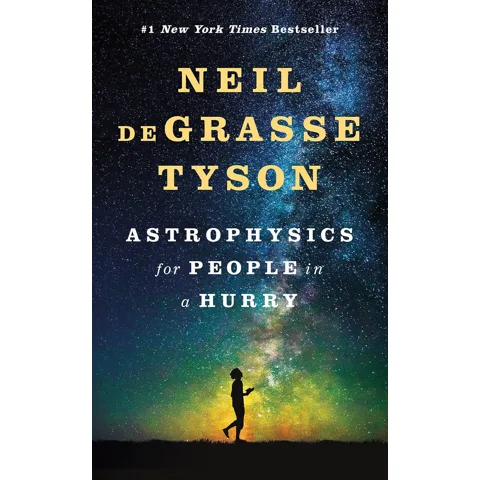
1. Astrophysics for People in a Hurry
Neil deGrasse Tyson wrote twelve short chapters that each fit into a commute: the Big Bang, how the elements formed, dark matter, dark energy, exoplanets and why the universe looks the same in every direction. It was written for readers with no science background and needs no math at all.
Read it as a map of where the rest of your studying will go. Every chapter matches a section you will meet later in a textbook, and knowing the story first makes those sections easier.
- W. W. Norton, 224 pages
- Math: none
Good: the fastest overview of modern astrophysics in print. Not great: it explains results without showing how astronomers got them; for more from the same author, Death by Black Hole collects his longer essays.
Best course in book form
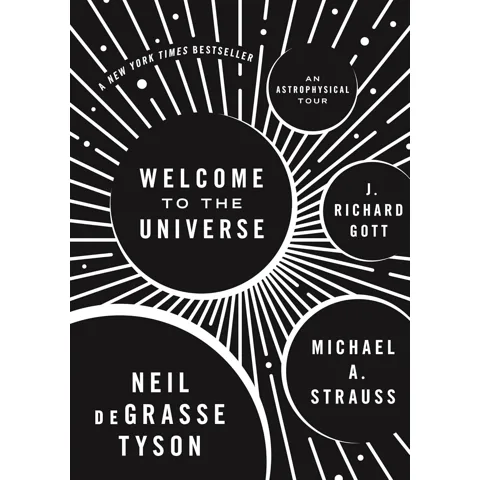
2. Welcome to the Universe: An Astrophysical Tour
Tyson, Michael Strauss and J. Richard Gott built this book from the introductory astronomy course they taught to non-science majors at Princeton. It covers stars, galaxies, black holes, cosmology and the search for life, and it shows a few simple formulas along the way, such as how the brightness of a star depends on its distance.
It is the best choice for someone who wants the structure of a real course without a textbook’s problem sets. Princeton also sells a companion problem book for readers who want to practice.
- Princeton University Press, 472 pages, illustrated
- Math: a few formulas, no algebra required
Good: more depth than any other popular book on this list. Not great: the large hardcover is heavy for reading in bed.
Best for why astronomy matters
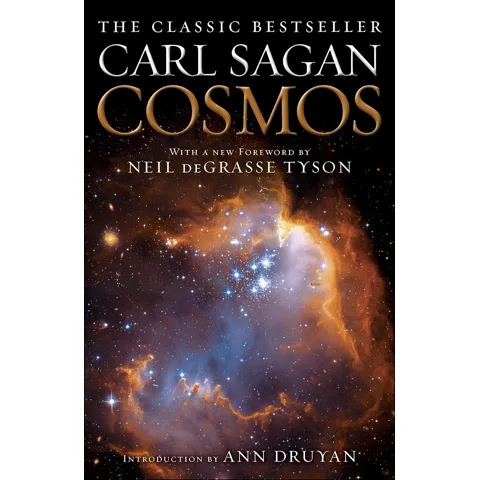
3. Cosmos
Carl Sagan’s companion to his 1980 television series tells the history of astronomy from Eratosthenes measuring the Earth with shadows to the Voyager probes. It is the book most likely to make a reader want to keep going. Sagan was a working planetary scientist, and the chapters on Venus, Mars and the outer planets come from his own research field.
- Ballantine, 432 pages, with an introduction by Ann Druyan
- Math: none
Good: shows how each discovery was made, which is the habit of mind self study needs. Not great: written before exoplanets and dark energy were discovered; pair it with a newer book. Sagan’s Pale Blue Dot continues the planetary story into the 1990s.
Best for black holes and the Big Bang
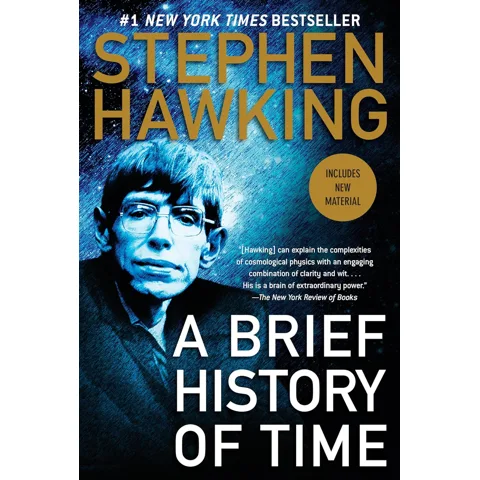
4. A Brief History of Time
Stephen Hawking explains space, time, black holes and the origin of the universe for general readers. It is more physics than astronomy: you won’t learn about stars or the night sky here, but you will learn why general relativity predicts black holes and what the Big Bang means. Self-learners name Hawking more often than any other author when they list what got them started.
- Bantam, 212 pages, 10th anniversary edition
- Math: none (one equation, E = mc²)
Good: short, and the chapters on black holes are clear. Not great: the later chapters on quantum gravity are hard going without physics; skip ahead if they lose you. For a longer history of the same ideas, Kip Thorne’s Black Holes and Time Warps is the classic, and Brian Greene’s The Elegant Universe covers relativity and string theory.
Best up-to-date overview
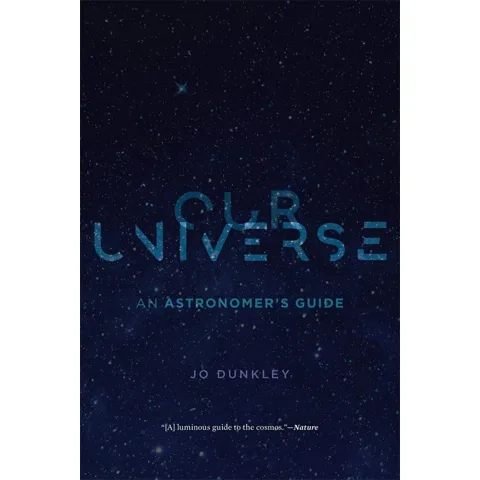
5. Our Universe: An Astronomer’s Guide
Jo Dunkley is a cosmologist at Princeton, and her book moves outward from the Solar System to the Milky Way, other galaxies and the edge of the observable universe. It is newer than the classics above, so it includes gravitational waves, exoplanet surveys and the current measurements of the universe’s age. Each chapter also names the astronomers who made the discovery, many of them women whose work older books skip.
- Belknap Press of Harvard University Press, 312 pages
- Math: none
Good: the most current popular overview on this list. Not great: it moves fast; read it after Tyson, not instead of a textbook.
Stage 2: Learn the night sky
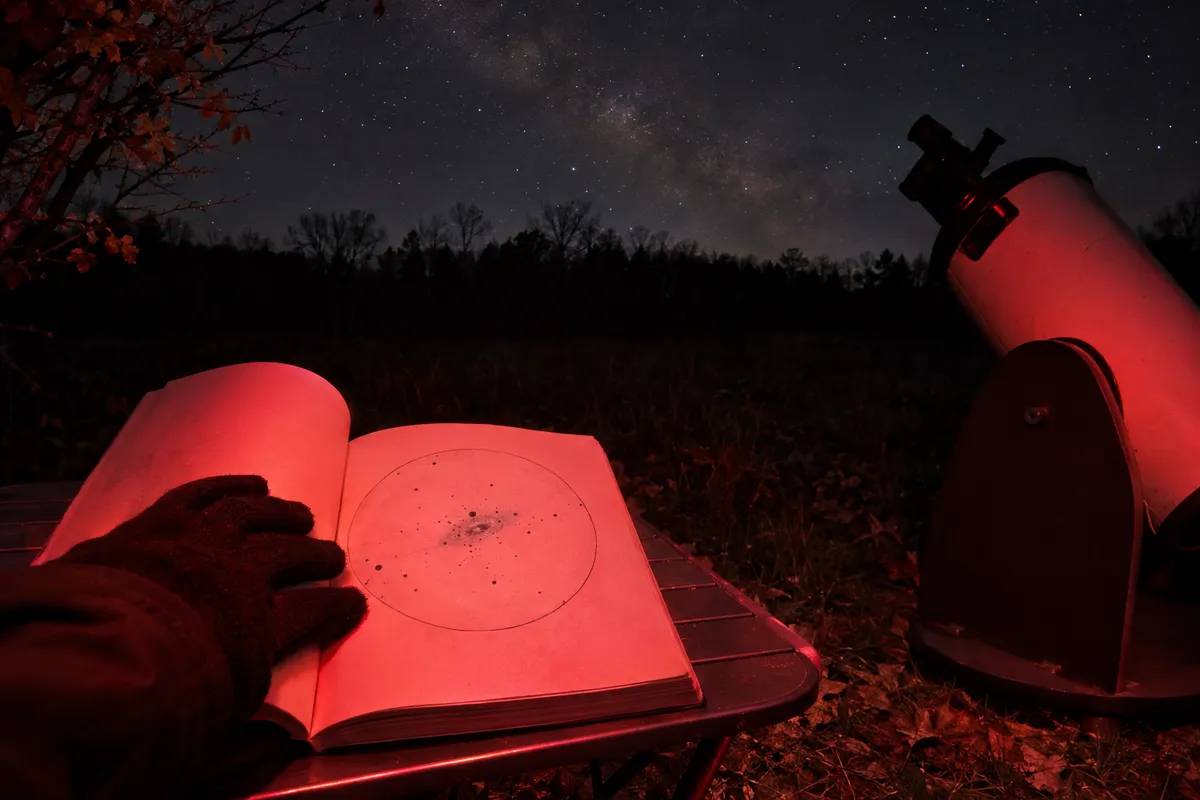
Studying astronomy from books alone is like studying a language without speaking it. Learning the sky makes every chapter real: when a textbook talks about red giants, you can walk outside and find Betelgeuse. You don’t need a telescope for the first two books here. If you do want one, our guide on how to choose a telescope and our telescope finder will help.
Best first sky guide
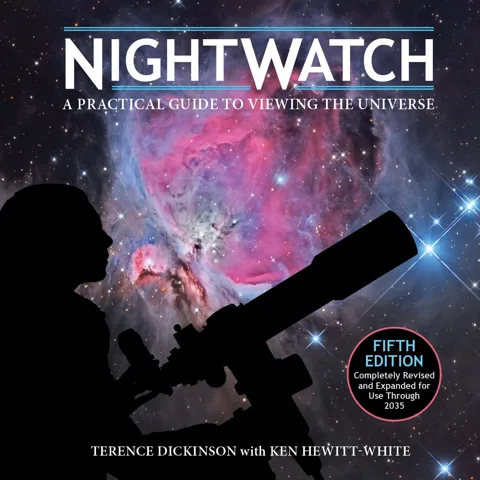
6. NightWatch: A Practical Guide to Viewing the Universe (5th edition)
Terence Dickinson’s NightWatch has been the standard beginner guide in North America for decades. It starts with naked-eye stargazing, explains binoculars and telescopes, then gives a set of seasonal star charts that are among the clearest in print. The fifth edition, revised with Ken Hewitt-White, includes tables of planet positions and eclipses through 2035.
- Firefly Books, 208 pages, spiral-bound
- Math: none
Good: lies flat outdoors and covers everything a new observer needs. Not great: once you outgrow it, Dickinson and Alan Dyer’s The Backyard Astronomer’s Guide (416 pages) goes much further into equipment and astrophotography.
Best for telescope owners
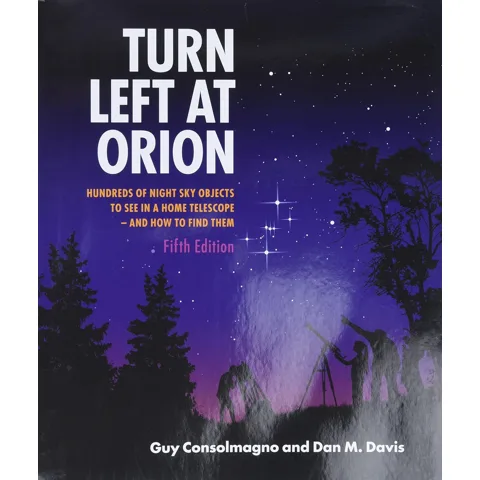
7. Turn Left at Orion (5th edition)
Guy Consolmagno and Dan M. Davis show each object the way it looks through a small telescope, not the way it looks in a Hubble photo. Every page has a finder chart, a sketch of the eyepiece view and step-by-step directions from a bright star you can already find. It is the observing book self-learners recommend most often, and Consolmagno later became director of the Vatican Observatory.
- Cambridge University Press, 256 pages, spiral-bound
- Math: none
Good: turns “what should I look at?” into a plan for each night. Not great: only useful once you have a telescope; for binoculars, start with NightWatch.
Best for learning constellations
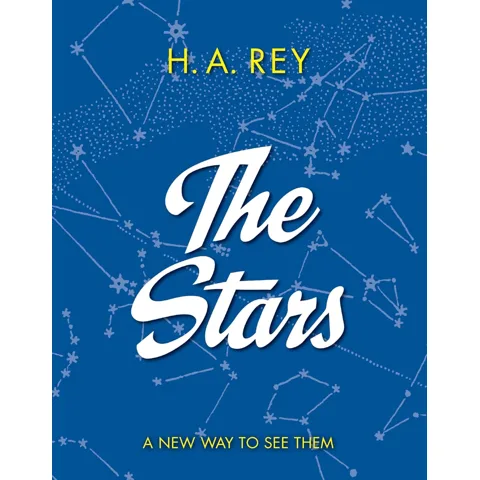
8. The Stars: A New Way to See Them
H.A. Rey, the illustrator of Curious George, redrew the constellations as stick figures that look like what they are named for. Leo looks like a lion and Cygnus like a swan, which makes them much easier to remember than the traditional charts. Astronomy magazine readers named it more often than any other book when asked what taught them the sky. The second half explains the celestial sphere, seasons and coordinates in simple terms.
- Clarion Books, 160 pages, updated edition
- Math: none
Good: the easiest way to learn the constellations for good. Not great: the illustrations look old-fashioned, and it has nothing on telescopes.
Best star atlas
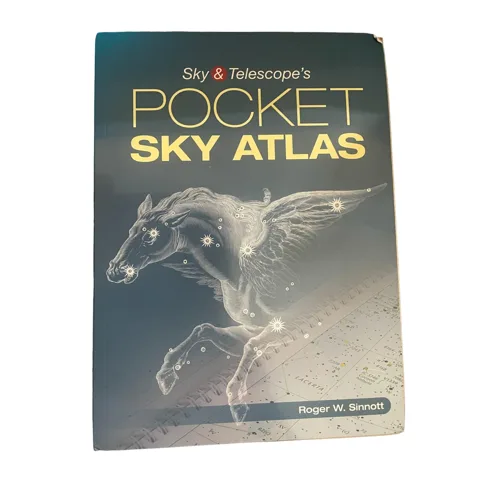
9. Pocket Sky Atlas (2nd edition)
Roger Sinnott’s atlas from Sky & Telescope maps the whole sky in 80 charts, down to stars of magnitude 7.6, with more than 1,500 galaxies, clusters and nebulae marked. It is spiral-bound and small enough for an eyepiece case. When you are ready to find objects on your own instead of following a guidebook, this is the atlas most observers use.
- American Astronomical Society, 107 pages, spiral-bound
- Math: none (you will learn to read right ascension and declination)
Good: detailed enough to use for years. Not great: it doesn’t tell you what an object will look like; for that, Karkoschka’s Observer’s Sky Atlas pairs charts with descriptions of 500 deep-sky objects.
Stage 3: Books written for self study
These two books were written for people learning alone. They explain the science behind what you see, with checks along the way to show you have understood it.
Best overall for self study
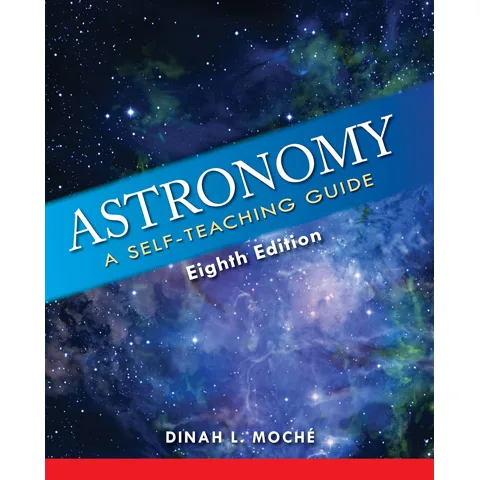
10. Astronomy: A Self-Teaching Guide (8th edition)
Dinah Moche taught astronomy at Queensborough Community College, and this book has been in print since 1978 because it does what no other astronomy book does: it teaches like a tutor. Each chapter opens with learning objectives, explains one idea at a time, then asks you questions and gives the answers so you can check yourself before moving on. It covers the sky, telescopes, light, the Sun, the planets, stars, galaxies and cosmology.
If you want one book to teach yourself astronomy and you aren’t sure where to start, start here. It sits between popular science and a textbook: you learn how astronomers measure distance, temperature and composition, not only what they found.
- Trade Paper Press, 388 pages
- Math: arithmetic and simple algebra, explained when used
- Self-tests with answers in every chapter
Good: the only book here built around checking your own understanding. Not great: the 2014 edition misses recent discoveries such as gravitational waves; the NASA science websites fill those gaps.
Best plain-language guide
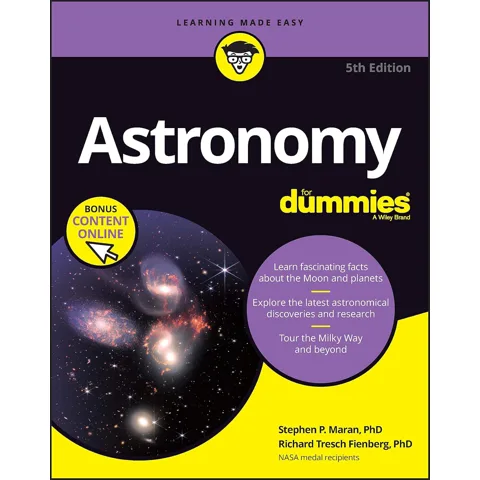
11. Astronomy For Dummies (5th edition)
Stephen Maran, a former NASA astronomer, and Richard Tresch Fienberg, the former press officer of the American Astronomical Society, cover the whole subject in short sections you can read in any order. The fifth edition adds online quizzes for every chapter, which makes it more useful for self study than earlier editions. It mixes observing advice with the science, so it works for someone who wants both.
- For Dummies (Wiley), 400 pages, 2023
- Math: none
- Online chapter quizzes
Good: up to date and easy to dip into. Not great: less structured than Moche. The next step in the series is Astrophysics For Dummies, which adds light algebra.
Stage 4: Introductory textbooks
These are the textbooks used in first-year college astronomy courses for non-science majors. They need algebra rather than calculus. They come with end-of-chapter problems. Doing those problems is what turns reading into learning: pick one textbook and work through it chapter by chapter.
Best free textbook
12. Astronomy 2e (OpenStax)
Andrew Fraknoi, David Morrison and Sidney Wolff wrote this full introductory textbook for OpenStax, the nonprofit at Rice University, and it is free to read online or download as a PDF. It covers the same ground as the commercial textbooks, with review questions, thought questions and figuring-for-yourself problems at the end of every chapter. The print version on Amazon is the same book in paperback, for readers who don’t want to study 1,200 pages on a screen.
- OpenStax / Kendall Hunt, 1,208 pages, 2nd edition (2022)
- Math: algebra, scientific notation, unit conversion
- Free at openstax.org; print copy on Amazon
Good: a complete course for free, updated in 2022. Not great: the writing is plainer than Bennett’s, and the print copy is a thick paperback that is awkward to hold.
Best intro textbook
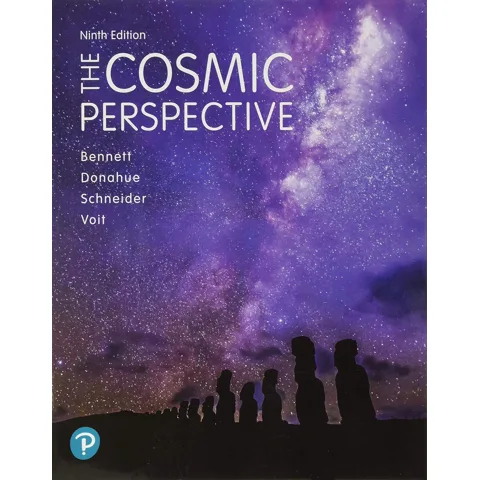
13. The Cosmic Perspective (9th edition)
Jeffrey Bennett, Megan Donahue, Nicholas Schneider and Mark Voit wrote one of the most widely used intro astronomy textbooks in the US. Its strength for self-learners is structure: each chapter starts with learning goals, each section ends with a “think about it” question, and the math sits in separate “Mathematical Insight” boxes you can work through or skip on a first pass. The chapters on how we learned the Earth moves and how we measure stellar distances are among the clearest in any textbook.
- Pearson, 727 pages, 9th edition (2019)
- Math: algebra in optional boxes, no calculus
Good: the best-organized textbook for working alone. Not great: new copies are sold by third-party sellers on Amazon and the 10th edition is rarely in stock; any edition from the 7th on teaches the same course.
Best detailed intro text
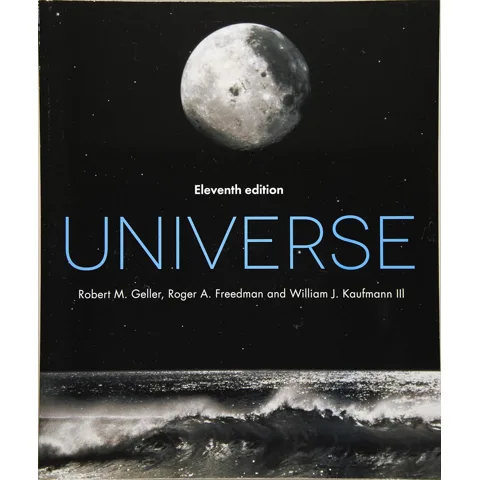
14. Universe (11th edition)
Roger Freedman, Robert Geller and William Kaufmann’s Universe goes into more physics than Bennett, with “Box” sections that work through the math step by step and a large set of problems at three levels of difficulty. It suits readers who were good at high school physics and want an intro text that doesn’t hold back. The book is 896 pages, so plan on a year to work through it.
- W. H. Freeman, 896 pages, 11th edition (2019)
- Math: algebra and some trigonometry, no calculus
Good: the most thorough of the algebra-level textbooks. Not great: only sold by third-party sellers on Amazon; the 10th edition is just as good for self study.
Best for “how do we know”
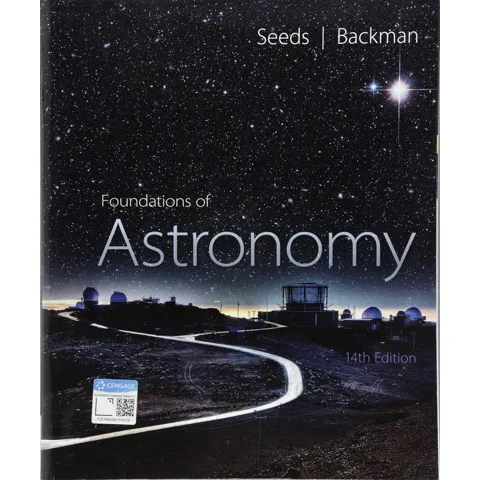
15. Foundations of Astronomy (14th edition)
Michael Seeds and Dana Backman organize each chapter around the questions astronomers asked and how they answered them. Short “How Do We Know?” boxes explain the evidence behind each claim, which trains you to read science critically. It is a little shorter than Bennett or Freedman and has a clear chapter on telescopes and light.
- Cengage, 688 pages, 14th edition (2018)
- Math: algebra in boxed examples
Good: teaches the reasoning, not only the results. Not great: sold by third-party sellers; check that the copy is not an instructor or international edition if you want the exact page layout.
Best textbook with the least math
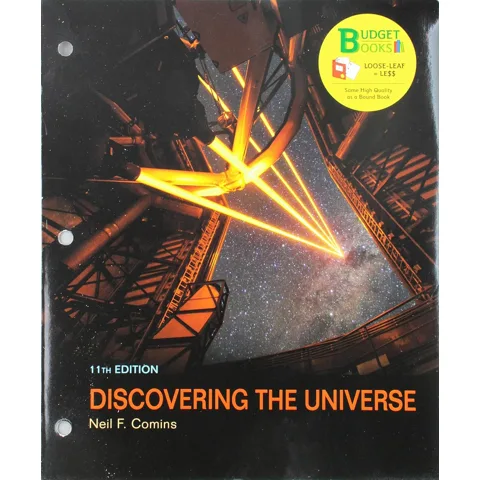
16. Discovering the Universe (11th edition)
Neil Comins writes in a conversational voice and keeps the math to a minimum. Each chapter also lists common misconceptions, such as the idea that the seasons come from the Earth’s distance to the Sun, and corrects them. It is the right textbook for an adult who wants a full course but has not done algebra in years.
- W. H. Freeman, 736 pages, loose-leaf for a three-ring binder
- Math: light algebra
Good: the most readable full textbook here. Not great: this is the unbound loose-leaf version, so you need a binder.
Best problem workbook
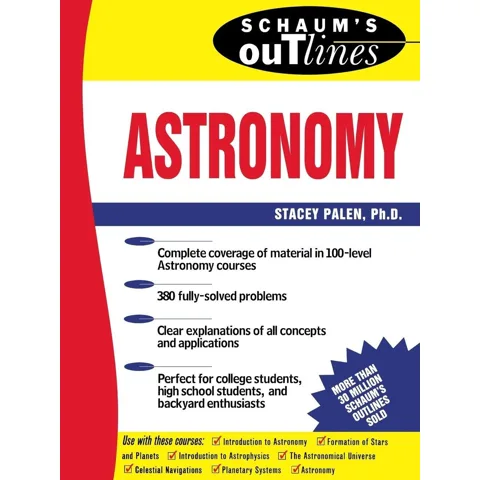
17. Schaum’s Outline of Astronomy
Stacey Palen’s outline is a book of solved problems, hundreds of them, covering everything from Kepler’s laws to the Hubble constant. Textbooks give answers to odd-numbered problems at best; Schaum’s shows every step. Use it alongside any of the textbooks above when you get stuck on the math or want more practice than the chapter gives you.
- McGraw Hill, 304 pages
- Math: algebra and trigonometry, worked out in full
Good: the missing answer key for self-learners. Not great: published in 2001, so some numbers are dated; the methods are not.
Stage 5: The bridge to astrophysics
Between the algebra-level textbooks and university astrophysics there is a gap, and it is mostly math. These books close it. A retired engineer in my local club spent one winter going through a calculus-based astronomy text with a calculus book open beside it, one evening at a time. By spring he was the person the rest of us asked about spectra. That pairing is what this stage is for.
Best bridge textbook
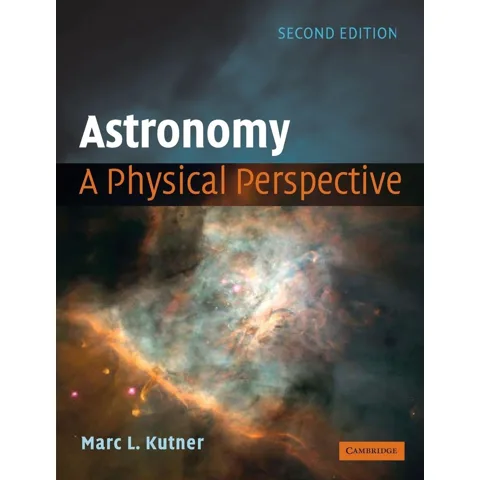
18. Astronomy: A Physical Perspective (2nd edition)
Marc Kutner wrote this textbook for students who know some physics and want astronomy explained through it. It derives results that the intro texts only state, using basic calculus, and covers stars, galaxies, cosmology and the Solar System. If you finished an intro textbook and want to know why the equations are true, this is the next book.
- Cambridge University Press, 598 pages, 2nd edition (2003)
- Math: basic calculus and introductory physics
Good: the gentlest route into real astrophysics. Not great: the 2003 edition predates many exoplanet results; sold by third-party sellers on Amazon.
Best compact university text
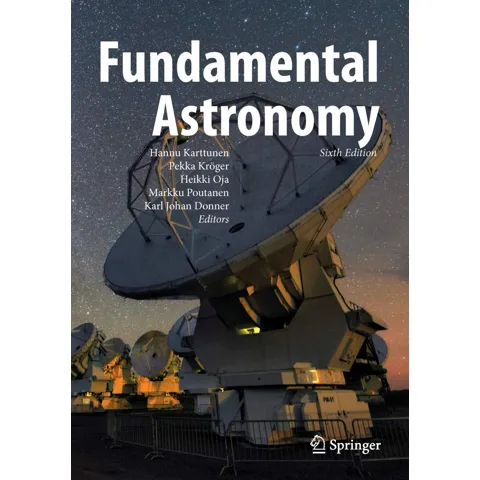
19. Fundamental Astronomy (6th edition)
Edited by Hannu Karttunen and colleagues at Finnish universities, this is the standard first-year astronomy text in much of Europe. It covers more than the American intro books, including spherical astronomy, celestial mechanics and observational methods, with worked examples and exercises in every chapter. It is dense, but it is complete.
- Springer, 550 pages, 6th edition
- Math: physics formulas throughout, calculus helpful
Good: the only book here with a full chapter on coordinates and timekeeping. Not great: few photos and a terse style; it reads like lecture notes.
Best for relativity without calculus
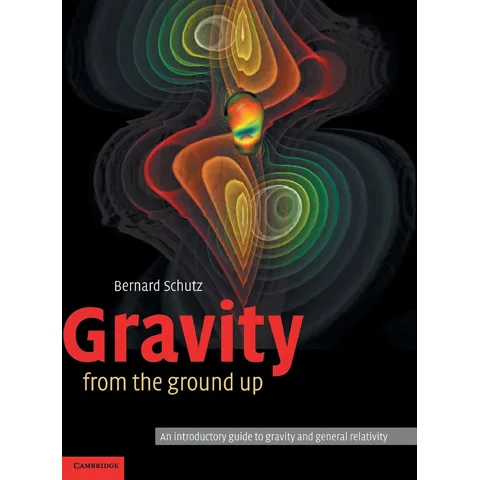
20. Gravity from the Ground Up
Bernard Schutz, a founding director of the Max Planck Institute for Gravitational Physics, explains gravity from falling apples to black holes, neutron stars, gravitational waves and cosmology. It uses only algebra, but it doesn’t skip the reasoning: you calculate things yourself, and the companion website has interactive programs for each chapter. Read it before a calculus-based relativity text.
- Cambridge University Press, 490 pages
- Math: algebra, no calculus
Good: real physics of black holes at a level anyone with high school math can follow. Not great: third-party sellers only. When you have calculus, James Hartle’s Gravity: An Introduction to Einstein’s General Relativity is the standard next step.
Best calculus primer
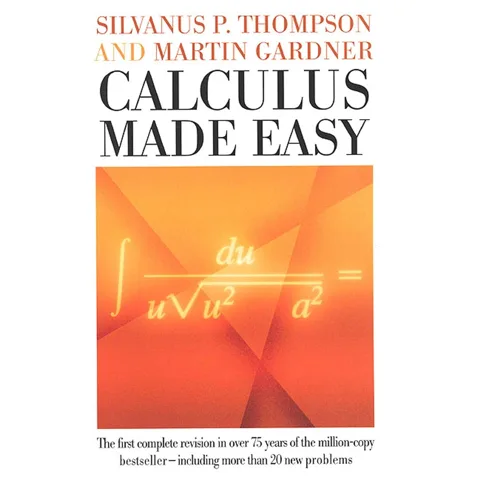
21. Calculus Made Easy
Silvanus Thompson wrote this book in 1910 for people scared of calculus, and Martin Gardner updated it with modern notation and examples. It explains derivatives and integrals in plain language, in about 300 pages. If calculus is what stands between you and Stage 6, this is the shortest route to the level the astrophysics books expect.
- St. Martin’s Press, 336 pages, revised edition
- Math: starts from algebra
Good: the friendliest calculus book in print. Not great: it won’t cover the differential equations and vector calculus that Carroll and Ostlie use; for those, Mary Boas’s Mathematical Methods in the Physical Sciences or Riley, Hobson and Bence’s Mathematical Methods for Physics and Engineering are the references.
Best physics companion
22. The Feynman Lectures on Physics, Vol. I
Astrophysics is physics applied to the sky, and Richard Feynman’s lectures from Caltech are the best-known explanation of the physics underneath it: mechanics, gravitation, light, radiation and heat. Volume I covers most of what Stage 6 assumes. Caltech also publishes all three volumes free online, so buy the print copy only if you prefer paper.
- Basic Books, 560 pages, New Millennium edition
- Math: calculus
Good: explains why things happen better than any standard physics textbook. Not great: few practice problems; pair it with a problem-focused text if you need drill.
Stage 6: University astrophysics and cosmology
These are the books used in undergraduate astrophysics courses. Each one expects calculus and calculus-based physics. In return, they teach astrophysics at the level a working astronomer learned it.
Best undergraduate astrophysics book
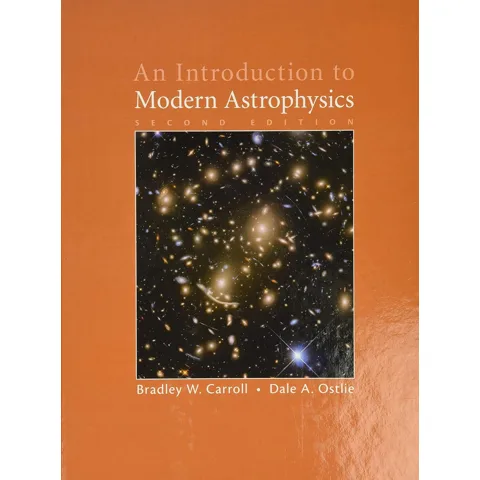
23. An Introduction to Modern Astrophysics (2nd edition)
Bradley Carroll and Dale Ostlie’s textbook, nicknamed “the big orange book,” covers the whole field in 1,359 pages: celestial mechanics, radiation, stellar structure and evolution, the Sun, compact objects, the Milky Way, galaxies and cosmology. It is the textbook self-learners recommend most often, by a wide margin, in threads about learning astrophysics on your own. The explanations are patient, and every chapter ends with problems.
- Cambridge University Press, 1,359 pages, 2nd edition (2017)
- Math: a year of calculus and calculus-based physics
Good: the one book that covers everything at university level. Not great: heavy and expensive; new copies come from third-party sellers. The first edition (1996) is fine for stars and galaxies if you find one used.
Best shorter alternative
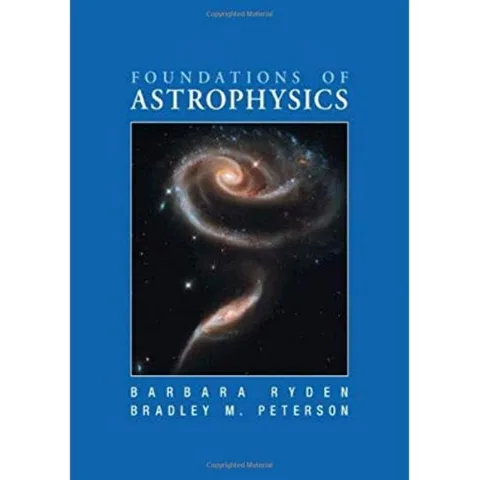
24. Foundations of Astrophysics
Barbara Ryden and Bradley Peterson of Ohio State wrote a one-year astrophysics course in 610 pages, about half the length of Carroll and Ostlie. It covers the same topics with less detail and a lighter tone, and it works better than the big orange book for a self-learner who wants to finish.
- Cambridge University Press, 610 pages (2020)
- Math: calculus-based physics
Good: realistic to complete on your own. Not great: less depth on stellar interiors than Carroll and Ostlie.
Best cosmology book
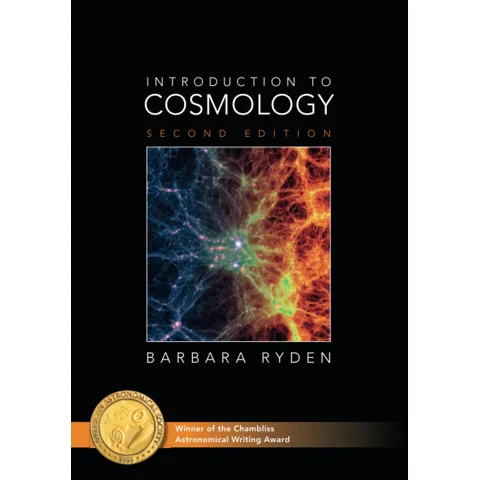
25. Introduction to Cosmology (2nd edition)
Barbara Ryden’s short textbook is the standard first cosmology course: the expansion of the universe, the Friedmann equation, dark matter, the cosmic microwave background, the early universe and inflation. It assumes calculus but no general relativity, and it builds the equations from simple physical arguments. At 278 pages, it is the most achievable upper-level book on this list.
- Cambridge University Press, 278 pages, 2nd edition (2016)
- Math: calculus and introductory physics
Good: clear and short enough to finish in a few months. Not great: covers cosmology only; read it after a general astrophysics book.
Best for physics graduates
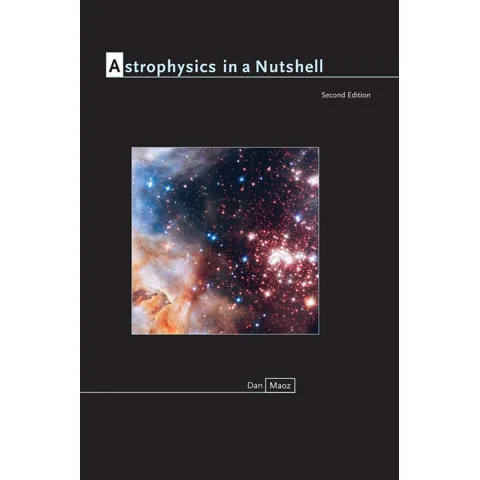
26. Astrophysics in a Nutshell (2nd edition)
Dan Maoz of Tel Aviv University packs a one-semester astrophysics course into 312 pages. It moves quickly and relies on order-of-magnitude reasoning, the way working astrophysicists think. The problems are excellent. It suits someone with a physics or engineering degree who wants astrophysics without a 1,300-page book.
- Princeton University Press, 312 pages, 2nd edition (2016)
- Math: calculus and undergraduate physics
Good: the most efficient route through the subject. Not great: too terse as a first astrophysics book; sold by third-party sellers on Amazon.
Best galaxies book
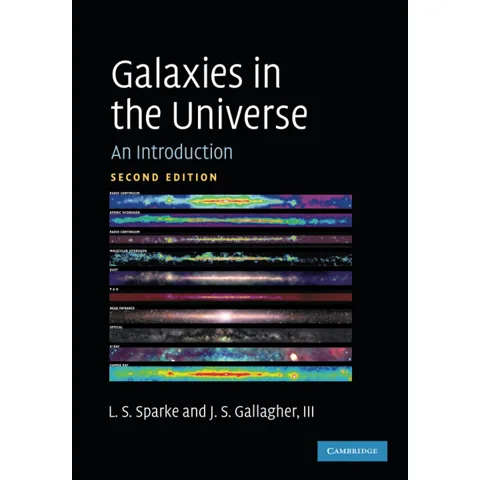
27. Galaxies in the Universe: An Introduction (2nd edition)
Linda Sparke and John Gallagher cover the Milky Way, other galaxies, dark matter, galaxy groups and clusters, and how galaxies formed. It is the usual next book after Carroll and Ostlie for a reader drawn to galaxies rather than stars. For the graduate-level treatment of how stars move in galaxies, Binney and Tremaine’s Galactic Dynamics is the reference.
- Cambridge University Press, 440 pages, 2nd edition (2007)
- Math: calculus and undergraduate physics
Good: the clearest upper-level introduction to galaxies. Not great: published in 2007, before many large survey results.
Free courses to pair with the books
A textbook plus a lecture series is the closest thing to taking a course. These are free, and each matches one of the stages above.
- Crash Course Astronomy (YouTube): 46 short episodes by Phil Plait. Matches Stages 1 to 3 and is the video series self-learners recommend most often.
- OpenStax Astronomy 2e: the full textbook from card 12, free online and as a PDF.
- Astronomy: Exploring Time and Space (Coursera, University of Arizona): an intro course taught by Chris Impey, free to audit. Matches Stage 4.
- Khan Academy: the cosmology and astronomy section, plus the algebra, calculus and physics courses you need for Stages 4 to 6.
- MIT OpenCourseWare: lecture notes and problem sets from MIT’s astrophysics courses. Matches Stages 5 and 6.
- The Feynman Lectures: all three volumes free on Caltech’s website.
For a paid lecture series, Alex Filippenko’s Understanding the Universe from The Great Courses is 96 lectures by a Berkeley astronomer who has won teaching awards for his introductory course.
How to study astronomy on your own
The book matters less than the routine. Here is the plan that works for most adults learning in the evenings.
Read one chapter a week. An intro textbook has about 25 chapters. At one a week you finish in six months, which is about the length of a two-semester course without the exams.
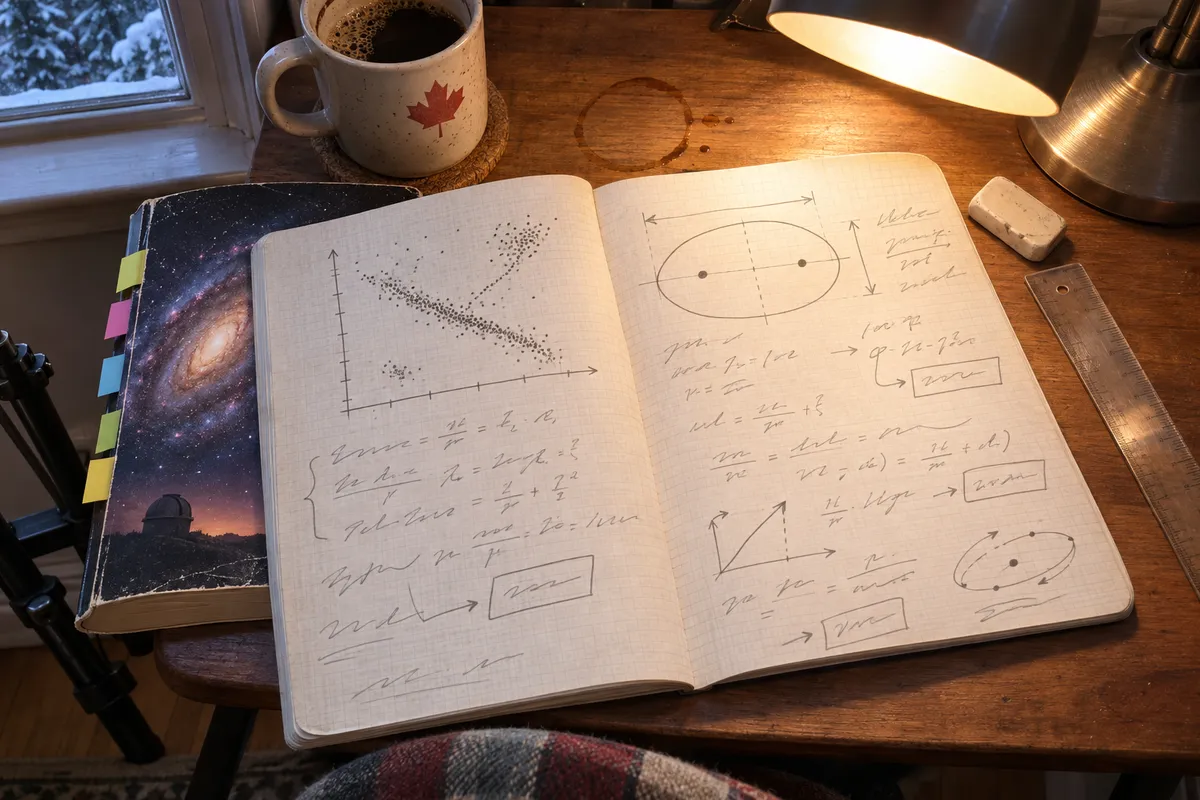
Keep a notebook. Write a half-page summary of each chapter in your own words and copy the key diagrams by hand. Drawing the Hertzsprung-Russell diagram once teaches you more than reading about it three times.
Do the problems. Pick five end-of-chapter problems, including at least two with numbers. If you can’t solve one, find a similar example in Schaum’s Outline or the OpenStax worked examples. Our telescope resolution calculator and magnification calculator check your answers to the telescope problems every intro textbook includes.
Go outside once a week. Find what the chapter talked about: the Moon’s phase after the chapter on the Moon, a red giant after stellar evolution, the Andromeda Galaxy after galaxies. Our Moon phase today page and the free planetarium program Stellarium tell you what is up.
Find people. A local astronomy club gives you observing nights, loaner telescopes and members who can answer questions. NASA’s Night Sky Network lists clubs across the US. If you are new to the hobby, our astronomy for beginners guide covers the first steps outdoors.
FAQ
Can you teach yourself astronomy?
Yes. Astronomy is one of the easiest sciences to learn on your own, because the textbooks are well written, free courses exist at every level and the sky is available every clear night. Start with a popular book, learn the constellations, then work through one introductory textbook such as OpenStax Astronomy 2e, doing the problems at the end of each chapter.
What is the best astronomy book for self study?
Astronomy: A Self-Teaching Guide by Dinah Moche is the best single book for self study, because it includes learning objectives, self-tests and answers in every chapter. For a full textbook, The Cosmic Perspective by Bennett and colleagues or the free OpenStax Astronomy 2e are the best choices.
What is the best astronomy book for beginners?
For learning the science, Astrophysics for People in a Hurry by Neil deGrasse Tyson is the best short introduction. For learning the night sky, NightWatch by Terence Dickinson is the standard beginner guide. Neither requires any math.
Do I need math to learn astronomy?
Not to start. Popular science books and observing guides need no math. Introductory textbooks use algebra and scientific notation. University astrophysics, such as Carroll and Ostlie, requires calculus and calculus-based physics.
What textbook do universities use for astrophysics?
An Introduction to Modern Astrophysics by Bradley Carroll and Dale Ostlie is the most widely used undergraduate astrophysics textbook. Foundations of Astrophysics by Ryden and Peterson and Astrophysics in a Nutshell by Dan Maoz are common alternatives, and Barbara Ryden’s Introduction to Cosmology is the usual cosmology text.
Is OpenStax Astronomy really free?
Yes. OpenStax Astronomy 2e is free to read online and download as a PDF from openstax.org. It was written by Andrew Fraknoi, David Morrison and Sidney Wolff and published by OpenStax at Rice University. A printed paperback is sold separately for readers who prefer paper.
Can I use an older edition of an astronomy textbook?
Yes. New editions of intro astronomy textbooks mostly update photos and recent discoveries. The physics is the same, so an edition from the last ten years is fine for self study. Check NASA’s websites for newer results on exoplanets, black holes and cosmology.
How long does it take to learn astronomy on your own?
Working through one introductory textbook at a chapter a week takes about six months. Reaching undergraduate astrophysics level takes longer, often two to three years, because you also need calculus and physics.
Should I learn astronomy or astrophysics first?
Astronomy first. Introductory astronomy covers the sky, the Solar System, stars and galaxies with algebra-level math. Astrophysics explains the same objects with the physics behind them and needs calculus, so it makes more sense once you know what you are explaining.
Sources
- OpenStax, Rice University, Astronomy 2e.
- Caltech, The Feynman Lectures on Physics (free online edition).
- MIT OpenCourseWare, Astrophysics courses.
- Coursera, University of Arizona, Astronomy: Exploring Time and Space.
- Crash Course, Crash Course Astronomy.
- NASA, Universe science and Night Sky Network.
- Astronomy magazine, readers’ recommendations of beginner books (2026).
- Book details from each Amazon listing, checked November 10, 2026.