As an Amazon Associate, Little Astronomy earns from qualifying purchases. The links below go to Amazon.
A good space book on the coffee table does a job a framed print can’t: guests pick it up. I keep a stack of them in the living room, and the same thing happens at every visit. Someone sits down, opens the Hubble book to a random page and stays there for twenty minutes.
This guide covers the space coffee table books I would buy today, grouped by subject: Hubble and Webb, Apollo and NASA history, planets and Earth and night-sky photography. Every title is in print and sold on Amazon US as of November 2026. Of the seven books in the 2022 version of this list, I kept The Planets, Expanding Universe, The NASA Archives, Infinite Wonder and Moonshots. I dropped Scott Kelly’s Endurance, which is a memoir with few pictures, and the NASA Graphics Standards Manual, a design book rather than a space book. Six new titles cover Webb, Apollo, early spaceflight, Earth and recent night-sky photography.
Quick picks
| Book | Best for | Subject | By |
|---|---|---|---|
| Expanding Universe | Best overall | Hubble | Taschen |
| The NASA Archives | Biggest statement piece | 60 years of NASA | Piers Bizony |
| Apollo Remastered | Best Apollo book | Moon landings | Andy Saunders |
| Infinite Cosmos | Best Webb book | James Webb | Ethan Siegel |
| Webb’s Cosmos | Most Webb detail | James Webb | Marcin Sawicki |
| The Planets | Best for families | Solar system | Nirmala Nataraj |
| Earth and Space | Best for Earth views | Earth from orbit | Nirmala Nataraj |
| Astronomy Photographer of the Year: Collection 14 | Best night-sky photos | Amateur astrophotography | Royal Observatory Greenwich |
| Moonshots | Best for photographers | Hasselblad cameras in space | Piers Bizony |
| Infinite Wonder | Best view from the ISS | A year in orbit | Scott Kelly |
| Gemini and Mercury Remastered | Best early spaceflight | Mercury and Gemini | Andy Saunders |
The 11 best space coffee table books
Best overall
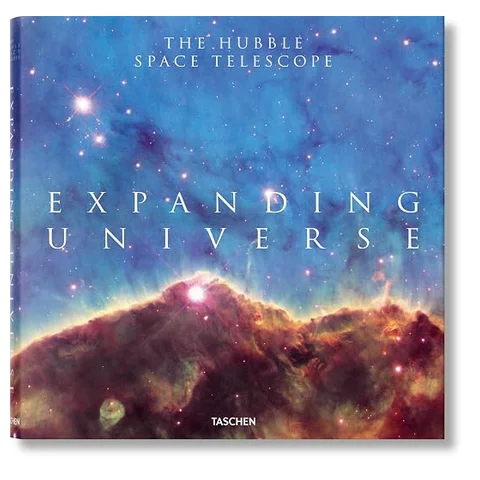
1. Expanding Universe: The Hubble Space Telescope
- Publisher: Taschen
- Authors: Owen Edwards, Charles Bolden, John Grunsfeld and Zoltan Levay
- Subject: Hubble
Hubble launched in 1990 and has produced some of the most recognizable images in astronomy, from the Pillars of Creation to the Deep Fields. Taschen collected the best of them in a large hardcover where the pictures run big, often across a full page or a two-page spread. The authors include former NASA administrator Charles Bolden and astronaut John Grunsfeld, who flew servicing missions to the telescope.
What I like: This is the book people reach for first. The galaxy and nebula spreads look better printed than they do on any screen, and the text stays short, so the pictures carry it. If you buy one book from this list, buy this one. The photos also pair well with our list of galaxies discovered by Hubble when someone asks what they are looking at.
Drawbacks: The Amazon listing is the multilingual edition, so the text appears in more than one language. It is a big book, close to a foot square, and it needs a table or a low shelf.
Biggest statement piece
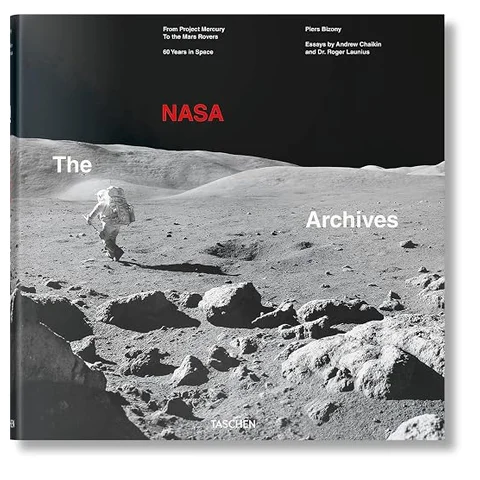
2. The NASA Archives: 60 Years in Space
- Publisher: Taschen (Extra Large)
- Author: Piers Bizony, with essays by Andrew Chaikin and Roger Launius
- Subject: Mercury to the Mars rovers
The listing calls it the Extra Large edition and it earns the name. It is about 13 inches square and heavy enough that I lift it with two hands. The photographs come from NASA’s own archives and run from Project Mercury through Apollo and the shuttle era to the Mars rovers. Andrew Chaikin, who wrote the book that inspired From the Earth to the Moon, contributes one of the essays.
What I like: It covers the whole history of NASA in one object. The Apollo lunar surface pictures work especially well at this size, and a single page can hold a guest’s attention for a minute. It is the one I put in the middle of the table when I want the room to look like it belongs to someone who loves space.
Drawbacks: Size is the only real complaint. It does not fit on a standard bookshelf and it is awkward to read in a chair. Treat it as a table book.
Best Apollo book
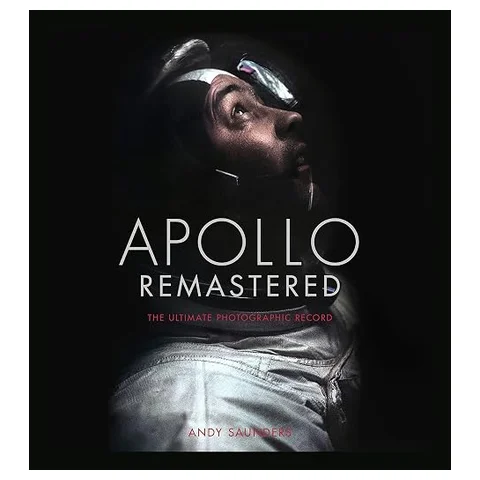
3. Apollo Remastered: The Ultimate Photographic Record
- Publisher: Black Dog & Leventhal
- Author: Andy Saunders
- Subject: Apollo missions
Saunders restored the Apollo photographs from scans of the original film and spent years on the work. The result is a thick hardcover covering the Apollo program, with the Apollo 8 Earthrise, the Apollo 11 surface pictures and the later J-missions, where the astronauts drove the lunar rover. The Amazon US edition runs 432 pages.
What I like: The restored pictures look different from the ones most of us grew up with. Colors on the lunar surface are cleaner, shadows keep detail and the black of space looks properly black. It is the book I hand to people who say they have seen all the Apollo photos. To go with it, read our Apollo missions guide or why Apollo 11 mattered.
Drawbacks: It is a heavy book with a lot of pages, so a long sit with it is tiring.
Best Webb book
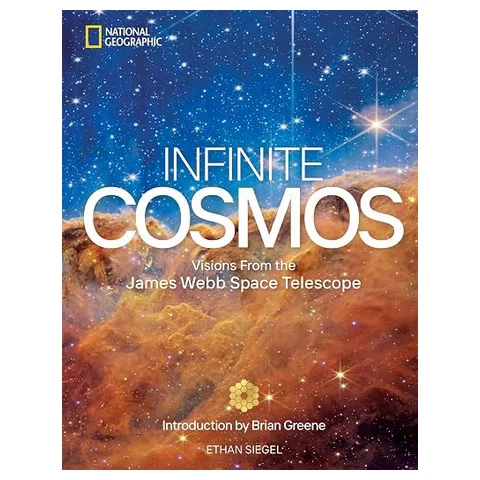
4. Infinite Cosmos: Visions from the James Webb Space Telescope
- Publisher: National Geographic
- Author: Ethan Siegel, introduction by Brian Greene
- Subject: James Webb Space Telescope
The James Webb Space Telescope launched in December 2021 and released its first images in July 2022. Infinite Cosmos is the National Geographic book on those images. Ethan Siegel writes the text, Brian Greene introduces it, and the pictures show infrared views of nebulae, distant galaxies and the planets of our own solar system.
What I like: It balances pictures and explanation well. You learn why Webb’s infrared view sees through dust that hides stars from Hubble. It is the Webb book I would give to someone who wants to understand the images and not just look at them.
Drawbacks: The text is more than a typical photo book carries, so it works better for readers than for people who only want to flip pages. Webb has kept observing since the book was written, so the newest results are not in it.
Most Webb detail
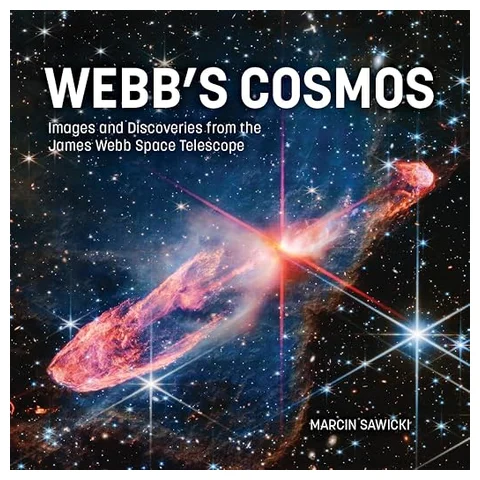
5. Webb’s Cosmos: Images and Discoveries from the James Webb Space Telescope
- Publisher: Firefly Books
- Author: Marcin Sawicki
- Subject: James Webb Space Telescope
Webb’s Cosmos is the other strong Webb book. It covers what Webb has found, from the earliest galaxies to star-forming clouds and the atmospheres of exoplanets, with each image next to the science behind it. The cover shows jets from a young star in infrared, which is a fair preview of the inside.
What I like: It runs longer than Infinite Cosmos and goes further into individual discoveries. If Infinite Cosmos is the book for understanding Webb, this is the one for browsing it.
Drawbacks: Most readers only need one Webb book. Pick this one for more pictures and discoveries, or Infinite Cosmos for stronger writing. The two overlap on the best-known images.
Best for families
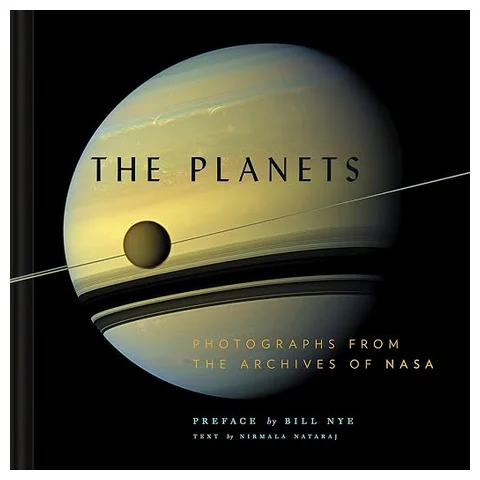
6. The Planets: Photographs from the Archives of NASA
- Publisher: Chronicle Books
- Author: Nirmala Nataraj, with Bill Nye
- Subject: The solar system
A photographic tour of the planets and their moons, using pictures from Hubble, Earth-based observatories and the spacecraft that visited each world. Nirmala Nataraj wrote the captions, and Bill Nye is credited on the opening text. The captions are short and written so a kid can read them alone.
What I like: It is the most approachable book on this list. My kids pick it up without being asked, and the captions give them one fact per picture without lecturing. It is also one of the easier books to give as a gift because nobody needs to know much about astronomy to enjoy it. For younger readers, see our list of best space books for kids.
Drawbacks: The pictures are smaller than in the Taschen books, and it covers the solar system only. It will not show you galaxies.
Best for Earth views
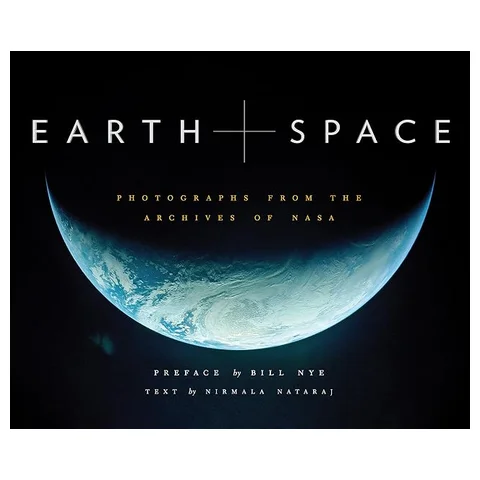
7. Earth and Space: Photographs from the Archives of NASA
- Publisher: Chronicle Books
- Author: Nirmala Nataraj, preface by Bill Nye
- Subject: Earth from orbit and beyond
The companion to The Planets, in a wide landscape format. It focuses on our own planet and its surroundings as NASA cameras have seen them. The cover, a thin crescent of Earth against black, sets the tone.
What I like: The landscape format suits the subject, since the curve of the Earth looks better wide. It pairs with the interactive Earth 3D model for anyone who wants to turn the planet around.
Drawbacks: It overlaps with The Planets and the NASA Archives. If you already own those, this adds little new.
Best night-sky photos
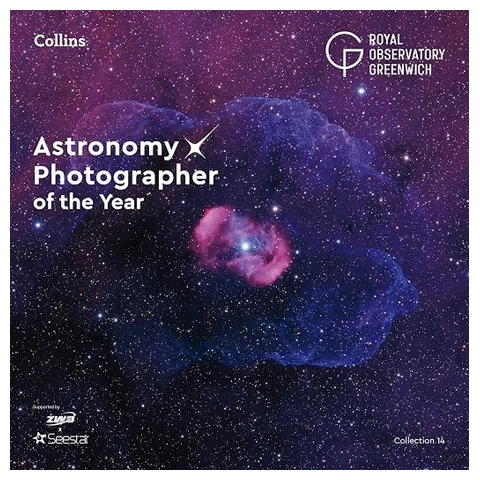
8. Astronomy Photographer of the Year: Collection 14
- Publisher: Collins
- Author: Royal Observatory Greenwich
- Subject: Amateur astrophotography
Every year the Royal Observatory Greenwich runs the Astronomy Photographer of the Year competition, and Collins publishes the best entries in a hardcover collection. Collection 14 covers the 2025 competition with 140 winning and shortlisted images: auroras, galaxies, the Moon and the Sun, plus wide landscape shots with the Milky Way overhead.
What I like: These are pictures taken by people with backyard gear, not space agencies, and that changes how you look at them. Each one has a caption with the photographer, the location and the equipment, so readers who own a telescope can see what is possible. It is a good gift for a new astronomer.
Drawbacks: It is a more modest size than the Taschen books. A new collection comes out each year, so earlier editions, including Collection 13, may be easier to find if you prefer a different year.
Best for photographers
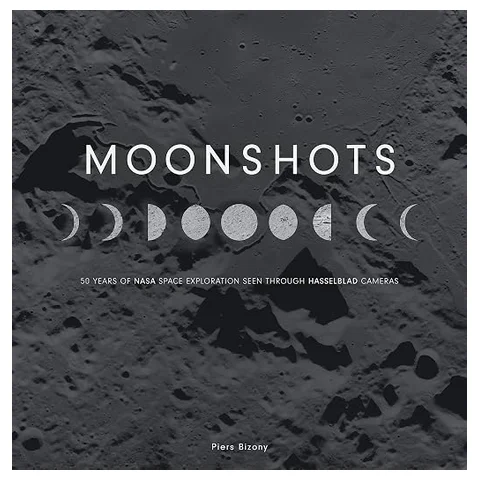
9. Moonshots: 50 Years of NASA Space Exploration Seen through Hasselblad Cameras
- Author: Piers Bizony
- Format: Hardcover
- Subject: Hasselblad cameras in space
NASA flew Hasselblad cameras on the Apollo missions, and most of the famous pictures from the lunar surface came from them. Piers Bizony tells the story of those cameras and shows the photographs they took across fifty years of exploration.
What I like: It answers a question I hear often, how astronauts took those pictures with no viewfinder and thick gloves. The book gives a photographer’s view of the Apollo images, and it is a great gift for anyone who owns a camera. The cover with the lunar surface and phases of the Moon looks good on a table.
Drawbacks: A softcover edition exists, so buy the hardcover if you want a coffee table book. Stock comes from third-party sellers at times, so check the seller line on the listing.
Best view from the ISS
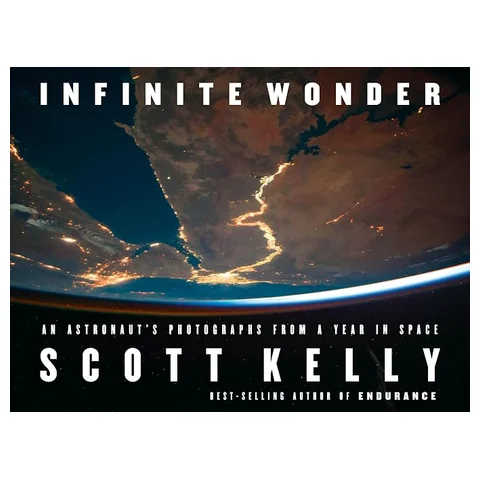
10. Infinite Wonder: An Astronaut’s Photographs from a Year in Space
- Publisher: Knopf
- Author: Scott Kelly
- Subject: A year on the International Space Station
Scott Kelly spent close to a year on the International Space Station in 2015 and 2016, and he photographed Earth throughout. Infinite Wonder collects his pictures: cities at night, storms, coastlines, auroras and the thin blue edge of the atmosphere, in a wide landscape format.
What I like: These are pictures taken by one person over many months, so they share a point of view you do not get in an agency archive. The night-time shots of cities are the ones guests ask about. It makes a good gift for anyone who has read Kelly’s memoir Endurance.
Drawbacks: It covers Earth and not deep space. Amazon stock sometimes comes from third-party sellers, so check the seller line before you order.
Best early spaceflight
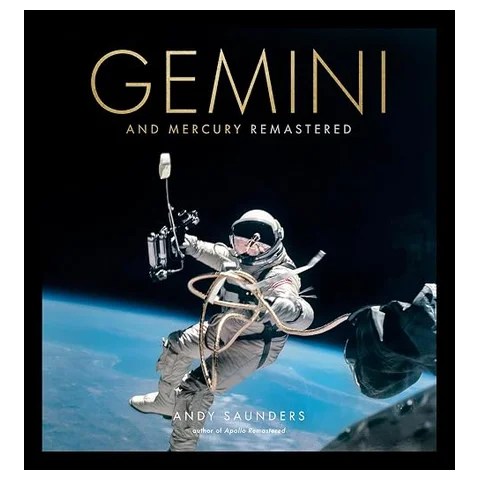
11. Gemini and Mercury Remastered
- Publisher: Black Dog & Leventhal
- Author: Andy Saunders
- Subject: Mercury and Gemini
Andy Saunders followed Apollo Remastered with the two programs that came first. Mercury put the first Americans in space, and Gemini tested the spacewalks, rendezvous and docking that Apollo needed to reach the Moon. Saunders restored the photographs from the original film, as he did for Apollo.
What I like: The early program pictures are the least familiar, so there is more to discover. Gemini was the program of the first American spacewalks. Pair it with Apollo Remastered and you have the full sequence from first orbit to the lunar surface.
Drawbacks: It is a narrower topic than the Apollo book. If you want only one Saunders book, Apollo Remastered has the more famous pictures.
How to choose a space coffee table book
Pick the subject first
Hubble and Webb books show deep space: nebulae, galaxies and star clusters. Apollo and NASA archive books show people and machines. Planet books show worlds up close. Astrophotography collections show the night sky from the ground. Decide which of those suits your guests or the person you are buying for, and the list gets short fast.
Check the size before you buy
Size is the biggest difference between these books. The Taschen titles are large and heavy, and they look best on a table where you can open them flat. The Chronicle and Collins books are smaller and easier to handle. If you want a book that fits a shelf, choose from the smaller group. If you want a centerpiece, choose Expanding Universe or The NASA Archives.
Pictures or text
Expanding Universe, Apollo Remastered and the Collins collection let the photos lead. Infinite Cosmos and Webb’s Cosmos give more explanation. For a table book that people flip through, lean toward pictures. For a gift to someone who likes to read, lean toward text.
Buy the hardcover and check the edition
A coffee table book should be a hardcover. Some of these titles also exist as paperbacks or in other languages, and the listing shows which one you are about to buy. Read the format line on the Amazon page before you order.
Gifts
These books work well as gifts because they do not depend on what someone already owns. For a first space book, The Planets or Expanding Universe are the safest choices. For someone with a telescope, give the Astronomy Photographer of the Year collection. For an Apollo fan, Apollo Remastered. More gift ideas are in our guides to astronomy gifts for adults and space-themed gifts. If the reader wants a book with more words, see our Mars books list.
FAQ
What is the best space coffee table book?
Expanding Universe from Taschen is the best space coffee table book for most people. It collects Hubble’s best images in a large hardcover with short text. If you prefer Apollo, choose Apollo Remastered. If you prefer the James Webb Space Telescope, choose Infinite Cosmos.
What is the best book of James Webb Space Telescope images?
Infinite Cosmos by Ethan Siegel, from National Geographic, is the best Webb book for readers who want explanation along with the images. Webb’s Cosmos by Marcin Sawicki runs longer and goes deeper on individual discoveries. Either one is a good pick, and most people only need one.
What is the best book of Apollo photographs?
Apollo Remastered by Andy Saunders is the best Apollo photo book. It uses pictures restored from the original film. For a book that covers all of NASA’s history including Apollo, choose The NASA Archives: 60 Years in Space.
What is a good space coffee table book for kids?
The Planets: Photographs from the Archives of NASA is the best coffee table book for kids. The captions are short and the pictures cover every planet. For a book with more story, see our list of best space books for kids.
Are these books too big for a normal coffee table?
The Taschen books, Expanding Universe and The NASA Archives, are the largest. The NASA Archives is about 13 inches square. They fit most coffee tables but need space to open. The Chronicle, Collins and Black Dog & Leventhal books are smaller.
Which space coffee table book is best as a gift?
The Planets and Expanding Universe suit the widest range of people. The Astronomy Photographer of the Year collection suits anyone with a telescope or a camera, and Apollo Remastered suits Apollo and space history fans.