TLDR
- An ocean planet is a world with so much water that it forms a global layer, often tens to hundreds of kilometers deep.
- Nobody has confirmed one outside our Solar System. The exoplanet candidates are all inferred from mass and size, not observed directly.
- Inside our Solar System, “ocean worlds” are real: Europa, Enceladus, Ganymede, and Titan hide oceans under ice.
- Too much water may actually hurt habitability, because a thick ice layer can cut the ocean off from the rock beneath it.
Table of contents
- What is an ocean planet?
- Ocean planet, ocean world, water world, hycean world
- How ocean planets form
- What’s inside an ocean planet
- Ocean worlds we know exist
- The best exoplanet candidates
- Could an ocean planet host life?
- How telescopes could detect an ocean
- FAQ
What is an ocean planet?
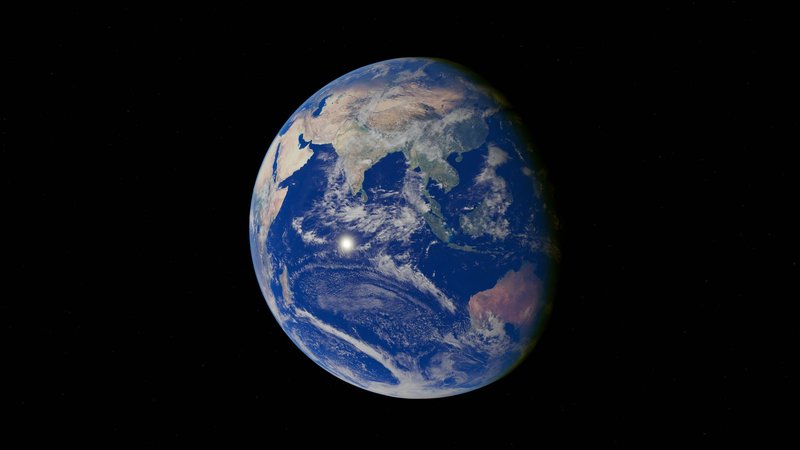
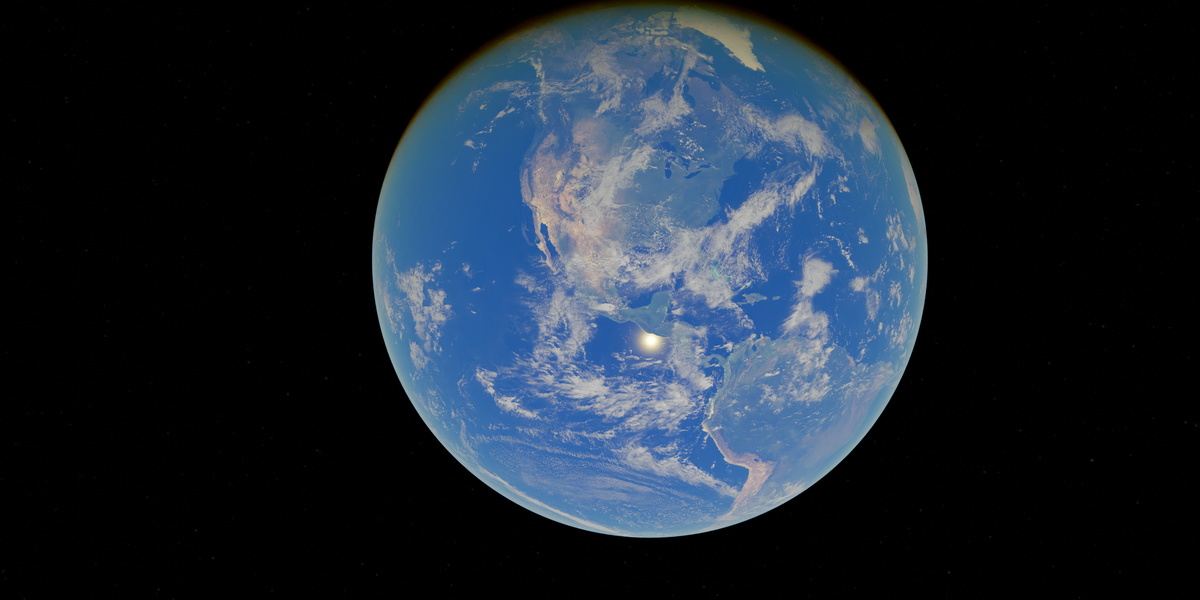
An ocean planet is a planet or moon with a global water layer, deep enough that no continents break the surface. Earth doesn’t qualify. Our oceans look enormous, but they make up only about 0.02 percent of the planet’s mass. A true ocean planet would be a very different object, with water making up a large fraction of its total mass, possibly 10 percent or more.
The idea has a specific origin. In 2004, astronomers Alain Léger, Franck Selsis, and colleagues proposed a new family of planets they called “ocean planets”: bodies that formed far from their star, where ice is abundant, and then moved inward. At the time, no one had found a planet that small. Now thousands of exoplanets are catalogued, and a few of them have densities that fit the idea.
Ocean planet, ocean world, water world, hycean world
These four terms get used interchangeably, and they shouldn’t be. Here is how they split.
- Ocean planet / water world: a planet with a deep, global ocean as a major part of its makeup. Mostly hypothetical outside our Solar System.
- Ocean world: the broader NASA-style term for any body with a liquid ocean, including icy moons with oceans buried under kilometers of ice. These are confirmed, and they’re in our neighborhood.
- Hycean world: a planet proposed by Nikku Madhusudhan and colleagues in 2021, with a water ocean beneath a thick hydrogen-rich atmosphere. K2-18 b is the best-known candidate, and whether it has an ocean at all is still argued.
So when someone asks “are there planets covered in water?”, the honest answer has two parts. Moons with hidden oceans: yes. Planets with surface oceans a hundred kilometers deep: probably, but unproven.
How ocean planets form
The leading model is simple. Beyond the “snow line,” the distance from a star where water freezes solid, planet-building material is rich in ice. A planet that forms there can end up with 10 to 50 percent water by mass. If it later migrates toward the star, the ice melts and you get a deep ocean, or, if it gets too close, a thick steam atmosphere.
There is a newer twist. A 2025 study from ETH Zurich found that some water-rich exoplanets may not need to import their water at all. Hydrogen in the atmosphere can react with a magma ocean on the surface and produce water. That would make water-rich planets more common than the migration story alone suggests, and it complicates the job of working out where a planet’s water came from.
What’s inside an ocean planet

Picture a layer cake. At the center sits a rocky and metallic core. Above it is a thick shell of high-pressure ice. On top of that is the liquid ocean, then the atmosphere.
The ice layer is the strange part. Water under extreme pressure freezes into forms like ice VI and ice VII even when it’s hot, because the weight of the ocean above squeezes the molecules into a solid. On a planet with a deep enough ocean, the seafloor isn’t rock. It’s hot ice.
That matters for life, which we’ll get to below. First, the worlds that exist.
Ocean worlds we know exist
Our Solar System has several bodies with oceans under their surfaces. None of them are planets, and all are sealed under ice.
- Europa (Jupiter): Magnetic field measurements from the Galileo spacecraft point to a salty global ocean under the ice shell. Estimates put its water volume at around twice that of all Earth’s oceans. NASA’s Europa Clipper, launched in 2024, is due to reach Jupiter in 2030 to study it.
- Enceladus (Saturn): Cassini flew through plumes of water vapor and ice erupting from cracks at the south pole, and later measurements of the moon’s wobble showed the ocean is global. The plume samples contained salts and organic molecules, as NASA’s Enceladus research describes.
- Ganymede (Jupiter): The largest moon in the Solar System, larger than Mercury. It generates its own magnetic field and appears to hold an ocean sandwiched between layers of ice.
- Titan (Saturn): Cassini gravity and tidal data suggest a liquid water layer deep below the hydrocarbon lakes on the surface.
These are the real-world versions of the ocean-world idea. They’re much smaller than the exoplanet candidates, and they stay liquid because tidal flexing from their giant host planets keeps their interiors warm.
The best exoplanet candidates
No telescope has seen an exoplanet ocean. What astronomers have are mass and radius measurements, which give a planet’s average density. A planet that’s too light to be solid rock, but too dense to be a puffy gas world, may carry a lot of water. That’s a hint, not proof, because other mixtures can produce the same density.
| Planet | Distance | Size | What the data suggest | Status |
|---|---|---|---|---|
| TRAPPIST-1 (several planets) | ~40 light-years | 0.8 to 1.1 Earth radii | Some planets are slightly less dense than pure rock, which could mean water or ice | Candidate, unconfirmed |
| Kepler-22b | ~600 light-years | ~2.4 Earth radii | In the habitable zone, but its mass was never pinned down | Hypothetical |
| TOI-1452 b | ~100 light-years | ~1.7 Earth radii | Density consistent with a world that could be up to about 30 percent water | Candidate, unconfirmed |
| LHS 1140 b | ~48 light-years | ~1.7 Earth radii | Roughly 10 to 20 percent water by mass is possible; a rockier interpretation also fits | Candidate, unconfirmed |
| GJ 1214 b | ~48 light-years | ~2.7 Earth radii | Once the textbook water world, now thought to have a hazy, metal-rich atmosphere | Doubtful |
A few notes on the list.
TRAPPIST-1 has seven rocky-sized planets around a small red dwarf. NASA’s TRAPPIST-1 page covers the system. Several planets sit in or near the habitable zone, and density estimates leave room for substantial water. JWST observations of the innermost planets, though, show little sign of thick atmospheres.
TOI-1452 b orbits one of two red dwarfs in a binary system in the constellation Draco. Its discoverers noted that its density would fit a planet with a very large water fraction.
LHS 1140 b is a “super-Earth” in its star’s habitable zone. It’s one of the best-studied candidates, and the answer to whether it’s an ocean world or a large rocky one is still open.
GJ 1214 b is the cautionary tale. It was announced in 2009 as a likely water world. Later JWST data found that its atmosphere is thick with haze, which makes the original picture hard to confirm.
Notice the pattern. Every entry carries a “maybe.” That’s the current state of the field.
Could an ocean planet host life?
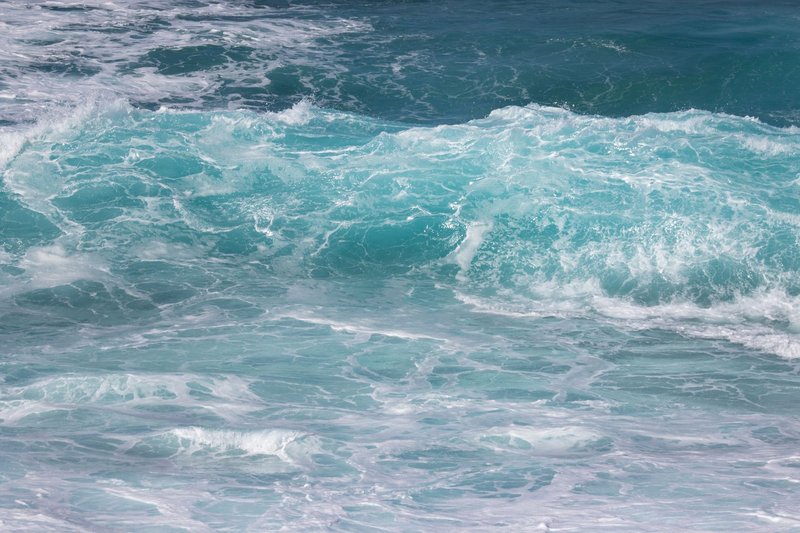
You’d expect that more water means more chances for life. The research says it isn’t that simple.
Earth has a thermostat. Rain weathers rock on the continents, which pulls carbon dioxide out of the air and locks it into the crust. When the planet cools, weathering slows, CO2 builds up, and the climate warms back up. This carbonate-silicate cycle has kept Earth’s temperature in a livable range for billions of years.
An ocean planet has no exposed rock, so the cycle can’t run the same way. A thick ice layer between the ocean and the rocky mantle also blocks the supply of minerals and nutrients that life needs. A study from the PlanetS research network summarized the problem under the title “Too much water is bad for life”. Their argument: with the CO2 feedback broken and the seafloor sealed off, such a planet could drift into a runaway greenhouse or a frozen state.
There’s a qualification. Planets with only a few percent water, or ones where the water layer is shallow enough that rock still touches liquid, may keep some chemical exchange going. Hycean worlds, if they exist, are a separate case with their own proposed chemistry. And the icy moons offer a different route: Europa and Enceladus have liquid water in contact with rock, which is the setup many researchers consider most promising for life, with no sunlight required.
How telescopes could detect an ocean
Spotting an ocean from light-years away is hard, and nobody has done it. Three approaches are on the table.
- Density: measure a planet’s mass and radius, as astronomers do now. It narrows the options without settling them.
- Atmospheric chemistry: the James Webb Space Telescope reads starlight filtered through a planet’s atmosphere. Water vapor, CO2, and methane in the right proportions can point to a water-rich surface.
- Reflected light: the planned Habitable Worlds Observatory is designed to image Earth-sized planets directly. A glint of sunlight bouncing off a large body of liquid water is a signal it could look for.
For now, the Solar System’s icy moons remain the only ocean worlds where we can send spacecraft.
FAQ
Are there planets covered in water? Possibly. Several exoplanets have densities that fit a deep-ocean model, but none has been confirmed. The oceans we know are on moons, under ice.
What’s the difference between an ocean planet and an ocean world? “Ocean planet” refers to a planet with a deep global ocean at the surface. “Ocean world” is broader and includes moons like Europa and Enceladus, whose oceans are buried.
What is a hycean planet? A planet with a liquid water ocean under a thick hydrogen-rich atmosphere. The term was proposed in 2021, and K2-18 b is the main candidate.
Could humans live on an ocean planet? Not on the surface in any familiar sense. There would be no land, and many candidates are much more massive than Earth, with stronger gravity. At best, floating habitats on one with mild conditions.
Is Earth an ocean planet? No. Water covers about 71 percent of the surface, but it’s a thin film on a rocky planet and a tiny share of Earth’s total mass.