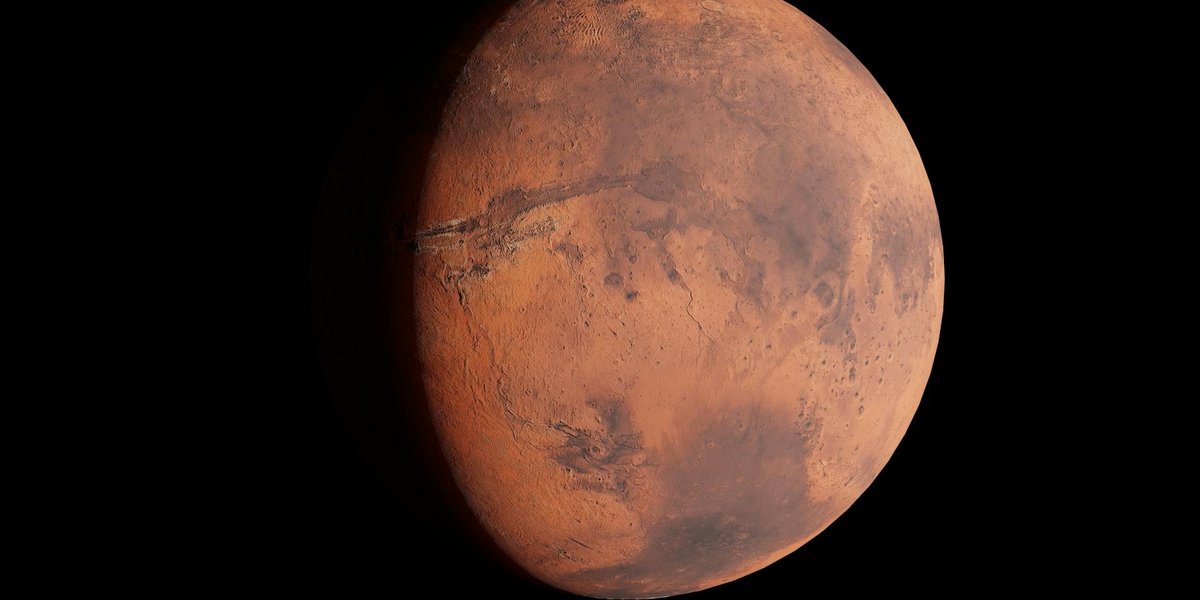
About a third of the planets we’ve found orbiting other stars don’t exist in our solar system at all. They’re bigger than Earth, smaller than Neptune, and sitting in a size gap that the eight planets next door simply skip. We call them super-Earths, and they’re probably the most common type of planet in the galaxy.
That’s the strange part. The most abundant planet design in the Milky Way is one we’ve never seen up close, because we don’t have one. So everything we know comes from starlight, gravity wobbles, and a lot of careful math.
Here’s what a super-Earth actually is, which ones are worth knowing, how astronomers spot them from light-years away, and the real answer to the question everyone asks: could we live on one?
Table of Contents
- What counts as a super-Earth
- Famous super-Earths at a glance
- What are they made of?
- Super-Earth vs. mini-Neptune
- How astronomers find them
- Why super-Earths are everywhere
- Could humans live on a super-Earth?
- The takeaway
What counts as a super-Earth
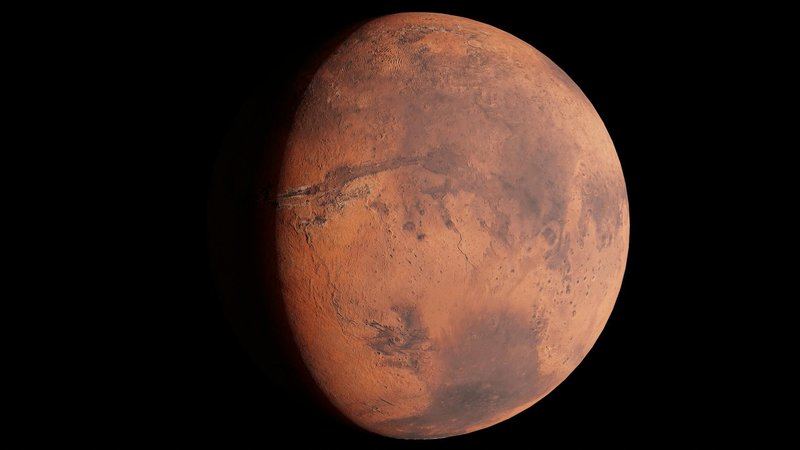
A super-Earth is defined by mass and size, not by anything you’d see standing on its surface. The working range most astronomers use: roughly 2 to 10 times Earth’s mass, with a radius up to about 1.6 times Earth’s. Below that you’ve got Earth-sized or smaller worlds. Above it, you’re heading into mini-Neptune territory, where thick gas envelopes take over.
The name throws people off, so worth saying plainly: “super-Earth” describes the size class only. It does not mean the planet is Earth-like, habitable, or rocky in any guaranteed way. A super-Earth could be a scorched ball of magma, a waterworld with no land, or a small gas planet. NASA’s exoplanet program is explicit about this — the term is about heft, not hospitality.
That radius ceiling of ~1.6 Earth radii isn’t arbitrary. It marks a real boundary in the data where planets stop being mostly rock and start holding onto puffy hydrogen-helium atmospheres. Cross it, and the planet’s density drops off a cliff.
Famous super-Earths at a glance
Five super-Earths come up again and again, each for a different reason. Here’s how they stack up.
| Planet | Mass (Earth = 1) | Radius (Earth = 1) | Distance | Host star | In habitable zone? |
|---|---|---|---|---|---|
| 55 Cancri e | ~8 | ~1.9 | 41 ly | Sun-like | No (far too hot) |
| Kepler-452b | ~5 (est.) | ~1.6 | ~1,800 ly | Sun-like | Yes |
| LHS 1140 b | ~5.6 | ~1.7 | 49 ly | Red dwarf | Yes |
| TOI-270 d | ~4.8 | ~2.1 | 73 ly | Red dwarf | Edge of it |
| K2-18 b | ~8.6 | ~2.6 | 124 ly | Red dwarf | Yes |
A couple of these sit right at the boundary — TOI-270 d and K2-18 b are large enough that some astronomers file them under mini-Neptune. That blurriness is the whole point of the next two sections.
55 Cancri e is the showpiece for being weird: it orbits its star in just 18 hours, with a dayside hot enough to melt iron. Early on it got the nickname “diamond planet” on the theory it was carbon-rich. That idea has since been walked back, but the surface is almost certainly molten on the sunward side.
Kepler-452b earned the “Earth’s cousin” headlines in 2015 — a planet about 1.6 times Earth’s width, orbiting a Sun-like star in roughly a 385-day year. The catch: its existence isn’t fully nailed down, and even its discoverers flagged the detection as needing confirmation.
K2-18 b is the current star of the show. In 2023 the James Webb Space Telescope detected methane and carbon dioxide in its atmosphere, and a tentative whiff of dimethyl sulfide — a molecule produced on Earth mainly by living things. Follow-up data reported in 2025 strengthened the signal but stopped well short of proof. More on that below, because the caveats matter. These five are only a slice of the catalog, too; if you want a wider tour, our list of famous exoplanets covers thirty notable worlds with their host stars and distances.
What are they made of?
Mass and radius together give you density, and density tells you the rough recipe. Super-Earths fall into a few buckets:
- Rocky super-Earths — iron core, silicate mantle, basically a scaled-up Earth. Dense, often with little or no atmosphere if they’re close to their star. LHS 1140 b leans this way.
- Water worlds — a large fraction of the planet’s mass is water, possibly hundreds of kilometers of ocean over a rocky core. No continents, no shoreline, just ocean all the way down.
- Mini-Neptunes — a rocky-or-icy core wrapped in a thick hydrogen-helium atmosphere. Lower density gives them away.
- Hycean worlds — a newer, still-debated category: a deep global ocean under a hydrogen-rich atmosphere. K2-18 b is the poster child, and also the reason the category is contested.
The frustrating reality is that a single mass-and-radius measurement often can’t distinguish between these. A planet that’s 60% rock and 40% atmosphere can have the same density as one that’s mostly water. Astronomers need a spectrum of the atmosphere — the kind Webb now provides — to break the tie, and even then the answers come with error bars. That spectral work is also doing more than sorting planets into buckets; there are several reasons studying exoplanet atmospheres matters, from reading climate to hunting for signs of life.
Super-Earth vs. mini-Neptune
This is the distinction that trips up casual readers, so here’s the clean version.
Both live in the same size gap between Earth and Neptune. The difference is what’s holding the size up:
- A super-Earth is dense. Its bulk is rock and metal (and maybe water). If it has an atmosphere, it’s thin relative to the planet.
- A mini-Neptune is puffy. A modest solid core is swaddled in a thick hydrogen-helium envelope that makes up a big slice of its volume.
The dividing line sits near that 1.6 Earth-radii mark. Astronomers even noticed a curious shortage of planets right at the boundary — the so-called “radius valley.” The leading explanation: intense radiation from the host star strips the atmospheres off smaller planets entirely, turning would-be mini-Neptunes into bare rocky super-Earths and leaving a thin spot in the population right between the two classes. Research published in The Astrophysical Journal and elsewhere has mapped this gap across thousands of planets. If you want to see what sits on the puffier side of that line, our list of mini-Neptunes gathers nine of them with their measured radii, masses, and orbital periods.
How astronomers find them
You can’t photograph a super-Earth. They’re small, dim, and drowned out by the glare of their star. So detection is indirect, and three methods do nearly all the work.
The transit method
When a planet crosses in front of its star from our viewpoint, it blocks a sliver of light. Measure that tiny, repeating dip in brightness and you get the planet’s size and orbital period. NASA’s Kepler mission and its successor TESS found the vast majority of known super-Earths this way. The limitation: the orbit has to be edge-on to us, so we only catch a fraction of the planets that are actually there.
Radial velocity
A planet’s gravity tugs its star, making the star wobble toward and away from us. That motion shifts the star’s light slightly redder and bluer, on a repeating cycle. Measure the wobble and you get the planet’s mass. Pair this with a transit (which gives radius), and you can finally calculate density — the single most useful number for figuring out what a planet is made of.
Gravitational microlensing
The rarest of the three. When a foreground star passes in front of a more distant one, its gravity bends and magnifies the background star’s light. A planet around the foreground star adds a brief extra blip to that magnification. Microlensing is the only method that can find super-Earths far from their stars, but each event happens once and never repeats, which makes follow-up impossible.
Most ranking explainers gloss over detection or skip it entirely. It’s actually the part that explains why our catalog looks the way it does: we find the planets our instruments are biased toward, which skews everything else.
Why super-Earths are everywhere
Here’s the genuinely surprising fact. Despite our solar system having exactly zero of them, super-Earths appear to be the most common class of planet in the galaxy. Roughly a third of confirmed exoplanets fall in this range, and that’s after accounting for the detection biases that make some planets easier to spot than others.
A 2023 analysis reported by ScienceAlert drew on microlensing data — the method that sees planets on wide orbits — and suggested super-Earths on long orbits are far more abundant than earlier counts implied. Different surveys, same direction: this size of planet is the rule, not the exception.
Which raises the obvious question. If super-Earths are the galaxy’s default planet, why didn’t we get one? The honest answer is that nobody fully knows. One idea is that Jupiter formed early and migrated inward, sweeping up or scattering the material that might have built a super-Earth before retreating. Our solar system may be the unusual one.
Could humans live on a super-Earth?
This is the question that drives most of the searches, so let’s give it a straight answer in two parts: could life exist there, and could we live there. They’re not the same.
On life in general: a rocky super-Earth in its star’s habitable zone — the orbital band where liquid water can persist — is one of the better bets for life beyond Earth. More mass means stronger gravity to hold a thick, protective atmosphere, and possibly a longer-lived magnetic field and active geology. K2-18 b’s tentative biosignature is exactly why these worlds get so much telescope time. But “tentative” is carrying weight there: the dimethyl sulfide signal is at the edge of detectability, and several teams have argued non-biological chemistry could produce the same reading. It’s a lead, not a discovery.
On humans specifically: this is where the “super” in super-Earth becomes a problem. Surface gravity scales with mass and radius, and on a planet several times Earth’s mass it could run 1.5 to 3 times what your body is built for. At 2g, a 170-pound person effectively weighs 340 pounds, all the time, with no breaks. Standing up is exhausting. Your skeleton and heart are working overtime constantly. Rocket launches become brutally harder, too — escaping a high-gravity world demands enormously more fuel, which is part of why one thought experiment suggests a sufficiently massive super-Earth could trap any civilization that evolved there, unable to ever reach orbit.
Then there’s the atmosphere. Stronger gravity holds onto a thicker air column, so surface pressure could be crushing, and the composition is unlikely to be breathable without heavy engineering. A waterworld super-Earth might have no land at all. A close-in one like 55 Cancri e is molten.
The realistic verdict: a super-Earth is a plausible place to find life, especially microbial life. It is a deeply hostile place for humans — somewhere between physically punishing and outright lethal, depending on the specific world. The dream of a roomier second Earth runs straight into the physics of gravity.
The takeaway
Super-Earths are the planets our solar system forgot to make: 2 to 10 Earth masses, the most common size class in the galaxy, and a category that spans everything from bare rock to global ocean to small gas world. We find them by watching stars dim, wobble, and flicker, and we read their makeup from the faint light filtering through their atmospheres.
The size that makes them common is also what makes them inhospitable to us — heavier gravity, thicker air, harder to leave. But for the broader hunt, they’re prime targets. K2-18 b’s contested signal won’t be the last. As Webb and the next generation of telescopes pull more atmospheres into focus, the most interesting answers about super-Earths are still coming. The galaxy’s most ordinary planet may yet turn out to be its most surprising.