TLDR
NASA’s active astronaut corps hovers around 40 people at any given time, drawn from a pool that’s grown to roughly 370 selections since the Mercury Seven in 1959. Right now, the names to know are the Artemis II crew — Reid Wiseman, Victor Glover, Christina Koch, and Canadian astronaut Jeremy Hansen — who are training to fly around the Moon, the first crewed lunar mission since Apollo 17 in 1972. Getting selected requires a STEM master’s degree (or equivalent), relevant professional experience, and beating odds that run into the thousands-to-one against you.
Table of Contents
- Who’s Flying Right Now
- The Artemis II Crew: NASA’s Next Big Mission
- A Short History: From Mercury Seven to Artemis
- Records and Firsts Worth Knowing
- How to Become a NASA Astronaut
- Quick Answers
Who’s Flying Right Now
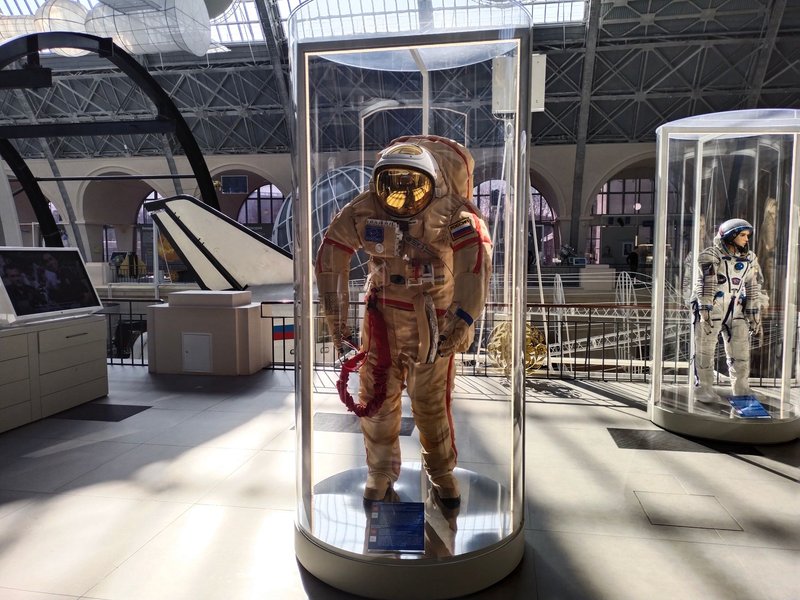
NASA doesn’t publish one static “current roster” the way a sports team publishes a lineup — astronauts rotate between active flight status, training assignments, ISS increments, and administrative roles at Johnson Space Center. But the shape of the corps is consistent: a mix of career military test pilots, research scientists, and medical doctors, most flying their second or third mission by the time they’re household names.
A few things define who’s active today:
- Size: The active corps typically runs in the 40s, small by design. NASA selects new classes only every few years, and each one is brutally competitive.
- International Space Station rotations: Most active astronauts spend their early flight assignments on six-month ISS increments, running experiments in microgravity and handling the unglamorous but essential work of keeping a space station running.
- Diversity of background: Recent astronaut classes have leaned harder into research scientists and engineers, a shift from the Shuttle era’s heavy emphasis on test pilots.
- Long waits between selection and flight: It’s common for astronauts to spend 5+ years training before their first launch. Patience is part of the job description.
For anyone who wants the exhaustive, name-by-name version, NASA’s Astronaut Fact Book is the primary source — it’s dense, but it’s the data NASA itself uses as the record.
The Artemis II Crew: NASA’s Next Big Mission
If you only remember four names from NASA’s current roster, make them these:
| Astronaut | Role | Notable |
|---|---|---|
| Reid Wiseman | Commander | Former Navy test pilot; previously spent 165 days aboard the ISS |
| Victor Glover | Pilot | Flew as pilot on SpaceX Crew-1; will become the first Black astronaut on a lunar mission |
| Christina Koch | Mission Specialist | Holds the record for the longest single spaceflight by a woman (328 days); part of the first all-female spacewalk in 2019 |
| Jeremy Hansen | Mission Specialist | Canadian Space Agency astronaut; first non-American to fly a lunar mission since the Apollo era |
Artemis II is a roughly ten-day mission that will send this crew around the Moon without landing — a shakeout flight for the hardware and life-support systems before Artemis III attempts an actual lunar landing. It’s the mission NASA’s own crew feature treats as the centerpiece of the current program, and for good reason: nobody has flown this far from Earth since 1972, when the last lunar missions of the Apollo era took place.
A Short History: From Mercury Seven to Artemis
NASA’s astronaut corps didn’t start as the specialized, multi-disciplinary group it is today. It started with seven military test pilots and a program built almost entirely around a single question: can a human being survive and function in space at all.
Mercury Seven (1959) — Scott Carpenter, Gordon Cooper, John Glenn, Gus Grissom, Wally Schirra, Alan Shepard, and Deke Slayton. Alan Shepard became the first American in space in May 1961; John Glenn became the first American to orbit Earth less than a year later. Every one of them was a test pilot first, an astronaut second — NASA had no other qualification framework yet.
Gemini and Apollo (1962–1972) — Selection widened to include engineers and scientists, though pilots still dominated. This era produced the Moon landings, ending with Apollo 17 in December 1972 — the last time humans left low Earth orbit until Artemis II.
Shuttle era (1978–2011) — The biggest shift in who got selected. The Shuttle, which flew 135 missions between 1981 and 2011, needed mission specialists, not just pilots, which opened the door to scientists, engineers, and doctors. This is the era that produced Sally Ride, the first American woman in space (1983), and Guion Bluford, the first African American in space, also in 1983.
ISS and commercial crew (2000–present) — Long-duration missions became the norm, and selection criteria shifted again toward researchers who could run a floating laboratory for six months at a stretch. NASA’s reliance on Russian Soyuz launches after the Shuttle’s 2011 retirement gave way to SpaceX Crew Dragon flights starting in 2020, restoring US launch capability from American soil.
Artemis era (2022–present) — The current chapter, aimed back at the Moon and eventually Mars, with a crew corps increasingly selected for a mix of engineering rigor and public-facing communication skill.
Records and Firsts Worth Knowing
Some names come up constantly in astronaut history for good reason — they moved the goalposts.
| Astronaut | Record or First |
|---|---|
| Alan Shepard | First American in space (1961) |
| John Glenn | First American to orbit Earth (1962); oldest person in space at the time, at 77, on STS-95 (1998) |
| Sally Ride | First American woman in space (1983) |
| Guion Bluford | First African American in space (1983) |
| Mae Jemison | First African American woman in space (1992) |
| Peggy Whitson | Record holder for most cumulative time in space by a US astronaut; first woman to command the ISS |
| Christina Koch | Longest single spaceflight by a woman (328 days); first all-female spacewalk, alongside Jessica Meir (2019) |
Notice how many of these records belong to the last four decades. The “who’s first” era of American spaceflight isn’t over — it’s just moved from “who leaves the atmosphere” to “who commands, who breaks endurance records, who flies further than anyone before them.”
How to Become a NASA Astronaut
This is the part most roster pages skip, and it’s usually what people actually want to know after they’ve scrolled past a list of names.
The baseline requirements:
- US citizenship
- A master’s degree in a STEM field (engineering, biological science, physical science, computer science, or math) — a bachelor’s plus significant relevant experience can sometimes substitute
- At least three years of related professional experience, or 1,000 hours as pilot-in-command of a jet aircraft for pilot applicants
- Ability to pass NASA’s long-duration spaceflight physical, which is stricter than a standard flight physical
The odds: NASA’s most recent astronaut classes have drawn well over 10,000 applicants for a dozen or fewer spots. That’s a lower acceptance rate than most Ivy League schools, and the applicant pool is already self-selected for advanced degrees and unusual accomplishments.
If you’re selected: Candidates go through roughly two years of basic training before they’re even eligible for a flight assignment. That includes:
- Spacewalk (EVA) training in NASA’s Neutral Buoyancy Lab, a 6.2-million-gallon pool with a full-scale ISS mockup
- T-38 jet training, regardless of whether you’re a pilot by background
- Russian language instruction, since Soyuz systems and ISS coordination still require it
- Robotics operation, geology field training, and wilderness survival
Even after basic training, most astronauts wait years for their first flight assignment. The job rewards people who can stay motivated through a genuinely long runway.
Quick Answers
How many astronauts does NASA currently have? The active corps generally sits in the 40s, though the exact number shifts as new classes graduate and veteran astronauts retire.
Who’s on the Artemis II crew? Commander Reid Wiseman, Pilot Victor Glover, Mission Specialist Christina Koch, and CSA Mission Specialist Jeremy Hansen.
Do you need to be a pilot to become an astronaut? No. NASA selects both pilot astronauts and mission specialists; the specialist track draws from research science, medicine, and engineering backgrounds.
Where can I find a full list of every astronaut NASA has ever selected? NASA maintains a former astronauts directory covering everyone who’s left the active corps, alongside the fact book for full historical detail.
Enjoyed this article?
Get daily 10-minute PDFs about astronomy to read before bed!
Sign up for our upcoming micro-learning service where you will learn something new about space and beyond every day while winding down.