The Moon went quiet for a while. After the last Apollo astronauts left in December 1972, no human set foot there again, and for stretches of the 1980s barely any spacecraft visited at all. That changed. We’re now in the busiest period of lunar exploration since the Space Race — except this time it’s not two superpowers, it’s a half-dozen national agencies and a fleet of private companies trying to land cargo for a few million dollars a pop.
This is the full arc: the Soviet firsts, the Apollo landings everyone half-remembers, and the modern scramble that’s putting robots back on the surface almost every few months. If you want to know what already happened and what’s launching next, it’s all here.
Table of Contents
- The Quick Version
- The Soviet Firsts (1959–1966)
- Apollo: The Crewed Landings (1968–1972)
- The Quiet Decades and the Asian Resurgence
- The Commercial Era Begins
- Artemis: NASA’s Return to the Surface
- What’s Launching Next: 2026–2029
- Mission Comparison Table
- Frequently Asked Questions
The Quick Version
If you only read one section, here’s the shape of it:
- The Soviets got there first. Luna 1 flew past the Moon in 1959, Luna 2 crashed into it (on purpose) that same year, and Luna 9 made the first soft landing in 1966.
- The United States won the crewed race. Six Apollo missions landed 12 astronauts between 1969 and 1972. Then nobody went back with people for over 50 years.
- Robots never fully stopped. China’s Chang’e program and India’s Chandrayaan-3 reset expectations in the 2010s and 2020s — Chang’e 4 landed on the far side, Chandrayaan-3 reached the south pole.
- Private companies now land too. Intuitive Machines and Firefly’s Blue Ghost have put commercial landers on the surface, flying NASA science under a contract program called CLPS.
- Humans return mid-decade. Artemis II will carry a crew around the Moon, and Artemis III aims to land near the south pole — the first crewed landing since 1972.
The Soviet Firsts (1959–1966)
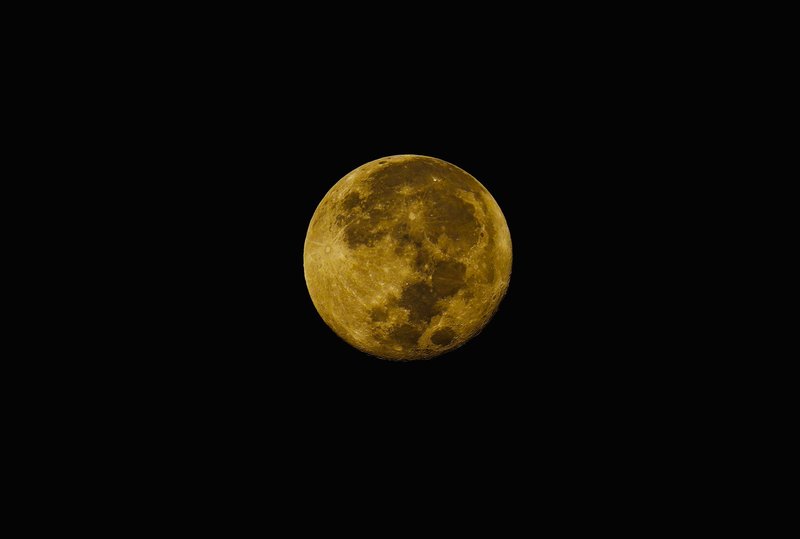
Everything about lunar exploration starts with the Soviet Luna program, and it started fast. In January 1959, Luna 1 became the first spacecraft to escape Earth’s gravity and fly past the Moon — it missed the surface and ended up in orbit around the Sun, which wasn’t quite the plan, but it proved the trajectory worked. Months later, Luna 2 became the first human-made object to touch another world, slamming into the surface near the Sea of Serenity.
Then came the shot that rearranged how people pictured the Moon. Luna 3, in October 1959, swung behind the Moon and photographed the far side — the half nobody on Earth had ever seen. The images were grainy and the spacecraft developed them onboard like a flying darkroom, but for the first time humanity got a look at the hidden hemisphere.
The hardest milestone took years. Landing without crashing meant slowing a spacecraft from thousands of miles per hour to a survivable touch, and the early attempts failed repeatedly. Luna 9 finally cracked it in February 1966, sending back the first photographs taken from the lunar surface and settling a real scientific argument: the surface was solid, not a deep ocean of dust that would swallow a lander. That mattered enormously for what came next — within months the United States began sending its own robotic Surveyor landers to prove the ground could hold a crewed spacecraft.
Apollo: The Crewed Landings (1968–1972)
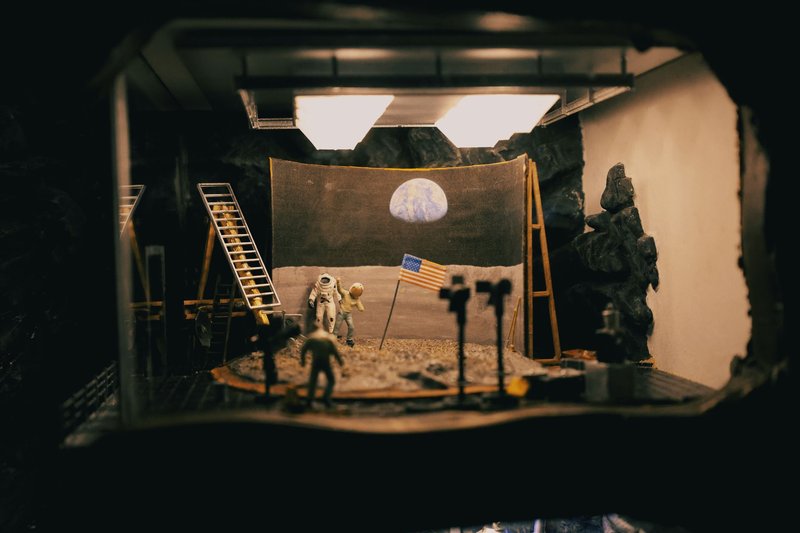
Apollo gets compressed into a single image — a boot print, a flag — but it was a sequence of escalating gambles. Apollo 8 didn’t land at all; in December 1968 it became the first crewed mission to orbit the Moon, and the crew’s “Earthrise” photograph arguably did more for the environmental movement than for spaceflight. Apollo 10 flew the full landing rehearsal, descending to within about nine miles of the surface before pulling back.
Then Apollo 11. On July 20, 1969, Neil Armstrong and Buzz Aldrin landed in the Sea of Tranquility while Michael Collins orbited overhead. The descent was tighter than the public ever knew — Armstrong flew manually past a boulder field with the computer throwing alarms and roughly 30 seconds of fuel margin left. NASA’s mission record lays out the timeline.
Five more landings followed, and they got more ambitious each time. Apollo 12 nailed a pinpoint landing next to a robotic probe that had been sitting there for two years. Apollo 13 never reached the surface — an oxygen tank exploded on the way out, and the mission became a survival story instead. Apollo 15 brought the first lunar rover, letting astronauts range miles from the lander. By Apollo 17 in December 1972, the crew included Harrison Schmitt, the only trained geologist to walk on the Moon. Twelve people walked there in total. Then the program ended, the budget evaporated, and the surface stayed empty of footprints for the next half-century. The 3D model of the Moon plots the six Apollo landing sites and the astronaut and rover traverse paths, next to the Luna, Chang’e and Chandrayaan sites.
The Quiet Decades and the Asian Resurgence
After Apollo, the Moon fell out of fashion. The big powers turned toward space stations, the shuttle, and probes to the outer planets. A few orbiters mapped the surface — NASA’s Clementine and Lunar Prospector in the 1990s found hints of water ice at the poles — but the surface itself sat untouched.
The revival came from Asia. China’s Chang’e program built up methodically: orbiters, then a 2013 landing with the Yutu rover, then the headline act. In January 2019, Chang’e 4 became the first spacecraft ever to land on the far side of the Moon, a genuinely hard problem because you can’t talk to a lander you can’t see — China had to park a relay satellite in a special orbit just to keep contact. Chang’e 5 followed in 2020, scooping up the first fresh lunar samples returned to Earth since the 1970s.
India wrote the other defining chapter. After Chandrayaan-2’s lander crashed in 2019, the follow-up came back four years later and stuck it. In August 2023, Chandrayaan-3 touched down near the lunar south pole, making India the fourth country to soft-land on the Moon and the first to reach that polar region — the same area NASA now wants for Artemis, because of the water ice frozen in its permanently shadowed craters. The Indian Space Research Organisation documents the landing.
The Commercial Era Begins
Here’s the shift that separates this era from every one before it: governments are no longer the only ones landing. NASA created a program called Commercial Lunar Payload Services (CLPS), essentially hiring private companies to fly its science instruments to the surface on a fixed-price contract — cheaper, faster, and accepting that some attempts will fail.
The failures came first. Early CLPS attempts and other private efforts — including Israel’s Beresheet in 2019 and Japan’s ispace lander in 2023 — crashed during descent. Landing softly on an airless world is unforgiving; there’s no atmosphere to slow you down, so you do it entirely on rocket thrust and precise timing.
Then the wins started. Intuitive Machines’ IM-1 (Odysseus) reached the surface in February 2024, the first U.S. soft landing since Apollo, even though it tipped over on touchdown and ended up on its side. Firefly Aerospace’s Blue Ghost did it cleaner in early 2025, operating through a full lunar day. These missions are small and short-lived, but they’re proving out a supply chain — the idea that you can buy a ride to the Moon the way you’d buy a launch to orbit.
Artemis: NASA’s Return to the Surface
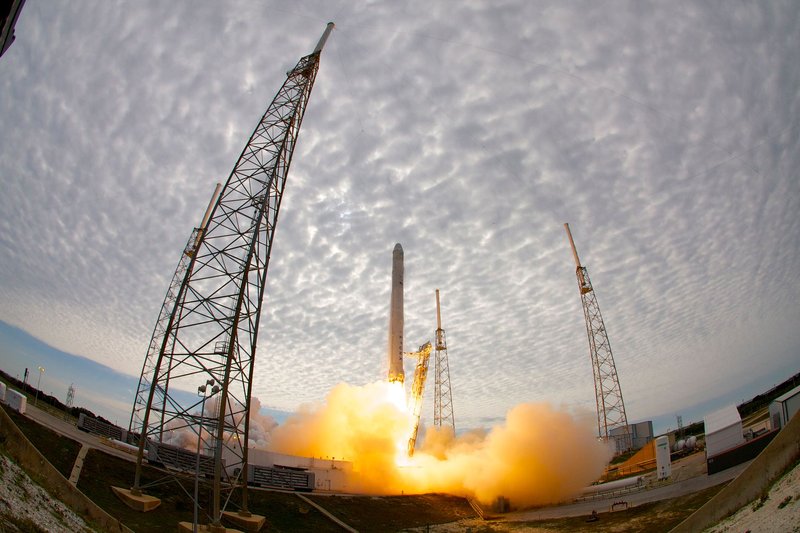
The crewed return runs under the Artemis program, and it’s already partly underway. Artemis I flew in late 2022 — an uncrewed test that sent the Orion capsule on a 25-day loop around the Moon and back, validating the Space Launch System rocket and the heat shield at re-entry speeds.
Artemis II is the one that breaks the 50-year drought. It carries four astronauts on a flyby of the Moon — no landing, but the first crew to leave low Earth orbit since 1972. The crew has been named and is in training; it’s a confidence test for the life-support and navigation systems before anyone risks a descent.
Artemis III is the landing. The target is the lunar south pole, chosen specifically for the water ice, which can in principle be turned into drinking water, breathable oxygen, and rocket propellant — the difference between visiting the Moon and staying. The landing itself depends on a human landing system derived from SpaceX’s Starship, and the schedule has slipped more than once as that hardware matures. Artemis IV and beyond extend the plan toward a small space station in lunar orbit, the Gateway, meant as a staging point for longer surface stays. NASA’s Artemis overview tracks the current roadmap.
What’s Launching Next: 2026–2029
This is where the Moon gets crowded. A rough calendar of what’s lined up over the next few years:
- Blue Ghost Mission 2 (Firefly) — a follow-up commercial lander, this time targeting the far side with a relay component, carrying NASA and international payloads.
- IM-3 (Intuitive Machines) — the company’s third CLPS landing, aimed at a region of scientific interest near the lunar swirls, building on lessons from the first two flights.
- Griffin (Astrobotic) — a larger lander class after the company’s first attempt failed to reach the surface, designed to carry heavier cargo to the south polar region.
- Blue Moon Pathfinder (Blue Origin) — Jeff Bezos’s lander program, with an uncrewed demonstration flight intended to prove out a vehicle that later versions could scale toward crewed support.
- Artemis II (NASA) — the crewed lunar flyby, the marquee mission of the stretch.
- Continued Chang’e and international missions — China is advancing toward Chang’e 7 and 8 and a stated goal of crewed landings by around 2030, with plans for a joint research station near the south pole.
Schedules in this business slip. Treat the dates as intentions, not promises — but the direction is unmistakable: more landers, more nations, and for the first time in two generations, people headed back.
Mission Comparison Table
| Mission | Country / Operator | Year | Outcome |
|---|---|---|---|
| Luna 1 | USSR | 1959 | First lunar flyby |
| Luna 2 | USSR | 1959 | First impact on the Moon |
| Luna 9 | USSR | 1966 | First soft landing |
| Apollo 11 | USA | 1969 | First crewed landing |
| Apollo 17 | USA | 1972 | Last crewed landing |
| Chang’e 4 | China | 2019 | First far-side landing |
| Chang’e 5 | China | 2020 | First sample return since 1976 |
| Chandrayaan-3 | India | 2023 | First south-pole landing |
| IM-1 (Odysseus) | Intuitive Machines (USA) | 2024 | First commercial soft landing |
| Blue Ghost 1 | Firefly (USA) | 2025 | Successful commercial landing |
| Artemis I | NASA | 2022 | Uncrewed test flight |
| Artemis II | NASA | Mid-decade | Crewed flyby (upcoming) |
| Artemis III | NASA | Late-decade | Crewed south-pole landing (planned) |
Frequently Asked Questions
How many times have humans landed on the Moon? Six crewed missions landed successfully, all under the Apollo program between 1969 and 1972. Twelve astronauts walked on the surface in total. No human has landed since Apollo 17 in December 1972.
Which country reached the Moon first? The Soviet Union, by every robotic measure — first flyby, first impact, first far-side photos, first soft landing. The United States was first to land humans there with Apollo 11.
Why did Moon missions stop after Apollo? Cost and politics, mostly. Apollo was driven by Cold War competition, and once the U.S. had won the crewed race, the enormous budget couldn’t be justified. Funding shifted to the space shuttle and other priorities, and crewed lunar flight went dormant.
Why is everyone targeting the lunar south pole now? Water ice. Permanently shadowed craters near the poles trap frozen water that can be converted into drinking water, oxygen, and rocket fuel. That makes the south pole the most practical place to establish a long-term presence rather than a brief visit.
When will astronauts return to the Moon? Artemis II will carry a crew around the Moon without landing, and Artemis III aims to put astronauts back on the surface near the south pole. Both are scheduled for the second half of the 2020s, though the landing date has shifted as the hardware develops.
Are private companies really landing on the Moon? Yes. Through NASA’s CLPS program, Intuitive Machines and Firefly Aerospace have both put commercial landers on the surface, carrying NASA science instruments. Several more private landings are scheduled through the rest of the decade.