Denmark has one astronaut who has flown: Andreas Mogensen. He was the first Dane in space in 2015, and in 2023 he went back for a long stay that ended with him running the International Space Station. Every fact people search for under “Danish astronauts” comes back to him.
Contents
- Quick facts
- How a Dane became an ESA astronaut
- 2015: the iriss mission
- 2023: Crew-7 and the Huginn mission
- The Danish touches he took to orbit
- How many Danish astronauts are there?
- FAQ
Quick facts
| Name | Andreas Mogensen |
| Born | 1976, Copenhagen, Denmark |
| Nationality | Danish |
| Agency | European Space Agency (ESA) |
| Selected | May 2009 |
| First flight | Sept 2015, Soyuz TMA-18M, about 10 days (iriss) |
| Second flight | Aug 2023 to Mar 2024, SpaceX Crew-7, about 199 days (Huginn) |
| Total time in space | Roughly 209 days |
| Role in 2023 | Crew-7 pilot, then ISS commander for Expedition 70 |
How a Dane became an ESA astronaut
Denmark has no national astronaut corps. It flies through ESA, which it joined in 1977, so a Danish astronaut is an ESA astronaut who happens to hold a Danish passport.
Mogensen came out of ESA’s 2008 to 2009 selection, which drew about 8,000 applicants. Six people made the final cut. His classmates included Samantha Cristoforetti, Alexander Gerst, Luca Parmitano, Tim Peake and Thomas Pesquet. That class has since covered most of Europe’s recent time on the ISS.
He wasn’t a career pilot or a lab scientist by default. He trained as an engineer, with a master’s degree in aeronautical engineering from the University of Aalborg and a stint in the oil industry before ESA. He was also working on offshore drilling technology when he applied, which is closer to a Sunday-night hobby project than what most people picture when they think “astronaut.”
2015: the iriss mission
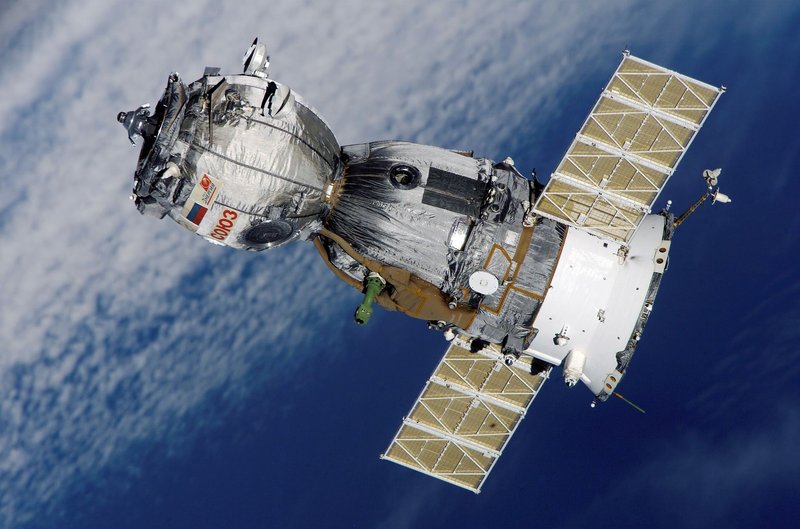
Mogensen launched on 2 September 2015 aboard Soyuz TMA-18M from Baikonur, Kazakhstan, alongside Russian commander Sergey Volkov and Kazakhstan’s Aidyn Aimbetov. The Soyuz docked with the ISS two days later, on 4 September. That made him the first Dane in space.
The mission was short by ISS standards, about ten days, because he flew as a “visiting” crew member. Aimbetov and Mogensen shared a seat rotation while Gennady Padalka, who had been on the station for months, came home on the same capsule on 12 September.
Ten days is enough time to do real work, though. The iriss mission, ESA’s name for it, packed in dozens of experiments. Mogensen ran studies on how the human body adapts to weightlessness, tested technology and even remotely operated a robot on Earth from orbit, work that feeds into future missions where astronauts will control rovers from space.
2023: Crew-7 and the Huginn mission
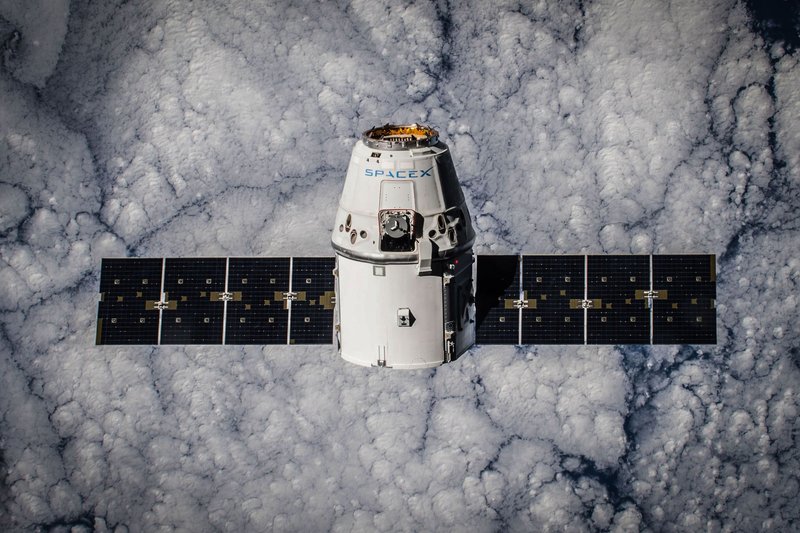
His return was a different kind of flight. Mogensen launched on 26 August 2023 from Kennedy Space Center in Florida aboard a SpaceX Crew Dragon, as pilot of NASA’s Crew-7 mission. The rest of the crew was NASA’s Jasmin Moghbeli as commander, Japan’s Satoshi Furukawa and Roscosmos cosmonaut Konstantin Borisov.
The Danish name for this mission was Huginn, after one of the two ravens that sit on Odin’s shoulders in Norse myth and bring him news from the world.
Unlike 2015, this was a long-duration stay of roughly six and a half months. In October 2023, Mogensen took command of the ISS for part of Expedition 70. He was the first Dane to do so, and one of only a handful of ESA astronauts to lead the station. Crew-7 returned to Earth on 12 March 2024, splashing down off the coast of Florida.
The Huginn mission carried about 30 ESA experiments, covering areas like human physiology, materials and technology demonstrations. If you want detail beyond the headlines, ESA’s mission pages list them by category.
The Danish touches he took to orbit

What makes a Dane’s mission recognizably Danish is the small stuff.
Lego. Denmark is the home of Lego, and Mogensen carried Lego models to orbit as both a nod to national identity and an educational tool. Lego built sets for the missions, and school children in Denmark followed his experiments through classroom material linked to the flights.
Kierkegaard. He has spoken publicly about bringing works by the Danish philosopher Søren Kierkegaard with him, a fitting choice for someone who spent months looking down at a planet with no borders drawn on it.
Danish outreach. Both missions came with a large education program aimed at Danish students, and in 2015 he was greeted at home as a national event. Newspapers of the time, including The Local Denmark, covered the docking like a sporting victory.
How many Danish astronauts are there?
One. Andreas Mogensen is the only Danish national to have flown to space, and he has done it twice.
A few people in the history of spaceflight are sometimes wrongly listed as Danish because of ancestry or a Scandinavian name, but by nationality and by ESA’s own roster, Denmark’s flown-astronaut count is still one. Denmark doesn’t have a second astronaut in the current ESA corps either, so a second Dane in orbit would need a future selection round.
FAQ
Who was the first Danish astronaut? Andreas Mogensen, who launched on 2 September 2015 and docked with the ISS on 4 September.
How many Danes have been to space? One person, on two flights, in 2015 and in 2023 to 2024.
Has a Dane commanded the ISS? Yes. Mogensen commanded the station during part of Expedition 70 in late 2023.
How long has Mogensen spent in space? Roughly 209 days across both flights: about 10 in 2015 and about 199 in 2023 and 2024.
How do you become an ESA astronaut? ESA runs selection rounds only occasionally, roughly once every decade or so. The 2008 to 2009 round that picked Mogensen started with about 8,000 applicants. Candidates need a master’s degree in natural sciences, engineering, mathematics or medicine, or an equivalent, plus fluency in English and strong medical fitness. Check ESA’s astronaut recruitment pages and the main ESA site for the next call.