TLDR
The Space Shuttle program flew 135 missions between 1981 and 2011, using five orbiters (Columbia, Challenger, Discovery, Atlantis, Endeavour) to put the first reusable American spacecraft into orbit. Two of those missions ended in the loss of the crew — Challenger in 1986, Columbia in 2003 — and both changed how NASA managed risk. The rest built the Hubble Space Telescope’s career, assembled the International Space Station piece by piece, and put the first American woman and first African American astronaut into orbit. Below are the 15 flights that explain what the program actually did, in the order it did them.
Table of Contents
- What “STS” and Those Weird Numbers Mean
- Quick Reference Table
- STS-1 — The First Flight (1981)
- STS-6 — The First Shuttle Spacewalk (1983)
- STS-7 — Sally Ride Breaks the Ceiling (1983)
- STS-8 — Guion Bluford’s First (1983)
- STS-41-B — Untethered, for the First Time (1984)
- STS-51-L — The Challenger Disaster (1986)
- STS-31 — Hubble Goes Up (1990)
- STS-61 — The Repair Job Nobody Was Sure Would Work (1993)
- STS-71 — Docking With Mir (1995)
- STS-88 — The First Piece of the Space Station (1998)
- STS-93 — The First Female Commander (1999)
- STS-107 — The Columbia Disaster (2003)
- STS-114 — Return to Flight (2005)
- STS-125 — Hubble’s Last House Call (2009)
- STS-135 — The Final Flight (2011)
- What Replaced the Shuttle
What “STS” and Those Weird Numbers Mean
Every shuttle mission carried the prefix STS, for Space Transportation System — NASA’s formal name for the whole program, not just the vehicle. The first nine flights got simple sequential numbers: STS-1, STS-2, and so on.
Starting with the tenth flight, NASA switched to a code nobody outside the program could parse on sight: a fiscal year digit, a launch site digit, and a letter. STS-41-B, for instance, meant fiscal year 1984 (the “4”), launch site 1 for Kennedy Space Center (the “1”), and B for the second mission originally slated that year. Challenger’s final flight, 51-L, decodes to fiscal year 1985, Kennedy, and the 12th mission on that year’s original schedule — reshuffles and delays meant the letter rarely matched the actual flight order.
After the Challenger disaster, NASA scrapped the letter system entirely and went back to sequential numbers for the Return to Flight mission, STS-26, in 1988. Every mission after that — through STS-135 in 2011 — used the simpler format. If you ever wondered why some missions look like “STS-9” and others look like “STS-51-L,” that’s the whole story.
A couple of terms worth having straight before the list: an EVA is a spacewalk, any time an astronaut leaves the vehicle in a pressurized suit. Docking is when two spacecraft physically connect and their crews can move between them. The orbiter is the winged part of the shuttle stack — the piece that actually reached orbit and glided home; the external tank and solid rocket boosters never made it past the atmosphere.
Quick Reference Table
| Mission | Year | Orbiter | Key Achievement |
|---|---|---|---|
| STS-1 | 1981 | Columbia | First shuttle flight |
| STS-6 | 1983 | Challenger | First shuttle spacewalk |
| STS-7 | 1983 | Challenger | Sally Ride, first American woman in space |
| STS-8 | 1983 | Challenger | Guion Bluford, first African American in space |
| STS-41-B | 1984 | Challenger | First untethered spacewalk |
| STS-51-L | 1986 | Challenger | Lost 73 seconds after launch |
| STS-31 | 1990 | Discovery | Hubble Space Telescope deployed |
| STS-61 | 1993 | Endeavour | Hubble’s vision corrected in orbit |
| STS-71 | 1995 | Atlantis | First shuttle docking with Mir |
| STS-88 | 1998 | Endeavour | First ISS assembly flight |
| STS-93 | 1999 | Columbia | Eileen Collins, first female shuttle commander |
| STS-107 | 2003 | Columbia | Lost on reentry |
| STS-114 | 2005 | Discovery | Return to Flight after Columbia |
| STS-125 | 2009 | Atlantis | Hubble’s final servicing call |
| STS-135 | 2011 | Atlantis | Program’s last flight |
STS-1 — The First Flight (1981)
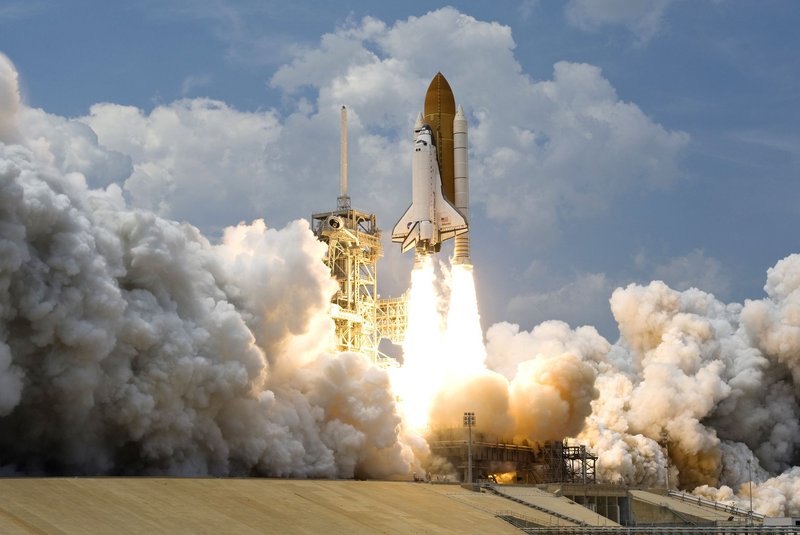
On April 12, 1981, Columbia lifted off from Kennedy Space Center with John Young and Bob Crippen aboard — the first time a crewed American spacecraft had ever flown without an unmanned test flight first. Every prior US vehicle, from Mercury to Apollo, flew empty before it flew with people. Columbia went straight to a crewed test.
The mission lasted just over two days and covered 36 orbits, but the real achievement was the landing: Columbia came down on a runway at Edwards Air Force Base like an airplane, the first time any spacecraft had done that instead of splashing into an ocean or parachuting onto land. Young reportedly climbed out and did a fist pump on the tarmac — you can find the photo. It’s the image that defined what made the shuttle different from everything that came before it: reusable, winged, and built to fly again.
STS-6 — The First Shuttle Spacewalk (1983)
Challenger’s maiden flight in April 1983 gets less attention than STS-1, which is a shame, because it did two things that set the template for the next three decades. It deployed the first Tracking and Data Relay Satellite, part of the network NASA still uses to talk to spacecraft in orbit without relying on ground stations passing overhead every 90 minutes. And mission specialists Story Musgrave and Don Peterson stepped outside for the first shuttle-era spacewalk, testing the suits and tools that every ISS assembly crew would depend on later.
STS-7 — Sally Ride Breaks the Ceiling (1983)
Sally Ride flew as a mission specialist on Challenger in June 1983, becoming the first American woman in space — two decades after the Soviet Union sent Valentina Tereshkova up in 1963. Ride was 32, a physicist recruited through NASA’s 1978 astronaut class, the first to actively solicit women and minority applicants. She’d go on to fly a second mission before the Challenger disaster grounded the program she’d hoped to fly a third time on. She later served on both accident investigation boards — Challenger’s and Columbia’s — the only person to do both.
STS-8 — Guion Bluford’s First (1983)
Five months after Ride’s flight, Guion Bluford became the first African American in space, also aboard Challenger. Bluford was a career Air Force officer and aeronautical engineer who’d flown 144 combat missions in Vietnam before joining NASA’s astronaut corps. STS-8 also included the first night launch and night landing of the shuttle program — a detail that mattered more than it sounds, since every subsequent mission needed the option of launching regardless of what time the orbital mechanics demanded.
STS-41-B — Untethered, for the First Time (1984)
In February 1984, astronaut Bruce McCandless strapped into a jetpack-like device called the Manned Maneuvering Unit and pushed off from Challenger with nothing connecting him to the ship. He drifted more than 300 feet away, controlling his position with hand-held thrusters, and became the subject of one of the most reproduced photographs in the history of spaceflight — a lone astronaut, Earth behind him, no tether in the frame. NASA retired the MMU after two more flights; it was judged too risky for the ISS-assembly era that followed, where astronauts stayed tethered and let the robotic arm do the moving.
STS-51-L — The Challenger Disaster (1986)
On the morning of January 28, 1986, Challenger broke apart 73 seconds after launch, killing all seven crew members: Francis Scobee, Michael Smith, Ellison Onizuka, Judith Resnik, Ronald McNair, Gregory Jarvis, and Christa McAuliffe, the first Teacher in Space. The cause was a rubber O-ring in the right solid rocket booster that failed to seal a joint in unusually cold weather — 36°F at launch, well below the temperature engineers had tested the seals to withstand. Hot gas burned through the joint and ignited the external fuel tank.
The failure wasn’t just mechanical. Engineers at Morton Thiokol, the booster contractor, had recommended against launching in the cold and were overruled by managers under pressure to keep the schedule. The Rogers Commission investigation that followed didn’t just fix the O-rings — it rebuilt how NASA weighs engineering objections against schedule pressure, a lesson the agency would have to relearn after Columbia seventeen years later. The shuttle program didn’t fly again for nearly three years.
STS-31 — Hubble Goes Up (1990)
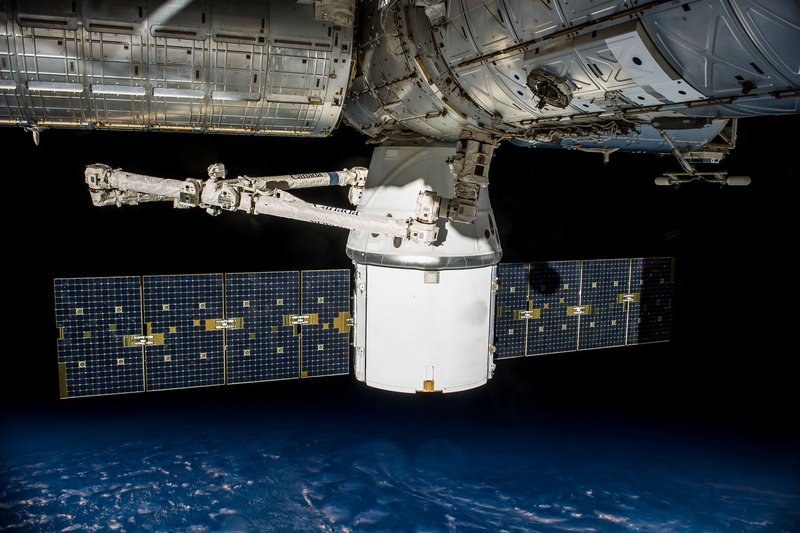
Discovery launched on April 24, 1990, carrying the Hubble Space Telescope in its cargo bay, and deployed it into orbit the next day. The telescope’s solar array briefly stalled while unfurling, and two crew members suited up for a contingency spacewalk before ground controllers freed it remotely — a preview of how much hands-on maintenance Hubble would need over its life.
What most people don’t know: Hubble launched with a flawed primary mirror, ground down to the wrong shape by a fraction of the width of a human hair. Its first images came back blurry, a public embarrassment for a telescope that cost over a billion dollars. Fixing it required a mission that hadn’t been built yet — which is exactly what STS-61 was for.
STS-61 — The Repair Job Nobody Was Sure Would Work (1993)
In December 1993, Endeavour’s crew performed five spacewalks over ten days to install corrective optics on Hubble — essentially glasses for a telescope with a manufacturing defect nobody could fix by adjusting the mirror itself. It worked. The images Hubble sent back afterward are the ones most people picture when they hear the name: the Pillars of Creation, deep field galaxies, the images that made Hubble a household name instead of a punchline. Four more servicing missions followed over the next 16 years, each one extending a telescope that was never designed to be repaired in orbit at all — the shuttle’s cargo bay and robotic arm made it possible.
STS-71 — Docking With Mir (1995)
Atlantis docked with the Russian space station Mir in June 1995, the first time an American spacecraft had docked with a Russian one since the Apollo-Soyuz test project two decades earlier. The mission swapped out American astronaut Norman Thagard, who’d spent 115 days aboard Mir, and dropped off two cosmonauts. It was as much diplomacy as engineering — the Shuttle-Mir program that followed built the working relationship NASA and Roscosmos needed to jointly build the International Space Station a few years later.
STS-88 — The First Piece of the Space Station (1998)
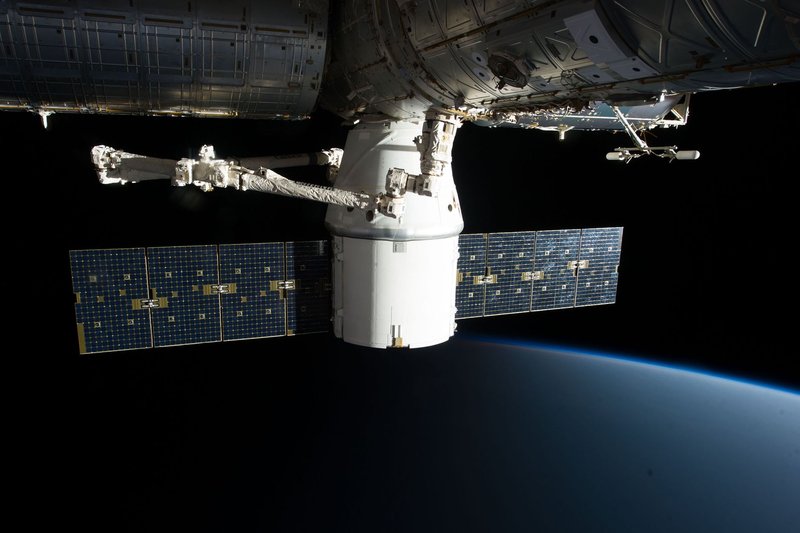
Endeavour launched in December 1998 carrying the American-built Unity module, and over the following days its crew used the shuttle’s robotic arm to capture the Russian-built Zarya module — already in orbit — and mate the two together. Commander Robert Cabana and cosmonaut Sergei Krikalev then floated together into Unity, the first humans ever inside the space station that would eventually house crews continuously for more than two decades. NASA’s own account of the mission calls it the moment station assembly stopped being a plan and started being a structure in orbit. Forty more assembly flights followed before the station was complete.
STS-93 — The First Female Commander (1999)
Eileen Collins had already made history as the first woman to pilot a shuttle in 1995; in July 1999 she became the first to command one, leading Columbia’s crew to deploy the Chandra X-ray Observatory — still one of NASA’s three “Great Observatories,” alongside Hubble and the since-retired Spitzer Space Telescope. Chandra studies X-ray emissions from black holes and neutron stars, wavelengths the atmosphere blocks entirely, which is why it had to go up on a rocket instead of sitting in a lab.
STS-107 — The Columbia Disaster (2003)
Columbia broke apart over Texas on February 1, 2003, during reentry, sixteen minutes before its scheduled landing. All seven crew members died: Rick Husband, William McCool, Michael Anderson, David Brown, Kalpana Chawla, Laurel Clark, and Ilan Ramon, Israel’s first astronaut. A piece of foam insulation, roughly the size of a briefcase, had broken off the external tank during launch 16 days earlier and struck the leading edge of the left wing, cracking a reinforced carbon panel. On reentry, superheated atmospheric gas worked through that crack, destroyed the wing’s internal structure, and sent the orbiter into an unrecoverable breakup.
NASA had seen foam strikes on previous flights and treated them as a maintenance issue rather than a safety-of-flight risk — the same normalization of a known problem that preceded Challenger. The Smithsonian’s retrospective on the anniversary describes how the investigation board’s findings pushed NASA toward mandatory on-orbit inspections and repair capability for every subsequent mission — capability the program had never needed until it was too late to help Columbia’s crew.
STS-114 — Return to Flight (2005)
Discovery’s July 2005 launch was the first crewed shuttle mission in two and a half years, flown under new rules: a robotic arm extension to inspect the wing’s leading edge for damage, procedures for astronauts to perform in-orbit tile repairs, and a rescue plan for the crew to shelter at the ISS if their own orbiter turned out to be unsafe to fly home. Even with the fixes, engineers spotted foam shedding from the external tank during this launch too, grounding the fleet again for another year of redesign. It wasn’t a clean return, but it was an honest one — NASA didn’t declare victory until the tank problem was actually solved.
STS-125 — Hubble’s Last House Call (2009)
Atlantis’s May 2009 mission was the fifth and final shuttle visit to Hubble, installing two new instruments and replacing batteries, gyroscopes, and both sets of solar arrays. It was also flown with a second orbiter, Endeavour, sitting fueled on a separate pad in case of a rescue — Hubble’s orbit doesn’t pass anywhere near the ISS, so there was no space station to shelter at if something went wrong, unlike every other late-era mission. The repairs worked well enough that Hubble is still operating today, more than three decades after a shuttle first carried it into orbit.
STS-135 — The Final Flight (2011)
Atlantis launched on July 8, 2011, with a four-person crew — the smallest of any late-program mission, kept deliberately small since there was no other shuttle standing by for a rescue flight. The mission delivered a year’s worth of supplies to the ISS and returned some failed hardware to Earth for analysis. NASA’s account of the mission describes Atlantis’s landing at Kennedy Space Center on July 21, 2011, at 5:57 a.m., as the moment the program’s odometer stopped: 135 missions, 30 years, five orbiters, and two that never made it home.
What Replaced the Shuttle
For nine years after STS-135, the United States had no way to launch its own astronauts and paid Russia for seats on Soyuz capsules — a gap that was supposed to be much shorter. SpaceX’s Crew Dragon ended that dependency in May 2020, launching NASA astronauts from American soil for the first time since the shuttle retired. Boeing’s Starliner is meant to provide a second option, though its path to regular crewed flights has been slower than either NASA or Boeing planned.
The shuttle and Crew Dragon solve the same problem in almost opposite ways. The shuttle was a reusable orbiter the size of a small airliner, capable of carrying up to eight people and tons of cargo, launching and landing like a plane. Crew Dragon is a capsule — smaller, simpler, splashing down under parachutes the way Apollo did — that flies on an expendable booster and carries up to seven. It’s a less ambitious vehicle by design, and that’s the point: the shuttle’s complexity was also what made both disasters possible, and every capsule since Apollo has had a launch-abort system that could pull the crew away from a failing rocket. The shuttle never had one.
NASA’s Artemis program, aiming to return astronauts to the Moon, uses yet another approach: an expendable Space Launch System rocket paired with an Orion capsule, closer in spirit to Apollo than to the shuttle it replaced. Between Crew Dragon’s routine ISS runs and Artemis’s lunar ambitions, the shuttle’s real legacy isn’t the vehicle itself — it’s the station it built piece by piece over 40 assembly flights, still occupied today, and the hard-won lesson that a known problem ignored long enough eventually becomes a disaster.
Enjoyed this article?
Get daily 10-minute PDFs about astronomy to read before bed!
Sign up for our upcoming micro-learning service where you will learn something new about space and beyond every day while winding down.