Table of Contents
- TLDR
- Who counts as a Washington astronaut
- Quick reference table
- Apollo era: Richard Gordon
- Shuttle era: Dunbar, Scobee, and Oswald
- Space station era: Barratt, McClain, and Barron
- Commercial spaceflight: Christopher Sembroski
- The University of Washington pipeline
- See the hardware in person
- FAQ
TLDR
Six NASA astronauts were born in Washington State: Bonnie Dunbar (Sunnyside), Dick Scobee (Cle Elum), Richard Gordon (Seattle), Stephen Oswald (Seattle), Michael Barratt (Vancouver) and Anne McClain (Spokane). Kayla Barron was born in Idaho but grew up in Richland. Christopher Sembroski lived in Everett when he flew on the private Inspiration4 mission. Together they cover Gemini, Apollo, the shuttle, the space station and commercial flight.
Who counts as a Washington astronaut
Most “astronauts from Washington” lists mix three different things, so here’s the split this page uses.
- Born in Washington: the birthplace on the NASA biography is a Washington city.
- Raised in Washington: born elsewhere, but the hometown listed on the NASA biography is in the state. Barron is the clearest case.
- Lived in Washington at flight time: a commercial astronaut with no NASA hometown listing, such as Sembroski.
This page covers Washington State only. Washington, D.C. has its own birthplace section on the usual lists and doesn’t belong in this one. Birthplace and hometown also get garbled between sources, so the details below follow the NASA biographies.
Quick reference table
| Name | Washington tie | Flights | Notable fact |
|---|---|---|---|
| Richard Gordon | Born in Seattle | Gemini 11, Apollo 12 | Stayed in lunar orbit while his crewmates walked on the Moon |
| Dick Scobee | Born in Cle Elum | STS-41-C, STS-51-L | Commanded Challenger on its final flight |
| Bonnie Dunbar | Born in Sunnyside | STS-61-A, 32, 50, 71, 89 | Five shuttle flights; later ran the Museum of Flight |
| Stephen Oswald | Born in Seattle | STS-42, 56, 67 | Commanded the 16-day Astro-2 telescope mission |
| Michael Barratt | Born in Vancouver | Expedition 19/20, STS-133, Crew-8 | Physician who flew to the station three times |
| Anne McClain | Born in Spokane | Expedition 58/59, Crew-10 | Army helicopter pilot and West Point graduate |
| Kayla Barron | Raised in Richland | Crew-3 | Former submarine officer |
| Christopher Sembroski | Lived in Everett | Inspiration4 | Flew on a seat given to him by a friend |
Apollo era: Richard Gordon
Richard Gordon was born in Seattle in 1929 and earned a chemistry degree at the University of Washington before becoming a Navy pilot. He flew twice.
On Gemini 11 in 1966, he spacewalked and tied the capsule to an Agena rocket stage with a tether, then rode the Agena for a moment like a bronco. The mission also reached an apogee of roughly 850 miles, still one of the highest Earth orbits any crew has flown.
Three years later he was command module pilot on Apollo 12. While Pete Conrad and Alan Bean spent about a day and a half on the Moon’s surface, Gordon stayed in orbit alone in the Yankee Clipper. He never got his own lunar landing: he was in line to command Apollo 18, which was cancelled. He died in 2017.
Shuttle era: Dunbar, Scobee, and Oswald
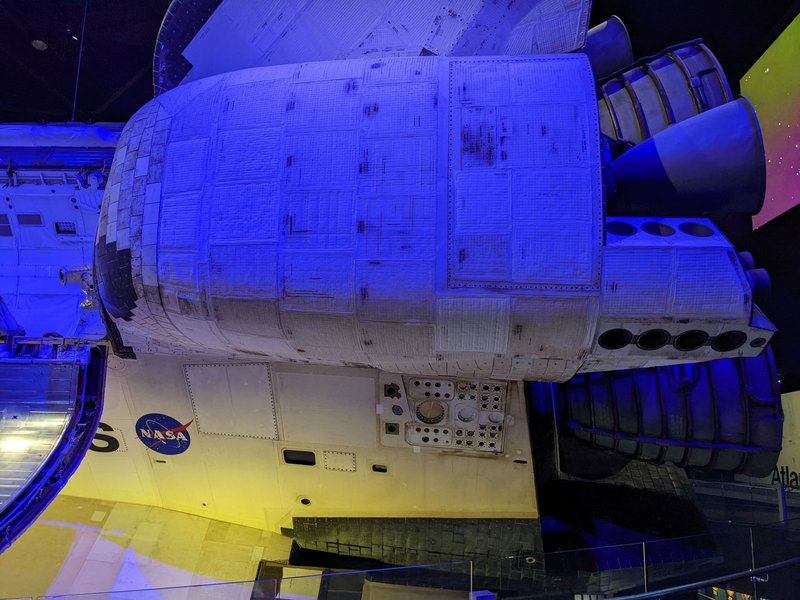
Washington’s biggest cluster of astronauts flew the shuttle.
Bonnie Dunbar was born in Sunnyside, in the Yakima Valley, and earned both a bachelor’s and a master’s degree in ceramic engineering at the University of Washington. That’s a fitting background for someone who spent her career around heat-shield materials. She flew five times: STS-61-A (1985), STS-32 (1990), STS-50 (1992), STS-71 (1995) and STS-89 (1998). STS-71 was the first shuttle docking with the Russian space station Mir. After NASA, she became president and CEO of Seattle’s Museum of Flight.
Dick Scobee was born in Cle Elum, a former coal-mining town on the east side of the Cascades. He joined the Air Force as an enlisted airman, finished his degree at night, and became a test pilot. He flew as pilot on STS-41-C in 1984, the mission that captured and repaired the Solar Max satellite. Two years later he commanded Challenger on STS-51-L. The orbiter broke apart 73 seconds after liftoff on January 28, 1986, and all seven crew members died.
Stephen Oswald was born in Seattle and flew three shuttle missions: STS-42 and STS-56 as pilot, then STS-67 as commander. STS-67 carried the Astro-2 ultraviolet telescopes for about 16 days in 1995, among the longest shuttle flights ever flown.
Space station era: Barratt, McClain, and Barron
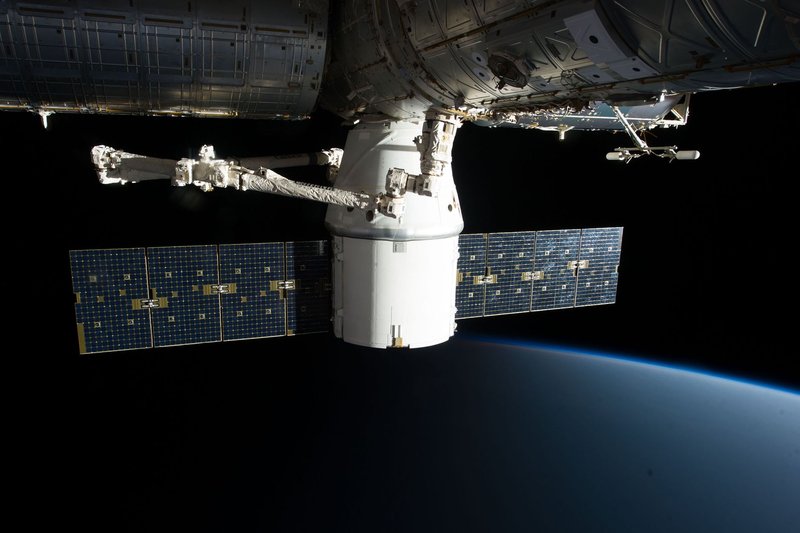
The three astronauts from the station era each have a different route into the program: a doctor, a soldier and a submariner.
Michael Barratt was born in Vancouver, Washington, and grew up in nearby Camas. He’s a physician who trained as a flight surgeon, which is why his first mission, in 2009, was a long-duration stay on the station as part of Expeditions 19 and 20. He returned on STS-133 in 2011, the final flight of Discovery, and again in 2024 on SpaceX’s Crew-8. The Crew-8 stay ran to roughly eight months after the schedule was disrupted by Starliner’s troubled test flight.
Anne McClain was born in Spokane and graduated from Gonzaga Prep there before going to West Point. She flew Army helicopters before NASA picked her in 2013. Her first flight was a 2018-19 station expedition. In 2019 she became part of a spacesuit-sizing story: a planned all-female spacewalk was reassigned because only one medium-size upper torso was ready on the station. She flew again on Crew-10 in 2025.
Kayla Barron is the “raised, not born” entry. She was born in Pocatello, Idaho, but her hometown on NASA’s biography is Richland, Washington, in the Tri-Cities. She graduated from the U.S. Naval Academy, studied nuclear engineering at Cambridge, and served as a submarine warfare officer, among the first women to do so. NASA selected her in 2017, and she flew a roughly six-month station stay on Crew-3 in 2021-22. In 2020 NASA named her to the Artemis Team, the group of astronauts eligible for lunar missions. That’s a pool, not a crew assignment, so treat “Artemis astronaut” headlines with care.
Commercial spaceflight: Christopher Sembroski
Christopher Sembroski doesn’t fit the NASA mold, which is the point. A U.S. Air Force veteran living in Everett, he flew in September 2021 on Inspiration4, the first orbital mission with an all-civilian crew. His seat came from a friend who won it in a charity raffle and passed it on to him.
The three-day flight on a SpaceX Crew Dragon orbited higher than the space station, at about 575 kilometers. He has no NASA hometown listing, so he’s included here for where he lived, not where he was born.
The University of Washington pipeline
Gordon, Dunbar and Barratt all studied at the University of Washington, which makes the school the strongest single link between Washington and the astronaut corps. The university’s alumni magazine has profiled its astronaut graduates, and its Department of Aeronautics & Astronautics is one reason the school keeps turning up in astronaut biographies. NASA’s state-by-state page also lists Washington names.
A caveat for Washington State University fans: none of the astronauts above has a WSU degree on their NASA biography, so don’t expect a Cougar pipeline on this list.
See the hardware in person
Seattle’s Museum of Flight is the obvious stop. It has a full-fuselage space shuttle trainer used to rehearse crew procedures, and its space gallery covers the program Dunbar ran the museum next to for years. Walking through the trainer shows how little room seven people had, which makes the careers above feel more concrete.
FAQ
Which astronaut from Washington has flown the most missions? Bonnie Dunbar, with five shuttle flights. Michael Barratt has three (two station expeditions and one shuttle flight).
Which Washington astronaut flew on Apollo? Richard Gordon of Seattle, on Apollo 12 in 1969. He had flown on Gemini 11 three years earlier.
Was Kayla Barron born in Washington? No. She was born in Pocatello, Idaho, and grew up in Richland, Washington.
Who from Washington died in the Challenger accident? Dick Scobee, the mission commander, born in Cle Elum.
Are there astronauts from Washington, D.C.? Yes, but they’re a separate list. This page covers Washington State only.
Which Washington astronauts attended the University of Washington? Richard Gordon, Bonnie Dunbar and Michael Barratt.