
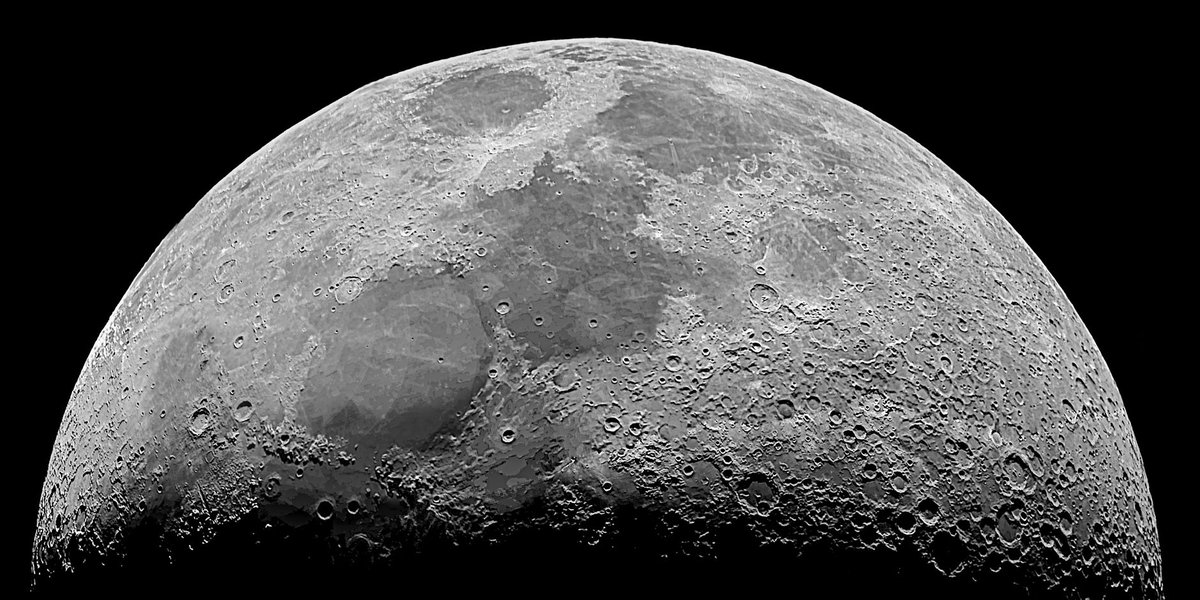
The largest confirmed impact crater in the solar system is Utopia Planitia on Mars, about 3,300 km (2,050 miles) across. It’s buried under lava and dust, so you can’t see it in a photo. The largest one you can see is the Moon’s South Pole–Aitken basin at roughly 2,500 km.
Then there are the bigger claims. Mars may have a basin on its northern hemisphere around 8,500–10,600 km wide, and Ganymede may carry a scar of about 15,600 km. Those are hypotheses, and lists that rank them next to Utopia are mixing categories. This post keeps them apart.
TLDR
- Largest confirmed: Utopia Planitia, Mars, about 3,300 km.
- Largest you can clearly see: South Pole–Aitken basin, Moon, about 2,500 km. Hellas Planitia on Mars (about 2,300 km) is the largest crater-like feature that’s obvious from orbit on another planet.
- Largest proposed: Mars’ North Polar (Borealis) Basin at about 8,500–10,600 km, and Ganymede’s furrow system at about 15,600 km. Neither is settled.
- Largest relative to its host: Rheasilvia on the asteroid Vesta, at roughly 90% of Vesta’s width.
Table of contents
- Three categories: confirmed, visible, proposed
- The largest craters in the solar system, ranked
- The top 10 profiles
- The bigger claims: Mars’ north and Ganymede
- Crater size vs. body size
- How scientists confirm an impact basin
- Why the rankings disagree
- FAQ
- Sources and dates
Three categories: confirmed, visible, proposed
“Largest crater” has three honest answers, and most articles pick one without telling you.
Confirmed means the structure has been mapped well enough, through topography, gravity, or rock samples, that planetary scientists agree an impact made it. Utopia qualifies even though it’s hidden.
Visible means you can open an image and point at the thing. South Pole–Aitken and Hellas qualify. Utopia doesn’t.
Proposed means someone has published an argument, and the argument is still being tested. Both of the very large candidates sit here.
Everything in the ranked table below is confirmed or widely accepted. The proposed ones get their own section.
The largest craters in the solar system, ranked
Technically, features this big are called impact basins. The word “crater” covers them in everyday use, and that’s the sense used here.
| Rank | Name | Body | Diameter (km) | Diameter (miles) | Status |
|---|---|---|---|---|---|
| 1 | Utopia Planitia | Mars | ~3,300 | ~2,050 | Confirmed (buried) |
| 2 | South Pole–Aitken | Moon | ~2,500 | ~1,550 | Confirmed |
| 3 | Hellas Planitia | Mars | ~2,300 | ~1,430 | Confirmed |
| 4 | Argyre Planitia | Mars | ~1,800 | ~1,120 | Confirmed |
| 5 | Caloris Basin | Mercury | ~1,550 | ~960 | Confirmed |
| 6 | Isidis Planitia | Mars | ~1,500 | ~930 | Confirmed |
| 7 | Imbrium Basin | Moon | ~1,145 | ~710 | Confirmed |
| 8 | Sputnik Planitia | Pluto | ~1,050 | ~650 | Widely accepted |
| 9 | Rembrandt | Mercury | ~715 | ~445 | Confirmed |
| 10 | Rheasilvia | Vesta (asteroid) | ~505 | ~315 | Confirmed |
Diameters are rounded. Different studies measure different rims, which is why you’ll see other numbers elsewhere (more on that below). For scale, Earth’s biggest known impact structure, Vredefort in South Africa, was an estimated 250–300 km wide when it formed. Utopia is more than ten times that.
The top 10 profiles
1. Utopia Planitia, Mars (~3,300 km)
Utopia is the winner because it’s so large that the surface above it looks like plain flat lowland. The basin sits in Mars’ northern hemisphere, filled and buried by later material. Orbiter topography and gravity data revealed the outline, and ground-penetrating radar on Mars Reconnaissance Orbiter probed what lies beneath. NASA’s Viking 2 lander touched down on the plain in 1976 without anyone knowing it was sitting inside a basin the size of the continental United States.
2. South Pole–Aitken basin, Moon (~2,500 km)
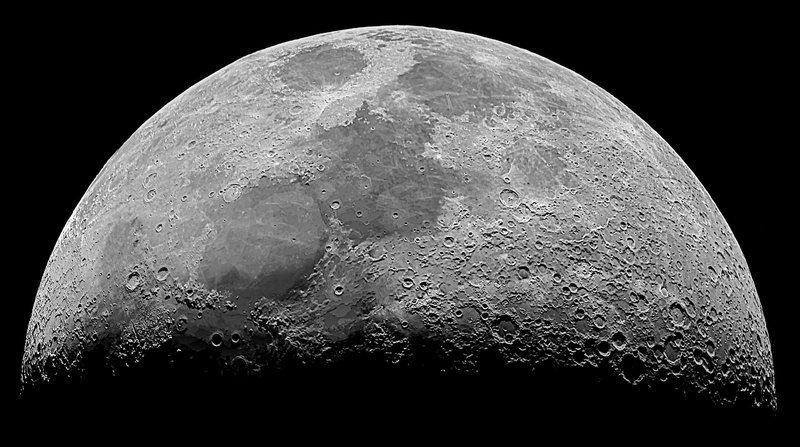
South Pole–Aitken is the largest confirmed crater you can actually photograph, and it’s the oldest large one on the Moon, probably more than 4 billion years old. It’s about 8 km deep on average, and it holds the lowest elevations on the lunar surface. It’s on the far side, so Earth-based telescopes never see it. China’s Chang’e 4 landed inside it in 2019, and Chang’e 6 brought back samples from the far side in 2024. Researchers hope those rocks pin down the basin’s age.
3. Hellas Planitia, Mars (~2,300 km)
Hellas is the one you’ll recognize from Mars globes: a pale, circular scoop in the southern hemisphere. The floor sits roughly 7 km below the surrounding terrain. That extra depth means atmospheric pressure at the bottom is noticeably higher than the Martian average, and the basin is a frequent spot for frost and dust-storm activity.
4. Argyre Planitia, Mars (~1,800 km)
Argyre lies in the southern highlands, ringed by the Charitum and Nereidum mountain chains, which are the broken remains of its raised rim. It’s younger than Hellas in appearance and preserves features that suggest ice and water modified it over time.
5. Caloris Basin, Mercury (~1,550 km)
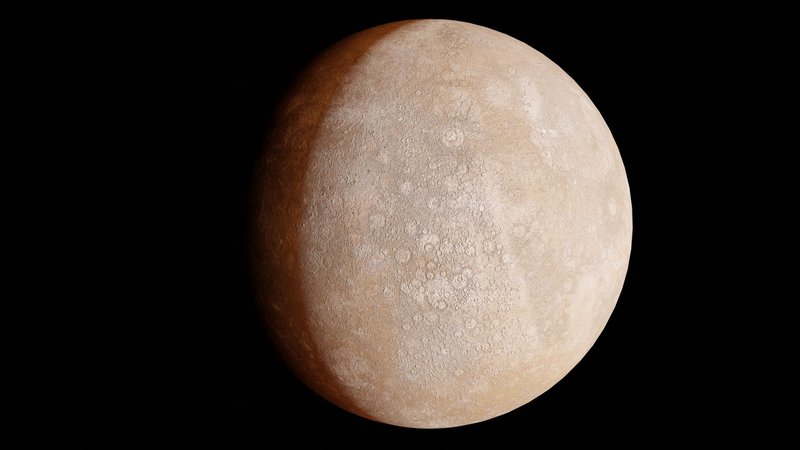
Caloris is Latin for “heat.” It sits on one of the two longitudes that face the Sun when Mercury is closest to it in its orbit. Mariner 10 imaged only half of it in 1974. NASA’s MESSENGER spacecraft mapped the whole thing decades later. Planetary scientists have long argued that the impact’s seismic energy focused on the opposite side of the planet and wrecked the terrain there, a patch known as the “weird terrain.”
6. Isidis Planitia, Mars (~1,500 km)
Isidis is a Mars basin with a famous neighbor. Jezero Crater, where NASA’s Perseverance rover landed in 2021, sits on the basin’s northwestern edge. The impact that made Isidis is part of why that region has a mix of ancient rock types for the rover to sample.
7. Imbrium Basin, Moon (~1,145 km)
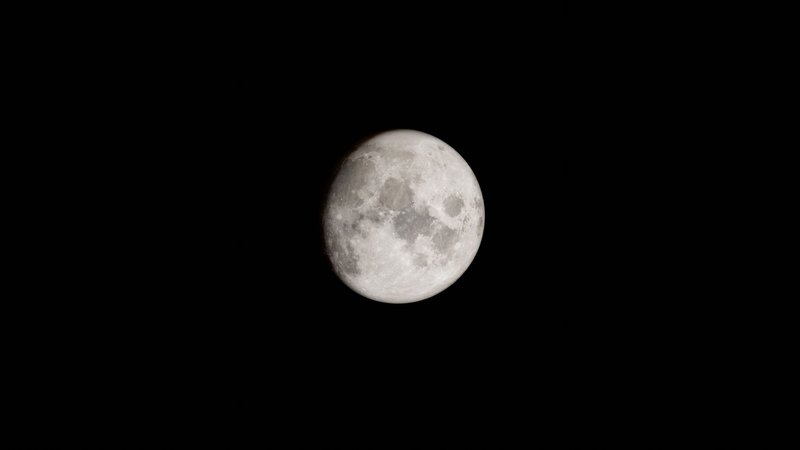
Imbrium is the dark “eye” on the Moon’s face, and it’s the one that humans have literally walked next to. Apollo 15 landed at the edge of the basin in 1971, near the Apennine Mountains, which are the basin’s uplifted rim. Imbrium formed about 3.9 billion years ago. Lava flooded it later, making the smooth dark plain we see from Earth.
8. Sputnik Planitia, Pluto (~1,050 km)
Sputnik Planitia is the left lobe of Pluto’s “heart.” NASA’s New Horizons flew past in July 2015 and found a floor of nitrogen ice that is slowly convecting, with cells that renew the surface. The basin is widely thought to be an impact scar, with the ice pooling in it because it sits in a low spot. It’s on this list because of its size, though the evidence for its origin is less rock-solid than for the Moon or Mars.
9. Rembrandt, Mercury (~715 km)
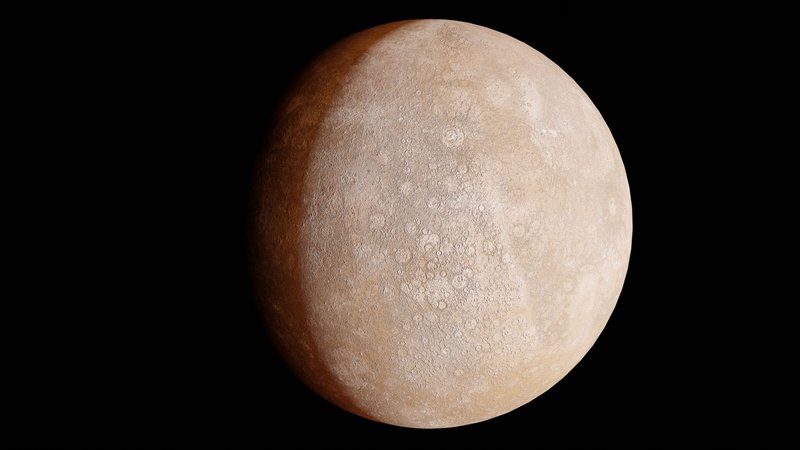
Rembrandt is Mercury’s second giant, spotted during MESSENGER’s flybys in 2008. It’s around 3.9 billion years old and has two features Caloris doesn’t: a visible younger ring structure, and a set of fault scarps that show the planet shrank as its interior cooled after the impact.
10. Rheasilvia, Vesta (~505 km)
Rheasilvia is the smallest on this list and the one that should surprise you most. Vesta is only about 525 km across on average, and you can see it next to Bennu and Apophis in an interactive 3D model. NASA’s Dawn mission orbited Vesta in 2011–2012 and mapped a crater covering nearly the whole southern hemisphere, with a central peak about 20 km high. That’s among the tallest mountains known in the solar system. The impact also threw off debris that reaches us as meteorites, so you can hold a piece of Vesta in a collection.
The bigger claims: Mars’ north and Ganymede
Mars’ North Polar Basin. In 2008, NASA described a possible giant impact that shaped Mars’ northern lowlands. The proposed basin is about 10,600 by 8,500 km, covering roughly 40% of the planet. If it’s real, it makes Utopia look like a dent inside the dent. It’s also an old, heavily modified feature, and researchers still debate whether an impact or internal processes made Mars’ hemispheric split.
Ganymede’s impact scar. Ganymede, Jupiter’s largest moon, has a region of grooved furrows in arcs around a dark ancient terrain called Galileo Regio. A 2020 study proposed these furrows are the remains of rings from a single giant impact about 4 billion years ago. The reported scale is roughly 15,600 km, which is almost three times Ganymede’s own diameter of 5,268 km. That number refers to the spread of the ring pattern, not a crater floor, which is a reminder that these figures aren’t directly comparable to Utopia’s.
The best chance to test it is ESA’s JUICE mission, launched in 2023. It’s scheduled to reach Jupiter in 2031 and enter orbit around Ganymede in the mid-2030s, with instruments that can measure the moon’s surface and interior.
Crater size vs. body size
Raw diameter ranks Utopia first. Divide by the size of the world it hit, and the order changes.
| Crater | Host body | Host diameter (km) | Crater as share of host |
|---|---|---|---|
| Rheasilvia | Vesta | ~560 (equatorial) | ~90% |
| South Pole–Aitken | Moon | ~3,474 | ~72% |
| Utopia Planitia | Mars | ~6,779 | ~49% |
| Sputnik Planitia | Pluto | ~2,377 | ~44% |
| Hellas Planitia | Mars | ~6,779 | ~34% |
| Imbrium | Moon | ~3,474 | ~33% |
| Caloris | Mercury | ~4,879 | ~32% |
| Rembrandt | Mercury | ~4,879 | ~15% |
Rheasilvia and South Pole–Aitken are the extreme cases. An impact that digs a hole 72% as wide as the Moon is close to the limit of what a body can take without breaking apart. Vesta took a hit nearly its own width and survived as a round enough world with a mountain taller than Everest.
How scientists confirm an impact basin
On Earth, the proof is in the rock. Shocked quartz, shatter cones, and impact melt form only under pressures that volcanoes and tectonics can’t produce. Most other bodies don’t offer that, so researchers use indirect evidence.
- Topography. A circular depression with a raised rim, measured by laser altimeters, is the starting point.
- Gravity. Impacts leave dense material below the basin, which shows up in orbiter gravity maps. On the Moon these are called mascons.
- Radar. Radar sounders see buried structures. That’s how Utopia’s hidden outline became solid.
- Crustal thickness. A basin should have thinned crust beneath it and a raised mantle.
- Samples. Returned or meteoritic rock can be dated and tested for shock effects. This is why the Chang’e 6 and Apollo samples matter.
The Ganymede and Mars North Polar claims rely mostly on the first two. That’s why they’re labeled proposed.
Why the rankings disagree
Ask three sources for the largest crater and you can get three answers. There are a few reasons.
- Different edges. Some studies measure the topographic rim. Others measure an outer ring or the gravity signal, which are all different sizes for the same basin.
- Erosion and burial. Old basins like Utopia and Argyre have been filled and eroded, so their edges blur.
- Elliptical shapes. South Pole–Aitken is closer to 2,500 by 2,000 km than a circle. Published values depend on which axis is used.
- Category mixing. Some lists include proposed structures. Others stop at confirmed ones.
The numbers above are the commonly cited published figures, rounded.
FAQ
What is the largest crater in the solar system? Utopia Planitia on Mars, about 3,300 km across, is the largest confirmed impact basin. Larger structures have been proposed on Mars and Ganymede but aren’t confirmed.
What is the largest crater on the Moon? South Pole–Aitken basin, about 2,500 km wide and around 8 km deep on average. It’s on the far side.
What is the largest crater on Mars? Utopia Planitia (about 3,300 km) is the largest confirmed. Hellas Planitia (about 2,300 km) is the largest you can clearly see from orbit.
What is the largest crater on Earth? Vredefort in South Africa is the largest confirmed impact structure, estimated at 250–300 km originally. Chicxulub in Mexico, linked to the dinosaur extinction, is about 180 km.
Is Valles Marineris a crater? No. It’s a system of canyons, roughly 4,000 km long, formed by tectonic stretching of the crust rather than an impact.
Sources and dates
Figures reflect commonly cited published measurements as of November 2026 and are rounded. Mission details come from NASA (Dawn, Viking, MESSENGER, New Horizons, Perseverance), ESA (JUICE), and the Chinese Chang’e missions. The Mars North Polar Basin was described in 2008 papers and a NASA release the same year. The Ganymede proposal dates to a 2020 study. Sizes may be revised as missions return new data.
