Most “Hispanic astronauts” roundups repeat the same three names — Franklin Chang-Díaz, Ellen Ochoa, José Hernández — and call it a list. Those three earned their spots. But NASA and its international partners have flown Latino astronauts on more than 40 missions since 1980, and the roster includes a Peruvian Marine who built the ISS’s first solar arrays, a Spanish flight engineer who later ran his country’s science ministry, and a Salvadoran-born flight surgeon who spent a year in orbit because his ride home got hit by space debris.
This is that fuller list: 15 astronauts, organized by era, each with the specific thing that made their flight matter.
Table of contents
- The pioneers (1980–1998)
- The shuttle and station regulars (1997–2009)
- The new generation (2018–present)
- Why Hispanic representation in space still lags
The pioneers (1980–1998)
1. Franklin Chang-Díaz — Costa Rica
Chang-Díaz became NASA’s first Latin American immigrant astronaut in 1980, and he didn’t fly just once. He flew seven Space Shuttle missions between 1986 and 2002, tying the all-time record for most spaceflights, a mark he shares with astronaut Jerry Ross. In between missions, he ran the Advanced Space Propulsion Laboratory at Johnson Space Center, developing the VASIMR plasma rocket — technology he’s still chasing today through his own company, aimed at cutting the trip to Mars down from months to weeks.
2. Rodolfo Neri Vela — Mexico
Neri Vela became the first Mexican citizen in space on November 27, 1985, aboard Space Shuttle Atlantis for STS-61B. He wasn’t a career astronaut — he was a telecommunications engineer riding along as a payload specialist to help deploy Mexico’s Morelos-B satellite. Over 6.88 days and 108 orbits, he ran experiments for the Mexican government, then went back to teaching engineering. One flight, one job to do, done.
3. Sidney Gutierrez — United States (New Mexico)
Gutierrez, selected by NASA in 1984, was the first U.S.-born Hispanic astronaut. He flew as pilot on STS-40 in 1991, then commanded STS-59 in 1994 — an 11-day Earth radar mapping mission that logged more than 400 precision maneuvers, a shuttle record at the time. That command made him the first person of Hispanic descent to command a spacecraft, five years before anyone else got the chance.
4. Ellen Ochoa — United States (California)
Ochoa became the first Hispanic woman in space aboard STS-56 in 1993, one of four shuttle missions she’d eventually fly. She was also a working inventor before NASA — her patents from Stanford and Sandia National Laboratories covered optical systems for detecting defects in repeating patterns. In 2013, she became the first Hispanic director of Johnson Space Center, running the building where astronauts train, not just visiting it.
5. Pedro Duque — Spain
Duque became the first Spanish citizen in space on STS-95 in 1998 — the same flight that sent 77-year-old John Glenn back to orbit, 36 years after his first trip. Duque returned to space in 2003 as flight engineer on Soyuz TMA-3, running Spain’s “Cervantes” experiment program aboard the ISS. He later swapped a flight suit for a cabinet post, serving as Spain’s Minister for Science, Innovation and Universities from 2018 to 2021.
The shuttle and station regulars (1997–2009)
6. Carlos Noriega — Peru
Noriega, born in Lima and selected by NASA in 1994, flew STS-84 to the Mir space station in 1997 and STS-97 to the ISS in 2000. On STS-97, his crew installed the station’s first set of U.S. solar arrays across three spacewalks totaling more than 19 hours — the panels that gave the ISS its wingspan. A former Marine lieutenant colonel, Noriega logged over 461 hours in space before moving into NASA management.
7. Michael López-Alegría — Spain / United States
Born in Madrid to a Spanish father and raised in California, López-Alegría holds dual citizenship and the American record for most career spacewalks: 10, totaling 67 hours and 40 minutes outside the spacecraft. He commanded ISS Expedition 14 for 215 days — at the time, the longest single spaceflight by an American. Only Russia’s Anatoly Solovyev has more spacewalk time than he does.
8. John “Danny” Olivas — United States (Texas)
Olivas flew STS-117 in 2007 and STS-128 in 2009, and his first spacewalk made shuttle history for the wrong-turned-right reason: a thermal blanket had torn loose from Atlantis during launch, and Olivas pinned it back down and stapled it in place, the first-ever on-orbit repair of the shuttle’s thermal protection system. It added two days to the mission and kept the crew from returning on a damaged heat shield.
9. George Zamka — United States (Colorado)
Zamka, a Marine Corps pilot of Colombian and Polish descent, commanded STS-130 in 2010 — the mission that delivered the ISS’s Tranquility module and the Cupola, the seven-window observation dome astronauts now use to watch Earth go by. The flight made him the first person of Colombian descent to reach orbit.
10. José Hernández — United States (California)
Hernández’s parents were Mexican migrant farmworkers, and he spent his childhood moving between California’s Central Valley and Michoacán, Mexico, following the harvest — he didn’t start learning English full-time until he was 12. He applied to NASA’s astronaut program 11 times before getting selected in 2004, then flew as a mission specialist on STS-128 in 2009, where he sent the first tweet from space written in Spanish. His autobiography became the 2023 film “A Million Miles Away,” with Michael Peña playing him on screen. Hernández later ran for a California congressional seat — proof the story didn’t stop at the landing.
11. Marcos Pontes — Brazil
Pontes became the first South American, and the first Portuguese speaker, to reach orbit when he docked at the ISS aboard Soyuz TMA-8 on March 30, 2006. He’d originally trained with NASA for a shuttle seat, but after the Columbia disaster grounded the program for years, he switched to Russia’s cosmonaut corps to get his flight. Eight days, a full slate of Brazilian-government science experiments, and a return on a different Soyuz — TMA-7 — eight days later.
12. Serena Auñón-Chancellor — United States (Indiana)
Both of Auñón-Chancellor’s parents are Cuban, her father having immigrated to the U.S. in 1960. She trained as a physician before NASA selected her in 2009 out of 3,500 applicants, and in 2018 she spent 197 days aboard the ISS as a flight engineer, running life-science experiments — fitting, for someone who was a working doctor first and an astronaut second.
The new generation (2018–present)
13. Frank Rubio — United States (Florida) / El Salvador
Rubio was born in El Salvador, moved to Miami at six, flew Black Hawk helicopters in Bosnia, Afghanistan, and Iraq, then became an Army flight surgeon before NASA picked him in 2017. His 2022 ISS mission was supposed to run six months. It ran 371 days after a piece of space debris punctured the radiator on the Soyuz that was meant to bring him home, forcing NASA and Roscosmos to send a replacement capsule. The extra half-year set the record for the longest single spaceflight by an American, a record he didn’t ask for and wouldn’t have chosen.
14. Marcos Berríos — United States (Puerto Rico)
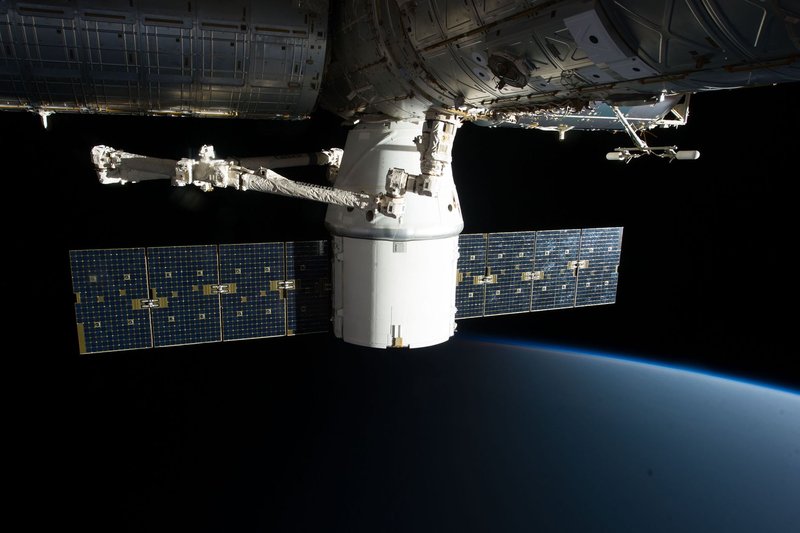
Berríos, an Air Force test pilot with degrees from MIT and Stanford, was selected in NASA’s 2021 astronaut class and reported for training in 2022 — one of the newer names on this list, and the second Puerto Rican ever selected as an astronaut, after Joseph Acaba. He hasn’t flown yet. He’s in the pipeline of active astronauts NASA is training for its next round of station and Artemis-era missions, which is exactly the kind of name that doesn’t make it into the “greatest hits” lists.
15. Katya Echazarreta — Mexico / United States
Echazarreta grew up in Guadalajara being told space wasn’t for her, moved to the U.S. as a teenager, and became an electrical engineer who worked on five NASA missions, including the Europa Clipper and the Mars 2020 rover. In June 2022, sponsored by the nonprofit Space for Humanity, she flew on Blue Origin’s NS-21 suborbital flight and became the first Mexican-born woman in space. She shared that flight, by coincidence, with Victor Hespanha — a Brazilian engineer who became just the second Brazilian ever to reach space, 16 years after Marcos Pontes.
Why Hispanic representation in space still lags
Here’s the number that doesn’t show up in the celebratory posts: out of roughly 360 people NASA has sent to space since 1959, fewer than 20 have been Hispanic or Latino. Hispanic people make up close to 20% of the U.S. population. The astronaut corps doesn’t come close to matching that, and the gap isn’t about talent — it’s about pipeline. Test-pilot and PhD-STEM tracks, the two main feeder paths into the astronaut corps, have historically underrepresented Hispanic candidates for the same reasons those fields underrepresent them everywhere else: fewer scholarships reaching the right students early, fewer visible role models before college, fewer connections into military aviation programs.
That’s slowly changing. Berríos and Rubio are both active astronauts today, not historical footnotes, and commercial spaceflight — Echazarreta’s Blue Origin seat, Hespanha’s — is opening a second door that doesn’t require a test-pilot logbook or a NASA PhD. The list of 15 above isn’t the ceiling. It’s a progress report.