South Carolina has sent exactly three people to space: Charles Duke Jr., who walked on the Moon during Apollo 16; Ronald McNair, the laser physicist who died aboard Challenger; and Charles Bolden Jr., a combat pilot who flew four shuttle missions and later ran NASA itself. Three astronauts, three very different paths, all starting in the same state.
TLDR
- Charles Duke Jr. — grew up in Lancaster, was CAPCOM for Apollo 11, walked on the Moon during Apollo 16 in 1972.
- Ronald McNair — born in Lake City, a laser physicist with a PhD from MIT, died in the Challenger disaster on January 28, 1986.
- Charles Bolden Jr. — born in Columbia, flew more than 100 combat missions in Vietnam, then flew four space shuttle missions before becoming NASA’s 12th Administrator.
Table of Contents
- Charles Duke Jr.: Lancaster’s Man on the Moon
- Ronald McNair: Lake City’s Physicist Aboard Challenger
- Charles Bolden Jr.: Columbia’s Combat Pilot Who Ran NASA
- FAQ
Charles Duke Jr.: Lancaster’s Man on the Moon
Charles Duke was born in Charlotte but grew up in Lancaster, South Carolina, and that’s the town that claims him. He went to the U.S. Naval Academy, picked up a master’s in aeronautics from MIT, and joined NASA’s astronaut corps in 1966 — one of nineteen men selected that year.
Before he ever left the ground on his own mission, Duke’s voice was already part of space history. As CAPCOM for Apollo 11, he’s the one who radioed “Roger, Tranquility, we copy you on the ground” after Neil Armstrong and Buzz Aldrin touched down — the line that confirmed, to the room and to the world, that the landing had actually worked.
His own flight came on Apollo 16, launched April 16, 1972. Duke served as lunar module pilot alongside commander John Young, landing in the Descartes highlands while Ken Mattingly orbited above in the command module. Over three moonwalks, Duke and Young drove the lunar rover 16 miles across the surface and hauled back 213 pounds of rock and soil. At 36, Duke became the tenth person — and, at the time, the youngest — to walk on the Moon. He left a photo of his family on the surface, tucked into a plastic bag, where it presumably still sits today.
Duke retired from NASA in 1975 and moved into private business, running Duke Investments back home. His NASA biography still lists Lancaster as the place he calls home.
Ronald McNair: Lake City’s Physicist Aboard Challenger
Ronald McNair grew up in Lake City, South Carolina, in a house without indoor plumbing until he was a teenager, and by his own account spent his childhood summers picking cotton and tobacco. He graduated valedictorian of his segregated high school, went on to North Carolina A&T State University for a physics degree, and then to MIT, where he earned a PhD in laser physics in 1976 — one of the few Black students in the department at the time.
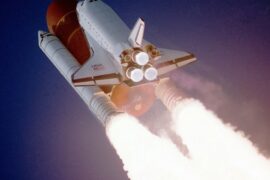
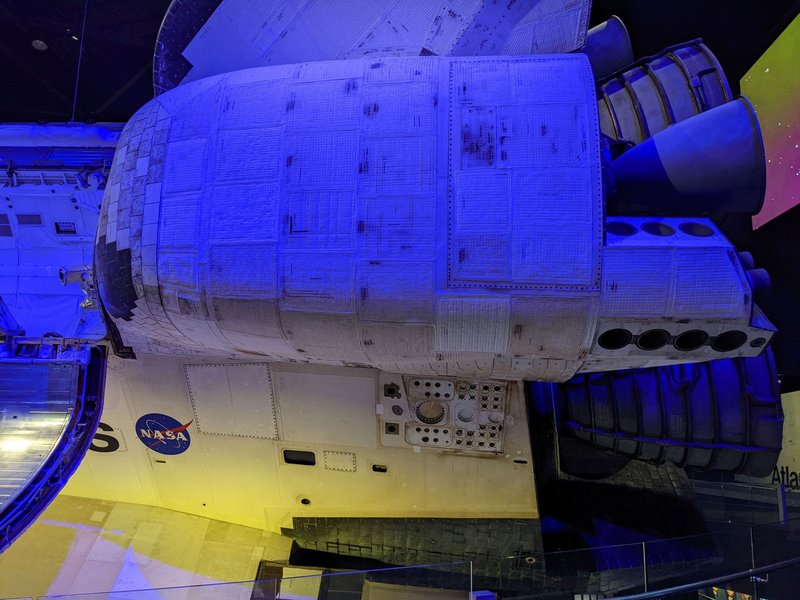
NASA selected McNair in January 1978 as part of its eighth astronaut class, the first group to include Black astronauts. His first flight came aboard Challenger on mission STS-41-B in February 1984, where he operated the shuttle’s robotic arm to help support Bruce McCandless’s untethered spacewalk — the one where an astronaut floated free of the vehicle for the first time. McNair logged 191 hours in orbit on that flight.
His second flight was Challenger’s final one. On January 28, 1986, the shuttle broke apart 73 seconds after launch, killing McNair and his six crewmates. He was 35. South Carolina has kept his name close ever since: a boulevard in Columbia, a science center at his alma mater, and the federal Ronald E. McNair Postbaccalaureate Achievement Program, which still helps first-generation and low-income students pursue PhDs. Outside of physics, McNair held a fifth-degree black belt in karate and played saxophone well enough to sit in with professional jazz musicians — details that show up in nearly every account of him, because people who knew him kept bringing them up.
Charles Bolden Jr.: Columbia’s Combat Pilot Who Ran NASA
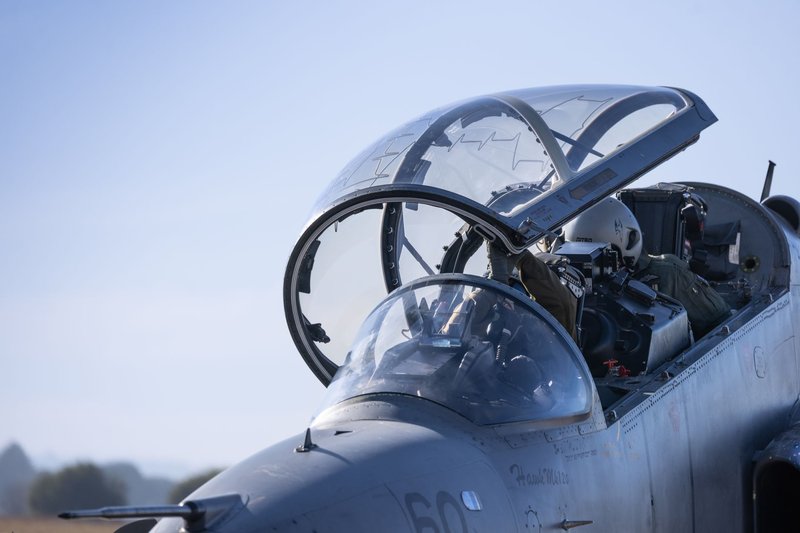
Charles Bolden was born in Columbia in 1946, the son of two schoolteachers, and graduated from C.A. Johnson High School before heading to the U.S. Naval Academy — a path he later said took multiple letters to his congressman just to get an appointment, since South Carolina’s delegation initially turned him down. He graduated in 1968 with a degree in electrical science and was commissioned into the Marine Corps.
Bolden trained as a naval aviator and flew more than 100 combat missions over North and South Vietnam, Laos, and Cambodia while based in Thailand between 1972 and 1973. NASA selected him as an astronaut in 1980, and he went on to fly four space shuttle missions: two as pilot, including the 1990 flight that deployed the Hubble Space Telescope, and two as commander.
After retiring from NASA and the Marine Corps as a major general, Bolden came back to the agency in a different role. President Obama nominated him as NASA Administrator in 2009, and the Senate confirmed him as the 12th person — and the first Black astronaut — to hold the job, a post he held until 2017. During his tenure, NASA wound down the shuttle program and began developing the Space Launch System and Orion spacecraft aimed at deep-space missions. His official NASA biography and his entry among the Naval Academy’s notable graduates both trace the same arc: from a kid in Columbia who had to fight for his Academy seat to the man running the country’s space program.
FAQ
How many astronauts are from South Carolina? Three: Charles Duke Jr. (Lancaster), Ronald McNair (Lake City), and Charles Bolden Jr. (Columbia).
Who was the first Black astronaut from South Carolina? Ronald McNair, selected by NASA in 1978 as part of the first astronaut class to include Black candidates.
Are any current NASA astronauts from South Carolina? No member of NASA’s active astronaut corps currently lists South Carolina as a hometown. The state’s spaceflight legacy so far runs through these three.
Where can you learn more about them in South Carolina? The South Carolina State Museum in Columbia has a permanent exhibit on McNair, Lake City is home to the Ronald E. McNair Life History Center, and Duke’s hometown of Lancaster has honored him with a monument downtown.