
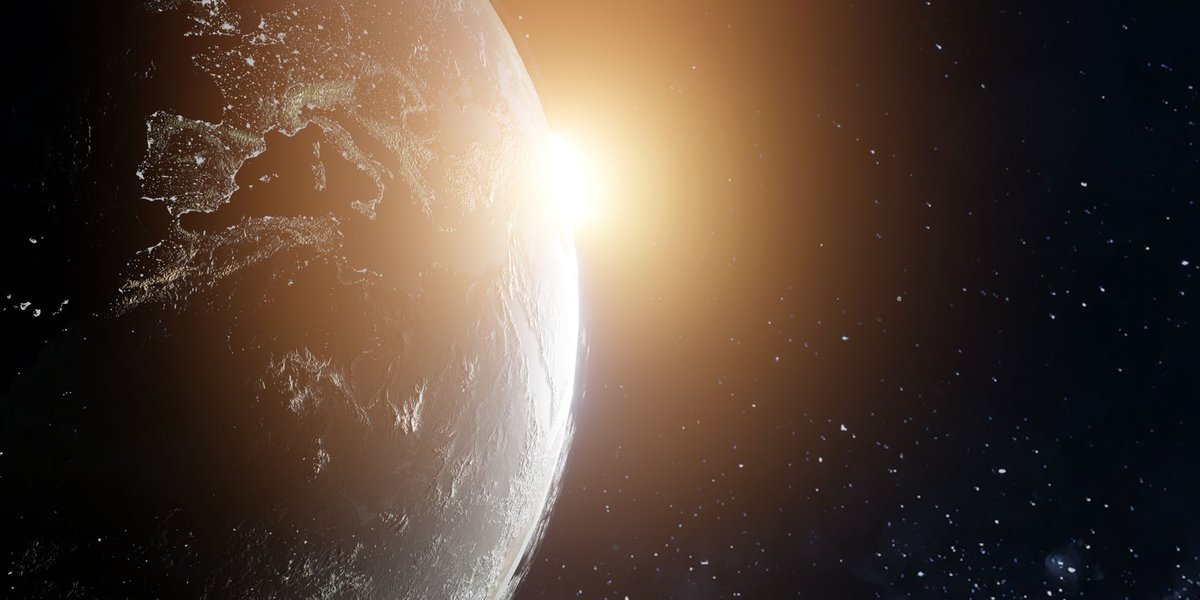
The Sun affects Earth in two ways. Its steady light and heat drive photosynthesis, weather, ocean currents, day and night, and the seasons. Its less predictable side, space weather, sends charged particles and magnetic storms that cause auroras and can disrupt satellites, GPS and power grids.
Most explanations stop at the first half. This one covers both, because they come from the same star and arrive on very different schedules.
Table of contents
- What does the Sun do for Earth every day?
- How does the Sun make weather, wind and ocean currents?
- Why does the Sun cause seasons?
- How does sunlight affect your body?
- What is space weather?
- What protects Earth from the Sun?
- How long does it take the Sun’s energy to reach Earth?
- Does the Sun cause climate change?
- What would happen if the Sun disappeared?
- Quick reference: effects at a glance
- FAQ
- Summary
What does the Sun do for Earth every day?
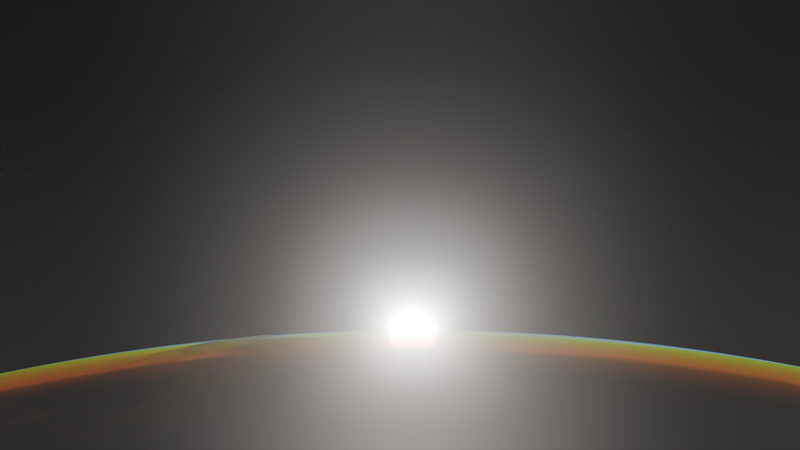
Sunlight leaves the Sun and reaches Earth in about 8 minutes and 20 seconds, after crossing roughly 150 million kilometers. The Sun’s output at that distance is about 1,361 watts for every square meter facing it, a figure scientists call the solar constant. About 30 percent of it bounces straight back to space off clouds, ice and bright surfaces. The rest warms the air, land and oceans or gets absorbed by living things.
Scale helps here. Roughly one hour of sunlight hitting the top of the atmosphere carries about as much energy as humanity uses in a full year. Earth intercepts only a tiny sliver of what the Sun puts out, and that sliver runs nearly everything on the surface.
The big daily jobs:
- Heat. Without the Sun, Earth’s surface would sit far below freezing. Sunlight, plus the greenhouse effect that holds some of the heat in, keeps the average surface temperature near 15 degrees Celsius.
- Photosynthesis. Plants, algae and cyanobacteria turn sunlight, water and carbon dioxide into sugars and release oxygen. That is the base of almost every food chain on land and in the upper ocean, and the source of the oxygen in the air you’re breathing.
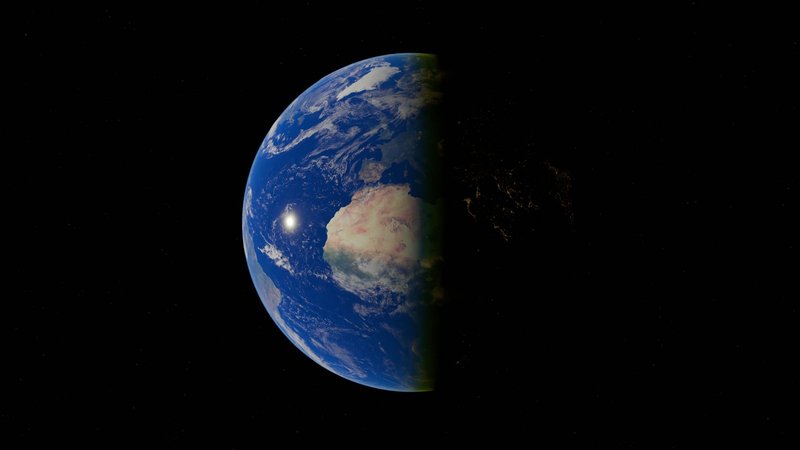
- Day and night. The Sun doesn’t move across the sky. Earth spins once every 24 hours, so your location turns toward the Sun, then away from it. Light, temperature and the rhythm of most animals follow from that.
- The water cycle. Solar heat evaporates ocean water, which condenses into clouds and falls as rain and snow.
How does the Sun make weather, wind and ocean currents?
Earth heats unevenly. The tropics get sunlight nearly head-on, while the poles get it at a shallow angle spread over a larger area. That temperature gap is the engine of weather.
Warm air at the equator rises, cooler air moves in to replace it, and Earth’s rotation bends those flows into trade winds, jet streams and storm tracks. Wind, in turn, pushes on the ocean surface and helps drive large current systems like the Gulf Stream, which carries tropical heat toward Western Europe. Differences in water temperature and salinity add a slower, deeper layer of circulation.
A common mix-up involves tides. The Moon is the main driver, and the Sun contributes a bit under half as much. When the two line up at new and full moon, you get the larger spring tides. So the Sun does affect tides, just as the junior partner.
Why does the Sun cause seasons?
Seasons come from Earth’s 23.4-degree axial tilt, not from distance. When your hemisphere leans toward the Sun, sunlight hits at a steeper angle and days run longer, so you get more heating. When it leans away, you get less. Tilt matters so much that Uranus, tipped nearly on its side, has seasons that each last about 21 years.
The distance explanation fails a simple test. Earth is closest to the Sun in early January, at about 147 million kilometers, which is the middle of winter in the Northern Hemisphere. Meanwhile the Southern Hemisphere is having summer.
How does sunlight affect your body?
Ultraviolet B light striking your skin triggers vitamin D production, which supports bone health and immune function. The same radiation causes sunburn and raises skin cancer risk, so the dose matters.
Light also sets your internal clock. Specialized cells in your eyes detect bright, blue-rich daylight and signal the brain to suppress melatonin and shift your circadian rhythm. Morning light helps you feel alert earlier and sleep better at night. That is one reason long polar winters affect mood and sleep for many people.
What is space weather?
Everything above is the steady Sun. Space weather is the restless one: the Sun’s magnetic field twists, snaps and releases bursts of energy and matter. Four things matter most.
Solar wind. The Sun constantly streams charged particles outward at roughly 300 to 800 kilometers per second, according to NOAA’s Space Weather Prediction Center. It reaches Earth in a few days and shapes the environment around our planet, filling a vast bubble called the heliosphere that reaches well past the outer planets.
Solar flares. A flare is a sudden flash of radiation from a magnetically active region, often near a sunspot. Its light and X-rays travel at light speed, so they arrive in about 8 minutes. Strong flares ionize the upper atmosphere on the sunlit side and can cause shortwave radio blackouts.
Coronal mass ejections (CMEs). A CME is a huge cloud of plasma and magnetic field thrown off the Sun. Fast ones reach Earth in roughly a day, slower ones in three or four. When a CME’s magnetic field points the right way, it connects with Earth’s field and sets off a geomagnetic storm.
Solar energetic particles. Flares and CME shock fronts can accelerate protons to near light speed, and they can reach Earth within minutes to hours. They are a radiation concern for astronauts and satellite electronics.
What do geomagnetic storms actually do?
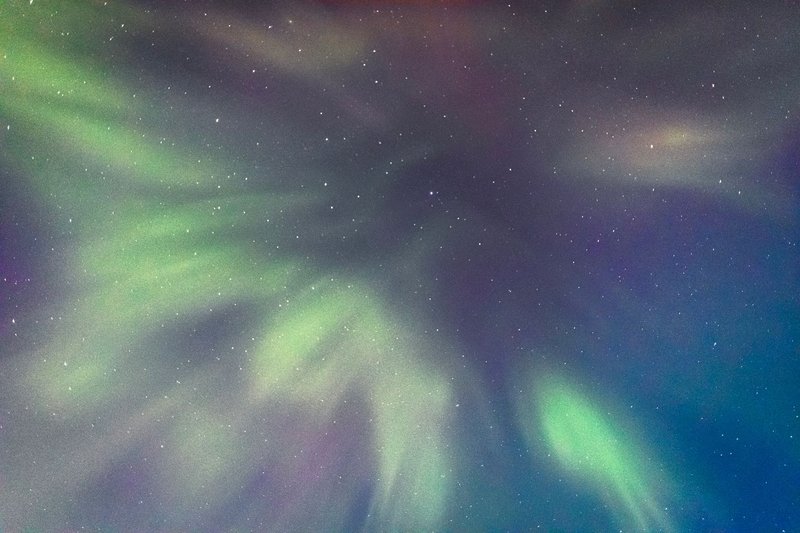
The visible effect is aurora. Charged particles funnel along magnetic field lines toward the poles and hit oxygen and nitrogen high in the atmosphere, which then glow green, red and purple. During the severe storm of May 2024, auroras appeared far from the poles, including at latitudes in the southern United States.
The less pleasant effects involve technology:
- Power grids. Changing magnetic fields induce electric currents in long conductors. On March 13, 1989, a geomagnetic storm collapsed the Hydro-Quebec grid in about 90 seconds and left roughly 6 million people without power for around nine hours.
- Satellites. A storm heats and expands the upper atmosphere, which increases drag on low-orbit satellites and can pull them down early. Particle radiation can also damage onboard electronics.
- GPS and radio. Disturbances in the ionosphere scramble the signals that GPS and radio depend on, reducing positioning accuracy and cutting off some communications.
The strongest storm on record is the Carrington Event of 1859, which set telegraph offices on fire and sent auroras as far south as the Caribbean. A storm of that size today would test every system listed above.
What is the sunspot cycle?
Sunspots are cooler, darker patches where intense magnetic fields punch through the Sun’s surface. Their count rises and falls in a cycle averaging about 11 years, and flares and CMEs become more common near the peak. NOAA tracks the cycle continuously. The current cycle, Cycle 25, reached its maximum period around 2024 to 2025. Big storms can still happen in quieter years, though, since the Carrington Event came from an ordinary cycle.
What protects Earth from the Sun?
Two shields do most of the work.
The magnetosphere is the region dominated by Earth’s magnetic field. It deflects most of the solar wind around the planet like a rock splitting a stream. Particles that do get in mainly follow field lines to the polar regions, which is why auroras form in rings around the poles.
The ozone layer, a thin band in the stratosphere, absorbs the most harmful ultraviolet radiation. It blocks essentially all UV-C and most UV-B, leaving the UVB that reaches you small enough to build vitamin D without sterilizing the surface. Ozone and the thick atmosphere also absorb X-rays and extreme ultraviolet light that would otherwise reach the ground.
Mars shows what happens without both. It lacks a global magnetic field, its atmosphere is thin, and its surface is exposed to far more radiation.
How long does it take the Sun’s energy to reach Earth?
Different things leave the Sun at different speeds. Here is the timeline for one active-region eruption:
- 0 minutes: a flare erupts and releases light, X-rays and ultraviolet.
- About 8 minutes: that radiation arrives at Earth. Radio blackouts can start on the sunlit side.
- Minutes to hours: energetic particles, if the event produces them, begin reaching Earth.
- 1 to 3 days: a CME arrives. The fastest on record, the 1859 Carrington CME, took about 17.6 hours.
- 2 to 4 days: ordinary solar wind arrives.
This is why forecasters can warn about a CME ahead of time. After a flare is seen, the light-speed effects are already here, but the heavy cloud takes a day or more.
Does the Sun cause climate change?
The Sun’s brightness varies only about 0.1 percent over the 11-year cycle, and longer swings are also small. Natural solar changes help explain past climate shifts, like some cooling during the Maunder Minimum in the 1600s, a long stretch with almost no sunspots.
The recent warming doesn’t match solar behavior. Since the 1980s, the Sun’s output has stayed flat or slightly declined, while global temperatures have climbed. NASA’s climate science team attributes the current warming mainly to greenhouse gases from human activity.
What would happen if the Sun disappeared?
For the first 8 minutes, nothing visible. Gravity and light both travel at the same finite speed, so Earth would keep orbiting and glowing for that long, then go dark and head off in a straight line.
After that, temperatures would fall quickly. Within days to weeks the surface would drop well below freezing, photosynthesis would stop, and weather would collapse. Deep-ocean life near hydrothermal vents and geothermal heat could hold on for a long time, but the biosphere we know would not.
Quick reference: effects at a glance
| Effect | Mechanism | How fast it arrives |
|---|---|---|
| Light and warmth | Visible and infrared radiation | About 8 minutes |
| Photosynthesis | Plants absorb sunlight, release oxygen | Continuous |
| Weather and winds | Uneven heating of air and ocean | Continuous |
| Seasons | Earth’s 23.4-degree tilt changes sunlight angle | Cycle repeats yearly |
| Vitamin D | UVB triggers production in skin | About 8 minutes |
| Solar flare effects | X-rays ionize the upper atmosphere | About 8 minutes |
| Energetic particles | Protons accelerated by flares and CMEs | Minutes to hours |
| Coronal mass ejection | Plasma cloud triggers geomagnetic storms | 1 to 3 days |
| Solar wind | Charged particle stream shapes the magnetosphere | 2 to 4 days |
| Sunspot cycle | Magnetic activity rises and falls | About 11 years |
FAQ
How far is the Sun from Earth?
About 149.6 million kilometers on average, a distance called one astronomical unit. It varies from roughly 147 million kilometers in January to 152 million in July.
Can the Sun’s flares hurt people on the ground?
No. The atmosphere and magnetic field block the radiation from flares. The risks are to astronauts, high-altitude flights near the poles, and infrastructure like grids and satellites.
Does the Sun affect the weather every day?
Yes. Uneven solar heating is the cause of nearly all weather. Space weather doesn’t change local rain or temperature in any meaningful way, though.
Is the Sun getting hotter?
Very slowly. Over billions of years, it brightens by roughly 10 percent every billion years. That shift is far too slow to matter on human timescales, though it will eventually make Earth uninhabitable.
Why is the Sun important to life on Earth?
It provides the energy for photosynthesis, warms the planet to a temperature where liquid water exists, and drives the water cycle and weather that distribute that water.
Summary
The Sun affects Earth through a steady energy supply and a variable stormy side. The steady side gives us warmth, photosynthesis, weather, ocean circulation, day and night, and seasons through the tilt of our axis. The stormy side, space weather, ranges from beautiful auroras to grid failures like the 1989 Hydro-Quebec blackout. Earth’s magnetic field and ozone layer keep most of the harm away from the ground.
Seeing the two together makes the arrival times make sense: light in 8 minutes, particles within hours, CMEs in a day or three, and solar wind soon after. And how the Sun affects Earth keeps changing on an 11-year beat, so it’s worth watching the cycle as it unfolds.