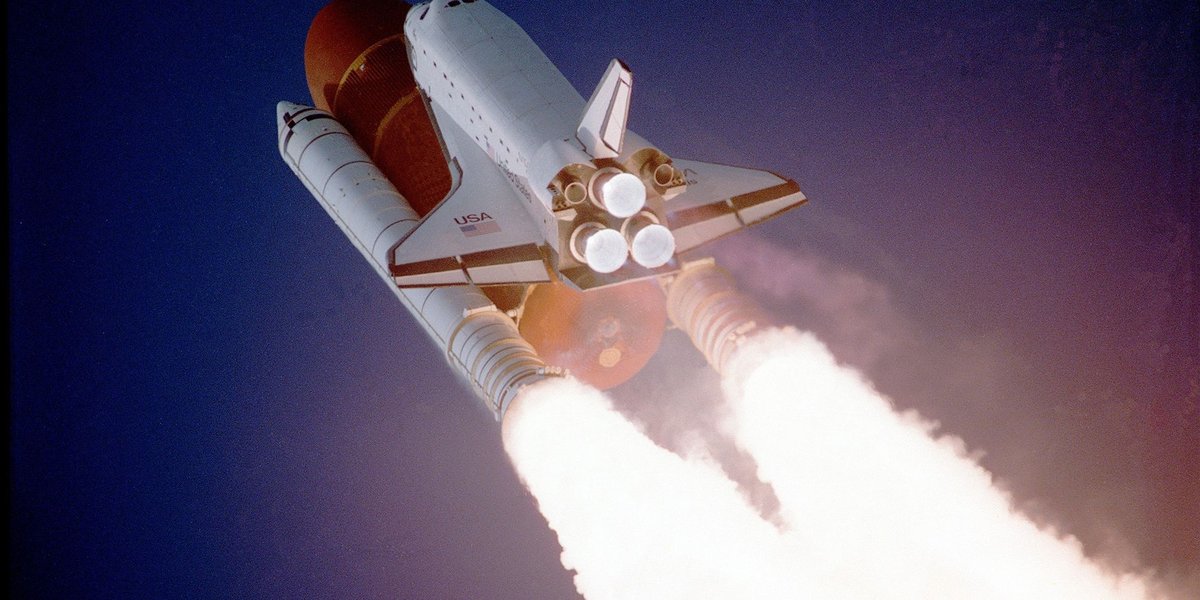
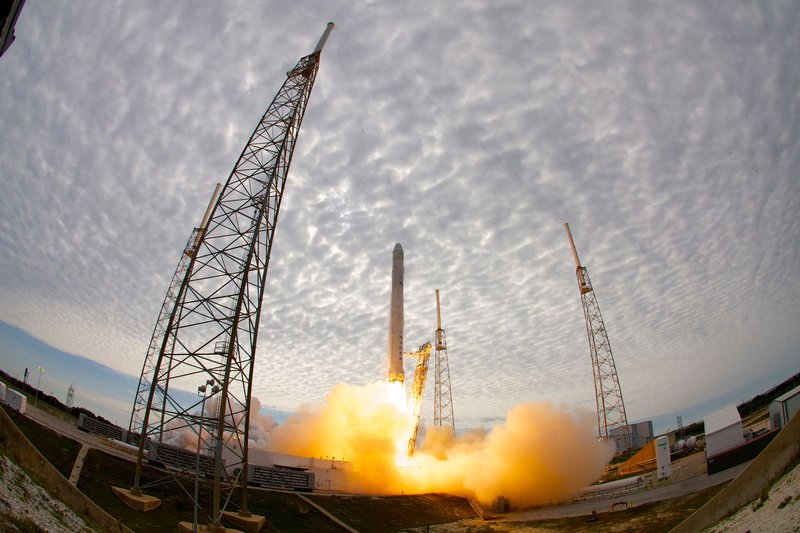
Louisiana builds rockets before it produces astronauts. NASA’s Michoud Assembly Facility, a 43-acre plant in New Orleans East, is where Boeing assembles the core stage of the Space Launch System — the tallest part of the 322-foot rocket NASA now flies to the Moon. Once a stage is built, it travels by barge to the John C. Stennis Space Center on the Pearl River, straddling the Louisiana-Mississippi line, where NASA fires the engines on a test stand before they’re ever trusted with a crew.
So Louisiana has been in the business of getting people to space for decades, even if most of that work happens on the ground. The people who actually left the ground are a shorter list than you’d think, and most “famous astronauts from Louisiana” roundups don’t get past three names with no details attached. Here’s the real one, in the order they first flew.
The Quick Answer
- James Halsell — West Monroe native, five Space Shuttle missions between 1994 and 2000, commanded three of them.
- Dominic Gorie — Lake Charles native, four Space Shuttle missions between 1998 and 2008, commanded the last two.
- Hayley Arceneaux — Baton Rouge native, flew on Inspiration4 in 2021 as the youngest American ever in space.
- Alyssa Carson — Hammond native, has trained toward a Mars mission since childhood but has never flown and has no official NASA affiliation.
Table of Contents
James Halsell
James Donald Halsell Jr. was born September 29, 1956, in West Monroe, and graduated from West Monroe High School before heading to the Air Force Academy. NASA selected him as an astronaut candidate in 1990, and by the time he retired in 2006 he’d flown five Space Shuttle missions — a flight count only a handful of astronauts ever reach.
He served as pilot on STS-65 in 1994, a two-week Spacelab mission focused on materials and life-science experiments, and again on STS-74 in 1995, the second shuttle flight to dock with Russia’s Mir space station. NASA then moved him into the commander’s seat for STS-83 in April 1997 — a flight that got cut short after four days when a fuel cell started acting up. Rather than scrap the science, NASA flew the same orbiter, the same crew, and largely the same experiment set three months later as STS-94. Halsell commanded that one too, and it ran the full mission as planned. His fifth flight, STS-101 in 2000, delivered supplies and hardware to the still-young International Space Station.
Between flights, Halsell spent six months at Russia’s Star City training center as NASA’s director of operations there, then managed shuttle launch integration at Kennedy Space Center before leaving the agency in 2006 for a job at ATK Launch Systems. You can find his official NASA biography, with a full flight log, on the Kennedy Space Center site.
Dominic Gorie
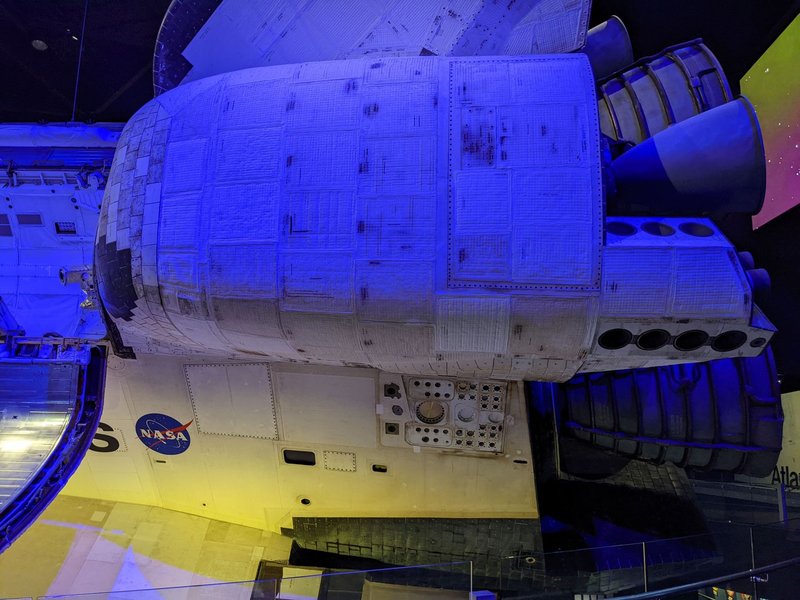
Dominic Lee Pudwill Gorie was born May 2, 1957, in Lake Charles. He went the Navy route — Naval Academy class of 1979, then carrier tours flying off the USS America and USS Coral Sea before he trained as a test pilot. During the Gulf War, he flew combat missions off the USS Theodore Roosevelt in Operation Desert Storm, which is the kind of resume line that made him a strong fit for NASA’s astronaut corps.
Gorie flew four shuttle missions over a ten-year span. He was pilot on STS-91 in 1998, the final shuttle mission to dock with Mir, and pilot again on STS-99 in 2000, a mission that mapped most of Earth’s landmass using radar interferometry. NASA gave him command for his final two flights: STS-108 in 2001, a station resupply and crew-rotation mission, and STS-123 in 2008, which delivered the first module of Japan’s Kibo laboratory along with the Canadian-built Dextre robotic arm to the ISS. NASA’s own mission-summary archive covers his early flights in detail on the STS-91 crew biography page.
Hayley Arceneaux
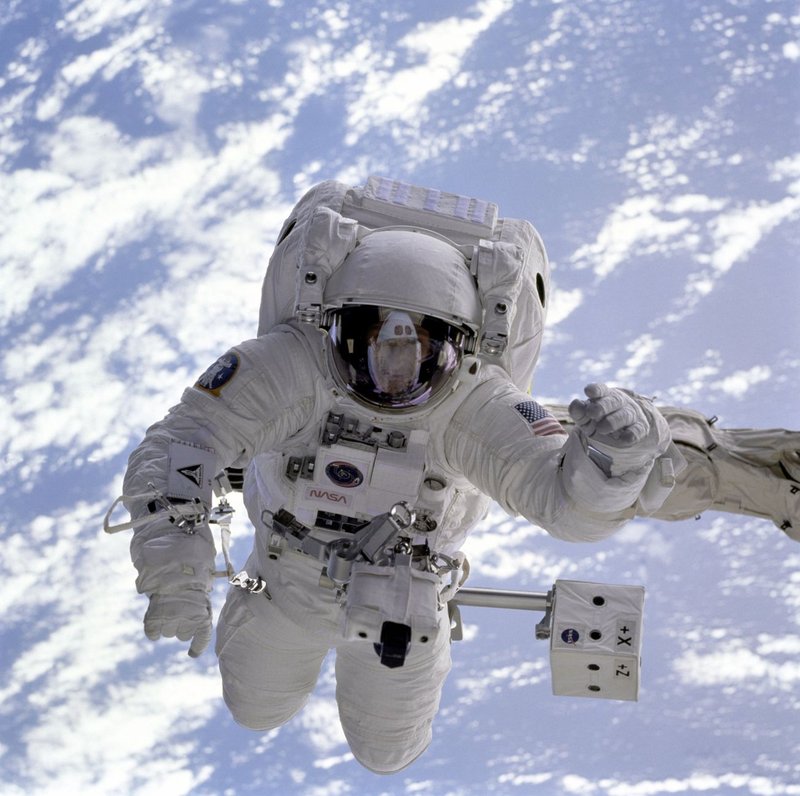
Hayley Arceneaux was born in Baton Rouge and raised in St. Francisville. At age 10, she was diagnosed with osteosarcoma, a bone cancer that required surgeons to replace part of her leg bone with a titanium rod — the same rod she’d carry into orbit two decades later. She grew up to become a physician assistant at St. Jude Children’s Research Hospital in Memphis, the hospital that treated her.
In September 2021, Arceneaux flew as a crew member on Inspiration4, the first all-civilian orbital spaceflight, alongside billionaire Jared Isaacman, engineer Chris Sembroski, and geoscientist Sian Proctor. The three-day mission flew aboard a SpaceX Crew Dragon capsule at an altitude higher than the International Space Station, and it made Arceneaux both the youngest American to reach space at 29 and the first person to fly with a prosthetic body part. The flight raised money for St. Jude, where Arceneaux still works, and she’s written about what the mission meant to her in a first-person account for the hospital’s own site.
Alyssa Carson
Alyssa Carson was born March 10, 2001, in Hammond and grew up in Baton Rouge, and she’s the name that keeps this list from being purely a NASA roster. She started telling people she wanted to go to Mars at age three, and by nineteen she’d become an aquanaut, a licensed pilot, a skydiver, and the youngest person to complete the Advanced Space Academy. She’s attended every one of NASA’s space camp programs worldwide and is the only person to finish the agency’s full “passport” program across all its camp locations.
None of that makes her a NASA astronaut, and NASA has said so directly — the agency has stated publicly that it has no official ties to Carson. Her goal is a seat on a crewed Mars mission, which realistically wouldn’t launch before the early 2030s at the soonest, and getting there would still require formal selection into an actual astronaut corps, something no purely private-training résumé bypasses. She belongs on this list as the trainee, not the flown astronaut — the distinction matters, and most of the articles that mention her skip right past it.
Louisiana’s astronaut count is small, but it’s not accidental. A state that builds the rocket and tests the engine tends to also produce a few people who ride one — and if Michoud keeps building SLS cores, this list probably isn’t finished growing.