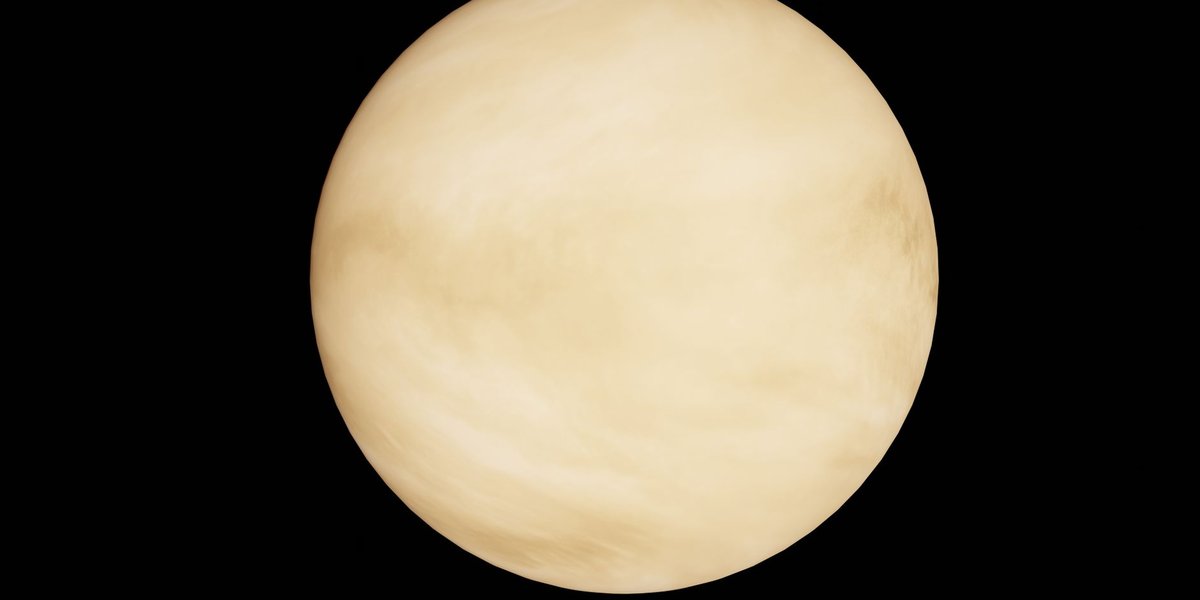
Life on the surface of Venus is out. Nothing we know of survives 465 °C and crushing pressure. But about 50 to 60 km up, inside the cloud deck, temperature and pressure look a lot like Earth’s, and that’s why scientists keep asking whether life could exist on Venus after all. The catch is that those clouds are made of sulfuric acid. No one has found life there, and no one has ruled it out.
Contents
- Why the surface rules out life
- Was Venus once habitable?
- The cloud-habitat hypothesis
- The acid problem
- The phosphine dispute
- What would count as proof?
- Upcoming missions
- So, could life exist on Venus?
Why the surface rules out life
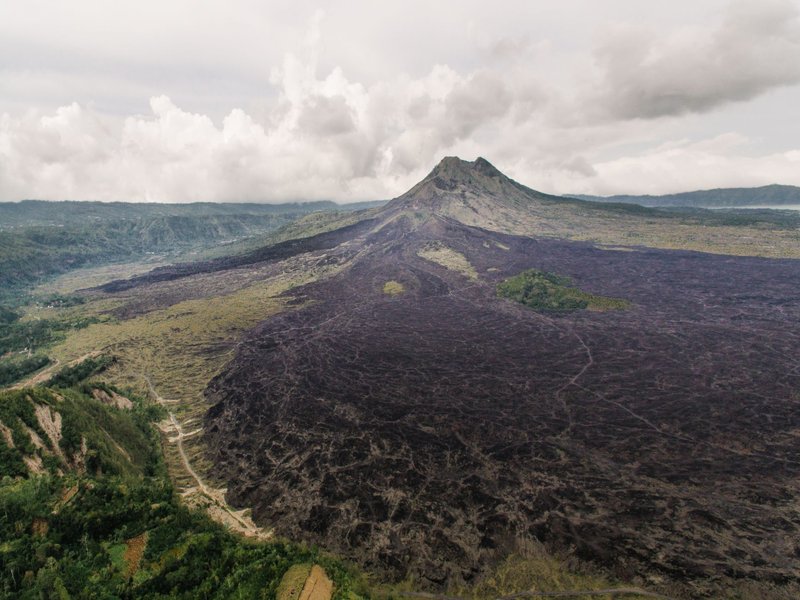
The surface of Venus averages about 465 °C, according to NASA’s Venus fact sheet. That’s hot enough to melt lead, which goes liquid at 327 °C. It’s hotter than Mercury, even though Mercury is much closer to the Sun, because Venus’s carbon dioxide atmosphere traps heat in a runaway greenhouse effect.
The pressure is about 92 times Earth’s at sea level. You’d get the same squeeze roughly 900 meters under the ocean. Add an atmosphere that’s about 96% carbon dioxide, and you have a place where liquid water can’t exist and complex chemistry falls apart.
The Soviet Venera landers proved the point. Venera 7 transmitted for about 23 minutes in 1970. Venera 13 set the record in 1982 at 127 minutes. Then the electronics cooked.
Was Venus once habitable?
Maybe. This is where the question gets interesting, and where scientists disagree.
Venus is about the same size and density as Earth, and it likely formed from similar material. Its atmosphere holds a clue: the ratio of heavy hydrogen (deuterium) to ordinary hydrogen is roughly 100 to 150 times higher than on Earth. That’s what you’d expect if Venus once had far more water and lost most of it to space, with the lighter hydrogen escaping first.
Climate models from NASA’s Goddard Institute for Space Studies, published in 2016, suggested that a slowly rotating early Venus could have kept shallow oceans for billions of years, possibly until about 700 million years ago. A longer-lived wet Venus means more time for life to start.
A December 2024 study pushed back. Researchers at the University of Cambridge looked at what volcanic gases tell us about Venus’s interior and concluded the planet’s volcanoes released very little water. That would point to a Venus that was dry from the beginning. The two ideas haven’t been reconciled, and without surface samples they won’t be soon. Nobody has proven Venus had oceans, and nobody has proven it didn’t.
The cloud-habitat hypothesis
In 1967, Carl Sagan and Harold Morowitz proposed that the Venusian clouds could host microbes. The idea has outlasted most of the planetary science from that decade.
The numbers explain why. Between roughly 50 and 60 km, the atmosphere changes fast with altitude:
| Condition | Venus surface | Venus clouds (about 50-60 km) | Earth surface |
|---|---|---|---|
| Temperature | about 465 °C | roughly 75 °C at 50 km to below 0 °C at 60 km, near 30 °C around 55 km | about 15 °C average |
| Pressure | about 92 bar | about 1 bar at 50 km, about 0.2 bar at 60 km | 1 bar |
| Main gas | carbon dioxide | carbon dioxide | nitrogen and oxygen |
| Liquid water | none | trace amounts in acid droplets | oceans |
| Main hazard | heat and pressure | concentrated sulfuric acid | none for life as we know it |
At around 55 km you get Earth-like warmth and about half an atmosphere of pressure. Winds there blow at roughly 100 m/s, circling the whole planet in about four Earth days. Any cloud life would have to ride that conveyor belt and avoid sinking into the hot lower layers.
There’s also a loose end in the data. The clouds contain an unidentified substance that absorbs ultraviolet light and makes dark streaks visible in UV images. It hasn’t been identified. Some researchers have suggested microbes as one candidate, though plain chemistry could explain it too.
The acid problem
The cloud droplets are mostly sulfuric acid, with concentrations around 75% or higher. Earth life doesn’t handle that. A 2021 study in Nature Astronomy calculated that the water activity in the clouds is about 0.004. The lowest value known life can tolerate is around 0.585. In other words, the clouds are about 150 times too dry for any organism we’ve ever found.
That argues against Earth-like cells. It doesn’t rule out Venus-specific biochemistry, and lab work from the last few years has made that less far-fetched than it sounded.
Sara Seager’s group at MIT and collaborators have tested whether the building blocks of life survive in concentrated sulfuric acid. Their results:
- Amino acids. Most of the 20 standard amino acids stayed intact in strong sulfuric acid, with a few exceptions.
- Nucleic bases. The components of DNA and RNA survived as well.
- Lipids. Follow-up work has examined whether acid-stable lipid-like molecules can form membrane structures, the container every cell needs.
None of this shows life exists. It shows the chemistry isn’t automatically impossible. Biology in sulfuric acid would look very different from ours, and so far it’s only been tested in beakers.
The phosphine dispute
In September 2020, a team led by Jane Greaves reported phosphine in the Venusian clouds at roughly 20 parts per billion. The detection came from radio telescopes in Hawaii and Chile.
Phosphine matters because on Earth it’s made mostly by anaerobic microbes and industry. On a rocky planet with an oxidizing atmosphere, the team couldn’t find a plausible non-living source.
The problem is how thin the signal is. Phosphine shows up as a faint dip in radio light at one wavelength. Critics found three issues:
- Data processing. Reanalyses in 2021 found that the way the data was flattened could create false dips. After recalibration, the ALMA signal weakened considerably.
- Sulfur dioxide. A sulfur dioxide line sits near the same wavelength. Some modelers argued the signal came from SO2 in the upper atmosphere, not phosphine.
- Non-detections. An airborne search with NASA’s SOFIA telescope found no phosphine above about 1 part per billion.
Greaves’s team has argued that a weaker signal is still there, at a lower level. Right now, the honest summary is that phosphine is unconfirmed, and even a confirmed detection wouldn’t prove life. It would only mean something on Venus is making a gas we can’t yet explain.
What would count as proof?
A gas alone won’t do it. Scientists hunting for biosignatures would want several lines of evidence that point the same way:
- Complex organic molecules in cloud droplets, in patterns that look biological rather than random.
- Handedness. Life on Earth uses left-handed amino acids almost exclusively. A strong one-sided preference on Venus would be difficult to explain without biology.
- Isotope patterns. Living processes tend to favor lighter isotopes of carbon and sulfur, leaving a measurable fingerprint.
- Cells. A microscope image of particles that look like cells and respond to their environment.
- Independent repeats. Detections from separate instruments and teams, with non-living sources ruled out.
The key is a direct sample. That means a probe flying through the clouds, not telescopes looking from Earth.
Upcoming missions
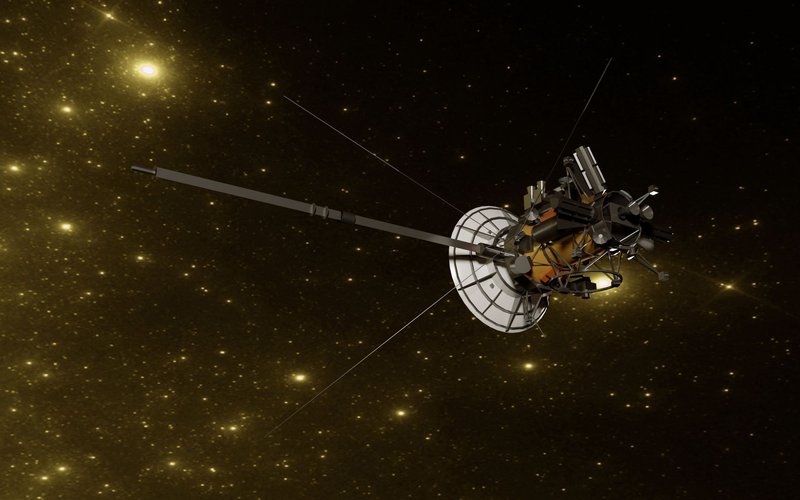
NASA’s DAVINCI is a descent probe designed to drop through the atmosphere, measuring its chemistry layer by layer, including the noble gases that tell us about Venus’s water history. VERITAS is an orbiter that will map the surface in high detail and look for signs of past geological activity. Both were scheduled around the end of this decade or early in the next, and both have slipped or faced budget pressure before, so check current launch dates.
Neither is built to find life. They’re meant to tell us whether Venus ever had oceans, which sets how seriously to take the habitability question. ESA’s EnVision orbiter and India’s planned Venus orbiter will add atmospheric and surface data. A mission that analyzes cloud droplets directly for organic molecules would need to come after these, and a few private concepts have been proposed, though none has flown.
So, could life exist on Venus?
On the surface, no. In the clouds, it’s a real but unproven possibility. The temperature and pressure are right at 50 to 60 km. The acid is a serious barrier, but lab results suggest key molecules can survive it. Phosphine, the only hint of a signal so far, is disputed.
The missions in the pipeline will answer a different question first: whether Venus was ever wet. If it was, the odds improve that something started there and held on in the clouds. If it wasn’t, the odds get worse. Until a probe samples the droplets, “could life exist on Venus” stays open.