Table of Contents
- Quick answer
- How spacecraft survive near the Sun
- NASA solar missions at a glance
- The NASA missions to the Sun, in order
- The pioneers (1960s and 1970s)
- Flares, poles, and a shuttle repair (1980s and 1990s)
- The observatory era (1998 to 2013)
- Touching the corona (2018 to 2020)
- The 2025 launches
- What’s coming next
Quick answer
The closest NASA mission to the Sun is Parker Solar Probe. It crossed into the Sun’s outer atmosphere, the corona, in April 2021, and NASA announced that first “touch” in December 2021. On December 24, 2024, it passed 3.8 million miles (6.1 million km) above the solar surface at about 430,000 mph (692,000 km/h), the closest and fastest approach any human-made object has made.
The rest of the NASA fleet watches from a distance. Some missions sit in Earth orbit, some park at the L1 point 1 million miles sunward of Earth, and some orbit the Sun itself. Two of the best known, SOHO and Solar Orbiter, are joint missions shared with the European Space Agency (ESA). Helios, a 1970s probe, was a joint effort with West Germany. Everything below is labeled so you can tell NASA-led from shared.
How spacecraft survive near the Sun
Nothing lands on the Sun. It has no surface to land on, and the heat would end the attempt long before arrival. Getting close and surviving comes down to three tricks.
A shield that does the sweating for you. Parker Solar Probe carries a heat shield 8 feet (2.4 m) across and 4.5 inches (11.5 cm) thick: carbon foam sandwiched between two carbon-carbon plates, with a white ceramic coating on the Sun-facing side. The front face reaches roughly 2,500°F (1,400°C). The instruments tucked behind it stay near room temperature, around 85°F (30°C).
Thin plasma, not thick fire. The corona is hotter than 1 million degrees, far hotter than the Sun’s visible surface at about 10,000°F (5,500°C). But it’s so sparse that very little heat actually transfers to a spacecraft flying through it. Temperature measures how fast particles move. Heat delivered depends on how many of them hit you.
Hiding and folding. Parker’s solar panels fold back behind the shield’s shadow near the Sun, leaving just a sliver exposed, and a water-based cooling loop keeps the panels from overheating. Sensors that can’t be shaded, like the one that sticks out to sample the solar wind, are made of materials such as tungsten and niobium that tolerate extreme temperatures.
Most other missions on this list avoid the problem by staying far away. SDO, SOHO, and IRIS all see the Sun in detail without ever feeling its heat.
NASA solar missions at a glance
| Mission | Launch | Orbit or distance | Key discovery | Status |
|---|---|---|---|---|
| Pioneer 6–9 | 1965–1968 | Solar orbit, about 0.8 AU | First network of space weather monitors | Ended (Pioneer 6 last heard in 2000) |
| Orbiting Solar Observatories | 1962–1975 | Earth orbit | First coronal mass ejection detected (OSO-7, 1971) | Ended |
| Skylab Apollo Telescope Mount | 1973 | Earth orbit | Coronal holes feed the fast solar wind | Ended 1974 |
| Helios 1 and 2 (joint with West Germany) | 1974, 1976 | Down to 43 million km (0.29 AU) | Inner solar wind; speed record until 2018 | Ended in the 1980s |
| Solar Maximum Mission | 1980 | Earth orbit | The Sun’s brightness varies with its cycle | Ended 1989 |
| Ulysses (joint with ESA) | 1990 | Over the Sun’s poles | Solar wind from the poles | Ended 2009 |
| SOHO (joint with ESA) | 1995 | L1 point | Interior seen via helioseismology; 5,000+ comets | Active |
| TRACE | 1998 | Earth orbit | Fine structure of coronal loops | Ended 2010 |
| Genesis | 2001 | L1 point | Returned solar wind samples | Ended 2004 |
| RHESSI | 2002 | Earth orbit | First gamma-ray images of a flare | Ended 2018 |
| STEREO | 2006 | Solar orbit, ahead of and behind Earth | 3D views of eruptions; the far side | STEREO-A active; B lost 2014 |
| SDO | 2010 | Geosynchronous orbit | High-definition Sun, flares in action | Active |
| IRIS | 2013 | Earth orbit | Heat flow through the layer under the corona | Active |
| Parker Solar Probe | 2018 | 3.8 million miles from the surface | First flight through the corona; switchbacks | Active |
| Solar Orbiter (ESA-led, NASA partner) | 2020 | About 0.28 AU at closest | First images of the Sun’s poles | Active |
| PUNCH | 2025 | Earth orbit | Tracking the corona into the solar wind | Active |
| IMAP | 2025 | L1 point | Mapping the edge of the heliosphere | Active |
| Carruthers Geocorona Observatory | 2025 | L1 point | Earth’s outer atmosphere in ultraviolet | Active |
| SWFO-L1 (NOAA-owned, NASA-launched) | 2025 | L1 point | Real-time eruption warnings | Active |
An AU, or astronomical unit, is the average Earth-Sun distance: about 93 million miles (150 million km).
The NASA missions to the Sun, in order
The pioneers (1960s and 1970s)
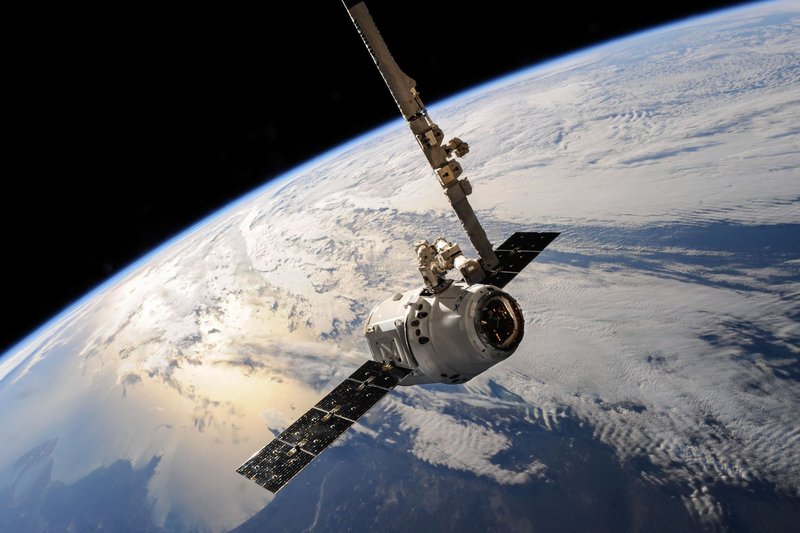
Pioneer 6–9 (1965–1968). Four near-identical spacecraft, each in its own orbit around the Sun at roughly 0.8 AU, formed the first space weather network. They measured the solar wind and magnetic field from several vantage points at once. Pioneer 6 outlived every plan: NASA contacted it in 2000, 35 years after launch.
Orbiting Solar Observatories (1962–1975). Eight satellites in Earth orbit made up the first dedicated series of solar telescopes in space. OSO-7 caught the first coronal mass ejection, a billion-ton cloud of plasma thrown off the Sun, in 1971. Ground telescopes had never seen one, because the glare of the sky hides the faint corona.
Skylab Apollo Telescope Mount (1973). The first US space station carried a solar observatory run by astronauts, who changed film canisters by hand during spacewalks. It showed that coronal holes, dark patches in the Sun’s atmosphere, are where the fast solar wind pours out.
Helios 1 and 2 (1974 and 1976, joint with West Germany). Built in Germany and launched by NASA, these two spacecraft flew closer to the Sun than Mercury ever gets. Helios 2 reached 43 million km (27 million miles) from the Sun in 1976 and hit 157,000 mph, a speed record that stood until Parker Solar Probe beat it in 2018. They mapped how the solar wind changes close to its source.
Flares, poles, and a shuttle repair (1980s and 1990s)
Solar Maximum Mission (1980). SMM went up to watch flares at the peak of the Sun’s cycle, then lost its pointing system within months when fuses failed. In 1984 the shuttle Challenger’s crew captured the spacecraft, swapped the broken electronics, and released it. SMM then showed that the Sun’s total brightness drifts by about 0.1% over the solar cycle, small but real. It reentered in 1989.
Ulysses (1990, joint with ESA). Every other mission on this list stays near the plane where the planets orbit. Ulysses used a Jupiter flyby in 1992 to swing out of that plane and over the Sun’s poles, making three polar passes before ending in 2009. It found that the fast wind from the poles was steadier and the magnetic field simpler than predicted.
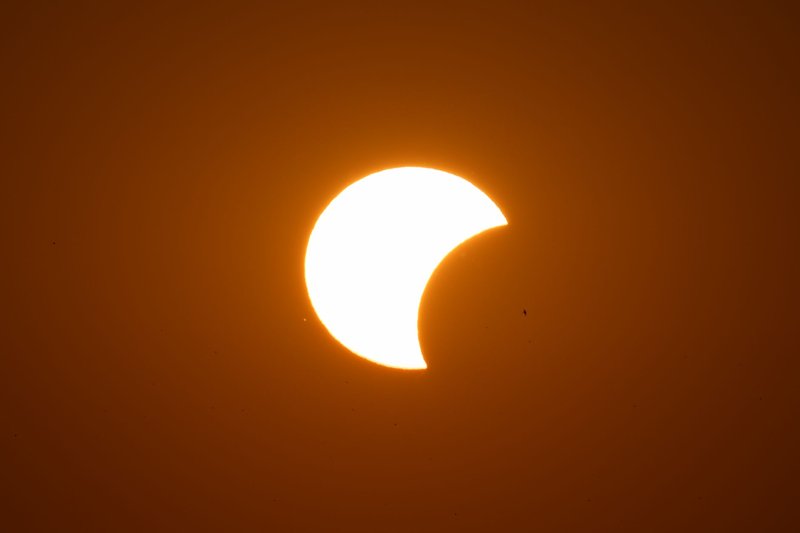
SOHO (1995, joint with ESA). The Solar and Heliospheric Observatory sits at L1, about 1 million miles from Earth, and has watched the Sun nonstop for three decades. Its helioseismology work reads sound waves rippling through the Sun to map the layers inside the Sun. Its coronagraph, which blocks the Sun’s disk like a permanent eclipse, has also turned SOHO into the greatest comet finder in history: it has spotted more than 5,000, most of them sungrazers, with the 5,000th logged in 2024. In 1998 contact was lost for weeks; engineers got the spacecraft back and it kept going. If you’ve ever seen a space weather image of a flare or eruption, it was probably from SOHO.
The observatory era (1998 to 2013)
TRACE (1998). The Transition Region and Coronal Explorer resolved individual loops of hot plasma in the corona, tracing magnetic field lines glowing in ultraviolet. It operated until 2010.
Genesis (2001). Genesis didn’t photograph the Sun. It collected it, exposing collector plates to the solar wind at L1 for about two and a half years. Its capsule hit the Utah desert at full speed in 2004 when the parachute failed, but scientists salvaged shards of the plates. The samples later showed that the Sun’s oxygen isotope mix differs from Earth’s, a clue to how the early solar system formed.
RHESSI (2002). The Reuven Ramaty High Energy Solar Spectroscopic Imager made the first gamma-ray images of a solar flare and showed where in a flare the most energetic particles are produced. It retired in 2018.
STEREO (2006). Two near-identical spacecraft drifted in opposite directions along Earth’s orbit, one ahead and one behind, giving scientists a 3D view of eruptions for the first time. In February 2011 their views combined into the first picture of the entire Sun, including the far side. STEREO-B went silent in 2014, but STEREO-A still reports.
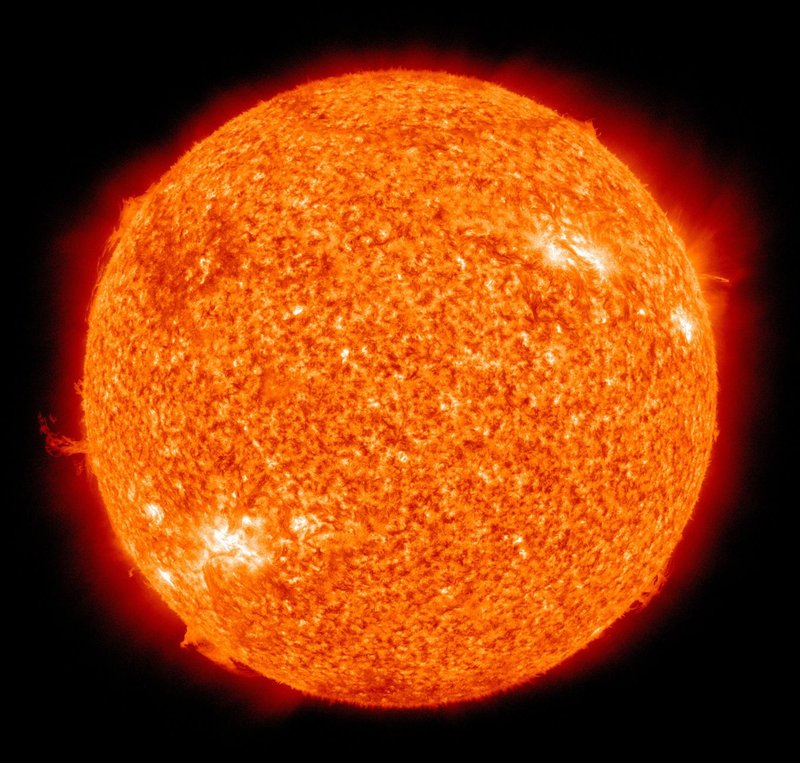
Solar Dynamics Observatory (2010). The Solar Dynamics Observatory parks in a geosynchronous orbit so one ground station can stay in constant contact. It images the Sun in 10 wavelengths about every 12 seconds and sends back more than a terabyte of data a day. That cadence lets you watch a prominence lift off, a flare brighten, and loops of plasma collapse after an eruption. Most of the dramatic NASA solar videos you’ve seen are SDO footage.
IRIS (2013). The Interface Region Imaging Spectrograph studies the thin layer between the Sun’s surface and its corona, where the temperature climbs from thousands to millions of degrees for reasons still debated. It revealed a chromosphere full of tiny jets and brief heating bursts, which are candidates for the missing energy source.
Touching the corona (2018 to 2020)
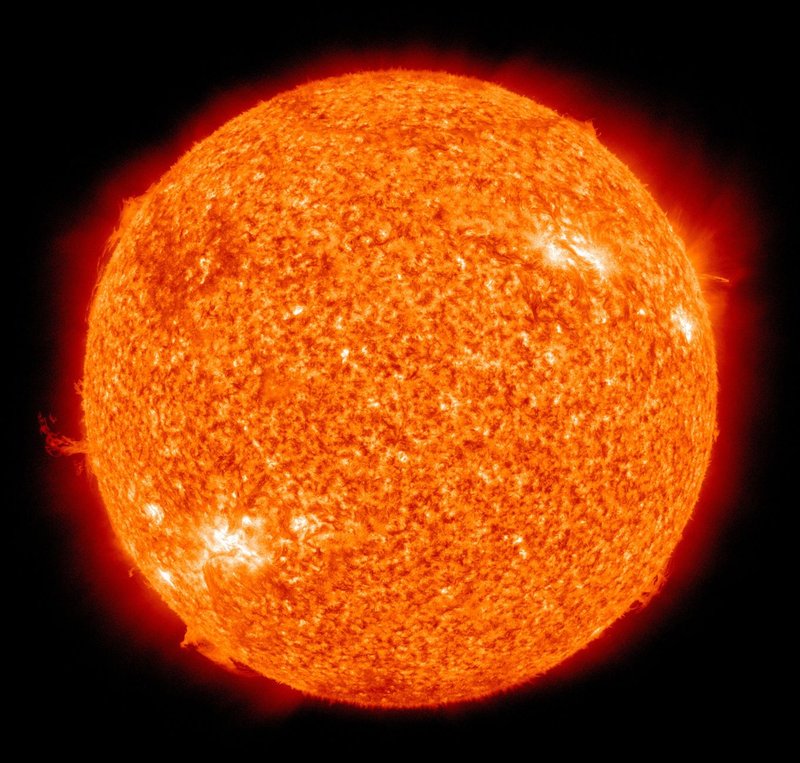
Parker Solar Probe (2018). Parker launched on August 12, 2018, and used seven Venus flybys to tighten its orbit around the Sun. On its eighth pass, in April 2021, it dipped below the Alfvén surface, the boundary where the Sun’s magnetic pull no longer controls the solar wind. That crossing was the first time a spacecraft entered the Sun’s atmosphere. Its other big finding is “switchbacks”: sudden zigzag kinks in the magnetic field that flip back on themselves, suggesting how the wind gets launched. Its closest passes in December 2024, March 2025, and June 2025 all held the same record distance of 3.8 million miles. Parker is still operating.
Solar Orbiter (2020, ESA-led with NASA). Built by ESA with NASA contributing instruments and the launch, Solar Orbiter approaches to about 0.28 AU and uses Venus flybys to tilt its orbit out of the planetary plane. In 2025 it returned the first images of the Sun’s poles, a region no earlier mission had seen directly. The Sun’s polar magnetic fields drive its 11-year cycle, and so far we’ve only inferred their behavior.
The 2025 launches
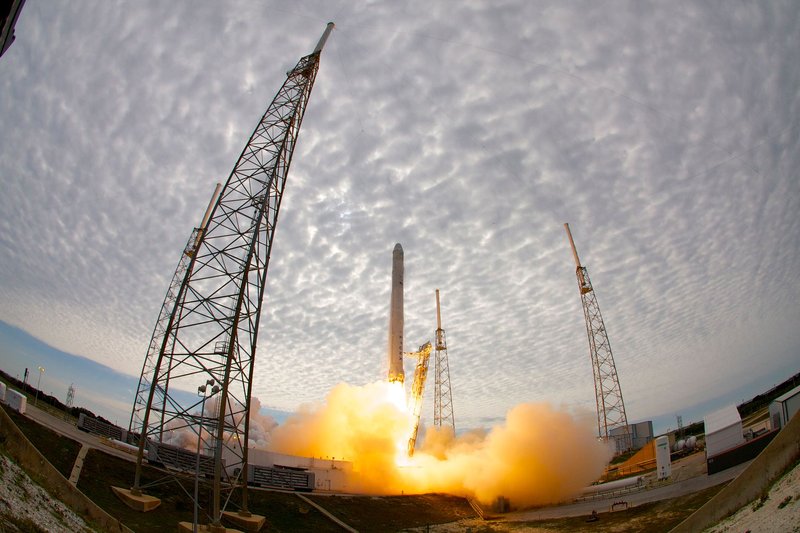
Three missions launched together on a single Falcon 9 on September 24, 2025, joined by a fourth, PUNCH, earlier in the year. Most are heliophysics missions: they study the Sun’s reach, not its surface.
PUNCH (March 2025). Four suitcase-sized satellites in low Earth orbit work as a single wide-field camera. Their job is the gap between the corona and the solar wind, the space where the Sun’s atmosphere stops looking like an atmosphere and starts to look like a wind. PUNCH tracks that handoff in 3D, so scientists can follow an eruption from the Sun out toward Earth.
IMAP (September 2025). The Interstellar Mapping and Acceleration Probe sits at L1 with 10 instruments. It maps the edge of the heliosphere, the bubble the solar wind blows around the solar system, and samples particles that leak in from interstellar space. It also streams real-time solar wind data for space weather forecasts.
Carruthers Geocorona Observatory (September 2025). Carruthers looks at Earth, not the Sun, but its subject is the exosphere, the outermost layer of our atmosphere, which is shaped by solar activity. It images the glow of hydrogen in ultraviolet from L1. The mission is named for George Carruthers, who built the ultraviolet camera that astronauts left on the Moon during Apollo 16.
SWFO-L1 (September 2025, NOAA-owned). Space Weather Follow On-Lagrange 1 is a NOAA spacecraft, built with NASA and launched by NASA. Its coronagraph watches for coronal mass ejections, giving forecasters earlier warning of geomagnetic storms that can disrupt GPS, power grids, and satellites. It counts here as a NASA-launched mission, not a NASA-run one.
What’s coming next
The NASA Sun fleet keeps growing, though dates move. The Multi-slit Solar Explorer (MUSE), a mission to study how the corona heats and flares erupt, is planned for the late 2020s. HelioSwarm, a nine-spacecraft swarm designed to measure turbulence in the solar wind in 3D, is also planned for the end of the decade. Parker Solar Probe, Solar Orbiter, and SDO will keep returning data in the meantime.
If you want to know how close we’ve gotten, the answer today is 3.8 million miles from the surface, and it was NASA that did it. The next step in NASA missions to the Sun won’t be a closer pass. It’ll be more eyes on the Sun from more angles, so the next big eruption doesn’t catch Earth by surprise.