Sending a spacecraft to the Sun sounds like a contradiction. You point a multi-billion-dollar machine straight at the one object in the solar system actively trying to vaporize it, and somehow the instruments keep working. The trick isn’t heat resistance the way you’d guess. It’s geometry, a heat shield the size of a dinner table, and a flight plan that uses Venus like a billiard ball.
Here’s the part most roundups skip: getting to the Sun is harder than getting to Mars. Earth orbits at roughly 67,000 mph, and all of that sideways speed has to be shed before a probe can fall inward. That’s why these missions take years and loop past Venus over and over before they ever get close.
Below are the 12 missions that actually moved the needle on solar science, ordered roughly by era so you can see how the engineering escalated from “observe from a safe distance” to “fly through the corona.” There’s a comparison table near the top if you just want the numbers.
Table of Contents
- The Quick Answer
- How Spacecraft Survive the Sun
- Comparison Table
- 1. Pioneer 5–9
- 2. Helios 1 and 2
- 3. Solar Maximum Mission
- 4. Ulysses
- 5. Yohkoh
- 6. SOHO
- 7. TRACE
- 8. Genesis
- 9. STEREO
- 10. Solar Dynamics Observatory
- 11. Parker Solar Probe
- 12. Solar Orbiter
- What’s Next
The Quick Answer
If you want the headline missions and nothing else:
- Closest ever: Parker Solar Probe, which passed within about 3.8 million miles of the Sun’s surface in December 2024 — roughly seven times closer than any earlier probe.
- Fastest object ever built: Also Parker, clocking around 430,000 mph at its closest approach.
- First to fly over the Sun’s poles: Ulysses (1990–2009), and now Solar Orbiter, which sent back the first clear images of a solar pole in 2025.
- The workhorse that never quit: SOHO, launched in 1995 and still operating — it’s discovered over 5,000 comets as a side effect.
Everything else is the story of how we got from “watch from afar” to “touch the corona.”
How Spacecraft Survive the Sun
This is the question everyone actually has, so let’s settle it before the list.
A spacecraft near the Sun doesn’t survive by being heat-proof. It survives by keeping its sensitive parts in shadow. Parker Solar Probe carries a carbon-composite heat shield about 4.5 inches thick and 8 feet across. The Sun-facing surface hits roughly 2,600°F at closest approach. The instruments tucked directly behind it sit at around 85°F — about room temperature. The shield does all the suffering; the payload rides in its shadow like a hiker behind a boulder.
There’s a second piece people miss. Space is a near-perfect vacuum, so heat doesn’t move by air the way it does on Earth. There’s no hot wind to convect heat into the spacecraft, only radiation. A probe can sit close to something blistering and stay survivable as long as it manages that radiant load and doesn’t let direct sunlight hit anything that matters. NASA’s own Parker mission page lays out how the autonomous sensors keep the shield aimed correctly — if any instrument edge pokes into sunlight, the spacecraft pivots itself back into shadow within seconds, no command from Earth required.
The getting-there problem is separate and arguably worse. To fall toward the Sun, a probe has to cancel most of Earth’s orbital velocity. Rockets can’t supply that much energy directly, so mission planners borrow it from planets. Parker flew past Venus seven times, each pass bleeding off a little speed and tightening its orbit. That’s why a mission to the Sun can take longer to reach its target than a mission to the outer planets.
Comparison Table
| Mission | Agency | Launched | Closest approach to Sun | Status |
|---|---|---|---|---|
| Helios 2 | NASA/West Germany | 1976 | ~27 million mi | Retired |
| Ulysses | NASA/ESA | 1990 | Polar orbit (~120M mi) | Retired 2009 |
| SOHO | NASA/ESA | 1995 | Earth–Sun L1 (~93M mi) | Active |
| Solar Dynamics Observatory | NASA | 2010 | Earth orbit | Active |
| Parker Solar Probe | NASA | 2018 | ~3.8 million mi | Active |
| Solar Orbiter | ESA/NASA | 2020 | ~26 million mi | Active |
Distances are measured from the Sun’s visible surface, not its center. “Closest approach” for L1 missions like SOHO is really their fixed observing distance — they park between Earth and the Sun rather than diving in.
1. Pioneer 5–9
Before anyone dreamed of touching the corona, the goal was simply to measure the space between planets. NASA’s Pioneer 5 through 9, launched between 1960 and 1968, were the first probes placed in orbit around the Sun rather than around Earth. They confirmed that the solar wind — a constant stream of charged particles boiling off the Sun — is real, continuous, and shapes the entire solar system’s weather. That stream is also what inflates the vast magnetic bubble called the heliosphere, the region of space the Sun’s influence carves out around all the planets. Pioneer 6, launched in 1965, holds an odd record: NASA successfully contacted it in 2000, making it one of the longest-operating spacecraft in history.
2. Helios 1 and 2
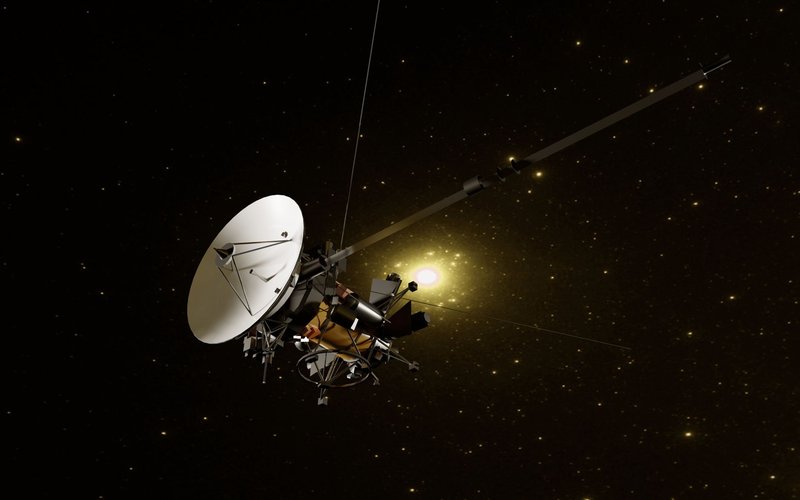
For 42 years, these two held the record Parker eventually shattered. A joint NASA and West German project, Helios 1 (1974) and Helios 2 (1976) swung to within about 27 million miles of the Sun — inside Mercury’s orbit. Helios 2 became the fastest spacecraft of its time at roughly 157,000 mph. They mapped the solar wind and magnetic field up close and proved that hardware could function in that punishing thermal environment, spinning to spread the heat evenly across their bodies. Their distance record stood until Parker beat it in 2018.
3. Solar Maximum Mission
Launched in 1980 to study solar flares during a peak in the Sun’s 11-year activity cycle, “Solar Max” earned its place in history for a different reason. When its attitude-control system failed, Space Shuttle astronauts captured and repaired it in orbit in 1984 — the first on-orbit satellite repair ever attempted. It went back to work and observed flares and coronal mass ejections until 1989, giving solar physicists their first sustained look at the violent side of the Sun.
4. Ulysses
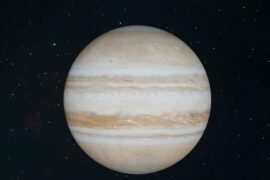
Every solar mission before it stayed near the Sun’s equator, because that’s where planets orbit and where gravity assists naturally drop you. Ulysses, a NASA–ESA collaboration launched in 1990, did something no probe had done: it flew over the Sun’s poles. To get there it took a wild detour — out to Jupiter, using the giant planet’s gravity to fling itself out of the planetary plane and into a polar orbit around the Sun. Over 18 years it revealed that the solar wind behaves very differently at the poles than at the equator, fast and steady up top, slow and gusty around the middle.
5. Yohkoh
Japan’s contribution to the field, launched in 1991 by the agency now known as JAXA with US and UK instruments aboard. Yohkoh — Japanese for “sunbeam” — watched the Sun in X-rays and captured flares with a clarity nobody had seen. Its decade of data showed how the corona reshapes itself during the solar cycle, and its movies of the X-ray Sun pulsing and flaring became some of the most-used teaching material in solar physics.
6. SOHO
If one mission deserves a statue, it’s this one. The Solar and Heliospheric Observatory, a NASA–ESA project launched in 1995, parks at the L1 Lagrange point about a million miles toward the Sun from Earth, where the gravity of the two bodies balances out and it can stare at the Sun without interruption.
It was supposed to last two years. It’s still running after nearly three decades. SOHO is the reason space-weather forecasters can warn satellite operators before a coronal mass ejection arrives. And in a quirk nobody planned, its coronagraph — which blocks the Sun’s disk to study the faint outer atmosphere — turned out to be a phenomenal comet hunter. Amateur astronomers combing its public images have spotted more than 5,000 comets, making SOHO the most prolific comet discoverer in history.
7. TRACE
The Transition Region and Coronal Explorer, launched in 1998, was small and focused. Its job was to image the thin, mysterious layer where the Sun’s surface temperature of about 10,000°F jumps to the corona’s millions of degrees — a temperature inversion that physicists still can’t fully explain. TRACE’s high-resolution images of magnetic loops arcing off the surface sharpened the central puzzle of solar physics: why is the Sun’s atmosphere hundreds of times hotter than its surface?
8. Genesis
Most solar missions observe. Genesis, launched in 2001, belonged to a rarer breed — a sample-return mission sent not to watch the Sun but to bring a piece of it home. It flew to L1, opened ultra-pure collector plates for over two years to catch particles of the solar wind, then flew home with the first samples of the Sun ever returned to Earth. The return didn’t go to plan — a parachute failed and the capsule slammed into the Utah desert in 2004. But scientists salvaged enough material from the wreckage to measure the Sun’s oxygen and nitrogen isotopes, data that reshaped models of how the solar system formed.
9. STEREO
NASA launched two nearly identical spacecraft in 2006 and sent them in opposite directions — one drifting ahead of Earth, one behind. The Solar Terrestrial Relations Observatory gave us the first 3D view of the Sun. With two vantage points, scientists could finally track coronal mass ejections in three dimensions as they barreled toward Earth, instead of guessing their trajectory from a single flat image. In 2011 the two craft reached opposite sides of the Sun and, for the first time in history, humans saw the entire Sun — all 360 degrees — at once.
10. Solar Dynamics Observatory
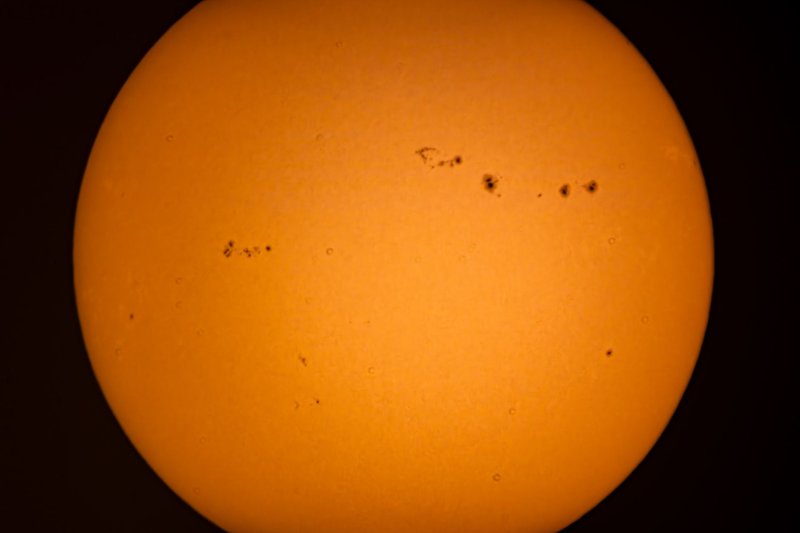
Launched in 2010 and still the visual backbone of solar science, SDO orbits Earth and photographs the Sun in extreme ultraviolet every 12 seconds, in resolution roughly ten times sharper than HD television. Nearly every dramatic Sun image you’ve seen in the last decade — the writhing plasma, the flares erupting in slow motion — came from SDO. According to NASA’s SDO mission overview, it generates around 1.5 terabytes of data per day, a firehose that lets scientists watch the magnetic field tangle and snap in near-real time.
11. Parker Solar Probe
This is the record-holder, and the one that earned the “touching the Sun” headlines that probably brought you here.
Launched in 2018, Parker Solar Probe is doing something no spacecraft has done: flying through the Sun’s outer atmosphere, the corona, repeatedly. In 2021 it crossed the Alfvén surface — the boundary where the Sun’s magnetic field releases its grip on the solar wind — which is the closest thing the Sun has to a “surface” you can pass through. By the December 2024 perihelion it had closed to about 3.8 million miles and hit roughly 430,000 mph, fast enough to fly from New York to Tokyo in under a minute, per NASA’s mission data.
Why bother flying into the corona? Because two of the oldest questions in solar physics can only be answered from inside it: why the corona is millions of degrees hotter than the surface below it, and what accelerates the solar wind to such enormous speeds. Parker is sampling the particles and fields directly, where the physics happens, instead of inferring it from 93 million miles away.
It’s named for Eugene Parker, the physicist who predicted the solar wind in 1958 — the first NASA mission ever named after a living person, and he lived to see it launch.
12. Solar Orbiter
ESA’s Solar Orbiter, launched in 2020 with NASA participation, is the perfect complement to Parker. Parker flies closest but mostly feels the Sun, sampling particles and fields with limited imaging because optics can’t survive that close. Solar Orbiter stays a bit farther out — around 26 million miles — but carries cameras that can stare directly at the Sun, combining in-situ measurements with high-resolution pictures.
Its signature achievement landed in 2025: using Venus gravity assists to tilt its orbit out of the planetary plane, Solar Orbiter captured the first clear images of the Sun’s south pole. We had never properly seen the top or bottom of our own star. The polar regions drive the long-term magnetic cycle, and these images are the first direct look at the engine behind it.
The Parker–Solar Orbiter pairing is the whole strategy in miniature: one probe inside the storm taking measurements, one a little farther back taking the pictures, their data combined to reconstruct what’s actually happening.
What’s Next
The Sun’s getting more company. NASA’s PUNCH mission (Polarimeter to Unify the Corona and Heliosphere) launched in early 2025, flying four small satellites in formation to image the corona and inner solar wind as a single connected system — filling the gap between what close-in probes feel and what Earth-based instruments see.
IMAP, the Interstellar Mapping and Acceleration Probe, is also slated to launch in the same window, parking at L1 to study how the solar wind interacts with the boundary of the solar system. And Parker Solar Probe keeps going, with more close passes on the schedule that will refine the corona measurements it’s already gathering.
After more than sixty years, the pattern is clear. We started by measuring the empty space around the Sun, then watched it from a safe distance, then learned to fly through its atmosphere and photograph its poles. The Sun stopped being a thing we observe from afar. It became a place we send hardware — and, against every intuition about pointing a spacecraft at a star, get the data back.