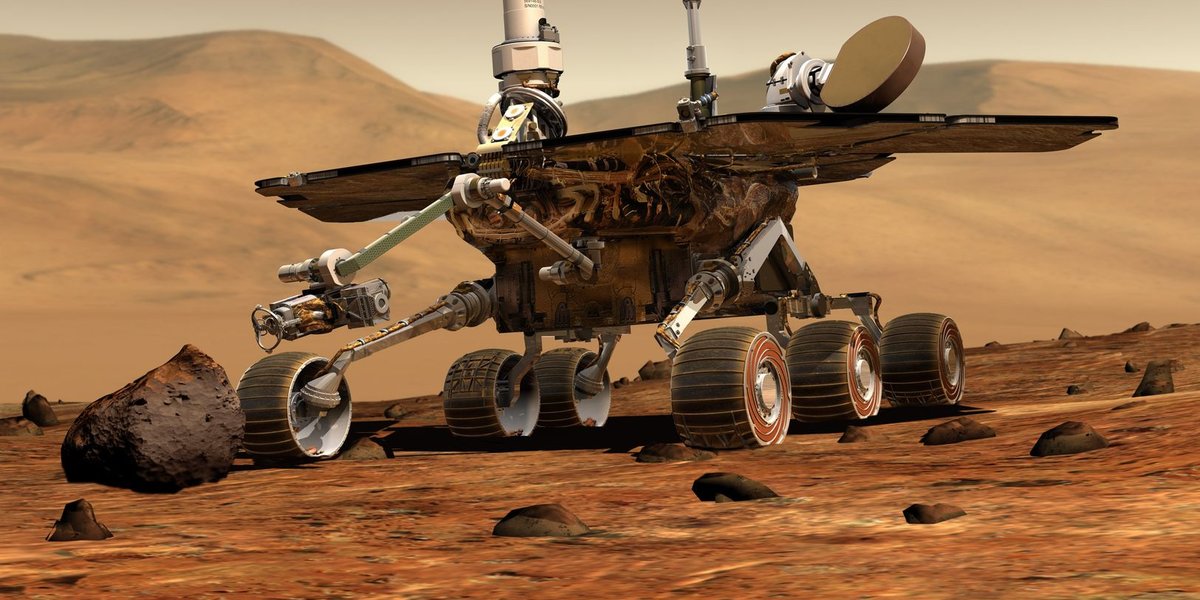
Roughly fifty spacecraft have aimed themselves at Mars since 1960. About half of them made it. That failure rate alone tells you more about why Mars is hard than any list of specs — this is a planet that has eaten landers, orbiters, and entire national space programs, and it keeps doing it to this day.
Here’s the full picture: what’s actually operating at Mars right now, how we got here across six decades of Soviet, American, European, Indian, Chinese, and Emirati attempts, why so many of those attempts ended in silence, and where the crewed-mission conversation actually stands once you strip out the marketing.
Table of Contents
- Mars missions active right now
- The full mission timeline
- Why do Mars missions fail
- Private vs. government: SpaceX and the state-run programs
- When will humans actually land on Mars
Mars missions active right now
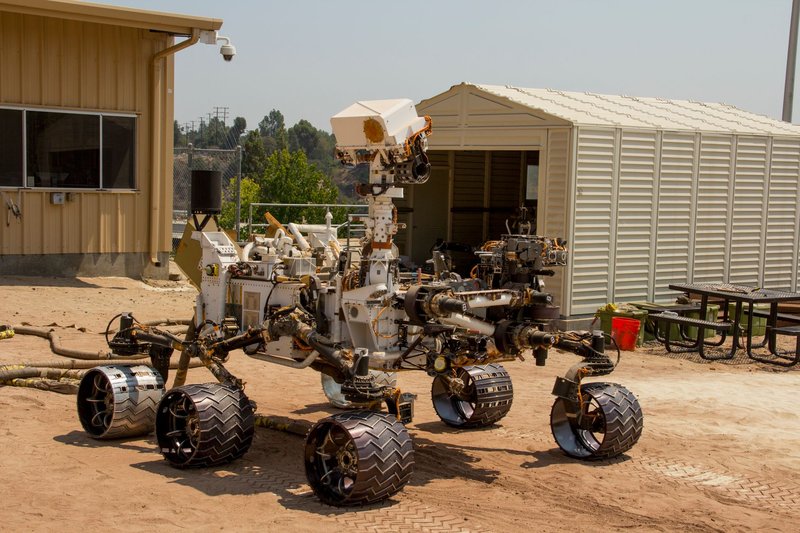
As of this writing, nine spacecraft are functioning at Mars — a mix of orbiters and one long-lived rover, run by four different space agencies:
| Spacecraft | Agency | Type | Launched | Status |
|---|---|---|---|---|
| Mars Odyssey | NASA | Orbiter | 2001 | Operating (oldest active Mars spacecraft) |
| Mars Express | ESA | Orbiter | 2003 | Operating |
| Mars Reconnaissance Orbiter | NASA | Orbiter | 2005 | Operating |
| Mars Science Laboratory (Curiosity) | NASA | Rover | 2011 | Operating |
| MAVEN | NASA | Orbiter | 2013 | Operating |
| ExoMars Trace Gas Orbiter | ESA/Roscosmos | Orbiter | 2016 | Operating |
| Perseverance / Ingenuity | NASA | Rover (helicopter retired) | 2020 | Rover operating; Ingenuity grounded 2024 |
| Tianwen-1 | CNSA (China) | Orbiter (rover lost) | 2020 | Orbiter operating; Zhurong rover silent since 2022 |
| Hope (Al-Amal) | UAE Space Agency | Orbiter | 2020 | Operating |
That’s a genuinely international neighborhood in orbit. Odyssey has been circling Mars since before most of its current mission controllers were out of college, and it’s still relaying data for newer arrivals — a reminder that Mars hardware, once it survives the trip, tends to outlive its warranty by a decade or more.
The full mission timeline
Mars exploration breaks cleanly into eras: the Cold War scramble, the “Mars Curse” drought of the 1990s, and the current golden age that kicked off with Mars Odyssey in 2001.
1960–1971 — the first attempts (mostly Soviet, mostly failures). The USSR tried first and tried often. Marsnik 1 and 2 (1960) never left Earth orbit. Mars 1 (1962) went silent en route. It took until 1965 for anyone to succeed — NASA’s Mariner 4 flew past Mars and beamed back 21 grainy photos that shocked scientists expecting a canal-covered, maybe-habitable world. Instead: craters, a thin atmosphere, no magnetic field. In 1971, the Soviets landed Mars 3 on the surface — the first soft landing on another planet — but it stopped transmitting 20 seconds later. NASA’s Mariner 9, that same year, became the first spacecraft to orbit another planet at all.
1975–1976 — Viking changes everything. NASA’s Viking 1 and Viking 2, twin orbiter-lander pairs, remain the most successful early Mars program by a wide margin. Both landers touched down safely in 1976 and operated for years — Viking 1’s lander ran for over six Earth years. They photographed the surface in color, tested the soil for microbial life (results were ambiguous and are still debated), and set the template every later mission has followed.
1988–1999 — the long drought. This stretch earned Mars its reputation as a spacecraft graveyard. The Soviet Phobos 1 and 2 probes (1988) both failed before reaching their targets. Japan’s Nozomi (1998) missed Mars orbit entirely due to a valve malfunction. NASA lost two missions back to back: Mars Climate Orbiter (1998) burned up after a units mix-up between metric and imperial measurements, and Mars Polar Lander (1999) crashed during descent. Of roughly a dozen launches in this period, only Mars Global Surveyor (1996) and Mars Pathfinder (1996, with the Sojourner rover) came through clean.
2001–2013 — the modern program takes hold. Mars Odyssey (2001) is still working today. ESA entered the game with Mars Express (2003), whose Beagle 2 lander failed but whose orbiter thrives to this day. NASA’s twin rovers Spirit and Opportunity (2003) were built for 90-day missions; Spirit lasted six years, Opportunity lasted nearly fifteen before a 2018 dust storm ended it. The Mars Reconnaissance Orbiter (2005) arrived with the sharpest camera ever sent to the planet. Phoenix (2007) confirmed water ice just beneath the arctic surface. Curiosity (2011) landed via an untested “sky crane” system that terrified engineers and worked perfectly. India’s Mangalyaan (2013) made the country the first in Asia to reach Mars orbit, and did it on a budget smaller than the movie Gravity.
2016–2022 — landers return, new players arrive. ESA and Roscosmos’s ExoMars program sent the Trace Gas Orbiter successfully but lost the Schiaparelli lander to a software error during descent in 2016. NASA’s InSight (2018) became the first mission to measure marsquakes before its solar panels finally succumbed to dust in December 2022. Then 2020 packed in three separate launches during a single favorable window: NASA’s Perseverance rover and its Ingenuity helicopter (the first powered flight on another planet), China’s Tianwen-1 with the Zhurong rover, and the UAE’s Hope orbiter — the first interplanetary mission from an Arab nation.
2024–2026 — the current window. Rocket Lab’s twin ESCAPADE probes launched in late 2024 aboard the debut flight of Blue Origin’s New Glenn rocket, aiming to study how Mars lost its atmosphere. Because that launch used a slower trajectory than a direct transfer, ESCAPADE is taking a longer road to Mars orbit than most missions. Meanwhile, ESA’s long-delayed Rosalind Franklin rover — originally a joint project with Roscosmos before that partnership collapsed following the invasion of Ukraine — has been rebuilt around Western and NASA-supplied components, with a new target launch later in the decade.
Why do Mars missions fail
Roughly half of all Mars missions in history have failed outright, and landers fail more often than orbiters or flybys. That’s not incompetence — it’s physics stacked against engineers at every stage.
The launch window is unforgiving. Earth and Mars line up for an efficient transfer only once every 26 months. Miss it, and you wait more than two years for the next shot — which is exactly what happened to Rosalind Franklin. There’s no “try again next month.”
The distance kills real-time control. Radio signals take anywhere from about 4 to 24 minutes to cross the gap between Earth and Mars, depending on where the planets sit in their orbits. During the critical entry-descent-landing sequence — famously nicknamed “seven minutes of terror” by NASA engineers — a spacecraft is fully on its own. Mission control can’t intervene. It can only watch a signal delay play out and hope the pre-programmed sequence worked.
Mars’s atmosphere is a trap, not a cushion. It’s thick enough to generate brutal heat during entry but too thin to slow a spacecraft down the way Earth’s atmosphere does — parachutes alone can’t do the job. Every successful landing has needed some combination of heat shield, parachute, retrorockets, and in Curiosity and Perseverance’s case, a sky crane that lowers the rover on cables before flying off to crash at a safe distance. Mars Polar Lander and Schiaparelli both died in this exact phase, decades apart.
Cost and complexity compound the risk. A Mars mission runs from tens of millions of dollars for a smallsat to well over $2 billion for a flagship rover, and nearly every subsystem is custom-built — there’s no off-the-shelf parts bin for interplanetary landers. More custom hardware means more single points of failure, and the mission gets exactly one chance to get it right.
Private vs. government: SpaceX and the state-run programs
Every mission on the timeline above was flown by a government space agency. That’s starting to change, and it’s the biggest structural shift happening in Mars exploration right now.
NASA, ESA, CNSA, and Roscosmos all operate the way space agencies have for sixty years: purpose-built spacecraft, single-mission timelines, budgets set by government appropriations and negotiated years in advance. It’s a model that has produced almost everything we know about Mars, but it’s slow — Rosalind Franklin has now spent over a decade in development.
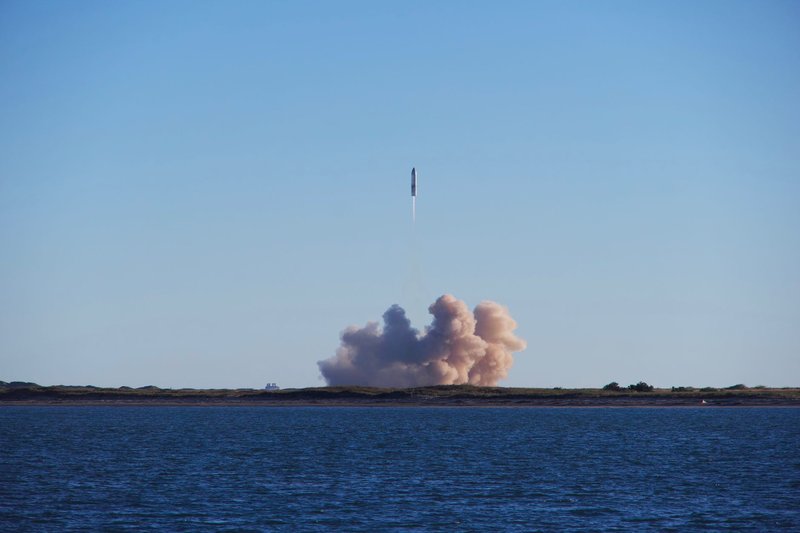
SpaceX’s approach is structurally different. Starship isn’t a Mars probe — it’s a reusable heavy-lift vehicle designed for Earth orbit, the Moon, and Mars using the same basic architecture, tested through rapid iterative flights rather than a single high-stakes launch. Elon Musk has repeatedly stated an intention to send uncrewed Starships toward Mars during upcoming transfer windows, using the trips as an in-space test of the vehicle’s deep-space life-support and landing systems before any crew goes near it. Those specific dates have slipped before, and they will likely slip again — that’s the honest track record.
China’s Tianwen program is the wildcard to watch. Following Tianwen-1’s mixed success (an orbiter that’s still healthy, a rover that isn’t), CNSA has a sample-return mission, Tianwen-3, in development for later this decade. If it flies on schedule, China could return Martian material to Earth before NASA and ESA’s own long-troubled Mars Sample Return program — a project that has been repeatedly restructured and re-costed after ballooning well past its original budget.
The practical difference for readers: government missions still do almost all of the actual science at Mars — the orbiters, the rovers, the instruments. Private spaceflight’s current contribution is cheaper, more frequent access to space, which increasingly means agencies can afford to fly smaller, riskier missions like ESCAPADE instead of only flagship-scale ones.
When will humans actually land on Mars

Here’s the honest answer: nobody currently has a funded, hardware-ready plan with a firm date, and every date attached to a crewed Mars landing so far has moved.
NASA’s official position, laid out in its Moon-to-Mars architecture, treats Artemis lunar landings as the proving ground for the life-support, propulsion, and surface-operations technology a Mars crew would need — with a human Mars mission realistically discussed for the late 2030s to 2040s, contingent on budgets that Congress hasn’t committed to yet.
SpaceX’s public timeline has always been more aggressive and less reliable. Musk has floated crewed Mars missions for years, with target dates that have repeatedly slipped by half a decade or more each time they’re revisited. The more grounded near-term goal — sending Starships to Mars without a crew, to test whether the vehicle can survive the trip and land intact — is a meaningfully different milestone from putting people on the surface, and it’s worth not conflating the two when you read mission announcements.
What would actually need to happen first, regardless of who’s flying: a demonstrated deep-space life-support system that works for the roughly seven-to-nine-month transit, a landing system proven at the scale and mass of a crewed vehicle rather than a car-sized rover, and either pre-positioned supplies on the surface or a return-fuel solution, since Mars doesn’t have a gas station. None of those three boxes is fully checked yet, by anyone.
According to NASA’s own Mars Exploration Program overview, the agency still frames robotic missions as the direct precursor to any human landing — which is a fairly clear signal that the robots aren’t done working yet, and neither is the runway to send people after them.