A NASA flagship mission is the biggest, most expensive, most ambitious kind of robotic science mission the agency runs. Think Hubble, Cassini, Curiosity, the James Webb Space Telescope. These are the once-a-decade bets where NASA spends more than two billion dollars to answer a question nobody else can afford to ask.
That’s the short version. If you came here because someone mentioned “flagship” and you wanted to know what it actually means, you now have your answer. The rest of this guide explains how these missions get picked, why the price tags are so eye-watering, how they differ from NASA’s cheaper mission classes, and what’s coming next.
Table of Contents
- The 30-second definition
- Flagship vs Discovery vs New Frontiers
- Famous flagships, by division
- Why they cost so much
- How a flagship gets chosen
- The overrun problem nobody loves to talk about
- Upcoming flagships
- FAQ
The 30-second definition
NASA sorts its science missions by cost and risk. Flagships sit at the top. They’re formally called “large strategic science missions,” and a few traits separate them from everything else:
- Price: typically north of $2 billion, sometimes far north. JWST landed around $10 billion.
- Cadence: roughly one per decade per science division, give or take.
- Direction: NASA picks the science goal and assigns the build to one of its own centers, usually the Jet Propulsion Laboratory in Pasadena, rather than handing the whole thing to a single outside scientist’s proposal.
- Risk classification: these are “Class A” missions, the category reserved for the highest-priority, lowest-tolerance-for-failure spacecraft.
The label exists because not every mission is created equal. A flagship isn’t just “a big mission.” It’s a deliberate strategic choice to spend a decade’s worth of a division’s ambition on one machine.
Flagship vs Discovery vs New Frontiers
NASA runs three main tiers of planetary missions, and the distinction trips people up constantly. The cleanest way to see it is side by side.
| Flagship | New Frontiers | Discovery | |
|---|---|---|---|
| Cost cap | No fixed cap, usually $2B+ | ~$1 billion | ~$500–800 million |
| How often | ~once per decade | a few per decade | most frequent |
| Who proposes | NASA directs it | Competed; scientist-led, from a NASA shortlist | Competed; scientist-led, open field |
| Scope | Large, multi-instrument | Focused on a specific high-priority target | Single-question, lean |
| Examples | Cassini, Curiosity, JWST | New Horizons, Juno, OSIRIS-REx | InSight, Lucy, Dawn |
The key difference isn’t only money. Discovery and New Frontiers are competed programs: scientists pitch ideas, and NASA picks winners through a cost-capped contest. Flagships are directed. NASA decides the destination and the science, then builds the team around it. The Planetary Society lays this competed-versus-directed split out well in their breakdown of mission classes.
That distinction matters for one practical reason: a Discovery mission has to fit its science into a fixed budget. A flagship’s budget tends to fit around the science.
Famous flagships, by division
Flagships aren’t only planetary probes. Every NASA science division gets them. Here’s how the heavy hitters break down.
Planetary
- Voyager 1 & 2 (1977) — the original deep-space flagships, now the only human-made objects in interstellar space.
- Galileo (1989) — first orbiter of Jupiter, dropped a probe into the planet’s atmosphere.
- Cassini (1997) — orbited Saturn for 13 years, delivered the Huygens lander to Titan, and ended with a deliberate dive into the planet.
- Curiosity (2011) and Perseverance (2020) — car-sized rovers that turned Mars geology into a daily news feed.
Astrophysics
- Hubble Space Telescope (1990) — the most productive scientific instrument ever launched, still working after 30-plus years and several servicing missions.
- Chandra X-ray Observatory (1999) — sees the high-energy universe: black holes, supernova remnants, hot gas between galaxies.
- James Webb Space Telescope (2021) — the infrared successor to Hubble, parked a million miles out at the second Lagrange point. NASA’s JWST overview covers what it’s built to see.
Heliophysics
- Parker Solar Probe (2018) — flies through the Sun’s outer atmosphere, the closest any spacecraft has come to a star, sometimes counted among the flagship-scale missions for its ambition and cost.
Notice the pattern: every one of these is a name a casual space fan recognizes. That’s not a coincidence. Flagships are where NASA spends enough to do something genuinely unrepeatable, and unrepeatable things make headlines.
Why they cost so much
Two billion dollars sounds absurd until you look at what the money buys.
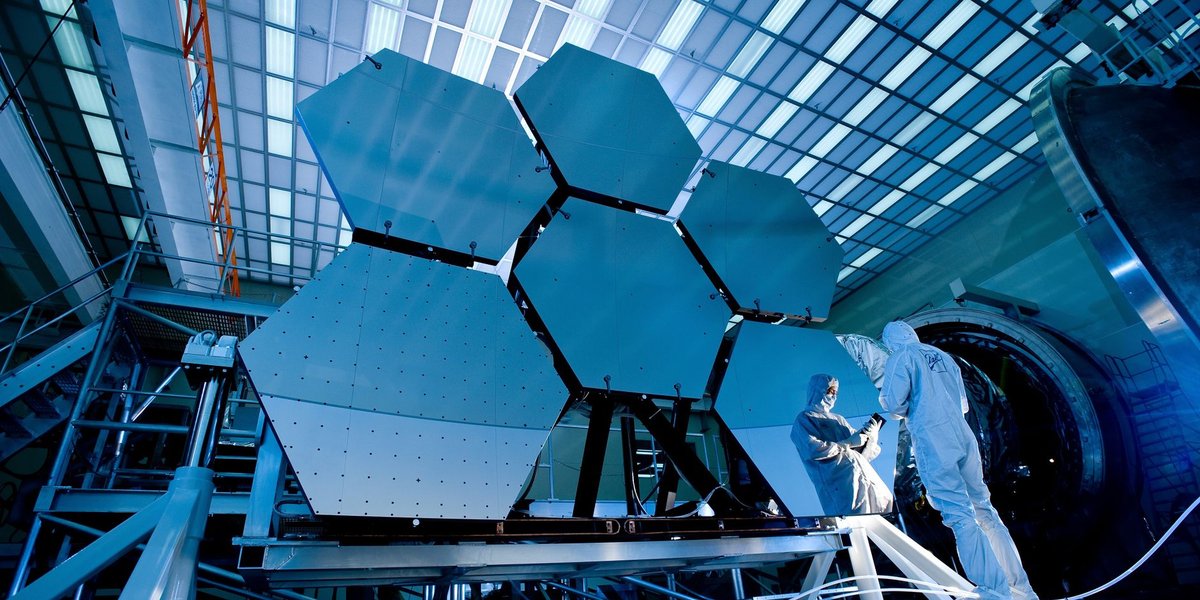
A flagship usually carries a dozen or more scientific instruments, each one effectively a custom-built laboratory designed for a single environment that exists nowhere on Earth. Cassini’s instruments had to survive Saturn’s radiation for over a decade. JWST’s mirror had to unfold itself in space because it was too big to fit in any rocket fully assembled, and there was no possibility of a repair trip a million miles out.
That last point drives a lot of the cost. Flagships often go somewhere no human will ever follow. If something breaks, that’s the mission. So NASA tests obsessively, builds in redundancy, and accepts schedules measured in decades. The agency rarely flies a brand-new technology on a billion-dollar flagship without proving it first, which is exactly why efforts like the New Millennium Program existed to fly experimental hardware on cheaper missions before it ever rode on the big one. The hardware on Perseverance was being designed years before it launched, and the science it enables will run for years after.
There’s also the simple fact of distance and time. A mission to the outer planets needs power that works without sunlight (radioisotope generators), communication systems that can reach across billions of miles, and a team kept on payroll for the full cruise. You’re not just funding a spacecraft. You’re funding a small institution for fifteen to twenty years.
How a flagship gets chosen
Flagships don’t come from a NASA administrator waking up with an idea. They come from the decadal survey.
Every ten years, the scientific community, organized through the National Academies, produces a survey for each field of space science: planetary science, astrophysics, heliophysics, Earth science. Hundreds of researchers debate, rank, and ultimately recommend the priorities for the coming decade. The top recommendation in each survey is often the next flagship.
This is why flagships feel inevitable once announced. By the time NASA commits, the mission has already survived a consensus process involving most of the relevant scientists in the country. The 2020 astrophysics decadal, for instance, put a large infrared/optical/ultraviolet telescope at the top of its list, which became the seed of the Habitable Worlds Observatory.
The survey doesn’t guarantee funding. Congress still has to pay for it, and budgets shift. But a decadal recommendation is the closest thing space science has to a green light.
The overrun problem nobody loves to talk about
Here’s the part most reference pages skim over: flagships have a habit of going over budget and behind schedule. JWST is the famous case. Early estimates put it around $1–3.5 billion with a launch in the early 2010s. It launched in late 2021 at roughly $10 billion.
This isn’t simple mismanagement, though plenty of audits have found room for improvement. It’s structural. Flagships attempt things that have never been done, which means the cost estimates are guesses about problems nobody has solved yet. When the problem turns out harder than expected, the only options are more money or cancellation, and a half-built telescope is worth nothing.
The downside is real. A flagship that swells in cost can crowd out the cheaper Discovery and New Frontiers missions that fill the gaps between decades. When JWST ran long, other astrophysics projects waited. This tension, the tug-of-war between one giant mission and many smaller ones, is one of the genuine ongoing debates in how NASA spends its science budget. It’s also why the agency has leaned harder on competed missions to keep a steadier flow of results.
Upcoming flagships
Two big ones dominate the conversation right now.
Mars Sample Return aims to bring the rock and soil samples Perseverance is collecting back to Earth, the first round-trip from the Martian surface. It’s a flagship-scale, multi-launch campaign, and as of recent budget cycles its cost and schedule are under active review precisely because of the overrun pressures described above.
Habitable Worlds Observatory (HWO) is the next flagship telescope, the one the 2020 astrophysics decadal recommended. Its goal is direct, head-spinning in scope: image Earth-like planets around other stars and search their atmospheres for signs of life. It’s early in development, with a launch realistically in the 2040s, which is exactly the decade-plus lead time flagships demand. HWO is far from the only observatory on the horizon, too, and it sits alongside a wave of other future space telescopes set to reshape astronomy over the coming decades.
Both follow the familiar pattern. A decadal survey names the priority, NASA directs the build, the price climbs into the billions, and a generation of scientists organizes their careers around the result.
FAQ
What’s the difference between a flagship and a regular NASA mission? A flagship is the largest, most expensive class, typically over $2 billion and directed by NASA rather than proposed competitively. “Regular” missions usually means the cheaper, competed Discovery and New Frontiers classes.
How much does a flagship mission cost? Generally $2 billion or more. JWST reached about $10 billion. There’s no fixed cap, which is part of why costs sometimes climb.
How often does NASA launch a flagship? Roughly once per decade per science division. They’re rare by design, tied to the ten-year decadal survey cycle.
Is the James Webb Space Telescope a flagship? Yes. JWST is the flagship astrophysics mission of its decade and one of the most expensive science missions NASA has ever flown.
Are Hubble and Cassini flagships? Both, yes. Hubble is the flagship of astrophysics; Cassini was the flagship Saturn mission. They’re textbook examples of the class.
What flagship missions are coming next? Mars Sample Return and the Habitable Worlds Observatory are the two headline upcoming flagships, recommended by recent decadal surveys.