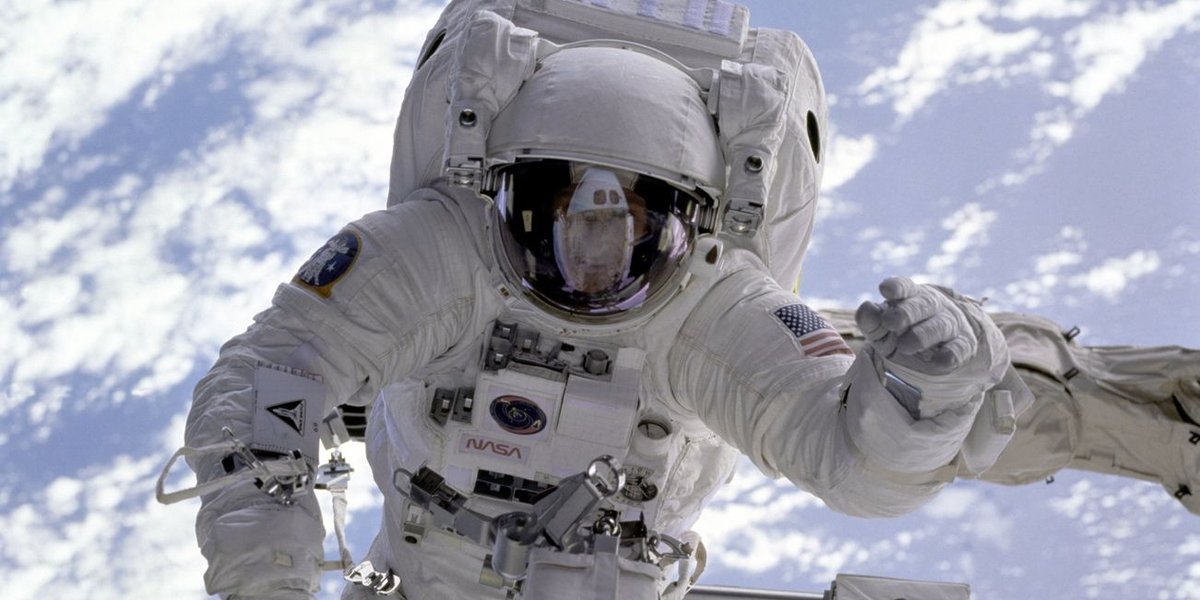
Twenty-five men, six decades of firsts, and one uncomfortable question: why was nearly every early astronaut a man? This list covers the male astronauts and cosmonauts whose flights changed what people thought was possible, from the first orbit in 1961 to the year-long stays aboard the International Space Station. It also includes astronauts from Europe, Canada, China, India and Japan, since most lists stop at the Apollo era and the American flag.
Contents
- Quick-reference table
- The firsts: opening the space age
- Mercury and Gemini era men
- Apollo: the Moon crews
- Long-duration record-holders
- Male astronauts from outside the US and USSR
- Why the first astronauts were all men
- How many astronauts are men today?
- FAQ
Quick-reference table
| Name | Country | First flight | Signature record |
|---|---|---|---|
| Yuri Gagarin | USSR | 1961 | First human in space |
| Alan Shepard | USA | 1961 | First American in space |
| John Glenn | USA | 1962 | First American to orbit Earth |
| Gherman Titov | USSR | 1961 | Youngest person to fly in space (25) |
| Alexei Leonov | USSR | 1965 | First spacewalk |
| Gus Grissom | USA | 1961 | First person to fly in space twice |
| Deke Slayton | USA | 1975 | Mercury Seven member who waited 16 years to fly |
| Neil Armstrong | USA | 1966 | First person on the Moon |
| Buzz Aldrin | USA | 1966 | Second person on the Moon |
| Jim Lovell | USA | 1965 | First to fly to the Moon twice |
| Frank Borman | USA | 1965 | Commanded first crewed Moon orbit |
| Bill Anders | USA | 1968 | Photographed Earthrise |
| Pete Conrad | USA | 1965 | Third person on the Moon |
| Gene Cernan | USA | 1966 | Last person on the Moon (so far) |
| Harrison Schmitt | USA | 1972 | Only geologist on the Moon |
| John Young | USA | 1965 | First to fly six space missions |
| Valeri Polyakov | USSR/Russia | 1988 | Longest single spaceflight (437 days) |
| Scott Kelly | USA | 1999 | 340-day mission; NASA Twins Study |
| Frank Rubio | USA | 2022 | Longest US single flight (371 days) |
| Oleg Kononenko | Russia | 2008 | Most cumulative days in space (1,100+) |
| Ulf Merbold | West Germany (ESA) | 1983 | First ESA astronaut |
| Yang Liwei | China | 2003 | First Chinese in space |
| Rakesh Sharma | India | 1984 | First Indian in space |
| Koichi Wakata | Japan | 1996 | First Japanese ISS commander |
| Chris Hadfield | Canada | 1995 | First Canadian to spacewalk |
The firsts: opening the space age
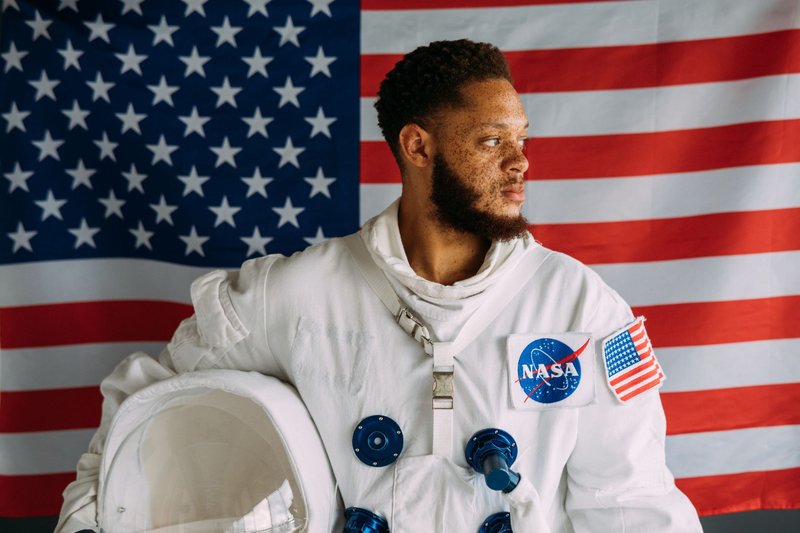
Five men claimed the milestones that every later flight is measured against. Four of them were military pilots. The fifth, Leonov, was also a pilot and an accomplished artist.
1. Yuri Gagarin (1934-1968), Soviet Union
Vostok 1, April 12, 1961. First human in space.
Gagarin made a single orbit in 108 minutes, and most of it was automated because Soviet doctors feared a passenger might lose control of his faculties in weightlessness. A sealed envelope held the manual-control code in case he needed it. He didn’t. Gagarin never flew to space again and died at 34 in a MiG-15 training crash near Moscow, seven years before the Apollo-Soyuz handshake in orbit.
2. Alan Shepard (1923-1998), United States, NASA
Freedom 7, May 5, 1961. First American in space.
Shepard’s suborbital hop lasted 15 minutes and 28 seconds, a lob up and down the Atlantic. Then came years of grounding for an inner-ear disorder. After surgery he commanded Apollo 14 and, at 47, walked on the Moon, where he hit two golf balls with a makeshift six-iron. He’s still the oldest person to have walked on the lunar surface.
3. John Glenn (1921-2016), United States, NASA
Friendship 7, February 20, 1962. First American to orbit Earth.
Glenn flew three orbits in just under five hours. A faulty sensor suggested his heat shield had come loose, so mission control told him to keep the retro-rocket pack strapped on during reentry. He survived. Glenn then served 24 years as a US senator from Ohio and flew again on Space Shuttle Discovery in 1998, at 77, the oldest person in space at that time.
4. Gherman Titov (1935-2000), Soviet Union
Vostok 2, August 6, 1961. Youngest person to fly in space.
Titov was 25 when he spent a full day in orbit, completing 17 revolutions. He was the first person to sleep in space, and the first to report space sickness, which is why doctors started paying attention to the inner ear. No one younger has flown to date. Gagarin’s flight had lasted under two hours. Titov’s showed that a human could endure a day away from Earth.
5. Alexei Leonov (1934-2019), Soviet Union
Voskhod 2, March 18, 1965. First spacewalk.
Leonov spent 12 minutes outside his spacecraft. His suit ballooned in the vacuum until he couldn’t bend his fingers or fit through the airlock, so he bled air out of the suit and went back in head first, against procedure. He later sketched what he saw, and in 1975 he commanded the Soviet side of the Apollo-Soyuz docking in orbit.
Mercury and Gemini era men
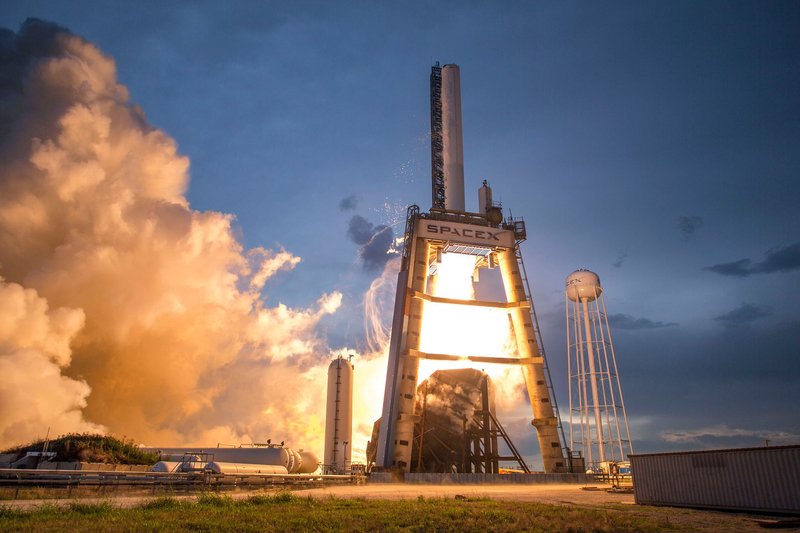
NASA’s first group, the Mercury Seven, and the Gemini crews built the techniques Apollo would need: long-duration flight, docking and spacewalking.
6. Gus Grissom (1926-1967), United States, NASA
Liberty Bell 7, July 21, 1961. Second American in space.
Grissom’s capsule hatch blew open after splashdown and the capsule sank, nearly taking him with it. Searchers pulled the capsule off the seafloor in 1999. In 1965 he flew Gemini 3, the first two-person US mission and the first crewed spacecraft to change its orbit. He died with Ed White and Roger Chaffee in the Apollo 1 cabin fire on the launch pad.
7. Deke Slayton (1924-1993), United States, NASA
Apollo-Soyuz, July 1975. Mercury Seven member grounded for 16 years.
Slayton was picked in 1959 and had an Atlas flight lined up. An irregular heartbeat grounded him in 1962. He became NASA’s director of flight crew operations, which meant he chose who flew to the Moon. Doctors cleared him in 1972, and in 1975 he finally reached orbit at 51, as docking module pilot on the Apollo-Soyuz mission.
Apollo: the Moon crews
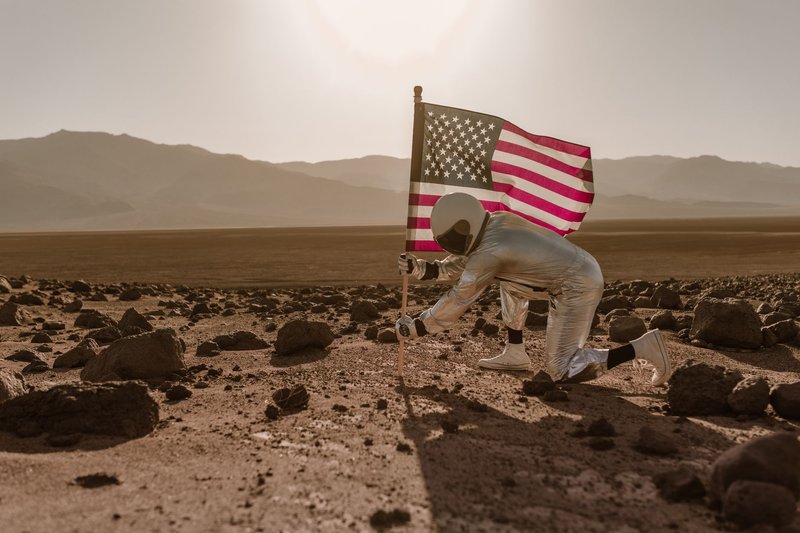
Twenty-four men have traveled to the Moon. Twelve walked on it. These nine stand for the highlights of that run.
8. Neil Armstrong (1930-2012), United States, NASA
Apollo 11, July 20, 1969. First person on the Moon.
Armstrong flew Apollo 11’s lander past a boulder field with under 30 seconds of fuel margin and touched down in the Sea of Tranquility. Three years earlier, on Gemini 8, he’d saved his crew after a stuck thruster sent the capsule spinning, just after the first docking of two craft in orbit. Armstrong, a civilian test pilot and Navy veteran, rarely gave interviews afterward.
9. Buzz Aldrin (born 1930), United States, NASA
Apollo 11, July 1969. Second person on the Moon.
Aldrin wrote his MIT doctoral thesis on orbital rendezvous, and colleagues nicknamed him “Dr. Rendezvous.” On Gemini 12 in 1966 he logged more than five hours of spacewalking in three outings and proved that working outside a spacecraft was manageable with the right handholds. On the Moon he spent about two and a half hours on the surface alongside Armstrong.
10. Jim Lovell (1928-2025), United States, NASA
Apollo 8 and Apollo 13. First to fly to the Moon twice.
Lovell flew four missions: Gemini 7, Gemini 12, Apollo 8 and Apollo 13. He never landed on the Moon. His second trip became the “successful failure” when an oxygen tank ruptured, and he steered the crew home using the lunar module as a lifeboat. Lovell also spent 14 days in orbit on Gemini 7, a record at the time.
11. Frank Borman (1928-2023), United States, NASA
Apollo 8, December 1968. Commanded the first crewed Moon orbit.
Borman commanded the first crew to leave Earth’s gravity and circle the Moon, ten orbits over Christmas 1968. On Christmas Eve the crew read from the Book of Genesis in a broadcast that drew one of the largest audiences in television history up to then. He later ran Eastern Air Lines.
12. Bill Anders (1933-2024), United States, NASA
Apollo 8. Took the Earthrise photograph.
Anders was the Apollo 8 lunar module pilot, though no lander flew on that mission. He grabbed a color film magazine and shot the picture of Earth rising over the lunar horizon that many people credit with energizing the environmental movement. He said later, “We came all this way to explore the Moon, and the most important thing is that we discovered the Earth.” He died in 2024 when the plane he was piloting crashed.
13. Pete Conrad (1930-1999), United States, NASA
Apollo 12, November 1969. Third person on the Moon.
At 5 feet 6 inches, Conrad stepped onto the Moon and said, “Whoopee! Man, that may have been a small one for Neil, but it was a long one for me.” He had made a bet with a reporter that he’d say it. Apollo 12 landed within walking distance of Surveyor 3, a probe that had been sitting there since 1967, and he and Alan Bean took pieces home. Conrad later commanded the first Skylab crew.
14. Gene Cernan (1934-2017), United States, NASA
Apollo 17, December 1972. Last person to walk on the Moon.
Cernan climbed the lander’s ladder last, on December 14, 1972, and no one has walked on the Moon since. Before that he’d flown Apollo 10, where the lander came within about nine miles of the surface. He scratched his daughter Tracy’s initials, “TDC,” into the lunar dust before leaving. Cernan hoped someone would take his title from him.
15. Harrison “Jack” Schmitt (born 1935), United States, NASA
Apollo 17, December 1972. Only professional geologist to walk on the Moon.
Schmitt was the only scientist among the twelve Moon walkers, and he got his seat on Apollo 17 after NASA cancelled the later Apollo flights. At the Shorty crater he spotted orange soil, volcanic glass about 3.6 billion years old. He later served one term as a US senator from New Mexico.
16. John Young (1930-2018), United States, NASA
Six missions across Gemini, Apollo and the Space Shuttle.
Young walked on the Moon with Apollo 16 in 1972, and he commanded Columbia on STS-1 in 1981, the first Space Shuttle flight. He flew Gemini 3, Gemini 10, Apollo 10, Apollo 16, STS-1 and STS-9, making him the first person to fly six times. On Gemini 3 he smuggled a corned beef sandwich aboard, which NASA wasn’t thrilled about.
Long-duration record-holders
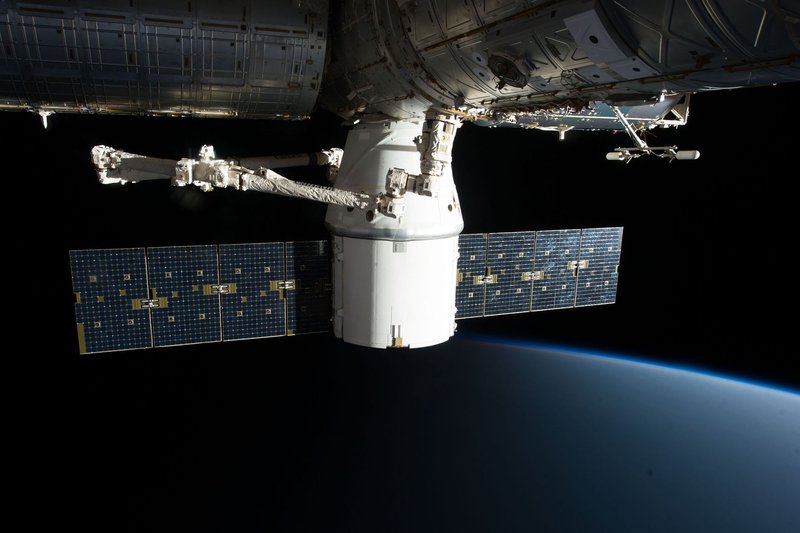
Space stations changed what an astronaut does. Records here are measured in months, and the aim is preparing for Mars.
17. Valeri Polyakov (1942-2022), USSR and Russia
Mir, 1994-1995. Longest single spaceflight: 437 days, 18 hours.
Polyakov, a physician, stayed on Mir from January 1994 to March 1995 to test whether a crew could survive a Mars-length trip. Three decades later, nobody has flown a longer continuous mission. He had already spent about eight months on Mir in 1988 and 1989, so his body was a decade-long data set on how humans adapt to weightlessness.
18. Scott Kelly (born 1964), United States, NASA
ISS, 2015-2016. 340 days in space, plus a twin back on Earth.
Kelly spent 340 days on the International Space Station while his identical twin Mark, also a former astronaut, stayed on the ground. Scientists compared their bodies for NASA’s Twins Study, which examined gene expression, the gut microbiome and cognition. Across four flights Kelly logged 520 days in space, a record among Americans when he retired.
19. Frank Rubio (born 1976), United States, NASA
ISS, 2022-2023. 371 days, the longest single flight by an American.
Rubio launched for six months and returned after a year when a coolant leak crippled the Soyuz that was meant to bring him home. He’s an Army doctor and helicopter pilot, and the first astronaut of Salvadoran descent. His mark still stands for American spaceflight, though Russian cosmonauts Oleg Kononenko and Nikolai Chub flew 374 days a year later.
20. Oleg Kononenko (born 1964), Russia, Roscosmos
Most cumulative time in space: more than 1,100 days.
Kononenko took the all-time record in 2024 when he passed Gennady Padalka’s 878 days, and he finished that year at 1,111 days across five flights. His 374-day mission with Nikolai Chub, launched in September 2023, is the second-longest continuous flight ever. If Mars crews need endurance, he’s the nearest thing to a proof of concept.
Male astronauts from outside the US and USSR
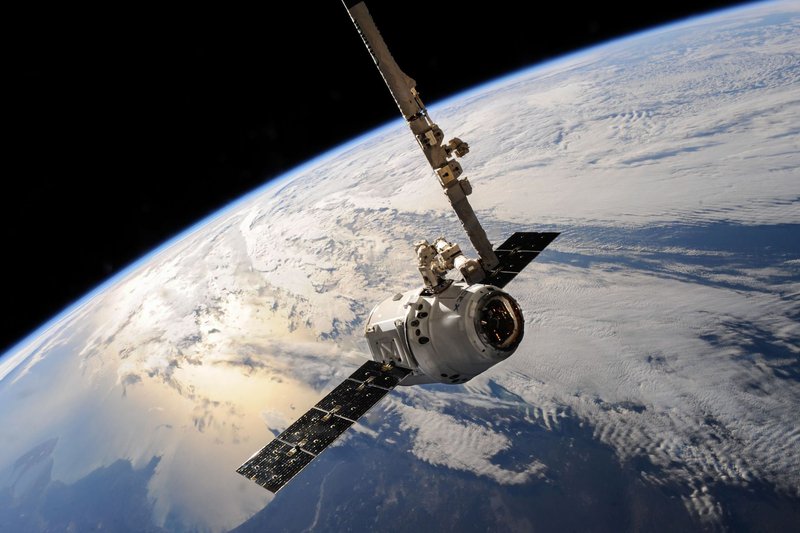
The early space race was a two-country contest. These men flew for everyone else.
21. Ulf Merbold (born 1941), West Germany, ESA
STS-9, November 1983. First ESA astronaut.
Merbold grew up in East Germany, moved west in 1960, and became West Germany’s first astronaut. He flew the Spacelab 1 science module on Space Shuttle Columbia, the first non-American on a US spacecraft. Sigmund Jähn flew for East Germany in 1978, so the two Germanys each had a first spaceman. Merbold also visited Mir in 1994.
22. Yang Liwei (born 1965), China, CNSA
Shenzhou 5, October 15, 2003. First Chinese in space.
Yang, a former People’s Liberation Army Air Force pilot, orbited Earth 14 times in 21 hours and made China the third country to launch humans on its own rocket. He reported a strange knocking sound during the flight, a detail the Chinese space program discussed publicly afterward. Yang also carried a Chinese flag and a United Nations flag.
23. Rakesh Sharma (born 1949), India, ISRO
Soyuz T-11, April 1984. First Indian in space.
Sharma spent nearly eight days aboard the Soviet Salyut 7 station. Prime Minister Indira Gandhi asked him how India looked from orbit, and he answered “Saare Jahan Se Accha” (“Better than the whole world”). Four decades later, Shubhanshu Shukla became the first Indian to reach the International Space Station, on Axiom-4 in 2025.
24. Koichi Wakata (born 1963), Japan, JAXA
Five flights, including command of the ISS in 2014.
Wakata became Japan’s first mission specialist on STS-72 in 1996 and the first Japanese commander of the ISS during Expedition 39. In five missions he has spent more than 500 days in space, among the highest totals for any astronaut from outside the US and Russia. He’s also a robotic-arm specialist who has helped capture and berth visiting cargo ships.
25. Chris Hadfield (born 1959), Canada, CSA
STS-74, STS-100 and ISS Expedition 35.
Hadfield was the first Canadian to board Mir, the first Canadian to spacewalk, and in 2013 the first Canadian to command the ISS. He recorded David Bowie’s “Space Oddity” with a guitar in the Cupola, and the video pulled in tens of millions of views. A former CF-18 fighter pilot, he’s probably the most recognized astronaut among people who don’t follow spaceflight.
Why the first astronauts were all men
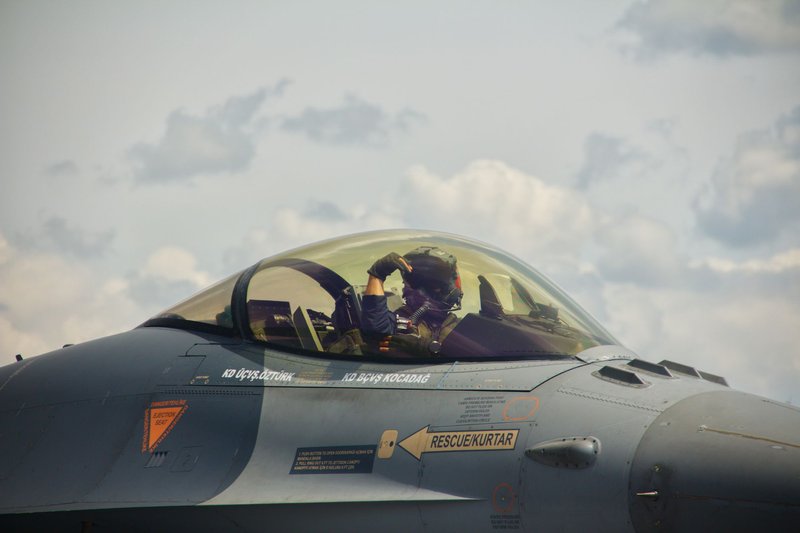
The early lineups weren’t a statement about who could handle spaceflight. They came from a hiring rule.
President Eisenhower decided in late 1958 that NASA’s astronauts should be drawn from military test pilots. The 1959 selection criteria required a bachelor’s degree, age under 40, height of 5 feet 11 inches or less, top physical condition, and graduation from a test pilot school with at least 1,500 hours of flying time. In 1959, no women held those jobs. NASA reviewed records of 508 pilots, brought in 32 finalists and chose seven: Scott Carpenter, Gordon Cooper, John Glenn, Gus Grissom, Wally Schirra, Alan Shepard and Deke Slayton. These are the Mercury Seven astronauts.
A privately funded program tested women in parallel. Dr. William Randolph Lovelace II, who had designed NASA’s physical exams for the Mercury Seven, ran the same tests on women pilots. Jerrie Cobb passed in 1960, and 13 of the 19 women who took the tests passed, a group later nicknamed the Mercury 13. The follow-up tests planned at the Navy’s Pensacola facility were cancelled in 1961 because NASA had no official program for women. At a House subcommittee hearing in July 1962, Glenn testified that women’s absence from the field was “a fact of our social order.”
The Soviets didn’t wait. Valentina Tereshkova flew Vostok 6 in 1963. The US took 20 more years, until Sally Ride flew on STS-7 in June 1983, five years after NASA selected its first women astronauts in 1978.
How many astronauts are men today?
Men remain the large majority. Of the more than 700 people who’ve flown past the Kármán line, about 88 percent are men, and women account for roughly 12 percent. Those numbers shift with each launch, but the direction is toward balance. NASA’s recent astronaut classes have been close to even, and the four-person Artemis II crew includes three men and one woman. You can see the current roster on NASA’s astronaut page.
FAQ
Who was the first male astronaut?
Yuri Gagarin, a Soviet cosmonaut, was the first human and first man in space on April 12, 1961. Valentina Tereshkova was the first woman, in 1963.
Who was the first American male astronaut?
Alan Shepard, on May 5, 1961. John Glenn was the first American to orbit Earth, in February 1962.
Who were the Mercury Seven astronauts?
Scott Carpenter, Gordon Cooper, John Glenn, Gus Grissom, Wally Schirra, Alan Shepard and Deke Slayton, selected by NASA in April 1959. All seven eventually flew, though Slayton waited until 1975.
Which man has spent the most time in space?
Oleg Kononenko, with more than 1,100 days across five flights. Valeri Polyakov holds the record for the longest single flight, at 437 days.
Who is the oldest male astronaut?
John Glenn was the oldest person to orbit Earth, at 77 in 1998. Short suborbital flights on Blue Origin have since carried older passengers, including William Shatner at 90.
How many astronauts are men?
About 88 percent of the people who have gone to space are men, though the share of women is rising with each new astronaut class.