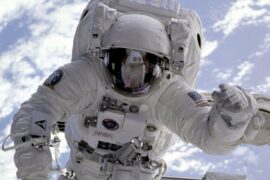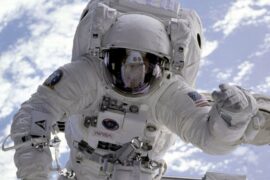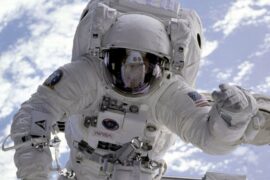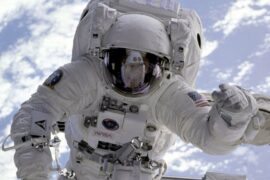
Italy has put ten of its citizens past the edge of space. That number is smaller than you’d guess for a country with this much engineering pedigree, which makes each name worth knowing. The first was Franco Malerba, a physicist who rode Space Shuttle Atlantis in September 1992. The most recent went up in 2024. In between you get a European endurance record, a spacewalk that nearly turned deadly, and the first European woman to command the International Space Station.
Most lists of Italian astronauts hand you a table and call it a day. Here you get the table and the story behind each name.
Table of Contents
- The quick roster
- Franco Malerba — the first
- Maurizio Cheli
- Umberto Guidoni
- Roberto Vittori
- Paolo Nespoli
- Luca Parmitano
- Samantha Cristoforetti
- The 2023 suborbital crew
- Firsts and records
- Italy, ESA, and the ISS
The quick roster {#the-quick-roster}
Eight Italians have reached orbit. Three more (one of whom also flew to orbit) crossed the boundary of space on a 2023 suborbital hop. Here’s the orbital list at a glance.
| Astronaut | First flight | Flights | ~Days in space | Headline record |
|---|---|---|---|---|
| Franco Malerba | 1992 | 1 | ~8 | First Italian in space |
| Maurizio Cheli | 1996 | 1 | ~16 | Flew the tethered-satellite mission |
| Umberto Guidoni | 1996 | 2 | ~28 | First European aboard the ISS |
| Roberto Vittori | 2002 | 3 | ~36 | Delivered the AMS particle detector |
| Paolo Nespoli | 2007 | 3 | ~313 | Flew his last mission at age 60 |
| Luca Parmitano | 2013 | 2 | ~367 | First Italian to command the ISS |
| Samantha Cristoforetti | 2014 | 2 | ~370 | First European woman to command the ISS |
| Walter Villadei | 2023 | 2 | ~21 | Flew suborbital and orbital |
Franco Malerba — the first {#franco-malerba}
Before he was an astronaut, Malerba was a biophysicist with a doctorate from Genoa and a job at the European Space Agency’s research center in the Netherlands. He flew on STS-46 aboard Atlantis from July 31 to August 8, 1992, as a payload specialist. His job centered on the Tethered Satellite System, an experiment to dangle a satellite from the Shuttle on a 20-kilometer conducting wire and generate electricity from Earth’s magnetic field.
The tether jammed at about 256 meters and never fully deployed, which sounds like failure but taught engineers a great deal about tether dynamics in orbit. Italy reached human spaceflight relatively late: Malerba’s flight came thirty-one years after Yuri Gagarin became the first human to orbit Earth. He spent just under eight days up there, came home, and later served a term in the European Parliament. A scientist, an astronaut, then a politician. That’s a résumé.
Maurizio Cheli {#maurizio-cheli}
Cheli came from the cockpit, not the lab: an Italian Air Force test pilot who logged thousands of hours across dozens of aircraft types. He flew STS-75 on Columbia in February 1996, a mission that ran nearly 16 days and carried the second attempt at the tethered satellite, this time deployed to almost its full length before the cable snapped.
Cheli worked as a mission specialist, the first Italian to hold that role rather than the more limited payload-specialist seat. After leaving the corps he went into aerospace industry and aviation, and he’s spoken openly about the discipline that flying high-performance jets drilled into him long before launch.
Umberto Guidoni {#umberto-guidoni}
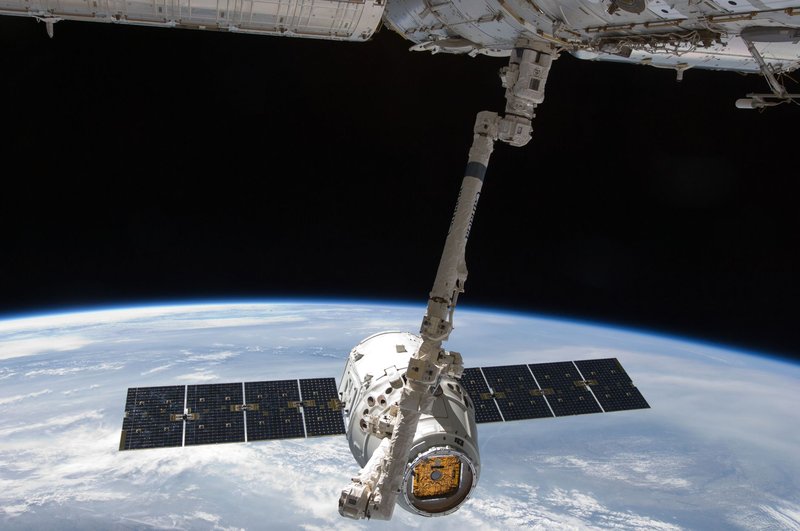
Guidoni shared that same STS-75 flight with Cheli, then earned a distinction nobody can take from him. On STS-100 in April 2001, aboard Endeavour, he became the first European astronaut to board the International Space Station. The mission delivered Canadarm2, the station’s big robotic arm that later astronauts would rely on for nearly every spacewalk and berthing operation.
An astrophysicist by training, Guidoni logged roughly 28 days across his two flights and, like Malerba before him, moved into the European Parliament afterward. Italian astronauts have a curious habit of trading the launch pad for politics.
Roberto Vittori {#roberto-vittori}
Vittori is the workhorse. Three flights, an Air Force test pilot’s precision, and a knack for being aboard when something important got delivered. His first two trips were short Soyuz “taxi” flights to the ISS in 2002 (Marco Polo) and 2005 (Eneide), each about ten days, swapping out the station’s emergency-return capsule.
His third flight is the one that mattered most. On STS-134 in May 2011, the final voyage of Endeavour, Vittori helped install the Alpha Magnetic Spectrometer, a $2 billion cosmic-ray detector that has been hunting dark matter and antimatter from the station’s truss ever since. Roughly 36 days in space total, spread across nearly a decade.
Paolo Nespoli {#paolo-nespoli}
Nespoli’s path was the least linear. He served in Italy’s army special forces, worked as a flight controller, and didn’t fly his first mission until 2007, at age 50. Then he kept going. STS-120 delivered the Harmony node. His MagISStra long-duration stay in 2010–2011 ran about 159 days. His VITA mission in 2017 ran another 139.
That last flight made him 60 years old in orbit, one of the older people to live aboard the ISS. He’s also the astronaut who photographed the Space Shuttle docked to the station from a departing Soyuz, the only crewed image ever taken of a Shuttle and the ISS together. Around 313 days off the planet by the time he retired.
Luca Parmitano {#luca-parmitano}
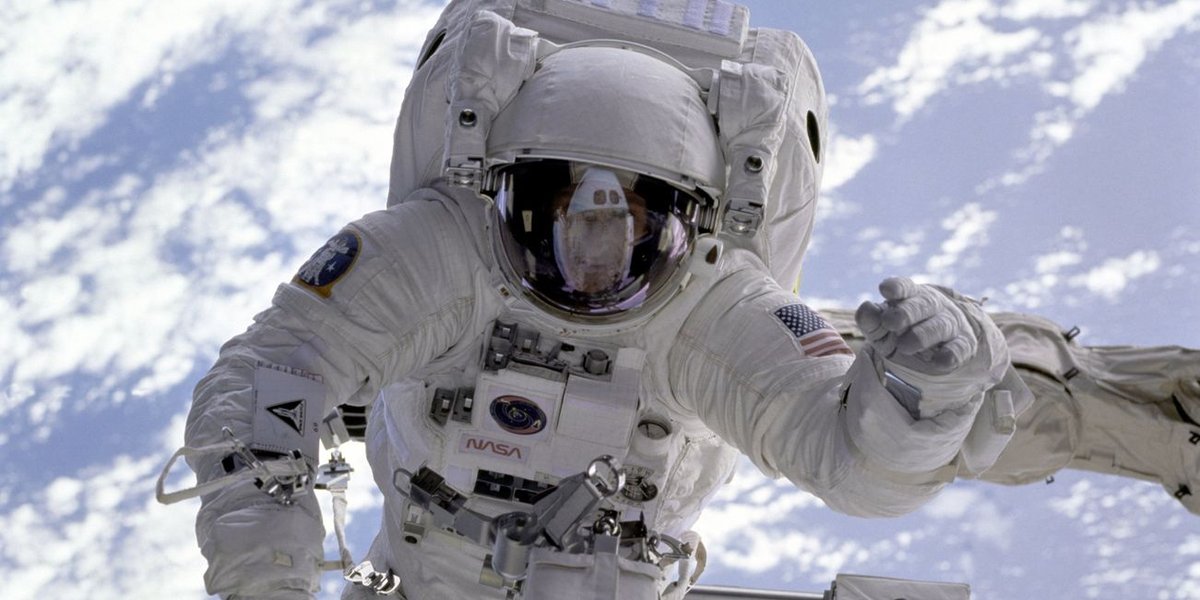
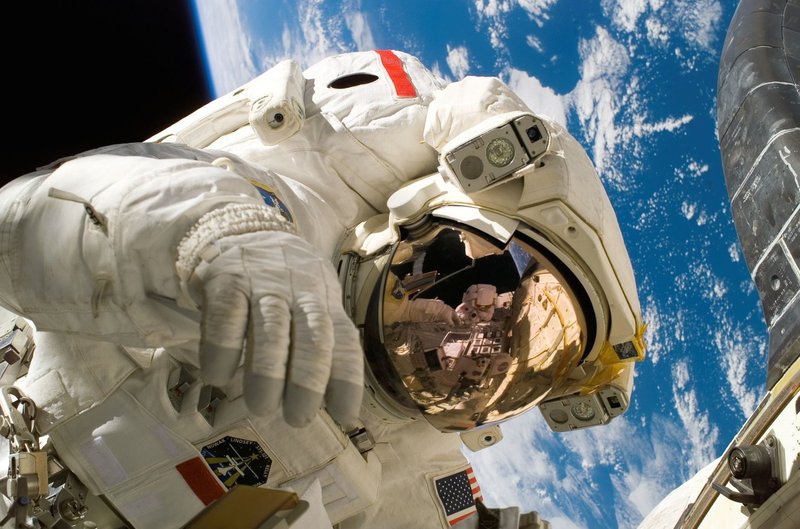
Parmitano, a Sicilian fighter pilot, gave Italian spaceflight its most harrowing moment. During a spacewalk on July 16, 2013, water began pooling inside his helmet from a failed cooling-system separator. It crept over his eyes, into his ears, around his nose. He couldn’t see or hear clearly and groped his way back to the airlock half-blind. NASA’s own investigation called it the closest a spacewalker had come to drowning, and it rewrote spacesuit safety procedures.
He went back anyway. On his 2019–2020 Beyond mission he became the first Italian and the first ESA astronaut to command the ISS, and he ran a series of intricate spacewalks to repair the station’s cosmic-ray instrument. That second flight cemented his place among the astronauts who flew during the 2010s who left the biggest mark on the decade. Two flights, roughly 367 days, and a story that gets told in every astronaut-safety briefing since.
Samantha Cristoforetti {#samantha-cristoforetti}
If Italy has a household-name astronaut, it’s Cristoforetti. A former Air Force pilot, she flew the Futura mission in 2014–2015 and stayed 199 days, which at the time set the record for the longest single spaceflight by a woman and the European record for a single flight. She also brewed the first espresso in orbit, using a specially engineered machine flown up for the purpose, which is either trivia or a deeply Italian achievement depending on your priorities.
Her second mission, Minerva in 2022, ended with her taking command of the ISS, the first European woman to do so. Around 370 days total, the most of any Italian. Her social-media dispatches from orbit, in five languages, turned her into a public face for European spaceflight in a way none of her predecessors managed, and earned her a place on lists of the world’s most famous astronauts.
The 2023 suborbital crew {#the-2023-suborbital-crew}
Most roster pages stop at the orbital seven and miss what happened in June 2023. Virgin Galactic’s first commercial flight, Galactic 01, carried a three-person Italian Air Force and research crew on a suborbital arc past the 80-kilometer boundary: Walter Villadei, Angelo Landolfi, and Pantaleone Carlucci. They ran fluid-physics and human-physiology experiments during the few minutes of weightlessness.
Villadei didn’t stop there. In January 2024 he launched again, this time to orbit, as pilot of the private Axiom Mission 3 to the ISS, spending about three weeks aboard. He’s the only Italian to have flown both a suborbital and an orbital mission, which is why he sits in the main roster table above while Landolfi and Carlucci are counted among the ten Italians who’ve reached space.
Firsts and records {#firsts-and-records}
The headline milestones, in one place:
- First Italian in space: Franco Malerba, September 1992.
- First European astronaut aboard the ISS: Umberto Guidoni, April 2001.
- First Italian spacewalker: Luca Parmitano, July 2013.
- First Italian (and ESA) commander of the ISS: Luca Parmitano, 2019.
- First Italian woman in space: Samantha Cristoforetti, 2014.
- First European woman to command the ISS: Samantha Cristoforetti, 2022.
- Most days in space by an Italian: Samantha Cristoforetti, around 370.
- Most flights: a three-way tie between Vittori, Nespoli, and (counting his suborbital trip) Villadei.
A striking pattern runs through the list: nearly every Italian astronaut came from one of two pipelines, the Air Force test-pilot corps or a research-science background, and several were among the very first ESA recruits Italy contributed.
Italy, ESA, and the ISS {#italy-esa-and-the-iss}
Italy’s footprint in human spaceflight is bigger than its astronaut headcount suggests, because the hardware tells the rest of the story. Italian industry built large sections of the ISS itself. The pressurized modules where crews live and work, including Harmony, Tranquility, and the Cupola observation dome with its seven windows, were manufactured in Turin by Thales Alenia Space. By some estimates Italian factories produced close to half of the station’s habitable internal volume.
That industrial role is why Italy, through both ESA and a long-standing bilateral agreement with NASA, has earned a steady stream of flight seats. The country joined the European astronaut corps early and contributed candidates to multiple selection rounds, including the 2022 class that added new Italian names to ESA’s reserve pool. The roster on this page isn’t finished. Given Italy’s hardware on the station and its bench of trained candidates, the next Italian launch is a question of when, not if.