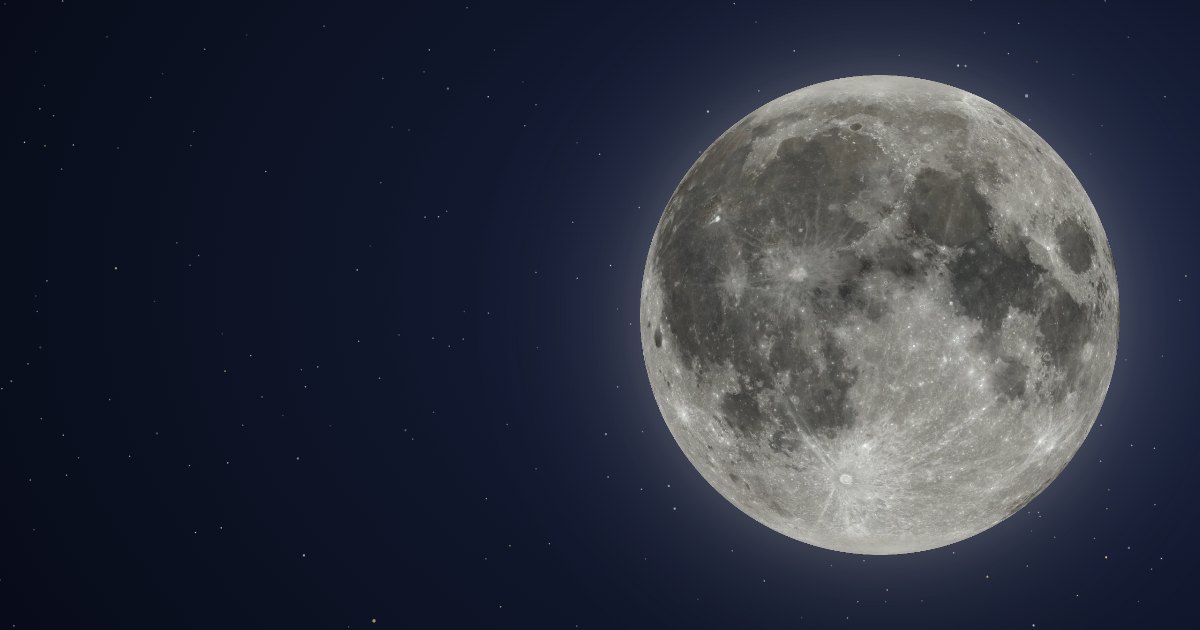
The Beaver Moon 2026, the November full moon, is full on Tuesday, November 24 at 14:53 UT, which is 9:53 a.m. Eastern Time. It is also a supermoon, at 360,800 km from Earth. The Moon looks full on the evenings of Monday, November 23 and Tuesday, November 24.
When is the Beaver Moon 2026?
The exact full moon is Tuesday, November 24, 2026 at 14:53 UT. Daylight saving time ended on November 1, so every US zone is on standard time.
| Time zone | Full moon time on Tuesday, November 24 |
|---|---|
| Eastern (EST) | 9:53 a.m. |
| Central (CST) | 8:53 a.m. |
| Mountain (MST) | 7:53 a.m. |
| Pacific (PST) | 6:53 a.m. |
| Alaska (AKST) | 5:53 a.m. |
| Hawaii (HST) | 4:53 a.m. |
The exact moment comes in the morning across the US, after moonset in the Eastern, Central and Mountain zones, at about moonset in southern California, and with the Moon still low in the west in the Pacific Northwest, Alaska and Hawaii. Nobody needs to be watching at that instant. Times are from the US Naval Observatory.
What is the best night to see the Beaver Moon?
The best nights are the evenings of Monday, November 23 and Tuesday, November 24. The Moon is more than 99% lit on both and looks full. Wednesday, November 25 is still about 97% lit.
These are the lit fractions at 5 p.m. EST, close to moonrise in the eastern US.
| Evening | Moon lit |
|---|---|
| Monday, November 23 | 99.1% |
| Tuesday, November 24 | 99.7% |
| Wednesday, November 25 | 97.4% |
The full moon rises near sunset in the east-northeast, north of due east. It climbs highest around midnight, more than 60 degrees above the southern horizon from 40 degrees north, and sets in the west-northwest around sunrise. A late-autumn full moon takes a high path because it sits opposite the low November Sun. Moonrise time depends on your town, so check a local almanac or weather app.
Why is it called the Beaver Moon?
The Old Farmer’s Almanac says the name marks the time when beavers finished preparing for winter and retreated into their lodges. November was also the season when beavers were trapped for their winter pelts during the North American fur trade.
The Almanac lists other names for the November full moon, each tied to the season:
- Frost Moon (Cree and Assiniboine)
- Whitefish Moon (Algonquin)
- Deer Rutting Moon (Dakota and Lakota)
- Digging or Scratching Moon (Tlingit)
- Freezing Moon (Anishinaabe)
The name Beaver Moon applies to the November full moon every year. To see where it sits among the other eleven, read the full moon names by month.
Is the Beaver Moon 2026 a supermoon?
Yes. The Moon is 360,800 km from Earth at the moment it turns full, inside this site’s supermoon cutoff of 361,885 km. Perigee, the Moon’s closest point of the month, follows about 30 hours later, on Wednesday, November 25 at about 4 p.m. EST, at 359,300 km.
The farthest full moon of 2026 was May 31, at 406,100 km. Against that, the Beaver Moon is about 11% closer, 13% wider in the sky and about 27% brighter. The size difference is hard to see without a comparison photo.
It is the first of three supermoons in a row. The Cold Moon on December 23 is at 356,700 km, and the Wolf Moon on January 22, 2027 is at 357,600 km.
What to look at with binoculars or a small telescope
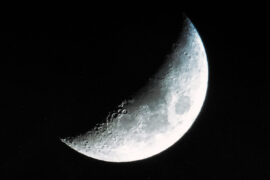
For craters and mountains, look a week early. The first quarter Moon falls on Tuesday, November 17, and the nights from November 17 to 22 show craters and mountain ranges in sharp relief along the terminator, the line between day and night. The Moon is lit from straight above at full, so the surface looks flat.
On the night of the full moon, binoculars show the dark lava plains called maria and the bright rays that spread from the craters Tycho and Copernicus. The glare is strong at the eyepiece. A moon filter reduces it and brings out surface contrast. To locate named features or the Apollo landing sites before you go out, use the interactive Moon 3D model.
The days around the new moon on Monday, November 9 give the darkest sky of the month, when galaxies and star clusters are easiest to see.
When is the next full moon after the Beaver Moon?
The next full moon is the Cold Moon on Wednesday, December 23 at 8:28 p.m. EST (5:28 p.m. PST), which is 01:28 UT on December 24. At 356,700 km it is the closest full moon of 2026.
For the exact time of whichever full moon comes next, use the live Moon phase tool, and see the full moon calendar for 2027 for every date, time and name next year.