Table of Contents
- TLDR: How many Swedish astronauts are there?
- The three at a glance
- Christer Fuglesang: the first Swedish astronaut
- Marcus Wandt: the fast-track flight
- Jessica Meir: the Swedish-American
- Why the count is disputed
- What Swedish experiments flew
- What the flights cost
- How a Swede becomes an astronaut
- What comes next for Sweden
TLDR: How many Swedish astronauts are there?
Two people have flown to space as Swedish astronauts: Christer Fuglesang (2006 and 2009) and Marcus Wandt (2024). A third, NASA astronaut Jessica Meir, has a Swedish mother and is often counted as the second Swede, which pushes Wandt to third. The answer is two or three depending on whether you count the flag a person flew under or their family roots.
The three at a glance
| Name | First flight | Mission | Role |
|---|---|---|---|
| Christer Fuglesang | December 2006 | STS-116 (Space Shuttle Discovery) | ESA astronaut, mission specialist |
| Jessica Meir | September 2019 | Soyuz MS-15 / ISS Expeditions 61 and 62 | NASA astronaut, flight engineer |
| Marcus Wandt | January 2024 | Axiom Mission 3, “Muninn” | ESA project astronaut |
The order is by launch date. Fuglesang is the only one of the three who came up through a traditional space agency pipeline and flew for Sweden’s partner agency, ESA, on a government mission.
Christer Fuglesang: the first Swedish astronaut
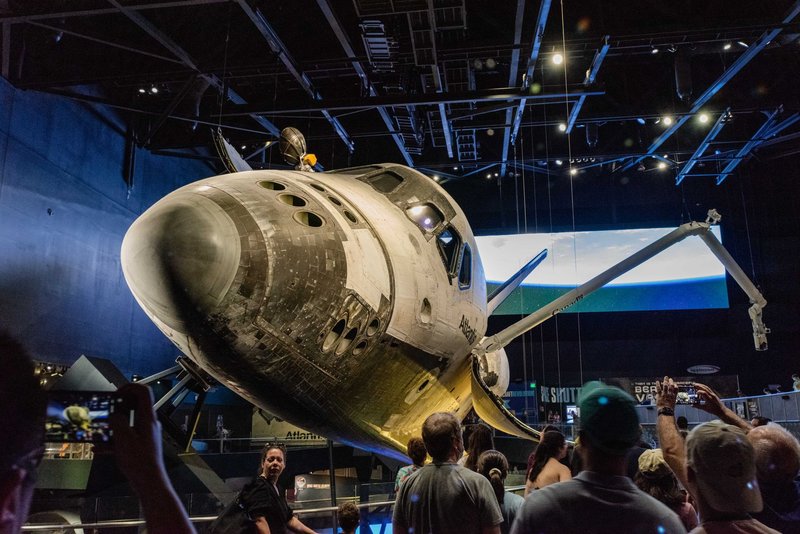
Fuglesang was born in 1957 and trained as a physicist. He worked at KTH Royal Institute of Technology in Stockholm and did particle physics research at CERN before the European Space Agency picked him for its astronaut corps in 1992.
Then he waited. It took 14 years from selection to launch. His first flight, STS-116 aboard Discovery, lifted off in December 2006. The crew installed a new truss segment on the International Space Station and rewired its power system, which meant spacewalks, and spacewalks became his specialty.
He flew again in 2009 on STS-128. Across both missions he logged 31 hours and 54 minutes outside the station, according to ESA’s biography. That’s a lot of vacuum for a man who started out as a lab physicist.
After his flights he went back to teaching at KTH, the university where his career began. He answers the question “who was the first Swedish astronaut,” and he was the only Swede to fly for Sweden until 2024.
Marcus Wandt: the fast-track flight
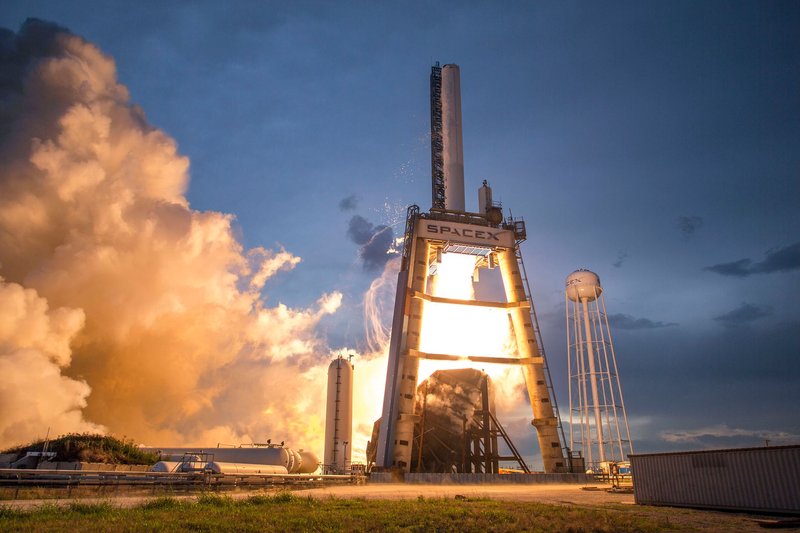
Wandt’s route looks nothing like Fuglesang’s. Born in 1980, he flew the Gripen fighter for the Swedish Air Force and later worked as a test pilot at Saab. He then applied to ESA’s astronaut selection, one of roughly 22,500 applicants. ESA named him a reserve astronaut, and Sweden then arranged a flight for him.
That flight was Axiom Mission 3, which launched in January 2024 on a SpaceX Dragon and spent about three weeks in orbit, most of it docked to the ISS. The Swedish mission name was “Muninn,” after one of Odin’s two ravens in Norse myth. Wandt became ESA’s first “project astronaut,” a title for someone who flies a specific, nationally backed mission rather than joining the permanent corps with an open-ended career.
The contrast with Fuglesang is the story. Fuglesang waited 14 years for a shuttle seat. Wandt went from reserve status to orbit through a mission Sweden arranged for him. Sweden’s Royal Swedish Academy of Engineering Sciences (IVA) called his flight an important door opener for Swedish space activity.
Jessica Meir: the Swedish-American
Meir was born in 1977 and grew up in Maine. Her mother is Swedish, and she has described herself as Swedish-American. She is a NASA astronaut, selected in 2013, and a marine biologist by training who studied diving physiology in animals before joining the corps.
She launched on Soyuz MS-15 in September 2019 and spent months on the ISS during Expeditions 61 and 62. In October 2019 she took part in the first all-female spacewalk, alongside Christina Koch.
She did not fly for Sweden, and Sweden did not pay for her flight. That’s the heart of the counting problem.
Why the count is disputed
The two-versus-three question comes down to what “Swedish astronaut” means.
- Flag-based count. Fuglesang and Wandt flew as Swedes, on missions tied to Swedish institutions and funding. Two people.
- Heritage-based count. Add Meir for her Swedish mother and you get three, with Meir second by launch date and Wandt third.
Sources split on this. Wikipedia calls Wandt the third Swedish astronaut. IVA’s own page calls him both the second and the third, which captures the split: second Swede to fly for Sweden, third if you include Meir.
For a school report, one sentence covers it: Sweden has had two national astronauts, and a third Swedish-American astronaut flew for NASA.
What Swedish experiments flew
Swedish science went up with Wandt. Researchers at Uppsala University sent stem cells to test how microgravity affects them, and KTH researchers ran cognition research on how spaceflight affects thinking. These were compact investigations that fit a short commercial mission schedule.
Fuglesang’s flights were about station assembly. His main contribution was the work he did with his hands outside the station.
What the flights cost
Sweden’s Muninn mission was funded by the government at roughly SEK 400 million. That covered the seat, training, and the research program around the flight. For a country of about ten million people, it was a visible national project, and a debatable one for anyone who thought the money belonged elsewhere.
How a Swede becomes an astronaut
There’s no Swedish astronaut corps. Swedes apply through ESA, which accepts citizens of its member states, and Sweden is one. ESA’s most recent open selection drew about 22,500 applications. Applicants generally need a master’s degree in a science, engineering, medicine or a related field plus several years of professional experience, or qualification as a test pilot, along with fluent English and passing medical and psychological screening.
Fuglesang’s profile (physicist, researcher) and Wandt’s (military pilot, test pilot) mark two classic entry points. Meir’s path, through NASA, is a third and requires US citizenship.
What comes next for Sweden
Wandt’s flight ended a 15-year gap in Swedish human spaceflight, and no further Swedish flight has been announced. ESA’s astronaut corps continues to draw candidates from all member states, and the Swedish government has shown it will fund a mission. The next Swedish flight will probably follow Wandt’s model more than Fuglesang’s: a nationally backed seat on a commercial or partner mission rather than a decade-long wait.
Until then, the list of Swedish astronauts stays short, and the argument over whether it has two names or three stays alive.