Table of Contents
- TLDR
- Vermont Has One Public Planetarium
- Show Lineup and Ticket Prices
- Hours and the Best Time to Visit
- How Long to Budget
- Accessibility
- Getting There
- What Else to Do in St. Johnsbury
- Vermont’s Dark-Sky Spots and Observatories
- Willing to Drive Farther? Other New England Planetariums
TLDR
Vermont has exactly one public planetarium: the Lyman Spitzer Jr. Planetarium inside the Fairbanks Museum in St. Johnsbury. Museum admission is $17 for adults, $15 for seniors and kids 5-17, and planetarium shows run an extra $8 on top of that (free for members). The museum runs five shows a day between 11:30 a.m. and 3:30 p.m., each 30-45 minutes. Budget two to three hours for the full visit, more if the butterfly house is open (June through September). It’s about 90 minutes from Burlington and under an hour from Montpelier. If you’re chasing dark skies rather than a domed ceiling, skip ahead to the stargazing section.
Vermont Has One Public Planetarium
Every “planetariums in Vermont” search resolves to the same answer, so let’s not pretend otherwise: the Lyman Spitzer Jr. Planetarium, tucked inside the Fairbanks Museum & Planetarium in St. Johnsbury, is it. No competing facility, no second option across the state. The building itself dates to 1891, a Victorian natural history museum that later added a planetarium dome, and the combination is unusual enough that it’s worth understanding both halves before you drive up.
The museum galleries hold the kind of cabinet-of-curiosities collection you don’t see built anymore: mounted animals, mineral specimens, an apiary with a working beehive, a weather station that’s been logging Vermont’s climate since the 1890s. The planetarium sits inside that same building, a single dome theater that runs a rotating slate of shows rather than one continuous program.
Show Lineup and Ticket Prices
The daily schedule runs five shows, spaced roughly an hour apart, starting mid-morning:
- 11:30 a.m. — Tonight’s Sky. A live, presenter-led rundown of what’s actually visible overhead that night: current planets, constellations, and any notable events. This is the one where you can ask questions, and it changes with the calendar rather than running the same script year-round.
- 12:30 p.m. — Butterfly Journey. A documentary-style show tracking monarch migration across North America and Blue Tiger migration in Australia, tied loosely to the museum’s live butterfly house.
- 1:30 p.m. — a rotating live presentation. Topics cycle through the week and cover things like solar system exploration, constellations across different cultures, and stellar physics.
- 2:30 p.m. — Dinosaurs: A Story of Survival. An animated walk through dinosaur evolution and extinction.
- 3:30 p.m. — Beyond the Sun. A show built around exoplanets: how astronomers actually find planets around other stars, using the same transit and radial-velocity methods NASA’s Exoplanet Exploration program relies on.
Museum admission (which gets you into the galleries, not the dome) runs $17 for adults and $15 for seniors 65+ and kids ages 5-17; kids under 5 get in free. The planetarium show itself is a separate $8 ticket for non-members, free if you’re a museum member. That’s the piece a lot of trip-planning posts skip: you’re paying twice, once for the building and once for the dome, unless you already hold a membership.
Hours and the Best Time to Visit
The museum opens daily at 10 a.m. and closes at 5 p.m., with closures on New Year’s Day, Easter, July 4th, Thanksgiving, Christmas, and a maintenance stretch in early January. Because shows run on a fixed daily schedule rather than continuously, you can’t just show up whenever and catch the next screening in ten minutes — plan around the 11:30, 12:30, 1:30, 2:30, or 3:30 slot you want.
Weekday mornings are the quiet window. St. Johnsbury draws a steady stream of weekend family traffic, especially in summer, and the 1:30 and 2:30 shows fill up faster than the bookend slots. If you’re traveling with the butterfly house in mind, note that it only operates June through September — outside that window, skip the crowd calculus around it entirely, since it won’t be running.
How Long to Budget
One planetarium show plus a walk through the galleries takes about two hours. If you’re catching two shows (say, Tonight’s Sky in the morning and a rotating afternoon presentation) and giving the butterfly house real time in season, budget closer to three. The galleries alone, without a show, run about an hour to an hour and a half if you’re actually reading the placards rather than speed-walking.
Accessibility
The museum permits ADA-recognized service animals throughout; standard pets, emotional support animals, and therapy animals aren’t allowed in exhibit spaces. Children under 14 need active adult supervision in the galleries and on the grounds — this isn’t a drop-your-kid-off-and-wander museum. Parking is free on Main Street, including two EV charging stations under a solar canopy.
Getting There
St. Johnsbury sits in Vermont’s Northeast Kingdom, which means it’s a genuine drive from the state’s population centers, not a quick detour.
- From Burlington: about 76 miles, roughly 1 hour 35 minutes via I-89 and Route 2.
- From Montpelier: about 35 miles, under an hour via Route 2.
Route 2 east from Montpelier is the more scenic of the two approaches, running along the Winooski River valley before climbing into the Kingdom’s hill country. If you’re coming from Burlington, factor the extra 40 minutes into your show timing — arriving for an 11:30 show means leaving Burlington by 9:45 at the latest, earlier if you want breakfast in St. Johnsbury first.
What Else to Do in St. Johnsbury
St. Johnsbury’s downtown is compact enough to walk between everything on this list. The St. Johnsbury Athenaeum, a few blocks from the museum, is a working public library that doubles as an art gallery — it holds Albert Bierstadt’s monumental “Domes of the Yosemite” and a handful of Winslow Homer pieces, which is a strange thing to find inside a small-town library and part of why it’s worth the stop.
For food, Salt Bistro runs indoor and outdoor seating with live music on summer weekend evenings, and the St. Johnsbury Distillery pairs spirit tastings with a speakeasy-style dinner service at its on-site Prohibition Kitchen. If you’ve got extra time, the Lamoille Valley Rail Trail starts right in town and runs a flat, 93-mile former rail bed north toward the Canadian border — good for a short out-and-back walk or bike ride between the museum and dinner.
Vermont’s Dark-Sky Spots and Observatories
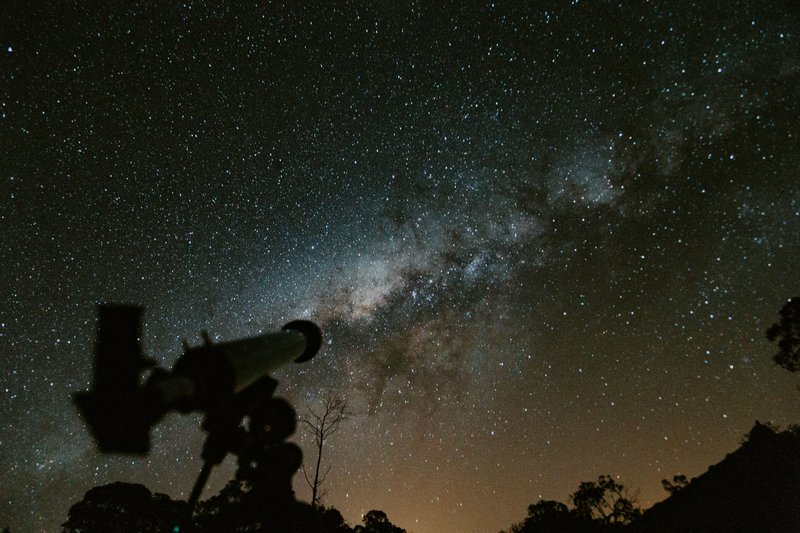
If what actually pulled you into this search was “astronomy tourism” rather than one specific building, Vermont has more to offer than a single dome. The Northeast Kingdom — the same region St. Johnsbury sits in — has some of the least light-polluted sky in the state, thanks to a low population density and a lot of undeveloped forest.
Groton State Forest, about 30 minutes southwest of St. Johnsbury, has several dark-sky viewing points across its parks, including Kettle Pond, Big Deer State Park, and Boulder Beach. Maidstone State Park, in Guildhall near the New Hampshire border, is Vermont’s most remote state park and correspondingly its darkest — worth the extra drive if you’re serious about seeing the Milky Way rather than a handful of bright stars.
For actual telescope access rather than naked-eye viewing, two options stand out. Stellafane, in Springfield, is a historic amateur astronomy clubhouse that’s hosted telescope-making conventions since the 1920s and remains a working observatory site. Peacham Observatory, run by the Northeast Kingdom Astronomy Foundation out of Peacham’s elementary school, opens to the public on a published event schedule and sits close enough to St. Johnsbury to pair with a museum visit on the same trip. The Fairbanks Museum itself also runs occasional public stargazing parties at rotating locations around the state — worth checking their calendar if your visit dates are flexible.
Willing to Drive Farther? Other New England Planetariums
If the Lyman Spitzer dome leaves you wanting a bigger production, two options sit within a few hours of St. Johnsbury. The McAuliffe-Shepard Discovery Center in Concord, New Hampshire — about two hours south — runs one of only three planetariums in North America with a 10K projection system, and its exhibits lean harder into spaceflight history given the center’s namesakes, astronauts Christa McAuliffe and Alan Shepard. The Charles Hayden Planetarium at Boston’s Museum of Science, roughly three hours from St. Johnsbury, runs the most technically advanced digital dome theater in the region, including shows built around live music.
Neither replaces a St. Johnsbury visit if the Northeast Kingdom is already the destination. But if you’re building a longer New England loop and space is the theme, both are worth the extra driving.
Vermont’s planetarium math is simple because there’s no math to do: one building, one dome, five shows a day. The harder decision is whether to stop there or use it as the anchor for a bigger trip — a Northeast Kingdom dark-sky night, a detour to Concord or Boston, or just an afternoon in St. Johnsbury’s small, strange, genuinely good museum.