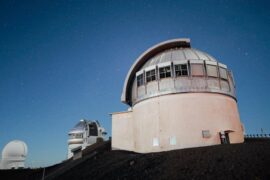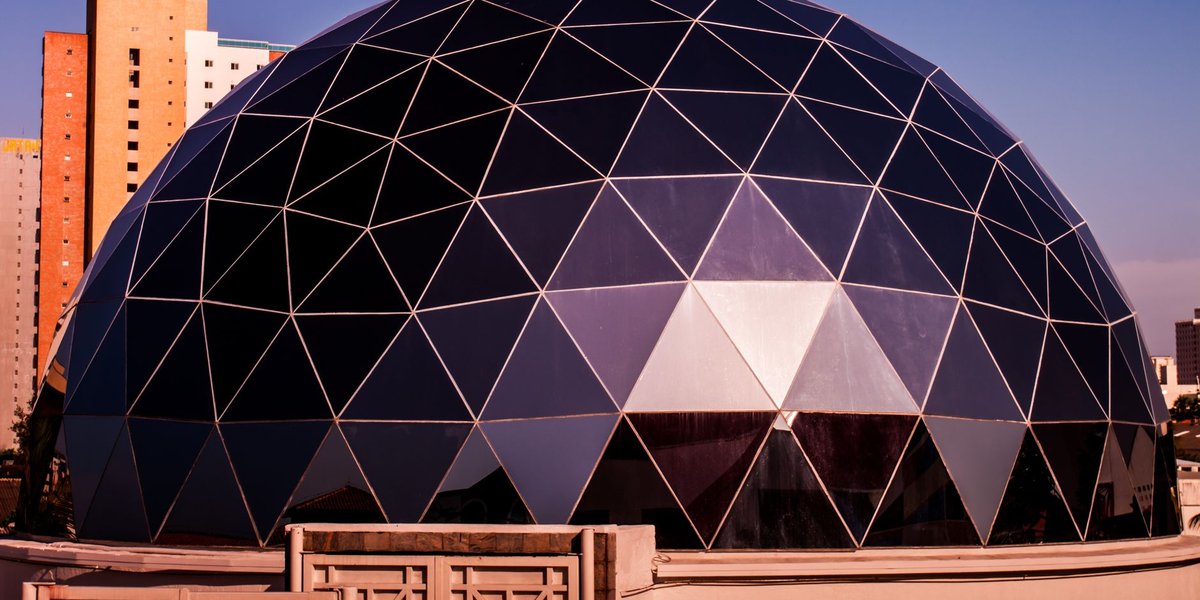
Every “planetariums in Massachusetts” list you’ll find is really a list of two things wearing a trench coat: the Museum of Science in Boston, and whatever else the writer could find in twenty minutes. That’s a shame, because Massachusetts has six operating planetariums, and they’re nothing alike. One is running on 1937 hardware. One inflates like a bounce house and deflates ten minutes later. One is named after a teacher who died on the Challenger.
Here’s the full set, with what you’re actually paying for, how long the show runs, and who’s going to get the most out of each one.
Quick Comparison
| Planetarium | City | Admission | Best For | Standout Feature |
|---|---|---|---|---|
| Charles Hayden Planetarium | Boston | Exhibit Halls admission + about $6 for the show | First-timers, teens, date nights | One of the most advanced digital domes in New England, plus live music shows |
| Alden Planetarium (EcoTarium) | Worcester | Museum admission + $7 non-member / $6 member | Families with elementary-age kids | Monthly speaker series with actual working astronomers |
| Seymour Planetarium (Springfield Science Museum) | Springfield | Separate ticket, check current pricing | History buffs, anyone curious what 1937 tech still looks like | The oldest continuously operating planetarium in the U.S. |
| Blake Planetarium | Plymouth | Public program pricing varies; groups by appointment | South Shore families, school groups | Only 4K full-dome planetarium south of Boston |
| Framingham State University Planetarium | Framingham | Check the Christa McAuliffe Center calendar | Adults and older kids who want a real lecture, not just a light show | Named for FSU alum and Challenger astronaut-teacher Christa McAuliffe |
| Brockton Public Library Planetarium | Brockton | Free | Toddlers through early elementary | A 16-foot inflatable dome that a volunteer sets up in a library meeting room |
Table of Contents
- Charles Hayden Planetarium — Boston
- Alden Planetarium — Worcester
- Seymour Planetarium — Springfield
- Blake Planetarium — Plymouth
- Framingham State University Planetarium
- Brockton Public Library Planetarium
- Which One Should You Actually Go To
Charles Hayden Planetarium — Boston {#charles-hayden-planetarium}
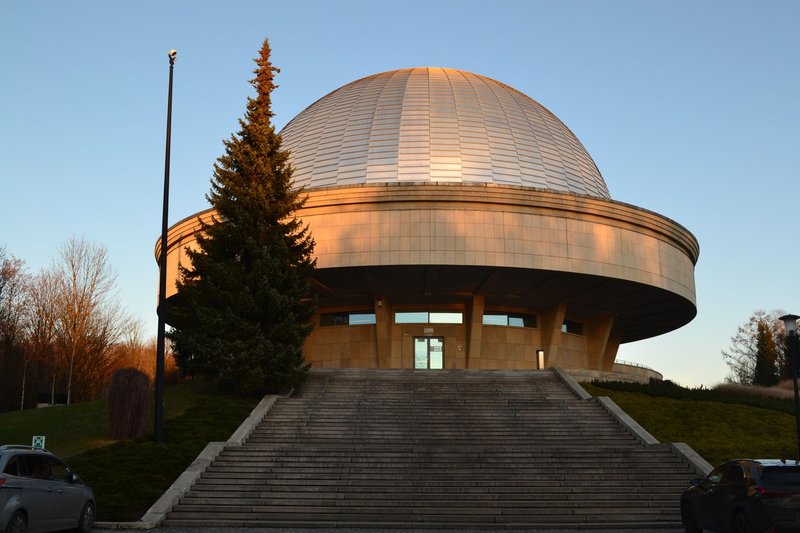
The Hayden is the one everyone already knows, and it earns the reputation. It sits inside the Museum of Science, which means a planetarium ticket rides on top of general Exhibit Halls admission — figure on roughly $6 more for the show once you’re already inside. That’s a real cost, not a rounding error, but it buys you one of the most technologically current digital domes in New England: full-dome projection sharp enough for actual astrophysics visualizations, not just twinkling dots.
What separates the Hayden from a school-trip planetarium is the programming range. Alongside the standard “tour of the night sky” shows, they run live music performances under the dome — Pink Floyd, Beyoncé, whatever’s on rotation — where the visuals sync to the set instead of a script. It’s the closest thing Boston has to a planetarium date night, and it’s the reason this is the one to pick if you’re bringing a teenager who’s rolled their eyes at “educational” before.
Best for: people making one Boston planetarium trip and want the version with the least chance of feeling dated.
Alden Planetarium — Worcester {#alden-planetarium}
The EcoTarium’s Alden Planetarium is a full-dome digital theater that rotates its show lineup bi-monthly, with titles like Passport to the Universe and Back to the Moon for Good running alongside kid-pitched shows like Secret of the Cardboard Rocket. General museum admission is $15 for adults and $10 for kids, seniors, and students; a planetarium ticket adds $7 for non-members or $6 if you’ve already got a membership, and children under 2 get in free.
The detail worth planning around is the monthly Speaker Series, where Worcester-area researchers present under the dome on their own work — Martian water, astrophotography, whatever they’re actually studying that month. It’s a different audience than the afternoon kids’ shows, and it’s the rare planetarium event in Massachusetts aimed squarely at adults who already know the difference between a comet and an asteroid.
Best for: families who want a full science-museum day (the EcoTarium also has live animals and outdoor trails) with the planetarium as one stop, not the whole trip.
Seymour Planetarium — Springfield {#seymour-planetarium}
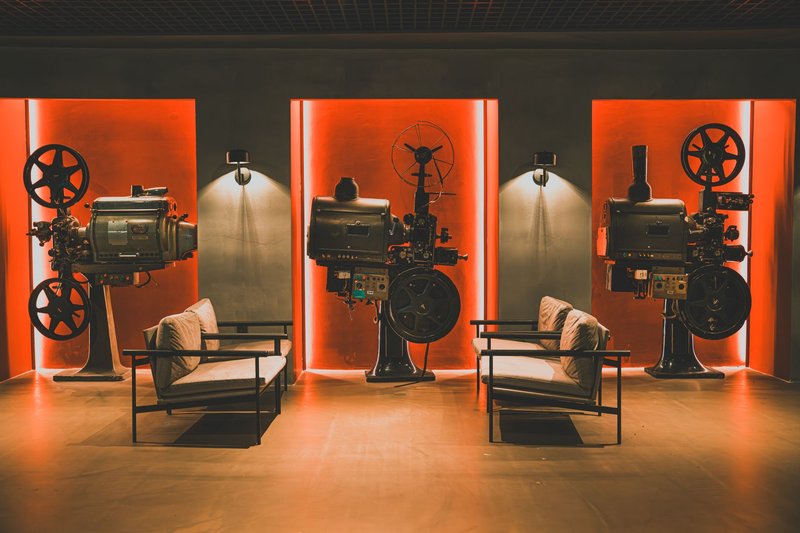
This is the one to visit if you care about the machine as much as the show. The Seymour Planetarium at Springfield Science Museum opened in November 1937 and is the oldest continuously operating planetarium in the United States. Its original “star ball” — built in Springfield, not imported from Zeiss in Germany — is the oldest operating American-made star projector anywhere, and it still throws more than 7,000 stars onto the dome with the same optical mechanism from the Truman administration.
The museum has paired that antique with a modern full-dome video system using Zeiss Velvet projectors, so you’re not just getting nostalgia — the astronomy and earth-science shows run in current digital video, layered on top of the mechanical star field. Tickets are separate from general Springfield Museums admission, and pricing is worth checking directly before you go since it’s handled apart from the main gate.
Best for: anyone who’d rather see a piece of working history than the newest dome on the market — this is a planetarium as museum artifact, still doing its original job eight decades later.
Blake Planetarium — Plymouth {#blake-planetarium}
Blake Planetarium, run through Plymouth Public Schools at 117 Long Pond Road, is the only 4K full-dome planetarium south of Boston — a meaningful claim once you look at the map and notice how much of southeastern Massachusetts has nothing between Boston and Cape Cod. The dome runs real-time multimedia and multichannel surround sound alongside the classic star-projection tools, so shows lean more immersive than a typical school planetarium.
The catch is access: this isn’t a walk-up museum with posted daily hours. It operates by appointment for school and group visits, plus a slate of public programs scheduled monthly. If you want in, the move is calling ahead — Tuesday, Wednesday, or Friday mornings — rather than showing up and hoping.
Best for: South Shore and Plymouth-area families and school groups who’d otherwise drive 45 minutes north for a comparable dome.
Framingham State University Planetarium — Framingham {#framingham-state-planetarium}
The Framingham State University Planetarium, operated through the Christa McAuliffe Center, is named for the Framingham State alum chosen for NASA’s Teacher in Space program, who died aboard the Challenger in 1986. That history shapes the programming: shows here run as live 60-to-75-minute presentations, with a real speaker walking through current astronomy topics before rolling a full-dome film like Undiscovered Worlds. It reads closer to a college lecture with visuals than a passive light show, which is exactly the point.
Public offerings change seasonally — recent programs have covered lunar missions and Halloween-timed sky tours — and everything runs on the McAuliffe Center’s own calendar rather than fixed daily hours. Check ahead before driving out.
Best for: older kids and adults who want to leave knowing something, not just having watched something.
Brockton Public Library Planetarium — Brockton {#brockton-public-library-planetarium}
This one isn’t a room — it’s an event. The Brockton Public Library’s mobile planetarium, launched in 2022, is an inflatable dome 16 feet across and 10.5 feet tall that seats around 40 kids, sets up in a library meeting room, and packs back down in about ten minutes. It’s coordinated by Pat Monteith, a NASA-certified Solar System Ambassador who volunteers to run the programs herself, and sessions have covered everything from a straight solar-system tour to geography and cultural-astronomy lessons, some presented in multiple languages.
There’s no ticket, no membership tier, no add-on fee — programs at 304 Main Street are free and scheduled through the library’s own events calendar. For a state where every other entry on this list comes with an admission line, that matters.
Best for: young kids, first planetarium visits, and any family who wants the experience without the price tag.
Which One Should You Actually Go To {#which-one-should-you-actually-go-to}
If you’re picking just one, let the trip decide it. Boston tourists or first-timers belong at the Hayden — it’s the least likely to disappoint and the easiest to fold into a museum day already on the itinerary. Families building a full day around science belong at the EcoTarium, where the planetarium is one stop among live animals and trails. Anyone who finds old machinery as interesting as the stars it projects should make the drive to Springfield; the Seymour is the only place in the country where you’re watching a nearly 90-year-old star ball still doing its job.
South of Boston, Blake is the practical choice if you’re willing to call ahead for a slot. Framingham State is the one worth the trip if you want an actual lecture with your light show. And if you’ve got a toddler who isn’t ready for a 75-minute program or a $15 ticket, Brockton’s inflatable dome — free, local, and run by someone who volunteers because she genuinely loves the subject — is the better first planetarium than any of the bigger domes on this list.
Massachusetts doesn’t have the planetarium density of a state like California, but what it has covers more range than most “best planetariums” roundups give it credit for: a national landmark in Springfield, a teacher’s memorial in Framingham, and a library volunteer inflating a dome in a meeting room in Brockton. Pick based on who’s coming with you, not just which one shows up first in search results.