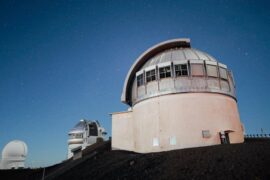
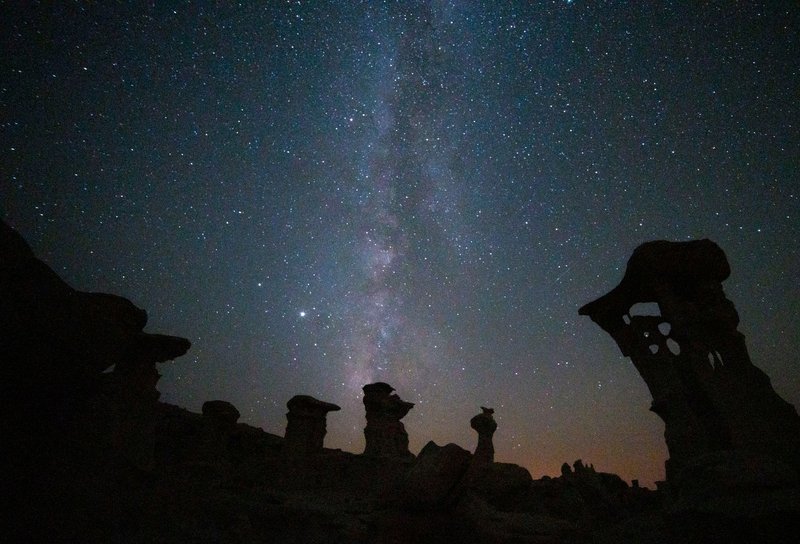
New Mexico has one of the darkest night skies in the lower 48. The state sits at high elevation, has vast stretches of empty desert, and has been protecting its dark skies by law since 1999 — one of the first states to do so. It’s also home to the New Mexico Space Trail, a 52-site driving route connecting ancient Pueblo archaeoastronomy sites, Cold War rocket ranges, and modern observatories.
That context matters, because the planetariums in New Mexico aren’t just standalone attractions. They exist inside a state that takes astronomy seriously — from the Chacoan people who built their great houses to align with solstices, to the rocket engineers who tested early engines in the Jornada del Muerto desert.
Here’s a guide to every major planetarium in the state, with the details you actually need before you go.
Table of Contents
- Quick Comparison
- New Mexico Museum of Natural History & Science — Albuquerque
- New Horizons Dome Theater — Alamogordo
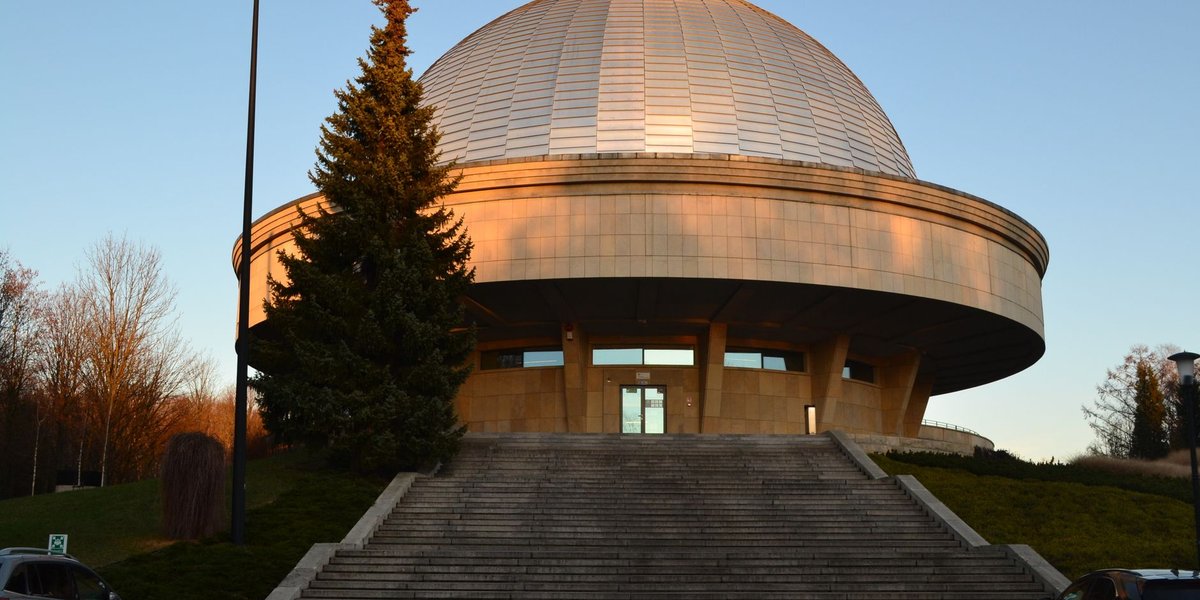
- Robert H. Goddard Planetarium — Roswell
- SFCC Planetarium — Santa Fe
- San Juan College Planetarium — Farmington
- Tips for Planning Your Visit
Quick Comparison
| Planetarium | City | Admission | Best For |
|---|---|---|---|
| NM Museum of Natural History | Albuquerque | $4–$7 | Families, all ages |
| New Horizons Dome Theater | Alamogordo | $6–$11 | Space history fans |
| Robert H. Goddard Planetarium | Roswell | $3–$5 | Budget trips, UFO tourists |
| SFCC Planetarium | Santa Fe | Free (groups) | School groups, educators |
| San Juan College Planetarium | Farmington | Free | Astronomy enthusiasts |
1. New Mexico Museum of Natural History & Science — Albuquerque
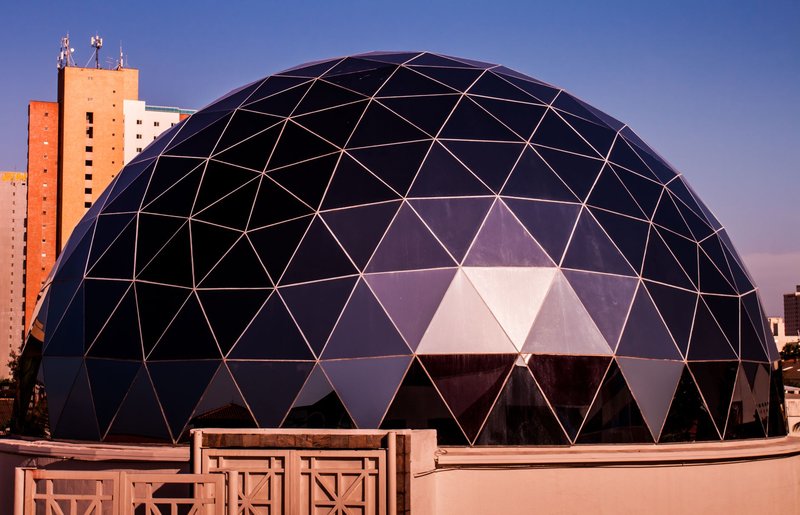
Location: 1801 Mountain Rd NW, Albuquerque (Old Town area) Hours: Wednesday–Monday; closed Tuesdays Tickets: Adults $7 | Seniors (60+) $6 | Youth (13–17) $6 | Children (3–12) $4 | Toddlers free
This is the flagship. The 55-foot Sky-Skan Definiti full-dome theater is the largest planetarium in New Mexico, and the programming reflects that ambition. Current shows cycle through several titles on any given day: Enchanted Skies is the crowd favorite — an audience-directed show where the presenter takes requests from the crowd, so no two performances are quite the same. Big Astronomy is a newer addition that follows real scientists working at observatories in Chile’s Atacama Desert, aimed at showing kids what a career in astronomy actually looks like. Little Star That Could runs at 11 AM for the younger set.
Box office only — no online ticket sales yet, so budget an extra few minutes on arrival. The box office closes five minutes before showtime, which they enforce.
Best for: Families with kids of mixed ages. Four different shows daily means you can pick the right fit rather than hoping the one show scheduled is appropriate for a six-year-old.
2. New Horizons Dome Theater & Planetarium — Alamogordo
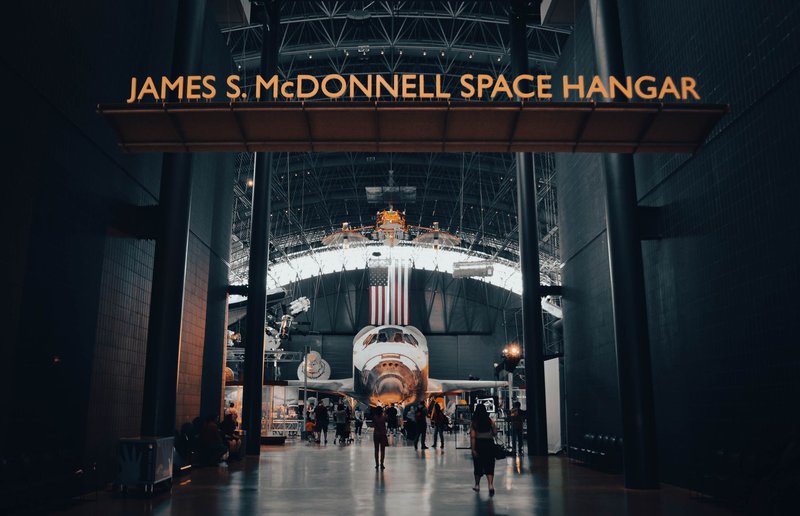
Location: New Mexico Museum of Space History, Alamogordo (at the top of a mesa — you’ll see the building before you see the city) Hours: Daily, shows from approximately 10:20 AM–4:20 PM Tickets: Planetarium only — Adults $6 | Children $5 | Seniors $5. Combo with museum: Adults $11 | Children $7 | Seniors $9
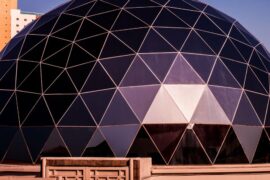
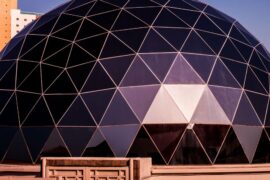
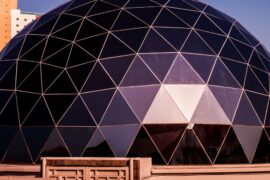
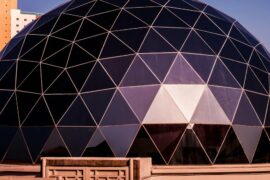
The New Horizons Dome Theater holds a distinction most planetariums can’t match: it houses the world’s first Spitz Scidome 4K laser full-dome projection system. Named after the NASA spacecraft that flew past Pluto in 2015, it connects directly to the Space History Museum below, which covers everything from Wernher von Braun’s early rocket tests at White Sands to the International Space Station.
The programming splits between giant-screen films and live star shows. Astronaut: Ocean to Orbit follows the journey from Navy test pilot to ISS crew member. Violent Universe covers catastrophic cosmic events — colliding galaxies, gamma-ray bursts, the works. The live Night Sky Star Show with a museum educator is the one worth booking around: it runs four times daily and includes real-time astronomy interpretation rather than a pre-recorded narration track.
Alamogordo is also 15 minutes from White Sands National Park, which makes a logical same-day pairing.
Best for: Space history enthusiasts and anyone doing a White Sands road trip.
3. Robert H. Goddard Planetarium — Roswell
Location: Roswell Museum and Art Center, Roswell Hours: Tuesday–Saturday 9 AM–5 PM | Sunday and holidays 1–5 PM | Closed Mondays Tickets: Adults $5 | Children $3 | Under 3 free
Robert Goddard — the father of modern rocketry — lived and worked in Roswell in the 1930s, which is why it’s fitting that the city’s planetarium carries his name. The full-dome digital theater shows approximately 30-minute programs paired with a star presentation, so you get both a film and a sky tour in a single session.
The Roswell Museum next door houses actual Goddard rocket hardware and workshop equipment, giving the planetarium a grounding most small-town facilities lack. The Roswell Astronomy Club also runs Star Parties from this site throughout the year, using telescopes to observe whatever’s visible — meteor showers, planetary conjunctions, lunar events.
Roswell leans into its UFO reputation, and the International UFO Museum is a two-minute walk away. If you’re combining a UFO Museum visit with the Goddard Planetarium, you’re covering both the alien mythology and the legitimate space science in one afternoon. That’s a very New Mexico afternoon.
Best for: Budget-conscious visitors, anyone already in Roswell for the UFO Museum, and families wanting a solid 90-minute outing.
4. SFCC Planetarium — Santa Fe
Location: Santa Fe Community College, 6401 Richards Ave, Santa Fe Admission: Free for school and community groups (Space and Earth Experiences program); fees negotiated for private groups Capacity: 60 seats, full-dome theater with reclining seats
The Santa Fe Community College Planetarium is primarily set up for educational outreach rather than drop-in public visits. Programming runs across the full astronomy curriculum — planets, lunar phases, constellations, dark matter, galactic structure, astrobiology — and the reclining seats in the dome make hour-long sessions comfortable rather than neck-craning.
The SEE (Space and Earth Experiences) program provides free presentations to schools and youth groups across northern New Mexico, funded by donations and grants. For individual visitors, the best approach is to contact the planetarium directly to ask about any scheduled public sessions (505-428-1000). It’s not a venue you can walk into on a Saturday afternoon — but for educators and groups, it’s worth pursuing.
Best for: School groups, educators, homeschool families who plan ahead.
5. San Juan College Planetarium — Farmington
Location: West Classroom Complex, Room 1723, San Juan College, Farmington Admission: Free Capacity: 60 seats under a 24-foot digital dome Public shows: Once monthly, Friday evenings (6:30 PM and 7:30 PM)
Farmington sits at the edge of the Colorado Plateau, surrounded by the dark skies of the Four Corners region — some of the lowest light-pollution readings in the entire country. The San Juan College Planetarium is a small facility but punches above its size because admission is free and the programming is astronomy-focused rather than entertainment-focused.
Public shows run once a month on Friday evenings; the rest of the schedule is reserved for student and school groups (September through May). A monthly daytime solar observation event with filtered telescopes also runs on Friday mornings, which is worth catching if you’re in the area. Reserve 14 days in advance for group visits by contacting planetarium director David Mayeux at (505) 566-3361.
The drive to Farmington from Albuquerque takes about three hours, so this one makes most sense if you’re already exploring the Four Corners region — Chaco Culture National Historical Park is about an hour south, and the archaeoastronomy there is genuinely worth a dedicated half-day.
Best for: Astronomy enthusiasts already in the Four Corners area, and anyone pairing it with Chaco Canyon.
Tips for Planning Your Visit
Best seasons: Fall (September–November) and spring (March–May) give you mild temperatures for any outdoor stargazing you want to tack on. Summer works too, but afternoon monsoons are common from July through September. Winter nights are the darkest and the clearest — but dress for it.
Plan around public shows: The SFCC Planetarium and San Juan College Planetarium have limited public hours. Check schedules before making a trip, especially for San Juan — a once-monthly public show schedule means missing it by a week means waiting another month.
Combine with outdoor astronomy: The International Dark-Sky Association has recognized several New Mexico sites, including Chaco Culture National Historical Park and Valles Caldera National Preserve. Most New Mexico planetarium visits pair well with a night outside — bring binoculars at minimum.
Museum combinations: The New Mexico Museum of Natural History and the New Mexico Museum of Space History both have enough content to fill most of a day. The Goddard Planetarium is inside the Roswell Museum, so plan for that too. Budget time accordingly.
Arrive early: The Albuquerque museum’s box office closes five minutes before show time. The New Horizons theater shows sell out during school field trip season (fall). Showing up 20 minutes early is the move.
New Mexico is one of the few states where the planetarium is almost the understated option — the outdoor sky is often better than any dome. But the planetariums here add the historical context and the science grounding that turns a night of stargazing into something you actually understand.
Enjoyed this article?
Get daily 10-minute PDFs about astronomy to read before bed!
Sign up for our upcoming micro-learning service where you will learn something new about space and beyond every day while winding down.