Last updated: November 2026. Schedules at volunteer-run and campus observatories change with the semester and the weather, so confirm with the operator before you drive.
Most lists of observatories in Minnesota give you a name, a paragraph, and a “check the website.” That’s not much help when you have a Saturday evening and a car full of kids. This guide sorts the sites by region, says who runs each one, and tells you whether the public can walk in, needs a date on the calendar, or should skip the trip entirely.
Contents
- TLDR
- Quick-reference table
- Observatories in Minnesota by region
- Twin Cities metro
- Southern Minnesota
- Northern Minnesota
- Before you go
- Best time to visit
- Which one should you pick?
TLDR
- Easiest for families: the Bell Museum planetarium in St. Paul. It’s indoors, so clouds don’t matter.
- Best for a real look through a telescope: the Minnesota Astronomical Society’s public nights in the metro, and the scheduled open houses at Carleton’s Goodsell Observatory in Northfield.
- Darkest skies: Voyageurs National Park, an International Dark Sky Park on the Canadian border.
- Mostly closed: the campus observatories at Minnesota State University, Mankato, which don’t publish a public schedule.
- Almost every public night in the state is weather-dependent. Cloud cover cancels it.
Quick-reference table
| Site | Region | Operator | Public access | Best for |
|---|---|---|---|---|
| Eisenhower Observatory (Hopkins) | Twin Cities | Minnesota Astronomical Society volunteers | Scheduled public viewing nights | Families, beginners |
| Bell Museum planetarium (St. Paul) | Twin Cities | University of Minnesota | Open during museum hours, ticketed | Families, rainy nights |
| Eagle Lake Observatory | South of the metro | Minnesota Astronomical Society | Mainly members, occasional public events | Serious observers |
| Goodsell Observatory (Northfield) | Southern MN | Carleton College | Scheduled open houses, weather permitting | History buffs |
| Andreas and Standeford observatories (Mankato) | Southern MN | Minnesota State University, Mankato | No published public schedule | Students, campus visitors |
| Alworth Planetarium (Duluth) | Northern MN | University of Minnesota Duluth | Check current show schedule | Families, rainy nights |
| Voyageurs National Park | Northern MN | National Park Service | Open year-round, free to look up | Dark-sky seekers, aurora chasers |
“Scheduled” means you need to check a date. “Occasional” means don’t plan a trip around it.
Observatories in Minnesota by region
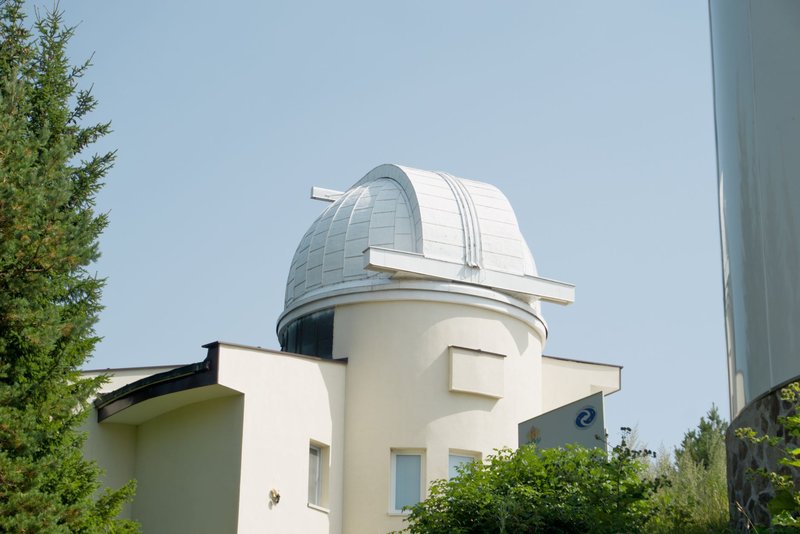
A note on terms. Some of these are working observatories with a dome and a telescope. A couple are planetariums, which show you the sky on a ceiling and don’t use a telescope at all. They’re included because they’re the reliable option when the forecast is overcast, and in Minnesota it often is.
Twin Cities metro
Eisenhower Observatory, Hopkins
- Operator: the Minnesota Astronomical Society (MAS), the state’s largest amateur astronomy club, with volunteers running the nights.
- Public access: free viewing on posted nights. Dates and cancellations go up on the MAS calendar, and a cloudy forecast usually means no session.
- Best for: families and first-timers.
This is the best-known public viewing site in the metro, and the reason is simple: it’s close to where people live. The tradeoff is the sky. Hopkins sits in the Twin Cities light dome, so you won’t see the faint stuff. What you will see are the Moon, Jupiter and its moons, Saturn’s rings, and the brighter double stars. These are the objects that make a kid say “wait, that’s real?” and none of them need a dark site.
Bell Museum planetarium, St. Paul
- Operator: University of Minnesota, on the St. Paul campus.
- Public access: open during museum hours with a ticket. Check the Bell Museum site for show times.
- Best for: families, anyone with a cloudy forecast.
It’s not an observatory, but it earns a slot. The planetarium dome is 60 feet across, and the live sky shows let you see the Milky Way the way you’d see it from northern Minnesota, minus the mosquitoes. Pair it with a clear-night visit to Eisenhower and you’ve covered both the real sky and the guided tour.
Public star parties
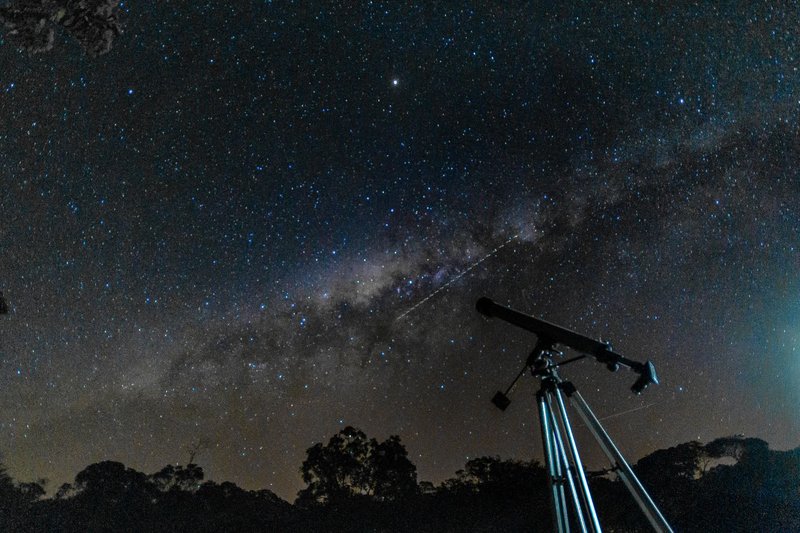
The MAS also runs star parties at parks around the metro through the warm months. These aren’t observatories, but they’re the cheapest way to look through a dozen different telescopes in one evening. Members bring everything from small refractors to large Dobsonians, and most will let you look and ask questions. Check the MAS event listings for the season’s schedule and park locations.
Southern Minnesota
Eagle Lake Observatory
- Operator: the Minnesota Astronomical Society.
- Public access: primarily a members’ site. Public events are occasional and announced by the club.
- Best for: serious observers, astrophotographers, MAS members.
This is the club’s dark-sky site, set out in the countryside south of the Twin Cities, well away from the metro glow. It’s where members do deep-sky observing, the faint galaxies and nebulae you can’t see from Hopkins. If you want in, the standard route is to join MAS and take part in member nights. Don’t show up uninvited. It’s a private site, not a drop-in attraction.
Goodsell Observatory, Northfield
- Operator: Carleton College.
- Public access: scheduled public open houses during the academic year, weather permitting. Check Carleton’s physics and astronomy pages for dates.
- Best for: history buffs and anyone who likes a telescope older than their grandparents.
Goodsell opened in 1887, and it still houses a large refractor from that era, a 16-inch-class instrument in a brick building that looks like it belongs in a Victorian novel. It’s one of the oldest working college observatories in the state. Looking through an antique refractor at Saturn or a star cluster is different from looking through a modern reflector. The image is crisper and the experience is slower. Plan around the open house schedule, since the building is a working teaching facility the rest of the time.
Andreas and Standeford observatories, Mankato
- Operator: Minnesota State University, Mankato.
- Public access: the university’s observatories page describes both facilities but doesn’t publish a standing public schedule.
- Best for: students and people who live nearby.
These two exist for coursework and research. If you’re in the Mankato area, it’s worth emailing the department to ask about open nights. If you’re driving from the Cities, don’t make the trip on the assumption that anyone will let you in.
Northern Minnesota
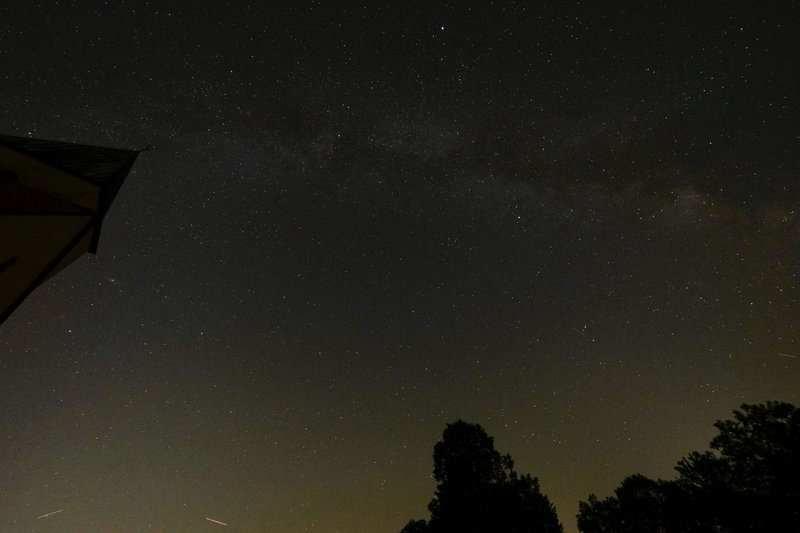
Voyageurs National Park
- Operator: National Park Service.
- Public access: the park is open year-round, and there’s no admission fee to the park itself. Ranger and visitor center programs are seasonal.
- Best for: dark-sky seekers, aurora chasers, campers.
Voyageurs is the answer to “where is Minnesota’s darkest sky?” It’s a designated International Dark Sky Park on the Ontario border, a long way from any big city. There’s no big dome here. The telescope is whatever you bring, and the show is the sky itself: the Milky Way arching overhead in summer, and aurora on the right night. Bring a red flashlight, and book lodging or a campsite early. You’ll find more on dark-sky sites and how they’re rated at DarkSky International.
Alworth Planetarium, Duluth
- Operator: University of Minnesota Duluth.
- Public access: show availability has varied. Check the university’s current listings before you go.
- Best for: families visiting Duluth, plus anyone who wants a backup plan for a cloudy North Shore weekend.
Like the Bell Museum, this is a planetarium rather than a telescope site. It fits a Duluth trip well, since the North Shore weather is hard to predict.
Before you go
- Check the date, then check again that day. Volunteer-run nights are canceled for clouds, and some for wind or extreme cold.
- Dress for colder than the forecast. Standing still at an eyepiece feels about 15 degrees colder than walking around. Winter sessions call for insulated boots and a hat you’d wear on a frozen lake.
- Bring a red light. White light ruins everyone’s night vision. A phone flashlight with red tape works.
- Expect lines at popular targets. Saturn and the Moon draw queues. Be patient, and ask the operator what else is up that night.
- Ask questions. The volunteers are there because they like explaining things. A good question gets you a better view and a better story.
- Leave pets and flashlights in the car unless the operator says otherwise.
- Reservations: most drop-in nights don’t need one. Planetariums and any special event usually do, so check the booking page.
Best time to visit
Season. Winter has the clearest, steadiest air in Minnesota, and the longest nights. The cost is the cold. Summer is comfortable but short on darkness, since in June it’s barely dark before 10 p.m. in the Twin Cities. Late summer and early fall are the sweet spot for most people, with the Milky Way still high and temperatures bearable.
Moon phase. The Moon is a target by itself, and a good one for public nights, since it shows craters in crisp detail. But for galaxies, nebulae, and the Milky Way, go near the new moon. A full moon washes out all of them. Many MAS member nights at dark sites are scheduled around the new moon for this reason.
Light pollution. The Twin Cities metro is heavily light-polluted, so its viewing is limited to bright objects. Move an hour or two out and the sky improves a lot. Voyageurs, up on the Canadian border, is another level entirely.
Which one should you pick?
The best observatory in Minnesota depends on what you want from the evening.
- Short drive and a telescope with kids: Eisenhower Observatory on a posted night.
- Cloudy forecast: Bell Museum or Alworth Planetarium.
- A historic instrument: Goodsell Observatory at an open house.
- Faint deep-sky objects: join MAS and work toward Eagle Lake Observatory.
- The darkest skies in the state: Voyageurs National Park.
Whichever you choose, the habits that matter are the same: check the calendar, dress warmly, and go near the new moon when you can. Minnesota’s observatories are mostly volunteer-run and weather-dependent, so a little planning is what turns a canceled trip into a good night.