
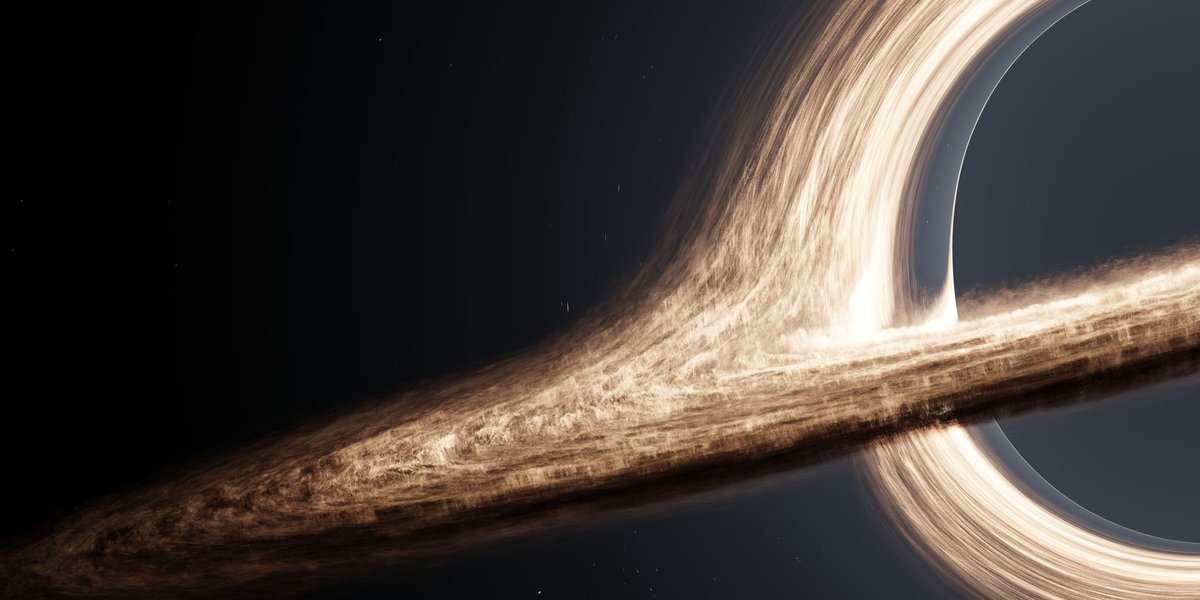
For most of history, astronomy meant collecting light. Since 2015, it also means feeling the universe shake. Gravitational waves are ripples in spacetime, and catching them has turned colliding black holes and neutron stars from theory into a data catalog that now holds close to 300 candidate events.
The breakthroughs in gravitational wave astronomy come fast and they stack. Here are the ten that mattered most, in order, with a plain-English reason each one counts.
Contents
The 10 breakthroughs
1. GW150914: the first direct detection (2015)
On September 14, 2015, both LIGO detectors, in Hanford, Washington and Livingston, Louisiana, recorded a signal lasting about a fifth of a second. Seven milliseconds separated the two recordings, which is what a wave crossing the continent at light speed would produce.
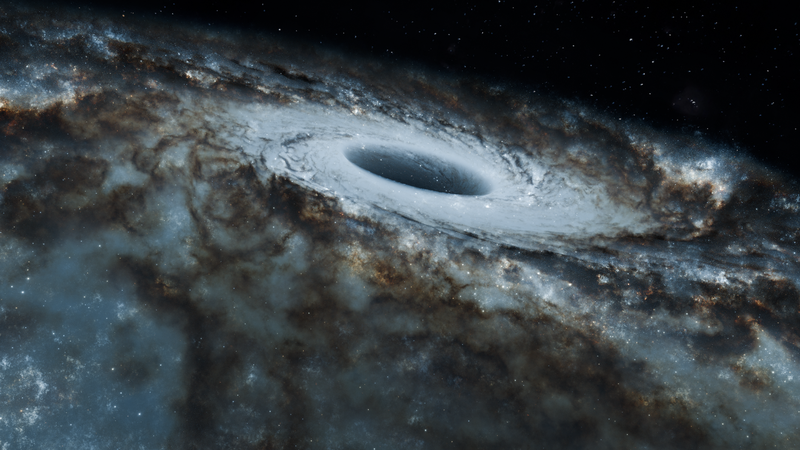
The source was two black holes of roughly 36 and 29 solar masses spiraling together 1.3 billion light-years away. They merged into a single hole of about 62 solar masses. The missing three suns’ worth of mass left as gravitational wave energy, briefly outshining every star in the observable universe combined. The discovery paper in Physical Review Letters came out in February 2016.
Why it matters: General relativity predicted these waves in 1916, and Einstein doubted anyone could ever measure them. LIGO’s 4-kilometer arms registered a length change of about a thousandth of a proton’s width. It also gave us the first proof that stellar-mass black holes merge in pairs. Rainer Weiss, Barry Barish and Kip Thorne received the 2017 Nobel Prize in Physics for it.
2. GW170817: the neutron star collision seen in light and gravity (2017)
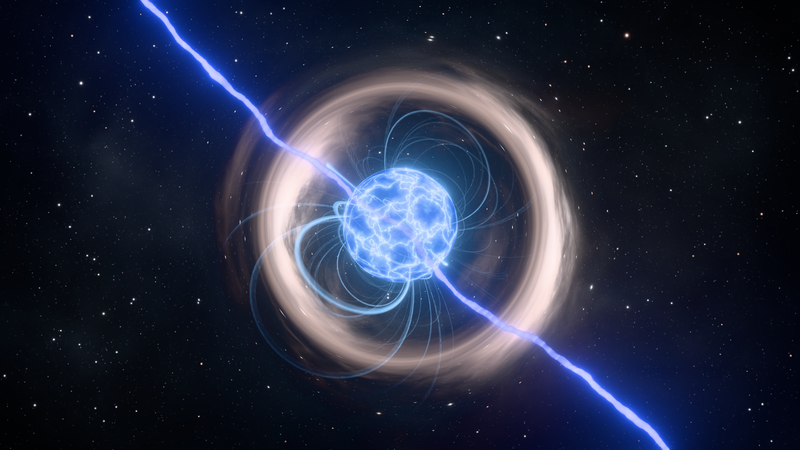
On August 17, 2017, LIGO and Virgo caught a signal that lasted about 100 seconds, far longer than any black hole merger. The rising pitch, called a chirp, told researchers the objects were light: two neutron stars, about 130 million light-years away in the galaxy NGC 4993.
Within two seconds, space telescopes saw a gamma-ray burst from the same patch of sky. Within about eleven hours, a telescope in Chile spotted a new point of light. Roughly 70 observatories followed the glow for weeks.
Why it matters: This was the first multimessenger event, one cosmic explosion observed through both gravitational waves and light. The GW170817 detection paper is the reason “multimessenger astronomy” now appears in funding proposals.
3. Gravity travels at the speed of light (2017)
The gamma-ray burst arrived about 1.7 seconds after the gravitational waves ended. Those two signals had traveled for 130 million years. A 1.7-second gap over that distance means gravity and light move at the same speed to within about one part in a quadrillion.
Why it matters: Many alternative theories of gravity predicted waves that travel at a different speed from light. GW170817 ruled out whole families of them in one afternoon.
4. Gold and platinum come from neutron star mergers (2017)
The glow that followed GW170817 was a kilonova, an explosion powered by newly forged heavy elements decaying. Its spectrum showed strontium and signatures of other heavy, neutron-rich atoms. Estimates for the merger’s output run to about ten Earth masses of gold and platinum.
Why it matters: Astronomers had argued for decades about where elements heavier than iron come from. Gravitational waves delivered a confirmed factory, and the gold in a wedding ring now has a likely origin story involving two dead stars colliding.
5. A new way to measure the Hubble constant (2017)
Gravitational waves tell you how far away a merger is directly, from how strong the signal is. The host galaxy’s redshift tells you how fast it’s receding. Divide one by the other and you get the universe’s expansion rate, with no distance ladder required. Researchers call such an event a standard siren.
GW170817 alone gave a Hubble constant near 70 kilometers per second per megaparsec, with an uncertainty of roughly 12 percent.
Why it matters: Measurements from the cosmic microwave background and from supernovae disagree by several percent, a standoff called the Hubble tension. A single siren can’t settle it, but each new neutron star merger with a visible counterpart tightens the independent check.
6. Objects in the “mass gap” (2019 and 2023)
Astronomers long suspected that nothing sits between the heaviest neutron stars (about 2.5 solar masses) and the lightest black holes (about 5). Then GW190814 paired a 23-solar-mass black hole with a mystery object of about 2.6 solar masses. In 2024 the collaboration announced GW230529, where a neutron star merged with an object between 2.5 and 4.5 solar masses.
Why it matters: Either the heaviest neutron stars are heavier than thought or the lightest black holes are lighter. Both outcomes force a rewrite of how dying stars behave.
7. An intermediate-mass black hole: GW190521 (2019)
Black holes come in stellar sizes and supermassive sizes, with a sparse middle. GW190521 merged two black holes of about 85 and 66 solar masses into one of about 142. That is the first direct evidence of an intermediate-mass black hole, in the range of 100 to 100,000 suns.
Why it matters: Standard stellar theory says stars don’t leave behind black holes between roughly 65 and 120 solar masses, because pair-instability supernovae tear them apart. Both parents sat at or above that edge. The likeliest explanation is that black holes can build up by merging repeatedly in dense star clusters.
8. GW231123: the heaviest merger yet (2023, announced 2025)
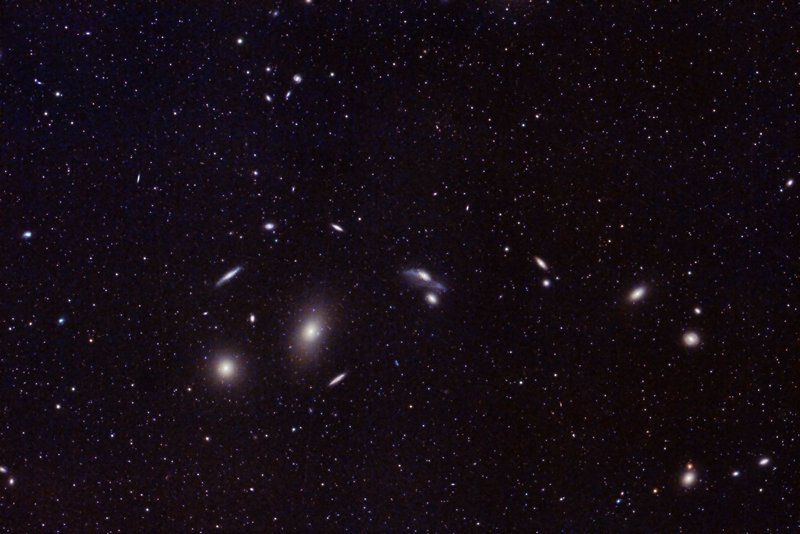
Detected on November 23, 2023 and announced in July 2025, GW231123 combined two black holes of roughly 137 and 103 solar masses into one weighing around 225 suns. Both were spinning near the maximum rate general relativity allows.
Why it matters: It is the most massive black hole merger seen in gravitational waves, and its components fall in or near the forbidden pair-instability range. This strengthens the case that some black holes are second-generation products of earlier collisions.
9. GW250114: the clearest signal yet, and Hawking’s theorem confirmed (2025)
The January 14, 2025 detection was the loudest signal so far. It resembled GW150914, with two black holes of about 33 solar masses each merging into one of about 63, but the signal was several times cleaner thanks to a decade of detector upgrades.
That clarity allowed a test Stephen Hawking proposed in 1971: the total surface area of the merged black hole must exceed the combined area of the original two. It did. The ringing of the final black hole also showed more than one tone at once, as general relativity predicts.
Why it matters: Ten years after the first detection, the detectors graduated from “did we hear something?” to precision checks of black hole physics.
10. The nanohertz background: pulsar timing arrays hear the universe hum (2023)
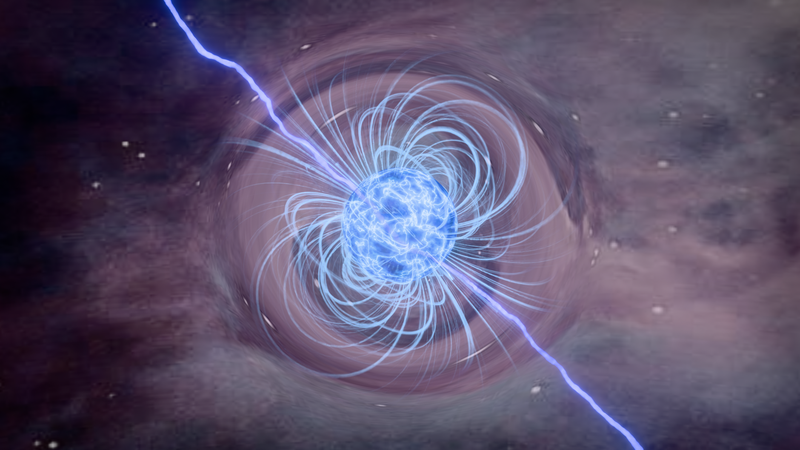
In June 2023, the NANOGrav collaboration in North America, together with teams in Europe, Australia, India, and China, announced evidence for a gravitational wave background. They found it by timing dozens of millisecond pulsars, which act like a galaxy-sized detector. Waves passing through stretch and squeeze the pulses’ arrival times in a particular pattern across the sky, known as the Hellings-Downs curve. The NANOGrav collaboration found that pattern in their 15-year dataset.
The waves are low-frequency, with periods of years to decades. The leading explanation is a crowd of supermassive black hole binaries sitting in the centers of merging galaxies, though exotic early-universe sources haven’t been ruled out.
Why it matters: LIGO, Virgo, and KAGRA hear waves that last seconds. Pulsar timing arrays hear waves that last years. Each opens a different slice of the spectrum, the way radio and X-ray telescopes see different parts of the electromagnetic spectrum.
Timeline at a glance
| Year | Event | What changed |
|---|---|---|
| 2015 | GW150914 | First direct detection, a black hole merger |
| 2017 | GW170817 | First neutron star merger seen in light and gravity |
| 2017 | Nobel Prize | Weiss, Barish, and Thorne honored |
| 2019 | GW190521 | Intermediate-mass black hole |
| 2019 | GW190814 | Mass-gap object |
| 2020 | KAGRA joins | Japan’s underground detector enters the network |
| 2023 | Pulsar timing arrays | Evidence for a nanohertz background |
| 2023 | GW231123 | Most massive merger (announced 2025) |
| 2025 | GW250114 | Loudest signal, area theorem test |
| 2025 | O4 ends | Fourth observing run closes with close to 300 candidates in total |
Gravitational wave astronomy: what comes next
The next jump comes from bigger and better instruments.
LISA. The European Space Agency adopted the Laser Interferometer Space Antenna in January 2024, with launch planned for the mid-2030s. Three spacecraft, 2.5 million kilometers apart, will fly in a triangle trailing Earth. LISA targets millihertz waves from supermassive black hole mergers and from compact objects spiraling into giants.
Einstein Telescope and Cosmic Explorer. Europe’s Einstein Telescope plans a 10-kilometer triangle built underground. Cosmic Explorer in the US proposes 40-kilometer arms. Both aim to detect black hole mergers across nearly the entire history of the universe, and to resolve neutron star mergers in detail.
More pulsar timing. The pulsar timing arrays continue to merge their datasets. The goal is to move from “evidence” to a clean detection, and then to spot individual supermassive binaries.
Upgraded ground detectors. LIGO, Virgo, and KAGRA close out their fourth run in late 2025 and prepare for the next one. LIGO-India is in development, which will help with sky localization.
Glossary
Interferometer: A detector that splits a laser beam into two perpendicular arms, bounces each off a mirror, and recombines them. A passing wave changes the arm lengths by different amounts, which shifts the interference pattern.
Chirp: The signal of two merging objects. As they spiral in, their orbital frequency and wave amplitude rise rapidly, like a bird’s chirp when converted to sound.
Multimessenger astronomy: Studying one event through multiple kinds of signals: light, gravitational waves, neutrinos, cosmic rays.
Standard siren: A gravitational wave source whose distance can be read directly from the signal, used to measure cosmic expansion.
Pair-instability gap: The range of roughly 65 to 120 solar masses where stars are expected to explode completely and leave no black hole.
Kilonova: The explosion following a neutron star merger, powered by the radioactive decay of freshly made heavy elements.