TLDR
- Pioneers (early 1900s): John Plaskett built what was briefly the second-largest telescope on Earth. Clarence Chant built the David Dunlap Observatory and Canada’s first astronomy department. Helen Sawyer Hogg mapped variable stars in globular clusters and explained the sky to a million newspaper readers.
- Mid-century: Andrew McKellar caught the first hint of the cosmic microwave background in 1941. Gerhard Herzberg won a Nobel Prize for molecular spectroscopy that astronomers still rely on. Sidney van den Bergh sorted galaxies and ran the Dominion Astrophysical Observatory.
- Modern and living: Ian Shelton found supernova 1987A. Arthur McDonald’s neutrino detector solved a solar mystery. Victoria Kaspi, Sara Seager, René Doyon, Jaymie Matthews and Laurie Rousseau-Nepton work on pulsars, exoplanets, space telescopes and star-forming galaxies today.
Table of contents
- Why Canadian astronomers punch above their weight
- Quick facts
- The pioneers
- The mid-century builders
- The modern era
- Living Canadian astronomers to follow
- A timeline of Canadian astronomy
- What’s coming next
Canada has a small astronomy community and a long list of results that people outside Canada have heard of. The Canadian astronomers below built telescopes, found exploding stars, measured the Milky Way’s spin and, in one case, picked up a Nobel Prize along the way. Here’s who they are and what each one actually did.
Why Canadian astronomers punch above their weight
Canada spends modestly on astronomy compared with the United States or Europe, yet Canadian papers are cited at a high rate. The reason is mostly strategy. Instead of each university building its own observatory, Canadian researchers pool money into shared instruments and take partner shares in big international ones: the Canada-France-Hawaii Telescope on Maunakea, the Gemini telescopes, ALMA in Chile, and the James Webb Space Telescope.
Geography helps too. The country has huge stretches of dark sky and radio-quiet land, and the community is small enough that most of its senior people know each other. That’s a short path from an idea to a collaboration.
Quick facts
| Astronomer | Years | Main base | Known for |
|---|---|---|---|
| John Stanley Plaskett | 1865–1941 | Dominion Astrophysical Observatory, Victoria | 72-inch telescope; Plaskett’s Star; Milky Way rotation |
| Clarence Chant | 1865–1956 | University of Toronto | David Dunlap Observatory; “father of Canadian astronomy” |
| Helen Sawyer Hogg | 1905–1993 | University of Toronto | Variable stars in globular clusters; science journalism |
| Andrew McKellar | 1910–1960 | Dominion Astrophysical Observatory | Cold interstellar molecules, an early clue to the cosmic microwave background |
| Peter Millman | 1906–1990 | National Research Council, Ottawa | Meteors and meteorite recovery |
| Gerhard Herzberg | 1904–1999 | National Research Council, Ottawa | Nobel Prize in Chemistry; molecular spectra for astronomy |
| Sidney van den Bergh | 1929–2024 | Dominion Astrophysical Observatory | Galaxy classification; supernova rates |
| Ian Shelton | b. 1957 | University of Toronto | Discovered supernova 1987A |
| Arthur McDonald | b. 1943 | Queen’s University | Sudbury Neutrino Observatory; Nobel Prize in Physics |
| Jaymie Matthews | Active | University of British Columbia | MOST, Canada’s first space telescope |
| Victoria Kaspi | b. 1967 | McGill University | Pulsars, magnetars, CHIME fast radio bursts |
| Sara Seager | b. 1971 | MIT | Exoplanet atmospheres and biosignature gases |
| René Doyon | Active | Université de Montréal | NIRISS instrument on the James Webb Space Telescope |
| Laurie Rousseau-Nepton | Active | University of Toronto | SIGNALS survey of star-forming regions |
The pioneers
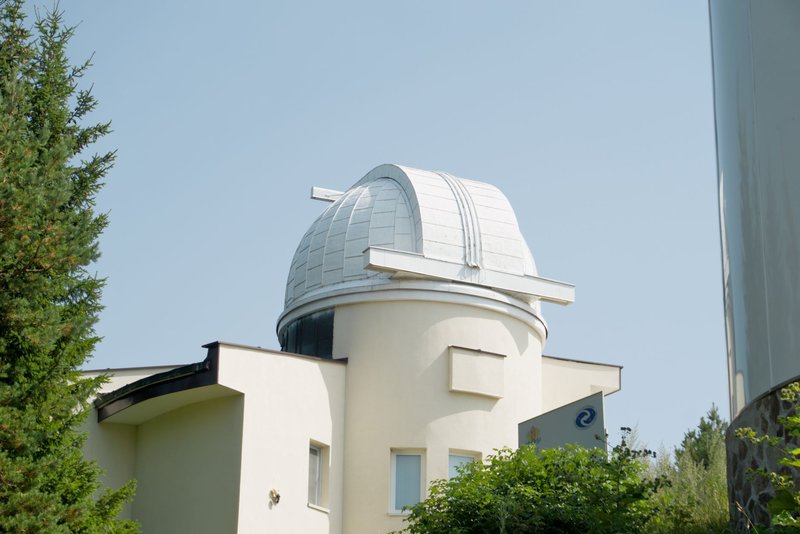
John Stanley Plaskett (1865–1941)
Plaskett grew up on an Ontario farm and worked as a mechanic before he turned to astronomy, which makes his later career a little absurd. He designed and built the 72-inch (1.85 m) telescope at the Dominion Astrophysical Observatory in Victoria, which saw first light in 1918 as the second-largest telescope in the world. It was the best in the country for decades.
He used it to measure stellar motions. Plaskett’s Star, a close pair of very massive stars in Monoceros, is still a textbook example of a heavy binary. His work on how stars move through the galaxy also helped establish that the Milky Way rotates.
Clarence Chant (1865–1956)
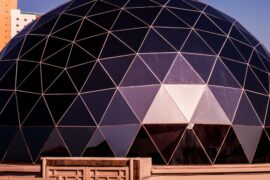
Chant taught physics at the University of Toronto and spent years persuading anyone with money that Canada needed a serious observatory. Jessie Dunlap eventually funded one in memory of her husband, and the David Dunlap Observatory opened in Richmond Hill, Ontario, in 1935 with a 74-inch telescope. Chant also founded the University of Toronto’s astronomy department and built the Royal Astronomical Society of Canada into an active national group, which is why he gets the title “father of Canadian astronomy.”
The Dunlap site was sold in 2008 and is now a public heritage property, but the dome is still there.
Helen Sawyer Hogg (1905–1993)
Hogg was born in Massachusetts, trained at Harvard and moved to Toronto in 1931, where she spent her career studying globular clusters. Her catalogues of variable stars in those clusters gave astronomers a way to estimate distances across the galaxy.
She was also the best science communicator Canada had. From 1951 to 1981 she wrote a weekly column, “With the Stars,” for the Toronto Star. She became the first woman to lead the Royal Astronomical Society of Canada and a Companion of the Order of Canada. If you’re looking for Canadian women astronomers, she’s the starting point, and she wasn’t a footnote in anyone’s story.
The mid-century builders
Andrew McKellar (1910–1960)
McKellar worked at the Dominion Astrophysical Observatory in Victoria. In 1941 he studied the light from distant stars passing through interstellar gas and found absorption lines from the molecule cyanogen (CN). The line strengths implied the molecules were being excited by something at about 2.3 kelvin.
Nobody knew what to make of it. After Penzias and Wilson found the cosmic microwave background in 1965, the number made sense: it was the faint afterglow of the Big Bang. McKellar had measured it 24 years earlier without knowing.
Peter Millman (1906–1990)
Millman ran Canada’s meteor research from the National Research Council in Ottawa. He photographed and recorded meteor spectra, and he organized the effort to track fireballs and recover the meteorites that survived the fall. Canada’s long record of meteorite recovery owes a lot to the network he built.
Gerhard Herzberg (1904–1999)
Herzberg was a physicist who fled Germany in the 1930s, worked at the University of Saskatchewan, and later moved to the National Research Council in Ottawa. He won the 1971 Nobel Prize in Chemistry for his work on the electronic structure and geometry of molecules, especially free radicals.
Astronomers care because spectra are fingerprints. Herzberg’s lab measurements told them what to look for when they hunted for molecules in comets, planetary atmospheres and interstellar clouds. NRC’s astronomy research centre in Victoria carries his name.
Sidney van den Bergh (1929–2024)
Born in the Netherlands, van den Bergh spent much of his career in Canada and directed the Dominion Astrophysical Observatory from 1977 to 1986. He proposed a luminosity-based classification for spiral galaxies, tracked how often supernovae occur in different galaxy types, and spent decades working on the galaxies of the Local Group. He was also a famously prolific writer, producing papers on everything from galaxy structure to the history of the cosmic distance scale.
The modern era
Ian Shelton (b. 1957)
On the night of February 23, 1987, Shelton was working at the University of Toronto’s station at Las Campanas Observatory in Chile. He developed a photographic plate of the Large Magellanic Cloud and found a bright star that shouldn’t have been there. It was supernova 1987A, the nearest supernova seen since 1604 and the only one in modern times visible to the naked eye. Two other observers spotted it independently within hours, but Shelton’s plate is the one that put a Canadian at the center of the story.
Arthur McDonald (b. 1943)
McDonald is a physicist, not a classical astronomer, but his work answers an astronomy question. The Sun produces fewer neutrinos than theory predicts. McDonald led the Sudbury Neutrino Observatory, a detector built two kilometers underground in a nickel mine, and showed that the missing neutrinos had changed type on the way to Earth. That earned him a share of the 2015 Nobel Prize in Physics and settled the question about the Sun.
Jaymie Matthews (University of British Columbia)
Matthews was the mission scientist for MOST, the Microvariability and Oscillations of Stars telescope, which launched in 2003. It had a 15-centimeter mirror and was about the size of a suitcase, and the team nicknamed it the “Humble Space Telescope.” It was Canada’s first space telescope, and it measured starquakes and detected the transits of exoplanet 55 Cancri e.
Living Canadian astronomers to follow
Victoria Kaspi
Kaspi leads McGill’s neutron star research and has spent her career on pulsars and magnetars, the most extreme magnetic objects known. She won Canada’s top science award, the Gerhard Herzberg Canada Gold Medal, in 2016. She’s also central to CHIME, the radio telescope near Penticton, British Columbia, which has no moving parts and watches the whole northern sky for fast radio bursts. CHIME’s first catalogue in 2021 listed 535 of them. In April 2020 it caught a burst from a magnetar inside our own galaxy, the strongest evidence that at least some fast radio bursts come from magnetars.
Sara Seager
Seager was born in Toronto, studied at the University of Toronto, and now teaches at MIT. She wrote much of the theory on how to read the atmospheres of planets around other stars, and she proposed which gases in those atmospheres might point to life. She received a MacArthur Fellowship in 2013. Her work is why “biosignature” is a normal word in astronomy now.
René Doyon
Doyon, at the Université de Montréal, is the principal investigator for NIRISS, the Canadian-built instrument on the James Webb Space Telescope. It’s one of the instruments pointed at transiting exoplanets, including the rocky worlds around TRAPPIST-1. Canada gave Webb its NIRISS instrument and a fine-guidance sensor, and in return Canadian teams get a guaranteed share of observing time.
Laurie Rousseau-Nepton
Rousseau-Nepton is an Innu astronomer from Mashteuiatsh, Quebec, and one of the first Indigenous women in Canada to earn a PhD in astrophysics. She leads SIGNALS, a survey that uses the SITELLE camera on the Canada-France-Hawaii Telescope to map hundreds of thousands of star-forming nebulae across nearby galaxies. The data show where new stars form and what chemical elements surround them.
A timeline of Canadian astronomy
- 1918: The 72-inch telescope in Victoria opens as the second-largest in the world.
- 1935: The David Dunlap Observatory opens in Richmond Hill, Ontario.
- 1941: McKellar finds cold cyanogen in interstellar space, an early hint of the cosmic microwave background.
- 1951: Helen Sawyer Hogg starts her weekly column in the Toronto Star.
- 1971: Herzberg wins the Nobel Prize in Chemistry.
- 1987: Ian Shelton spots supernova 1987A.
- 2003: MOST launches, Canada’s first space telescope.
- 2015: Arthur McDonald shares the Nobel Prize in Physics for neutrino oscillations.
- 2020: CHIME detects a fast radio burst from a magnetar in the Milky Way.
- 2021: The James Webb Space Telescope launches with Canadian instruments on board.
What’s coming next
Canadian astronomers are involved in the Square Kilometre Array, the huge radio observatory being built in South Africa and Australia, and in the Thirty Meter Telescope, which has been stalled at Maunakea by permitting disputes and protests since 2019. CHIME keeps adding bursts to its catalogue, and Webb results from Canadian-built instruments arrive every few months.
The pattern from Plaskett onward hasn’t changed. A small group builds the right instrument, shares it widely, and ends up in the textbooks.