
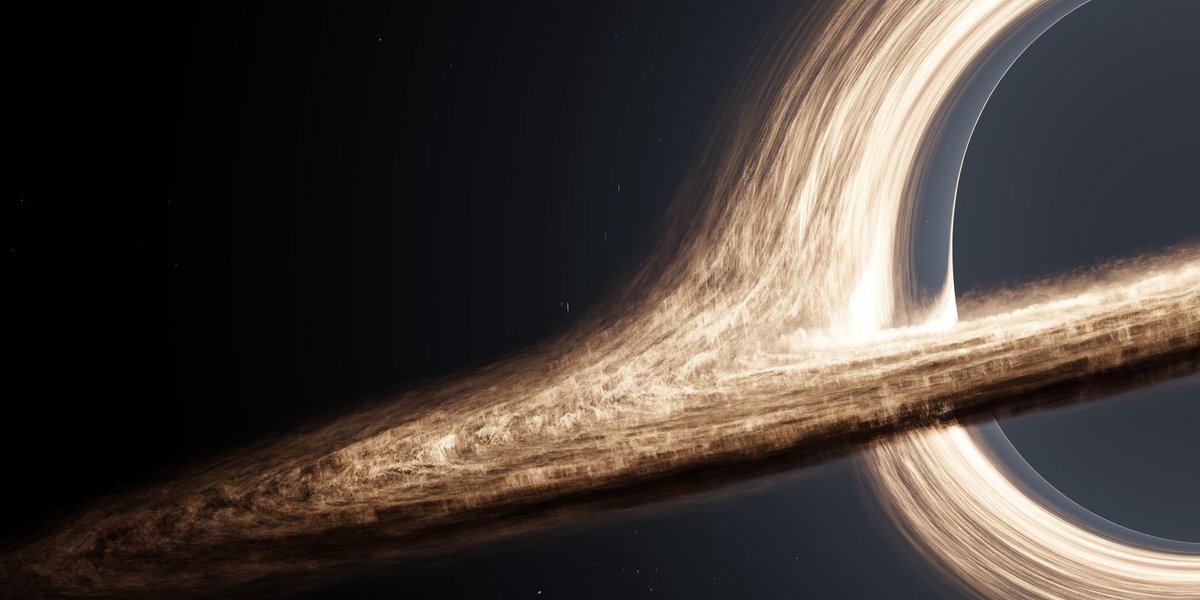
The current record holder is a black hole called UHZ1, and its light left home 13.2 billion years ago, back when the universe was about 470 million years old. That’s not a rounding error on “old.” That’s roughly 3% of the universe’s current age, which means UHZ1 was already there, already growing, before most of the stars that would eventually form the Milky Way had even ignited.
Distant black hole headlines show up every few months, usually with a new galaxy name and a bigger number attached. Most of them skip the part that actually explains anything: how “13.2 billion light-years” gets measured for an object nobody can send a probe to, and why these black holes got so massive so early that they’re currently breaking the models built to explain them.
Table of Contents
- The Quick Answer
- The Current Record Holders
- How Do You Measure Distance to Something 13 Billion Years Away?
- Light Seeds or Heavy Seeds: How Did They Get So Big So Fast?
- What’s Next: Roman’s Hunt for Even Older Black Holes
- Frequently Asked Questions
The Quick Answer
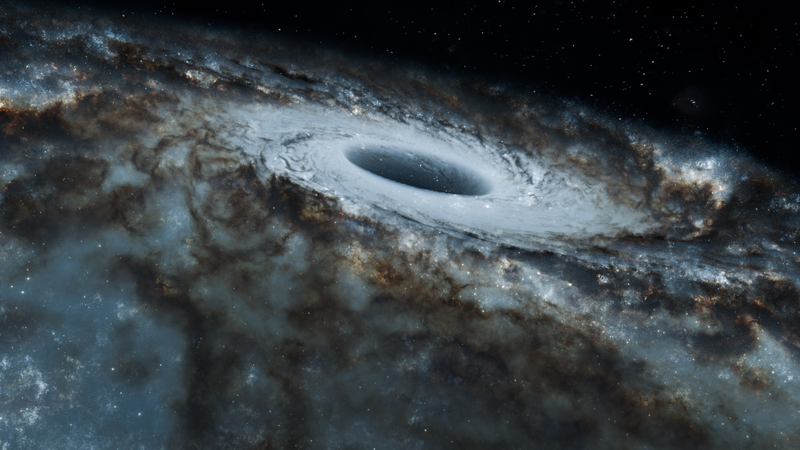
UHZ1 is the most distant black hole confirmed so far, spotted in a galaxy behind the cluster Abell 2744 using NASA’s Chandra X-ray Observatory paired with the James Webb Space Telescope. Its light traveled 13.2 billion years to reach us, from a galaxy that existed when the universe was under half a billion years old.
Two other black holes round out the record books for different reasons. GN-z11 holds the redshift record among confirmed black hole hosts, sitting even earlier in cosmic time than UHZ1 by some measurements. QSO J0313-1806 was, until JWST came online, the most distant quasar known, and it’s still notable for how much mass it packed into so little time. None of these are the biggest black holes ever found, that title belongs to something far closer to home. Distance and size are separate records, and mixing them up is where most casual explainers go wrong.
The Current Record Holders
Here’s how the field actually stacks up, ranked by how far back in time we’re looking.
| Black Hole | Light-Travel Time | Redshift (z) | Universe’s Age at Emission | Estimated Mass | How It Was Found |
|---|---|---|---|---|---|
| UHZ1 | 13.2 billion years | ~10.1 | ~470 million years | 10–100 million solar masses | X-ray (Chandra) + infrared (JWST), boosted by gravitational lensing from Abell 2744 |
| GN-z11 | ~13.4 billion years | 10.6 | ~430 million years | ~1.6 million solar masses | JWST near-infrared spectroscopy of a galaxy first flagged by Hubble |
| QSO J0313-1806 | ~13.03 billion years | 7.64 | ~670 million years | ~1.6 billion solar masses | Ground- and space-based optical/infrared quasar survey, confirmed by spectroscopy |
| TON 618 | ~10.4 billion years | 2.22 | ~3 billion years | ~66 billion solar masses | Ground-based optical spectroscopy (one of the most massive black holes known, not a distance record) |
Two things jump out. First, UHZ1 and GN-z11 are close enough in light-travel time that ranking them depends on which measurement technique you trust, redshift surveys and X-ray detections don’t always agree to the decimal point. Second, TON 618 is on this list specifically to make a point: it’s roughly 40,000 times heavier than GN-z11’s black hole but nowhere close to the distance record, because it formed billions of years later, when the universe had already had time to build monsters the slow way.
How Do You Measure Distance to Something 13 Billion Years Away?
Nobody is out there with a tape measure. What astronomers actually measure is redshift, the stretching of light’s wavelength as it travels through a universe that’s been expanding the entire time it was in transit. A galaxy moving away from us redder than it should be; the more the universe has expanded since the light left, the redder that light arrives. Redshift gets a number, z, and z for UHZ1 comes out around 10.1.
From redshift, astronomers calculate light-travel time, the number most headlines report: how many years that light spent crossing space before hitting a detector. That’s the “13.2 billion years” figure. But here’s the part that trips people up, and it’s the single most common confusion in every comment section under a black hole story: light-travel time is not the same as how far away that object is right now.
Because the universe kept expanding the whole time the light was traveling, the object has moved much farther away in the meantime. GN-z11’s light took 13.4 billion years to reach us, but the galaxy’s current distance, accounting for thirteen billion years of cosmic expansion, is closer to 32 billion light-years. Both numbers are correct. They’re just answering different questions: one tells you how old the light is, the other tells you where the source is sitting today, assuming it still exists at all.
For black holes specifically, there’s a second layer: astronomers also use reverberation mapping, timing the delay between flickers in a black hole’s accretion disk and the echo of that flicker in surrounding gas clouds, to estimate mass and confirm these objects are genuine black holes rather than compact star clusters or other imposters.
Light Seeds or Heavy Seeds: How Did They Get So Big So Fast?
This is the actual scientific fight, and it’s the reason UHZ1 made headlines beyond the usual “biggest thing ever found” cycle. Standard black hole growth starts small: a massive star collapses into a black hole of maybe 10 to 100 solar masses, then it slowly feeds on surrounding gas and merges with other black holes over billions of years. That’s the “light seed” model, and it works fine for black holes that had plenty of time to grow, like the one at the center of the Milky Way.
The problem is timing. UHZ1’s black hole weighs roughly as much as every star in its host galaxy combined, an ratio that shouldn’t be possible if it started small and grew at the normal, Eddington-limited pace. There simply wasn’t enough time between the Big Bang and 470 million years later for a 100-solar-mass seed to feed its way up to millions of solar masses.
That’s what pushed researchers toward the “heavy seed” model: black holes that formed directly from the collapse of massive gas clouds, skipping the star-formation step entirely and starting out at 10,000 to 100,000 solar masses. A heavy seed has a massive head start, which is the only way the math works for something like UHZ1. GN-z11 is messier evidence, its properties are consistent with either a heavy seed or a light seed that got lucky and fed at five times the theoretical limit for a sustained stretch, something astrophysicists call super-Eddington accretion. Neither scenario is fully settled. Every new distant black hole discovery is effectively another data point in this argument.
What’s Next: Roman’s Hunt for Even Older Black Holes
The next major tool in this search isn’t a bigger mirror, it’s a wider field of view. NASA’s Nancy Grace Roman Space Telescope, launched in 2026, runs a High-Latitude Time-Domain Survey covering an area of sky equivalent to 90 full moons, watching it repeatedly over time rather than staring at one patch. That design is built specifically to catch tidal disruption events, the flare of light produced when a supermassive black hole shreds a star that wandered too close.
According to the Space Telescope Science Institute, Roman’s survey is expected to catch around 100 tidal disruption events a year, reaching black holes that existed up to 11 billion years ago, including many too faint or too quiet to show up in a targeted JWST observation. Quiet, non-accreting black holes are essentially invisible until something falls into them; a tidal disruption event is one of the few moments they announce themselves. That makes Roman less about breaking the distance record in one dramatic discovery and more about finally getting a population count, rather than a handful of record-holders.
Frequently Asked Questions
How can something be billions of light-years farther away than the universe is old? Light-travel time and current distance are different measurements. A black hole 13.4 billion light-years away by light-travel time can sit around 32 billion light-years away today, because the universe expanded the entire time that light was crossing space. Nothing here breaks the speed of light; the space between us and the object is what’s been stretching.
Is UHZ1 the biggest black hole ever found, too? No. UHZ1 holds the distance record at 10 to 100 million solar masses, but far closer black holes like TON 618, at roughly 66 billion solar masses, dwarf it in size. Distance and mass are unrelated records; a black hole can be small and ancient, or nearby and enormous.
What does JWST actually add that older telescopes couldn’t do? James Webb’s infrared sensitivity lets it detect galaxies whose visible light has redshifted entirely out of the optical range, which is exactly what happens to light that’s traveled over 13 billion years. Older optical telescopes were effectively blind to the earliest galaxies; JWST is built to see in the wavelength those galaxies actually arrive in.
Could there be an even more distant black hole out there? Almost certainly. Each of these records has fallen within the last few years as JWST and Chandra improve detection methods, and Roman’s survey is specifically designed to find fainter, more distant candidates that current instruments miss. Treat any “most distant black hole” ranking as current as of publication, not permanent.
Why does the universe’s age at detection matter more than the light-travel time? Light-travel time tells you how old the signal is. Universe’s age at emission tells you how early in cosmic history that black hole had already formed and grown large enough to detect, which is the number that actually strains current formation theories. A black hole 13 billion years distant is impressive; one that existed just 470 million years after the Big Bang is the one that raises questions.