Table of Contents
- TLDR
- Jack Hathaway: Connecticut’s Newest Astronaut
- Kate Rubins
- Sherwood “Woody” Spring
- Daniel Barry
- Rick Mastracchio
- Daniel Burbank
- Pierre Thuot
- Connecticut’s Astronauts at a Glance
- Why Connecticut Keeps Producing Astronauts
TLDR
Seven astronauts carry a real Connecticut connection: Jack Hathaway (South Windsor, currently aboard the ISS on Crew-12), Kate Rubins (born in Farmington), Sherwood “Woody” Spring (born in Hartford), Daniel Barry (Norwalk), Rick Mastracchio (Waterbury), Daniel Burbank (Manchester, raised in Tolland), and Pierre Thuot (Groton). Between them they’ve logged dozens of spaceflights, a record-setting three-person spacewalk, and one satellite rescue mission that’s still taught in engineering classes. Hathaway is the one making news right now — he’s mid-mission on the space station as of this writing.
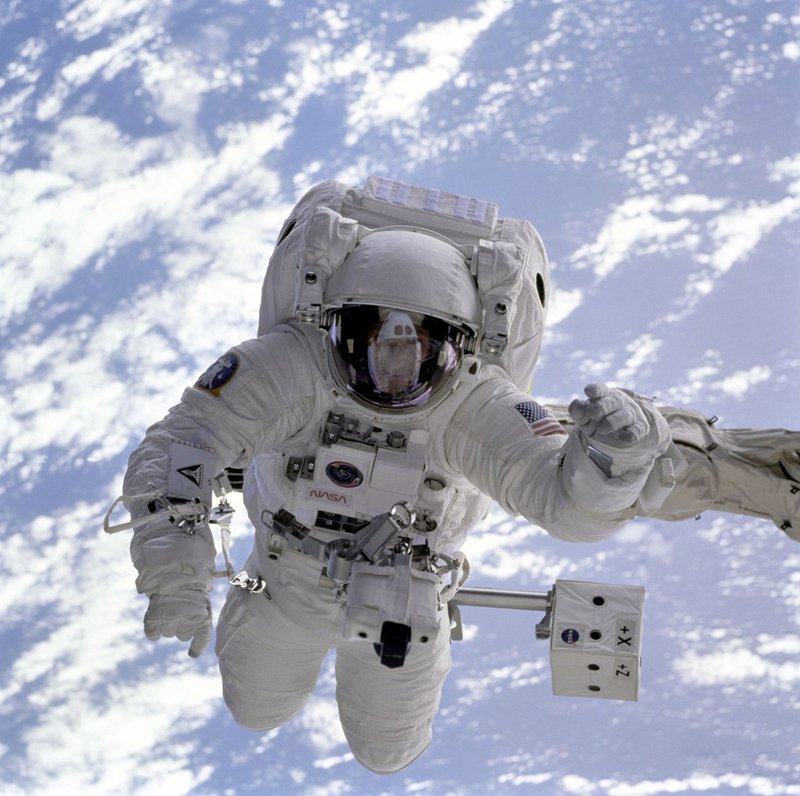
Connecticut isn’t exactly Houston. But scan the roster of NASA astronauts and the state punches well above its size — a mix of Naval Academy grads, a West Point engineer, a Coast Guard Academy pilot, and a UConn-trained biomedical engineer who all ended up strapped into a rocket. Here’s every one of them, what they actually did up there, and why South Windsor is having a moment in 2026.
Jack Hathaway: Connecticut’s Newest Astronaut {#jack-hathaway}
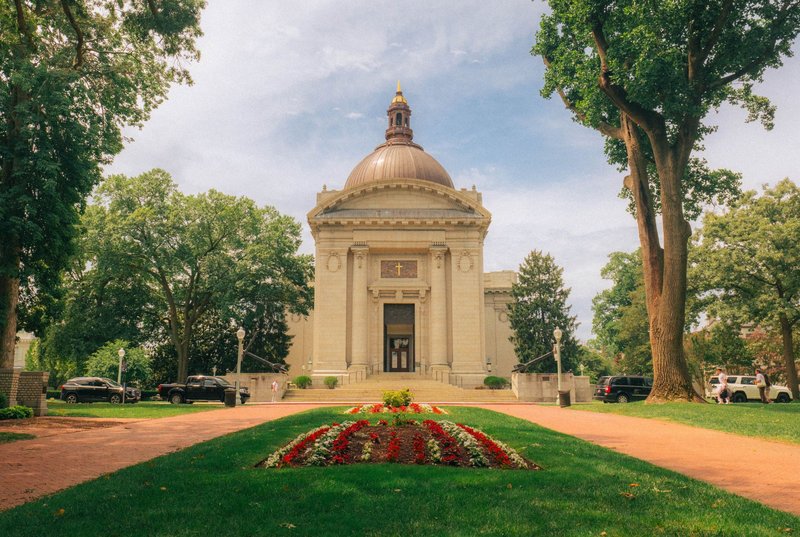
Jack Hathaway grew up in South Windsor and graduated from South Windsor High School before heading to the U.S. Naval Academy, where he earned a degree in physics and history in 2004. He went on to fly Navy aircraft professionally — NASA’s astronaut biography credits him with roughly 2,500 flight hours across 30 different aircraft and 39 combat missions before he ever applied to the astronaut corps.
He finished astronaut candidate training in March 2024, and in early 2026 he launched as pilot of SpaceX Crew-12, his first spaceflight. The mission made extra headlines back home, too: it followed a medical evacuation of another station crew member that reshuffled the rotation in the weeks before launch, so Hathaway’s seat assignment came together faster than the standard timeline. Once aboard, he joined Expedition 74/75 for a science tour that’s running roughly eight months — longer than the typical six-month ISS rotation.
For South Windsor, this isn’t an abstract “local astronaut” story. Hathaway’s mission has generated live crew check-ins and family interviews on Connecticut TV and radio, which is the main reason searches for “astronauts from Connecticut” are spiking in 2026 in the first place.
Kate Rubins {#kate-rubins}
Kate Rubins was born in Farmington, Connecticut, in 1978, though she grew up mostly in Napa, California, and considers that her hometown — worth flagging since she’s often lumped in with the state’s “raised here” astronauts when she’s really a “born here” one. She earned a molecular biology degree from UC San Diego and a PhD from Stanford before spending years researching infectious disease, including Ebola and smallpox virus biology, at the Whitehead Institute.
NASA selected her in 2009. She’s flown two long-duration ISS missions, in 2016 and again in 2020, and became the first person to sequence DNA in orbit — a genuinely novel piece of science, not a symbolic first. Between her two missions she’s logged over a year in space combined.
Sherwood “Woody” Spring {#sherwood-woody-spring}
Spring was born in Hartford in 1944, though he grew up in Harmony, Rhode Island, and calls that his hometown — another “born, not raised” case. He graduated from West Point with a general engineering degree in 1967, served two combat tours in Vietnam as an Army helicopter pilot, and later earned an aerospace engineering master’s from the University of Arizona.
NASA selected him as an astronaut in 1980. His one spaceflight, STS-61B in 1985, is the one Connecticut trivia nights consistently get wrong: Spring didn’t just deploy communications satellites, he spent more than 12 hours across two spacewalks testing hardware and assembly techniques that fed directly into how the International Space Station would eventually be built. He retired from NASA in 1988 and spent the following years running the Army’s Space Program Office in Washington.
Daniel Barry {#daniel-barry}
Daniel Barry was born in Norwalk in 1953 and racked up an unusually stacked resume before NASA: a Cornell engineering degree, a Princeton PhD, and an MD from the University of Miami. He flew three shuttle missions — STS-72, STS-96, and STS-105 — logging more than 734 hours in space, including four spacewalks that added up to nearly 26 hours outside the vehicle.
He left NASA in 2005 and founded Denbar Robotics, where he still works, which tracks with a career that always sat at the intersection of medicine and engineering rather than pure test-pilot flying.
Rick Mastracchio {#rick-mastracchio}
Rick Mastracchio was born in Waterbury in 1960 and studied electrical engineering at the University of Connecticut before adding a graduate degree from Rensselaer Polytechnic Institute — making him the rare Connecticut astronaut whose training pipeline ran through the state’s own flagship university rather than a service academy.
He flew four missions across his career, including three shuttle flights and a long-duration Soyuz/ISS rotation, and racked up nine career spacewalks, putting him among the most experienced spacewalkers NASA has produced. He’s since retired from the astronaut corps.
Daniel Burbank {#daniel-burbank}
Burbank was born in Manchester in 1961 and raised in Tolland, where he graduated from Tolland High School — making him one of the clearer “raised in Connecticut” cases on this list, not just a birthplace connection. He’s a U.S. Coast Guard Academy graduate and spent years as a Coast Guard helicopter pilot before NASA selected him in 1996.
Burbank flew three spaceflights, including command of ISS Expedition 30 in 2011–2012 — the first Coast Guard officer to command a space station mission. Across his career he’s logged over 188 days in space.
Pierre Thuot {#pierre-thuot}
Thuot was born in Groton in 1955, a fitting hometown for a future Navy officer given Groton’s submarine base. He graduated from the U.S. Naval Academy in 1977 and became a Navy pilot before joining NASA’s astronaut corps.
His signature mission is STS-49 in 1992, the maiden flight of Space Shuttle Endeavour. Thuot and crewmate Richard Hieb attempted to capture a stranded Intelsat VI satellite by hand — twice, unsuccessfully — before mission control improvised a plan to bring in a third astronaut, Thomas Akers, for the first three-person spacewalk in history. The 8-hour, 29-minute EVA that resulted was the longest spacewalk on record at the time. Thuot left NASA in 1995 and returned to active Navy duty.
Connecticut’s Astronauts at a Glance {#at-a-glance}
| Name | Connecticut Tie | Hometown | Missions | Years Active | Status |
|---|---|---|---|---|---|
| Jack Hathaway | Born & raised | South Windsor | 1 (Crew-12, 2026) | 2024–present | Active, aboard ISS |
| Kate Rubins | Born | Farmington | 2 (2016, 2020) | 2009–present | Active astronaut corps |
| Rick Mastracchio | Born | Waterbury | 4 | 1996–2018 | Retired |
| Daniel Burbank | Born & raised | Manchester / Tolland | 3 | 1996–2013 | Retired |
| Daniel Barry | Born | Norwalk | 3 | 1992–2005 | Retired, private industry |
| Pierre Thuot | Born | Groton | 3 | 1985–1995 | Retired, returned to Navy |
| Sherwood “Woody” Spring | Born | Hartford | 1 | 1980–1988 | Retired |
Why Connecticut Keeps Producing Astronauts {#why-connecticut}
Line up these seven careers and a pattern shows up fast: the U.S. Naval Academy, West Point, and the U.S. Coast Guard Academy account for most of them, with the University of Connecticut supplying the one true homegrown engineering track. That’s not a coincidence specific to Connecticut so much as it’s how NASA has recruited for decades — test pilots and military engineers made up the bulk of early astronaut classes, and a state with deep ties to the Navy submarine fleet in Groton and Coast Guard operations naturally feeds people into those academies.
What’s newer is Rubins and Hathaway’s generation, which points at a wider funnel: molecular biology PhDs and career test pilots now compete for the same handful of seats NASA opens roughly every four years. Connecticut’s small population means these seven names may represent close to the practical ceiling for a state its size — which is exactly why a single South Windsor launch, like Hathaway’s in 2026, becomes statewide news rather than a footnote.
Whichever way NASA’s astronaut selection process trends next, the throughline for Connecticut has stayed consistent: send people to a service academy or a strong engineering program, let them build flight or research credentials for a decade or more, then hope the timing lines up with an open astronaut class. It worked seven times. Hathaway’s mission is the reminder that it’s still working.
Enjoyed this article?
Get daily 10-minute PDFs about astronomy to read before bed!
Sign up for our upcoming micro-learning service where you will learn something new about space and beyond every day while winding down.