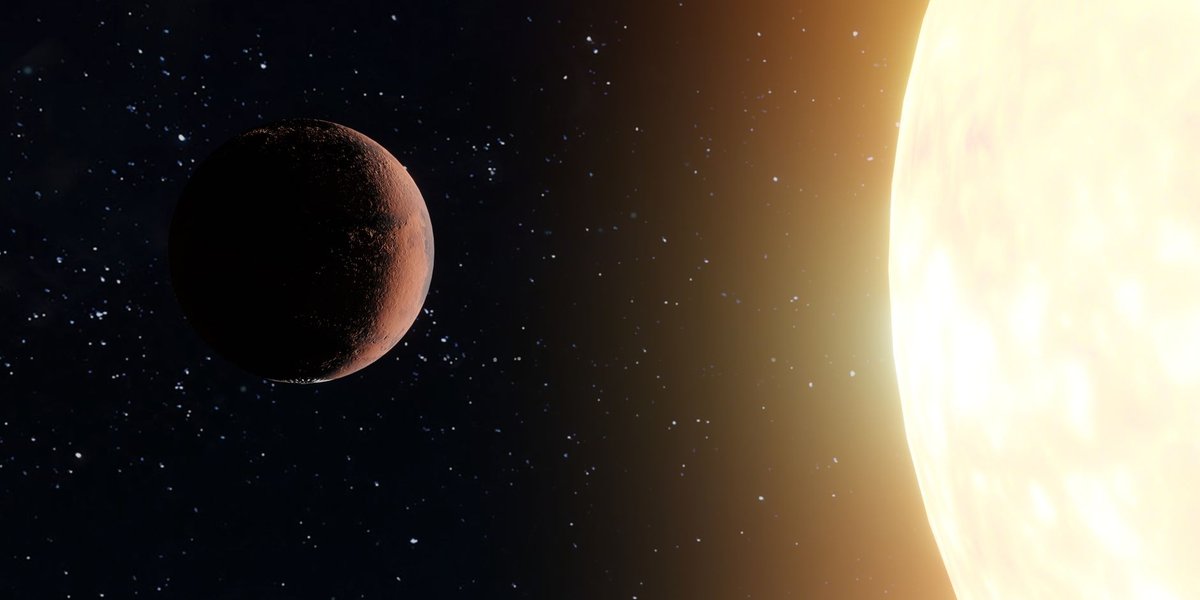
Mars, Jupiter, and Titan get most of the attention, and they’ve earned it. But the solar system has more than 290 named moons and five recognized dwarf planets, plus a back catalog of mythological names astronomers borrowed centuries before anyone pointed a telescope at the sky. Kepler, Vulcan, Atlas — most of them work as a first name for a boy without sounding like a prop from a planetarium gift shop.
This list sticks to what it promises. No constellations, no star names padding out the count. Just planets, their moons, the dwarf planets, and the mythological and scientific names tied directly to them — with pronunciation, meaning, and an honest read on whether each one actually works outside a nursery mood board.
Table of Contents
- Quick Answer
- Quick-Reference Table
- The Eight Planets
- Moons Worth Considering
- Dwarf Planets and Minor Worlds
- Mythological and Sci-Fi Planet Names
- Nicknames for Planet Names
- Are Planet Names Unisex?
- Sibling Name Pairings
- FAQ
Quick Answer
If you want something that reads as an obvious, sayable first name rather than a novelty: Mars, Jupiter, Atlas, Titan, and Kepler are the strongest picks. They’re short or naturally rhythmic, they don’t require a pronunciation guide, and none of them will make a teacher pause at roll call.
If you’re comfortable going further out — literally — Triton, Phobos, Oberon, Charon, and Vulcan carry real mythological weight and still function as names, just with a bit more explaining required at the birthday party.
Quick-Reference Table
| Name | Category | Meaning / Origin | Pronunciation |
|---|---|---|---|
| Mars | Planet | Roman god of war | MARZ |
| Jupiter | Planet | King of the Roman gods | JOO-pi-ter |
| Saturn | Planet | Roman god of agriculture and time | SAT-urn |
| Neptune | Planet | Roman god of the sea | NEP-toon |
| Mercury | Planet | Roman messenger god | MUR-kyoo-ree |
| Titan | Moon (Saturn) | The Titans, elder gods of Greek myth | TY-tun |
| Io | Moon (Jupiter) | A lover of Zeus in Greek myth | EYE-oh |
| Triton | Moon (Neptune) | Son of Poseidon, a merman god | TRY-tun |
| Atlas | Moon (Saturn) | Titan who held up the sky | AT-lus |
| Charon | Moon (Pluto) | Ferryman of the dead in Greek myth | KAIR-on |
| Oberon | Moon (Uranus) | King of the fairies, Shakespeare | OH-ber-on |
| Janus | Moon (Saturn) | Roman god of doorways and beginnings | JAY-nus |
| Prometheus | Moon (Saturn) | Titan who gave fire to humanity | pro-MEE-thee-us |
| Phobos | Moon (Mars) | Personification of fear | FOH-bos |
| Pluto | Dwarf planet | Roman god of the underworld | PLOO-toh |
| Makemake | Dwarf planet | Rapa Nui creator god | MAH-kay-MAH-kay |
| Kepler | Namesake | Astronomer Johannes Kepler | KEP-ler |
| Vulcan | Mythological/sci-fi | Roman god of fire and forge | VUL-kan |
The Eight Planets
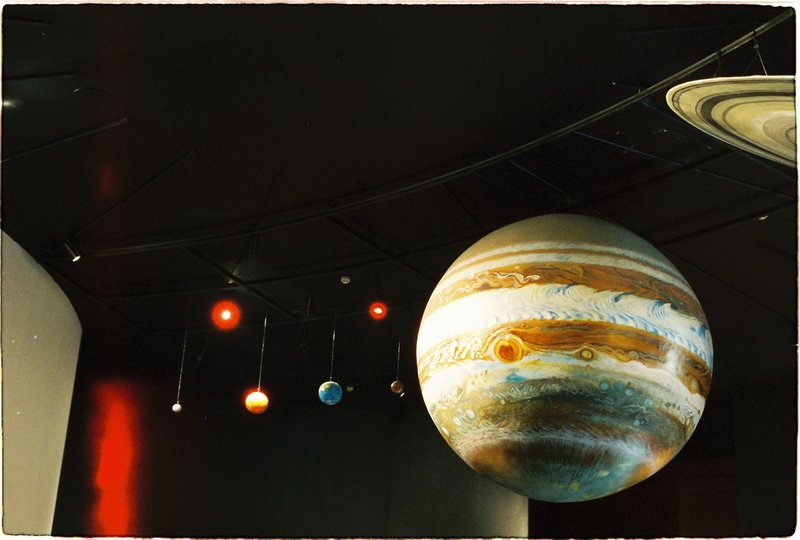
Only about half of the eight are realistic boy-name candidates, and it’s worth saying so up front instead of pretending otherwise.
Mars is the obvious one. Named for the Roman god of war, it’s a single syllable, it’s been a surname and a candy-bar name for a century, and it doesn’t need a spelling correction. According to NASA’s overview of the planet, Mars gets its reddish color from iron oxide dust on its surface — the same reason the god’s name stuck to a planet the color of blood.
Jupiter is the king of the Roman gods and the largest planet in the solar system, and the name has the swagger to match. Two syllables shorter as “Jupe,” it reads as strong without trying hard.
Saturn carries the myth of a god who ate his own children to avoid being overthrown — dark material, but nobody clocks that at the playground. As a name, it’s got the same rhythm as “Aaron” with a harder landing.
Neptune, god of the sea, is the rarer pick of the “big five.” It’s got a natural nickname in “Nep” and a real-world precedent: the Neptunes, the production duo behind a decade of hit records, put the name in front of millions of people who never thought of it as a planet first.
Mercury is usable but trickier — the car brand and the chemical element (a neurotoxin, no less) both compete for the association. It still works, especially with “Merc” as a nickname.
Uranus doesn’t make the realistic list. The pronunciation problem isn’t solvable with a birth certificate.
Venus and Earth are the two planets named for a female figure and a common noun, respectively — Venus is well-established as a girls’ name (see Venus Williams), and Earth reads as unisex but is used rarely enough for either that it sits outside the scope of this list.
Moons Worth Considering
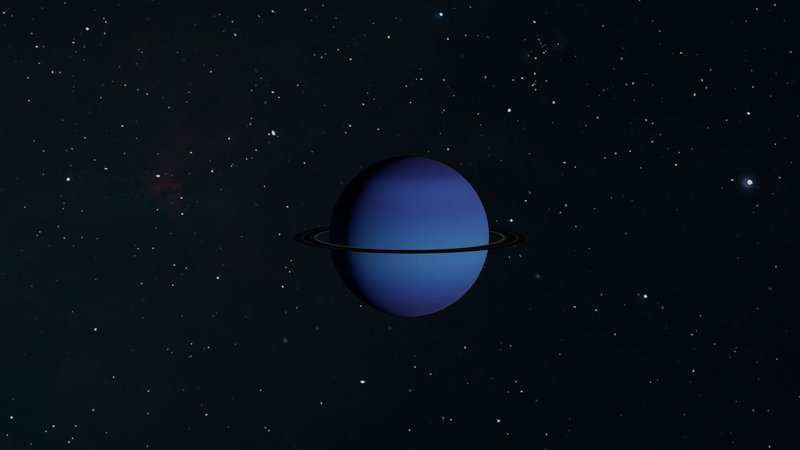
This is where the list opens up. The solar system’s moons draw almost entirely from Greek and Roman mythology, and a lot of the male figures in those myths never got turned into everyday names the way Jason or Adonis did — which means they’re sitting there, unclaimed.
Titan, Saturn’s largest moon, is named for the elder gods who ruled before the Olympians. It’s become a legitimately popular given name in its own right over the past decade, independent of its space origin — parents reach for it as a strong, one-syllable-feeling name the same way they reach for Atlas or Maverick.
Io, one of Jupiter’s four largest moons, is about as short as a name gets — two letters, one syllable. In myth, Io was a priestess turned into a heifer by a jealous Hera. As a name it reads clean and modern, closer to Leo or Theo than to anything mythological.
Triton, Neptune’s largest moon, is named for Poseidon’s son, usually depicted as a merman blowing a conch shell. It has the same three-syllable weight as Tristan without being a near-homophone.
Atlas, a small moon of Saturn, shares its name with the Titan condemned to hold up the sky. Outside astronomy, Atlas has quietly become one of the fastest-rising names in the English-speaking world over the last several years — it now shows up regularly among the more popular unconventional boy names, not as a novelty.
Charon, Pluto’s largest moon, is named for the ferryman who rows the dead across the river Styx. It’s an underused name with genuine gravity — literally, since Charon is so large relative to Pluto that the two are sometimes described as a double dwarf-planet system.
Oberon, a moon of Uranus, borrows from Shakespeare rather than mythology — he’s the king of the fairies in A Midsummer Night’s Dream. “Obie” is a built-in nickname that’s currently having its own moment as a standalone name.
Janus, another of Saturn’s moons, is named for the two-faced Roman god of doorways, transitions, and beginnings — the god January is named after. Hard to beat as a meaning if you’re naming a first child or one born at the start of a new year.
Prometheus, also orbiting Saturn, carries the name of the Titan who stole fire from the gods and gave it to humanity. It’s a mouthful, but it’s a mouthful with a story most people already half-know.
Phobos and Deimos, Mars’s two small moons, mean “fear” and “dread” — sons of Ares in Greek myth. Phobos works better as a standalone name; Deimos reads harder to say out loud without hesitating.
Dwarf Planets and Minor Worlds
Since the International Astronomical Union’s 2006 reclassification, the solar system officially has five recognized dwarf planets. The IAU’s naming conventions require each to draw from mythology tied to creation or the underworld, which is why this category skews unusual.
Pluto is the obvious one — Roman god of the underworld, name of a beloved (and controversial) former ninth planet, and about as recognizable a space name as exists. Demoted from full planet status or not, it still carries weight as a name, not just a punchline.
Makemake, the second-brightest object in the Kuiper Belt after Pluto, is named for the creator god of the Rapa Nui people of Easter Island — a genuinely distinctive choice for parents who want something no one else at the daycare will have.
Eris, Haumea, and Ceres round out the five, but all three are named for goddesses, which puts them outside a boys’ list on the strength of their mythology alone.
Mythological and Sci-Fi Planet Names
A few names orbit the planet-name category without being an actual planet, moon, or dwarf planet — either because they’re the mythological figure a planet was named after, or because science and science fiction have pulled them into the same orbit.
Vulcan is the Roman god of fire and the forge — Neptune’s blacksmith equivalent — and also the name briefly given to a hypothetical planet astronomers thought might exist inside Mercury’s orbit to explain irregularities in its motion. It turned out not to exist, but the name survived through Star Trek, which borrowed it for Spock’s home planet.
Kepler honors Johannes Kepler, the astronomer whose laws of planetary motion still get taught in physics class four centuries later — and whose name NASA reused for the space telescope that discovered thousands of planets orbiting other stars. As a first name, it reads modern and slightly unexpected, closer to a surname-as-first-name pick like Cooper or Sawyer than to a mythology reference.
Orion is technically a constellation rather than a planet, so it sits outside a strictly disciplined planet list — worth a mention only because it’s the name searchers most often expect to find here and won’t. For those interested in constellations and other sky-based names, astronomy names for boys explores a wider spectrum.
Nicknames for Planet Names
Full mythological names can feel like a lot for daily use. A few natural shortenings:
- Jupiter → Jupe or JJ
- Neptune → Nep
- Titan → Ty or Tate
- Triton → Tri
- Atlas → Al or Lasse
- Oberon → Obie
- Prometheus → Theo or Promo (informal)
- Mercury → Merc
- Charon → Ron
Are Planet Names Unisex?
Some are, most aren’t, and it’s worth being direct about which is which. Ariel — a moon of Uranus, and also a name that appears in the Book of Isaiah referring to Jerusalem — was historically a male name (Israeli statesman Ariel Sharon is a well-known example) before The Little Mermaid shifted the association firmly toward girls in the English-speaking world. Ceres, Eris, and Haumea are goddess names through and through, with no real history of male use. On the flip side, names like Atlas, Kepler, and Titan read as unisex-leaning-masculine in current naming trends — they show up on boys far more often, but nothing about the word itself is gendered, so they’d work for a daughter too if that’s the direction you’re leaning.
Sibling Name Pairings
Parents naming one child after a planet often want the sibling name to stay in the same universe without repeating the theme too literally.
- Mars and Luna (the Moon’s proper name)
- Atlas and Nova
- Titan and Stella
- Kepler and Vega
- Jupiter and Celeste
- Triton and Marina
- Orion and Andromeda (for two boys, drawing from constellations rather than planets to avoid overlap)
FAQ
Is Mars a good baby name? Yes — it’s short, easy to spell, easy to pronounce, and carries a clear, positive mythological meaning (the god of war, associated with strength and courage) without any awkward real-world associations.
Are planet names unisex? A handful are. Most planet and moon names split fairly cleanly by the gender of the mythological figure they’re named for — gods lean toward boys’ names, goddesses toward girls’. Ariel is the clearest example of a name that has moved between the two over time.
Can you actually name a baby Pluto? Nothing stops you, and it’s a real name with a real mythological pedigree — the fact that Pluto lost its “planet” classification in 2006 doesn’t change that it was the Roman god of the underworld first and a planet second.
What’s the most popular planet-inspired boy name right now? Among names tied to the solar system, Atlas and Titan have shown the clearest upward movement in recent years, based on the Social Security Administration’s public baby name data, which anyone can check for the most current U.S. rankings.
Is Jupiter a real name people actually use? Yes, though it remains uncommon. It’s recognized as a legitimate given name in most naming databases and carries none of the pronunciation friction that keeps names like Uranus off this list.
Enjoyed this article?
Get daily 10-minute PDFs about astronomy to read before bed!
Sign up for our upcoming micro-learning service where you will learn something new about space and beyond every day while winding down.