Germany gave astronomy its planetary laws, its first measured star distance, the sighting of Neptune and the first picture of a black hole. Most lists of German astronomers rank people by popularity and stop there. This one runs in order of birth, so you can watch each generation use the last one’s tools, data and mistakes.
Every entry below has one concrete contribution and the reason it still matters. The usual gaps are filled too: two women who found comets, the Herschel nationality question, and a Neptune story that depends on a Berlin star chart.
Contents
- Quick Reference: German Astronomers at a Glance
- Early German Astronomers: 1400s to 1600s
- The 1700s: Comets, a New Planet and Lost Asteroids
- The 1800s: Distances, Spectra and Star Catalogs
- The Modern Era: Relativity to Black Hole Images
- FAQ
Quick Reference: German Astronomers at a Glance
| Astronomer | Years | Known for |
|---|---|---|
| Regiomontanus | 1436–1476 | Printed astronomical tables used by navigators |
| Michael Maestlin | 1550–1631 | Teaching Kepler; early Copernican |
| Johannes Kepler | 1571–1630 | Three laws of planetary motion |
| Simon Marius | 1573–1625 | Naming Jupiter’s four big moons |
| Maria Margaretha Kirch | 1670–1720 | First woman to discover a comet |
| Tobias Mayer | 1723–1762 | Lunar tables for finding longitude |
| William Herschel | 1738–1822 | Discovering Uranus |
| Caroline Herschel | 1750–1848 | Eight comets |
| Johann Elert Bode | 1747–1826 | Bode’s law and the Uranographia atlas |
| Heinrich Wilhelm Olbers | 1758–1840 | Pallas, Vesta and Olbers’ paradox |
| Friedrich Bessel | 1784–1846 | First stellar parallax (61 Cygni) |
| Joseph von Fraunhofer | 1787–1826 | Dark lines in the Sun’s spectrum |
| Heinrich Schwabe | 1789–1875 | The sunspot cycle |
| Friedrich Argelander | 1799–1875 | Bonner Durchmusterung star catalog |
| Johann Gottfried Galle | 1812–1910 | First sighting of Neptune |
| Karl Schwarzschild | 1873–1916 | First exact solution to Einstein’s equations |
| Walter Baade | 1893–1960 | Stellar populations; doubling the distance scale |
| Heino Falcke | b. 1966 | First image of a black hole |
Early German Astronomers: 1400s to 1600s
Regiomontanus (1436–1476)
Johannes Müller took the name Regiomontanus from his hometown, Königsberg in Franconia. He set up a printing press in Nuremberg in 1471 and used it to publish astronomical tables, which made accurate star and planet positions something a ship’s navigator could buy instead of copy by hand. His Ephemerides of 1474 are the ones Columbus is said to have carried. He also wrote the Epitome of the Almagest, the book that taught a generation of astronomers, Copernicus included, how Ptolemy’s system actually worked.
Michael Maestlin (1550–1631)
Maestlin taught mathematics at Tübingen and is remembered mostly for his student. Kepler learned about Copernicus from him, and Maestlin taught the Sun-centered model privately while teaching Ptolemy’s in lectures. His own work was careful: he showed that the Great Comet of 1577 sat beyond the Moon, and in 1579 he plotted 11 stars in the Pleiades with the naked eye. When Kepler needed an honest critic, this was the man he wrote to.
Johannes Kepler (1571–1630)
Kepler worked out that planets move in ellipses, not circles, after wrestling with Tycho Brahe’s Mars data for years. Two of his three laws appeared in Astronomia Nova (1609): planets sweep equal areas in equal times, and orbits are ellipses with the Sun at one focus. The third, linking orbital period to distance, came in 1619. His Rudolphine Tables of 1627 predicted planetary positions better than anything before them.
That’s why NASA named its planet-hunting telescope after him. Kepler’s third law is still how astronomers weigh a star from the orbit of one planet around it.
Simon Marius (1573–1625)
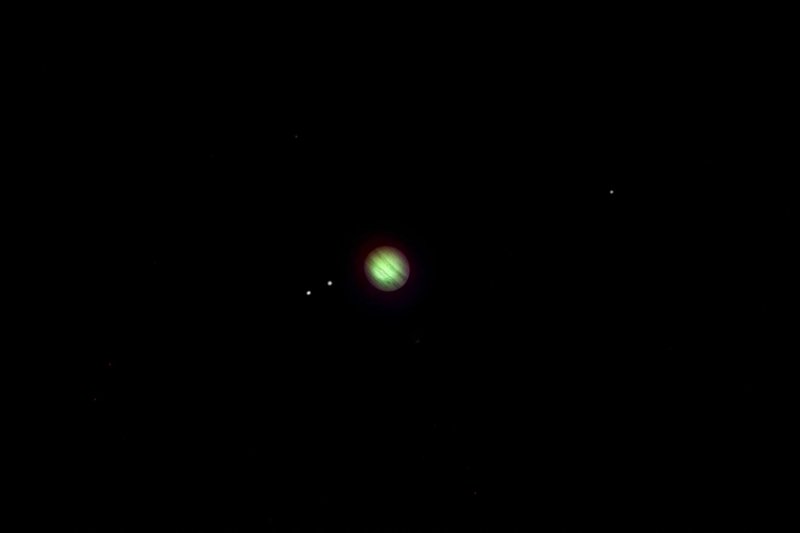
Marius, court mathematician in Ansbach, looked at Jupiter in late 1609 and saw the same four moons Galileo did. Galileo accused him of stealing the discovery, and the quarrel is old enough that Galileo’s name stuck to the moons for centuries. Marius did get the last word on one thing: Io, Europa, Ganymede and Callisto are his names, suggested to him by Kepler. He also gave the first telescopic description of the Andromeda Galaxy, in 1612, calling it a candle flame seen through horn.
The 1700s: Comets, a New Planet and Lost Asteroids
Maria Margaretha Kirch (1670–1720)
Kirch (born Winkelmann) trained as an astronomer in an era when women could not hold university posts, then married the astronomer Gottfried Kirch and worked alongside him at the Berlin Academy. In 1702 she discovered a comet, the first woman known to do so, though the credit went to her husband in the published record at first. After his death in 1710 she asked the Academy for a post and was refused. She kept observing from home anyway, and later helped her son and daughters become astronomers too.
Tobias Mayer (1723–1762)
Mayer, from Göttingen, drew a lunar map precise enough to measure the Moon’s tilt and built tables of its motion accurate to about a minute of arc. Sailors could use them to find longitude by measuring the Moon’s distance from a star. Britain’s Board of Longitude paid his widow £3,000 in 1765. Mayer died at 39, which makes the tables more impressive, not less.
William Herschel (1738–1822)
Herschel was born in Hanover and moved to England at 19 to work as a musician. On 13 March 1781 he spotted an object from his garden in Bath that moved against the stars. It was Uranus, the first planet found with a telescope. He also discovered infrared radiation in 1800 by putting a thermometer past the red end of a prism’s spectrum.
Caroline Herschel (1750–1848)
On the nationality question: both Herschels were born in Hanover, whose ruler was also King of Great Britain, and both spent their working lives in England. “German-born, British-based” is the accurate phrase, and both entries belong on a German list. Caroline started as her brother’s assistant and ended as the first woman paid for scientific work in Britain. She found eight comets between 1786 and 1797 and discovered several nebulae. The Royal Astronomical Society gave her its gold medal in 1828, and at 96 Prussia’s king gave her a gold medal for science.
Johann Elert Bode (1747–1826)
Bode directed the Berlin Observatory for nearly four decades and made its yearbook, the Astronomisches Jahrbuch, a standard reference. He is best known for Bode’s law, a numerical pattern for planetary distances that fit Uranus when it turned up in 1781 and seemed to predict a missing planet between Mars and Jupiter. The law has no known physical basis and fails at Neptune. His Uranographia atlas of 1801 plotted more than 17,000 stars and nebulae and was the best sky atlas of its day.
Heinrich Wilhelm Olbers (1758–1840)
Olbers practiced medicine in Bremen and watched the sky from the top floor of his house. He found the asteroids Pallas in 1802 and Vesta in 1807, and developed a quick method for computing a comet’s orbit that astronomers used for a century. His name is on a question: if the universe were infinite, static and full of stars, every line of sight would end on a star and the night sky would blaze. It doesn’t, and the modern answer is that the universe has a finite age.
The 1800s: Distances, Spectra and Star Catalogs
Friedrich Bessel (1784–1846)
Bessel started as an apprentice clerk in a Bremen trading house and taught himself navigation. He computed the orbit of Halley’s Comet from old observations and sent the result to Olbers, who got him a job at Königsberg Observatory. In 1838 he measured the parallax of 61 Cygni, the tiny shift in a star’s apparent position as Earth orbits the Sun. His 0.31 arcseconds put the star near 10 light-years away; the modern figure is 11.4. It was the first real distance to any star, and it settled the question of whether stars could be measured at all.
Joseph von Fraunhofer (1787–1826)
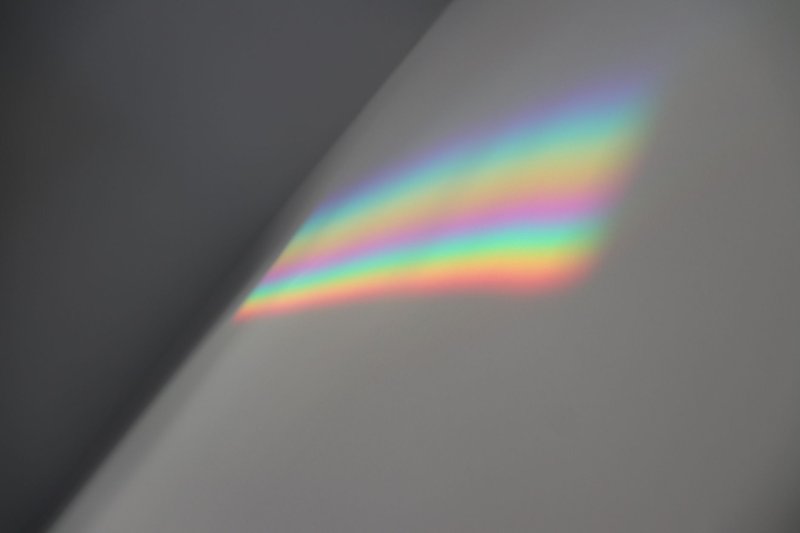
Fraunhofer was orphaned young and apprenticed to a glassmaker in Munich. He became the best lens-maker in Europe, and in 1814 he used his prisms to map 574 dark lines in the Sun’s spectrum, labeling the strongest ones with letters. Those lines are the fingerprints of elements in the Sun’s atmosphere, which is how astronomers later learned what stars are made of. His lenses went into the Dorpat refractor and into the Berlin telescope that found Neptune. He died at 39.
Heinrich Schwabe (1789–1875)
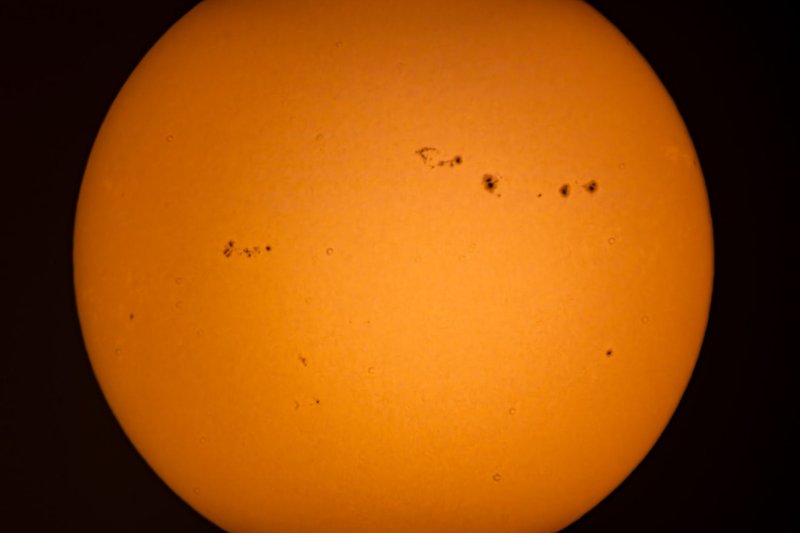
Schwabe was a pharmacist in Dessau who spent 17 years drawing the Sun, nearly every clear day. He was hunting a planet inside Mercury’s orbit by watching for its shadow crossing the Sun. He found no planet, but his drawings showed that sunspot numbers rise and fall in a cycle of roughly a decade. He announced it in 1843, and the 11-year solar cycle is now central to space-weather forecasting.
Friedrich Argelander (1799–1875)
Argelander was Bessel’s student and, at Bonn, produced the Bonner Durchmusterung, published between 1859 and 1862. It lists the positions and brightness of 324,198 stars across the northern sky, all measured without photography, with a small telescope and a team working through the nights. He also pioneered the study of variable stars, developing a visual method for estimating changes in brightness that amateurs still use.
Johann Gottfried Galle (1812–1910)
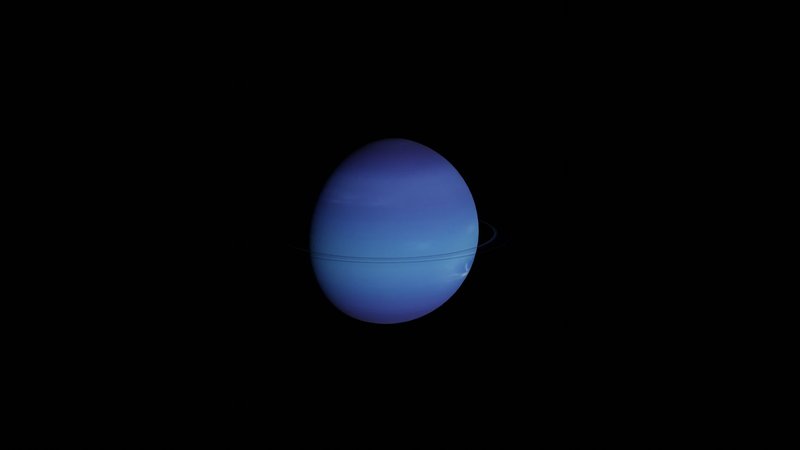
On the night of 23 September 1846, Galle received a letter from Urbain Le Verrier in Paris giving a predicted position for an unseen planet. Galle and his student Heinrich d’Arrest pointed the Berlin refractor there and checked the field against a new star chart from the Berlin Academy. One “star” wasn’t on the chart, less than a degree from Le Verrier’s prediction. That was Neptune.
The chart is the overlooked part. A 2021 arXiv paper argues that German star charts were essential to the discovery, and that without a recent, detailed map of that patch of sky the search could have dragged on. Galle lived to 98 and was alive when Halley’s Comet returned in 1910.
The Modern Era: Relativity to Black Hole Images
Karl Schwarzschild (1873–1916)
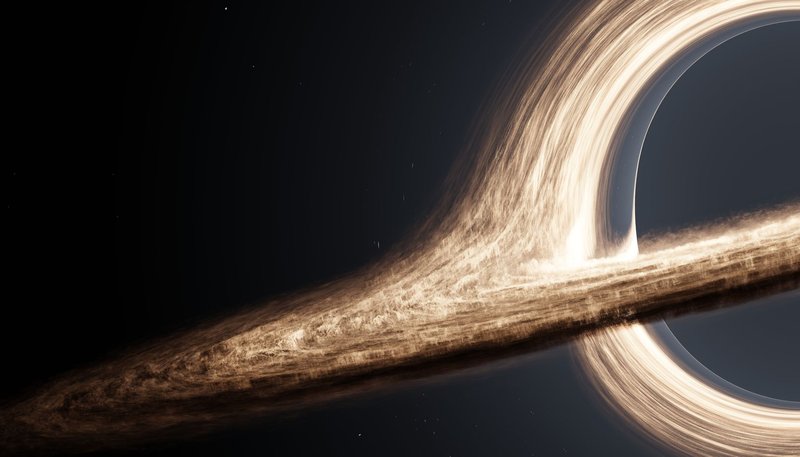
Schwarzschild directed the Potsdam Astrophysical Observatory from 1909. In 1915, serving in the German army on the Russian front, he wrote Einstein the first exact solution to the field equations of general relativity, describing the space around a single non-rotating mass. It contained what we now call the Schwarzschild radius, the size to which an object must shrink to become a black hole. Einstein presented the paper for him. Schwarzschild died the next year at 42 of a skin disease contracted at the front.
Walter Baade (1893–1960)
Baade moved from Hamburg to the Mount Wilson Observatory in California. During the wartime blackout of Los Angeles in 1943 he resolved individual stars in the center of the Andromeda Galaxy and sorted stars into two groups, young metal-rich Population I and old metal-poor Population II. That split led him to find that two kinds of Cepheid variable stars had been mixed together in distance measurements. Fixing it in 1952 roughly doubled the size of the known universe. With Fritz Zwicky he also coined the term “supernova” and proposed that these explosions leave neutron stars behind.
Heino Falcke (b. 1966)
Falcke, a professor at Radboud University in the Netherlands, argued in a 2000 paper that a supermassive black hole should cast a visible shadow against the glowing gas around it. He then spent two decades helping to build the instrument to test it. On 10 April 2019 the Event Horizon Telescope collaboration released the first image of a black hole, the one at the center of galaxy M87, 55 million light-years away. Falcke was one of its leading scientists.
FAQ
Who is the most famous German astronomer?
Johannes Kepler. His laws of planetary motion are taught in every introductory astronomy course, and they led directly to Newton’s theory of gravity.
Were William and Caroline Herschel German?
By birth, yes. Both were born in Hanover. They moved to England and worked there for life, so they are usually described as German-born British astronomers.
Which German astronomer discovered Neptune?
Johann Gottfried Galle was the first to see it, in Berlin in 1846. The position came from Urbain Le Verrier’s calculations in France. John Couch Adams in England had made a similar prediction independently.
Were there German women astronomers before the 1900s?
Yes. Maria Margaretha Kirch discovered a comet in 1702 and Caroline Herschel found eight between 1786 and 1797. Both worked in a system that did not allow them professional positions, and both are regularly left off ranked lists.
Why isn’t Copernicus on the list?
Nicolaus Copernicus was born in Toruń, in Royal Prussia under the Polish crown, and Poland claims him. Germans have claimed him too, and the argument has never been settled, so this list leaves him out. Johannes Hevelius of Danzig, whose lunar maps are famous, sits in the same gray zone.
Are there German astronomers working today?
Yes. Besides Heino Falcke, Reinhard Genzel of the Max Planck Institute for Extraterrestrial Physics shared the 2020 Nobel Prize in Physics for evidence of a supermassive black hole at the center of the Milky Way.