Utah has one full-scale public planetarium, one tiny campus dome that hosts free evening shows, and one mobile dome that mostly visits schools. That’s the whole list. Here’s how they compare, and how to pick.
Contents
- Quick reference
- Clark Planetarium, Salt Lake City
- Snow College Planetarium, Ephraim
- SUU Planetarium, Cedar City
- What about St. George?
- Which planetarium should you visit?
- Pairing a visit with a dark sky park
Quick reference
| Venue | City | Type | Cost | Seating | Open to the public |
|---|---|---|---|---|---|
| Clark Planetarium | Salt Lake City | Public | Free exhibits; paid theatre shows | Large dome and IMAX theatres | Yes, daily |
| Snow College Planetarium | Ephraim | Campus | Free public evening shows | 25 adults | Yes, on scheduled nights |
| SUU Planetarium | Cedar City | Campus, mobile | Varies by booking | Portable dome | Mostly school and group visits |
Prices and schedules change, so check each venue’s site before you drive.
Clark Planetarium, Salt Lake City
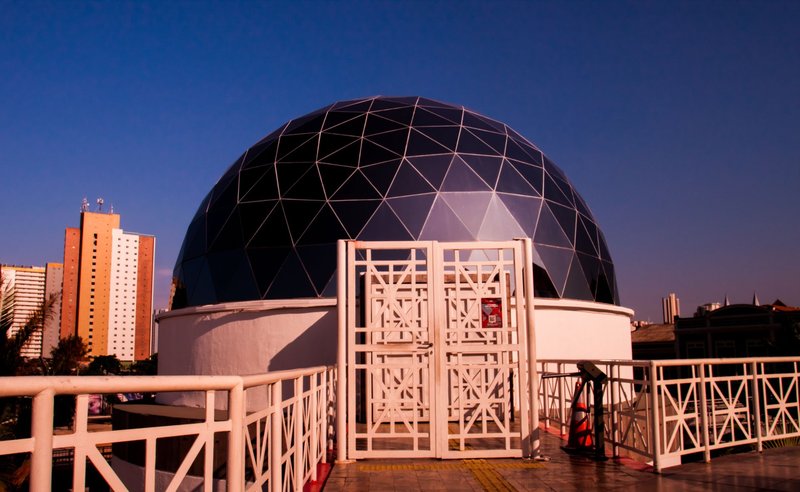
Clark is the one to build a day around. It sits downtown at The Gateway, and the ground-floor exhibit hall costs nothing to walk through. That’s the first answer to anyone searching for free things to do in Utah with kids: you can spend an hour with real space hardware and touch-screen displays without buying a ticket.
The paid part is the two theatres. One is an IMAX screen that runs large-format films, often on space, science and nature. The other is a digital dome, where a projection system fills the ceiling and the show can be a tour of the night sky, a trip through the solar system or a full-dome film. The dome is the reason to come. A flat screen can’t make you feel the scale of a nebula, and a dome gets closer than anything else in the state.
What to expect with kids:
- Under 5: the exhibits are the safe bet. Dark theatres and loud sound can be a lot for toddlers, so check a show’s rating and running time first.
- Ages 6 to 12: the sweet spot. Pair one dome show with the exhibit hall and you’ve filled a morning.
- Teens and adults: go for the dome programs that focus on the current night sky. They’re the closest thing to a live guide.
Practical tips: book theatre tickets ahead on school holidays and weekends, since shows are timed and can sell out. Downtown parking is paid, and the venue is close to public transit if you’d rather skip it. The building is designed for wheelchair access, but call ahead if you need specific accommodations for the theatres.
Snow College Planetarium, Ephraim
Snow College’s planetarium is small on purpose. It seats only 25 adults, and it’s the only permanent fixed-dome planetarium south of Provo. If you live in central or southern Utah, this is your nearest dome.
Public evening shows are free, and that scale is the appeal. With 25 seats, the presenter can answer questions mid-show, and the sky on the ceiling is whatever the audience asks about. It feels more like a guided evening with an astronomer than a screening.
The catch is capacity. Seats go fast, so reserve through the college’s planetarium page rather than showing up hoping. Shows run on scheduled evenings, not daily. Private shows for classes and groups can be booked separately, and school-age kids are the natural audience. Very young children will struggle to sit still in a dark room for that long.
Parking on a campus in the evening is usually easy, but ask when you book which lot is closest to the science building.
SUU Planetarium, Cedar City
Southern Utah University’s planetarium is a mobile outreach unit. It doesn’t have a fixed public theatre you can drop in on. Instead, an inflatable dome travels to schools, especially rural ones that would otherwise have no planetarium within hours.
That makes it a good option for teachers and school administrators, and a poor one for a family looking for a Saturday outing. If you’re an educator in southern Utah, contact SUU to ask about booking, availability and age-appropriate programs. If you’re a parent, ask your child’s school whether a visit is on the calendar.
What about St. George?
St. George has no planetarium, but the idea has been around. A local news report described a proposed planetarium that was gaining momentum, and it’s worth watching if you live in Washington County. For now, the nearest options are Snow College’s dome to the north or a visit from SUU’s mobile unit.
Which planetarium should you visit?
- Visiting Salt Lake City with kids: Clark. It’s free to enter, and you choose how much to spend on shows.
- Living in central Utah and wanting a real astronomer’s talk: Snow College, on a free evening.
- A teacher or school administrator in a rural district: SUU’s mobile dome.
- A rainy-day plan for a big group: Clark. The other two aren’t built for crowds.
Pairing a visit with a dark sky park
A planetarium shows you a simulated sky. Utah’s dark sky parks show you the real one, and the two work as a set.
Utah has more certified International Dark Sky Parks than any other state, and Natural Bridges National Monument was the first place in the world to earn that designation, in 2007. The International Dark-Sky Association lists others across the state, including Capitol Reef, Bryce Canyon and Arches.
Some pairings that work:
- Clark, then a night in the desert. See the constellations at the dome, then drive south and find them for yourself.
- Snow College, then Capitol Reef. Ephraim is the closest dome to the parks of south-central Utah. Catch an evening show, then head for darker skies the next day.
- A school visit from SUU, then a family trip. Once kids have seen the dome, take them to a park where the Milky Way is visible without a telescope.
Go around a new moon if you can, and bring a red flashlight. It keeps your eyes adapted to the dark, and the planetarium presenters will tell you the same thing.