
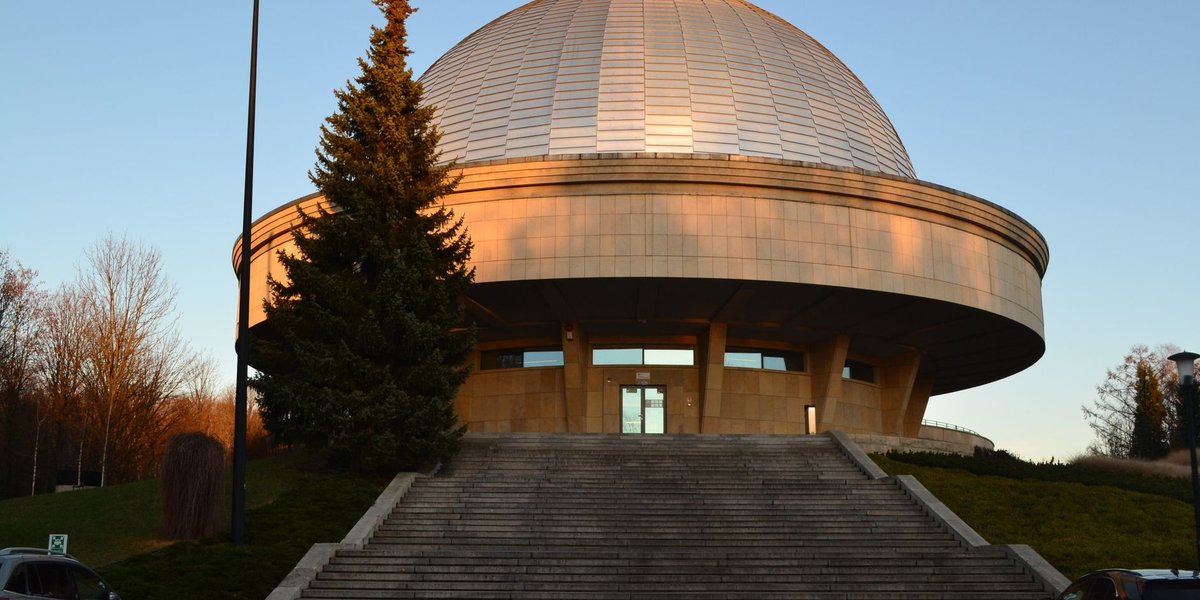
Arizona has some of the darkest skies in the lower 48, and almost nobody builds a planetarium trip around that. The state has three public domes worth planning a day around: one in Phoenix, one in Tucson, one in Prescott. They’re nothing alike. One is an 8K LED theater, one runs live star talks and laser music nights, and one is a college dome that is the only one in northern Arizona.
Most listings for planetariums in Arizona name one or two and stop. This guide covers all three, side by side, and then points you to the observatories and dark-sky spots that make a good second stop.
Contents
- Quick picks
- Phoenix: Dorrance DOME at Arizona Science Center
- Tucson: Flandrau Science Center and Planetarium
- Prescott: Jim and Linda Lee Planetarium
- What about Flagstaff?
- Pair each dome with a real sky
- Visiting tips
Quick picks
| Pick | Venue | City | Why |
|---|---|---|---|
| Best for kids | Flandrau Science Center | Tucson | Live star talks and a full science center around the dome |
| Best tech | Dorrance DOME | Phoenix | 60-foot, 8K LED dome seating 205 |
| Best day trip | Jim and Linda Lee Planetarium | Prescott | 116 seats, the only dome in northern Arizona, easy to pair with a mountain town day |
If you only have one outing, go where you already are: Phoenix people to the Dorrance, Tucson people to Flandrau. Prescott is worth a drive from either, but it’s a trip, not an errand.
Phoenix: Dorrance DOME at Arizona Science Center {#phoenix-dorrance-dome}
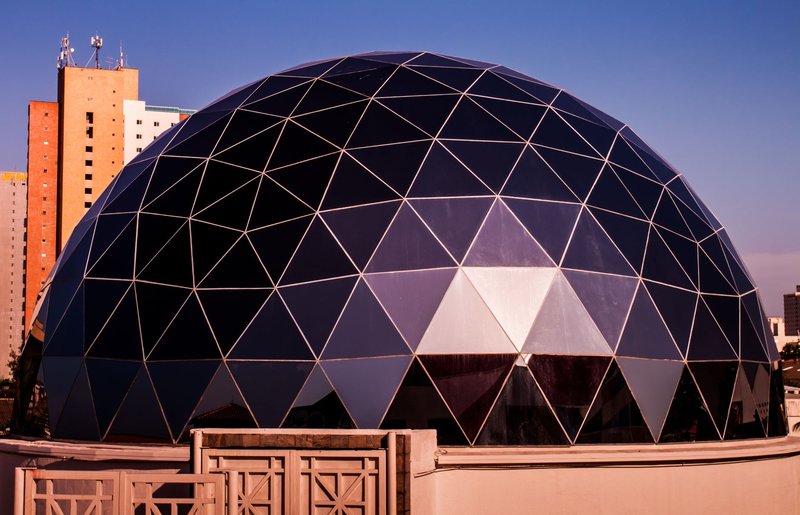
Dome: 60-foot, 8K LED, Cosm CX system. Seats: 205. Best for: visitors who want spectacle.
The Dorrance DOME reopened in October 2025 after a rebuild, and it isn’t the planetarium it used to be. The old projector dome is gone. In its place is a wraparound LED screen, the same kind of display technology Cosm builds for its shared-reality venues, with brightness and black levels that a projector can’t match. In a space show, black is the whole point. Stars on a projected dome look like faint gray dots on a gray ceiling. On an LED dome they look like stars.
What’s playing changes, and not everything on the schedule is astronomy. Some programming is nature, travel or entertainment content that uses the dome for scale. If you’re coming specifically for space, check the current schedule before you buy.
It sits inside Arizona Science Center in downtown Phoenix, so you can combine the dome with the museum’s exhibits and make a half day of it. Phoenix is also where the brief window between summer heat and winter tourist traffic is hardest to plan, so book dome tickets ahead on busy weekends.
Tip: Sit in the middle third of the room. On a wraparound screen, the front rows put the image above you and the back rows flatten it.
Tucson: Flandrau Science Center and Planetarium {#tucson-flandrau}
Dome: Eos Foundation Planetarium Theater. Best for: families, students, repeat visits.
Flandrau is run by the University of Arizona, which tells you something about the programming. Tucson is a university astronomy town, with Steward Observatory and the Mirror Lab on the same campus, and the planetarium reflects it: live star talks where a presenter walks you through tonight’s sky, not just a pre-rendered film.
That live format is the main reason to pick Flandrau over a bigger screen. A presenter can answer a kid’s question about why Mars looks orange. A film can’t.
The center also runs laser music nights, which are exactly what they sound like: laser shows set to albums, aimed at an older crowd than the daytime school groups. And the venue has a reputation beyond Tucson. USA Today readers ranked Flandrau fourth among planetariums in the country in their readers’ choice poll.
Flandrau is more than a dome. There are exhibits, a mineral collection and often an observatory open on clear evenings, so a visit can fill a morning or an evening depending on what’s scheduled.
Tip: Check whether a live star talk or a film is running at the time you’re visiting. They’re different experiences at different price points, and school groups fill weekday mornings.
Prescott: Jim and Linda Lee Planetarium {#prescott-embry-riddle}
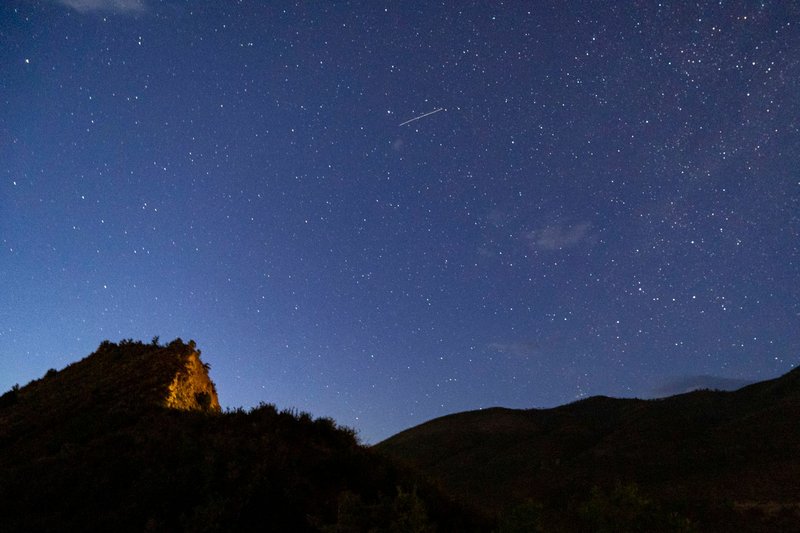
Dome: 116 seats. Where: Embry-Riddle Aeronautical University. Best for: a day trip, small groups.
The Lee Planetarium is the only planetarium in northern Arizona, and it’s the smallest of the three. That’s an advantage. At 116 seats, it feels like a classroom with the lights off, not an event. Seats are close enough to the presenter that a talk can turn into a conversation.
Its home is Embry-Riddle’s Prescott campus, an aviation and aerospace university, so shows lean toward spaceflight, planetary science and astronomy for people who like how things fly. Public show times are limited compared with the two city venues, so check the university’s calendar and plan around it instead of showing up.
Prescott works as a day trip from Phoenix because the drive climbs into pines and cooler air, and the downtown square has plenty of lunch options. Summer visitors from the Valley get a ten-to-twenty-degree break just from the elevation.
Tip: Because schedules are limited, treat the planetarium as the anchor of the trip and build lunch and a walk around it, not the other way round.
What about Flagstaff? {#what-about-flagstaff}
Flagstaff has no public planetarium dome on the scale of the three above, and most guides skip it. It still belongs on any Arizona astronomy itinerary because Flagstaff was designated the world’s first International Dark Sky City in 2001, and it has Lowell Observatory, where Pluto was discovered in 1930.
Think of Flagstaff as the place you go after the dome. Planetariums show you simulated skies, and Lowell lets you look through real telescopes at the real one. Public observing there depends on weather and season, so check before driving.
Pair each dome with a real sky {#pair-with-observatories}
A planetarium works best as the first half of a day. See the show, learn what’s up this month, then go find it.
- Phoenix: After the Dorrance, drive out of the Valley. The glow from the metro area is strong, so the useful dark sites start well outside the city. Pick a night near the new moon.
- Tucson: Flandrau pairs naturally with the mountains around the city. Kitt Peak National Observatory, southwest of Tucson, runs public programs, and Mount Lemmon, north of the city, has public stargazing through the University of Arizona’s SkyCenter. Check both for current schedules and reservations.
- Prescott: Combine the Lee Planetarium with a night out in the Prescott National Forest, where the sky darkens quickly away from town. Or continue north to Flagstaff.
Visiting tips {#visiting-tips}
- Schedules change. Show lineups, ticket prices and hours at all three venues change throughout the year. Verify on the venue’s website before you go, and treat any price or time you read elsewhere, including here, as a starting point.
- Book ahead for weekends and holidays. Smaller domes, like the Lee Planetarium, sell out first.
- Ask about the format. A live star talk, a full-dome film and a laser show are three different products, even in the same room.
- Check the moon. If you’re planning to follow the dome with observing, a new moon gives you the darkest sky, and a full moon washes out everything faint.
- Bring a layer. Domes are air-conditioned, and the desert at night gets colder than visitors expect, especially at elevation.
That’s the whole state: three domes, three different jobs. Pick the one that fits your group, then walk outside afterward and look up.