Most articles about Chinese astronomy are really articles about instruments, dynasties, and star catalogues — the field, not the people who built it. Search “Chinese astronomers” and you get timelines of inventions with names dropped in as footnotes: Zhang Heng gets a sentence, Guo Shoujing gets a caption.
That’s backwards. Nine people did the actual work of watching the sky, arguing with the imperial court about calendars, and building the instruments that made the observations possible in the first place. Here they are, in the order they worked, from the fourth century BC to the radio telescope currently listening for pulsars in a sinkhole in Guizhou.
Table of Contents
- Gan De and Shi Shen
- Zhang Heng
- Shen Kuo
- Su Song
- Guo Shoujing
- Wang Zhenyi
- Zhang Yuzhe
- Nan Rendong
- A rough timeline
Gan De and Shi Shen
4th century BC
Gan De and Shi Shen were rival court astronomers working in different states during China’s Warring States period, and between them they produced the oldest star catalogue anyone has found anywhere in the world — a couple of centuries before Hipparchus started his in Greece.
Gan De’s catalogue reportedly listed around 800 stars, organized by the same “three enclosures, 28 lodges” system that Chinese astronomy would keep using for the next two thousand years. Shi Shen worked independently but arrived at a compatible system, and later scholars combined both men’s records into a single reference used well into the imperial era. Neither man’s original text survived intact — what we have comes from later compilations — but the underlying star positions have checked out against modern calculations closely enough that historians treat the catalogue as genuine fourth-century observation, not later invention.
Zhang Heng
78–139 AD
Zhang Heng is the name most people half-remember from a textbook footnote about earthquake detectors, which undersells him. He was the Han court’s astronomer royal, and in 120 AD he wrote Ling Xian (“The Spiritual Constitution of the Universe”), a treatise that described a spherical universe with the Earth at the center, correctly explained solar and lunar eclipses as one body blocking the light of another, and worked out that the moon shines by reflected sunlight rather than its own light.
He also built a water-powered armillary sphere — a nested set of rings that modeled the celestial sphere’s rotation — and used it to catalogue roughly 2,500 stars organized into 124 constellations, a scheme more granular than anything Western astronomy had at the time. His seismoscope, a separate invention, is the one that made it into pop-science lists, but the star work is the reason later Chinese astronomers cited him for a thousand years.
Shen Kuo
1031–1095
Shen Kuo ran the Bureau of Astronomy under the Song court and used the job to run actual experiments, which was not universal practice at the time. He built improved gnomons and water clocks to pin down the exact length of the solar year and the timing of solstices, and he used models of the sun, moon, and Earth to demonstrate — correctly — that lunar and solar eclipses happen because the celestial bodies are spherical, not flat discs, and that an eclipse is one sphere’s shadow crossing another.
He also noticed something nobody else had written down: magnetized needles point toward true north with a small, consistent offset from geographic north — what we now call magnetic declination. That observation, tucked into a broader treatise on compasses, predates the West’s discovery of the same effect by roughly four centuries. Shen Kuo wasn’t a specialist in the way a modern astronomer is; he moved between astronomy, geology, and engineering in the same career, which was normal for a Song-dynasty polymath and exactly why his eclipse models held up.
Su Song
1020–1101
Su Song’s reputation rests on one object: an astronomical clock tower built in Kaifeng around 1092, powered by a water-driven escapement mechanism that some historians consider the direct ancestor of the mechanical clock escapement Europe wouldn’t develop for another two centuries. The tower combined a working armillary sphere, a celestial globe that rotated in sync with the night sky, and a set of mechanical figures that announced the hours — an automated observatory and clock in one structure, roughly ten meters tall.
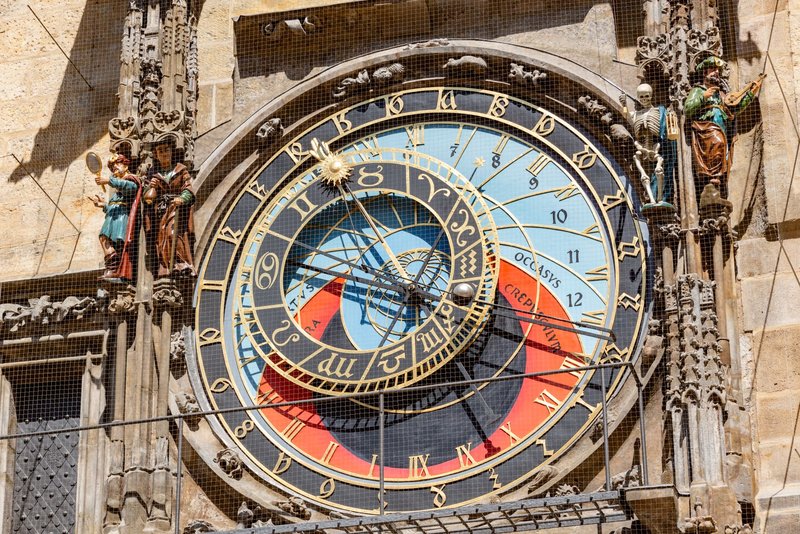
The tower’s real legacy, though, is on paper. Su Song’s star maps, published alongside his description of the clock, are the oldest printed star charts that still exist. Earlier Chinese star catalogues survive only through later copies and citations; Su Song’s went straight to woodblock print, which is why we can look at them today rather than reconstruct them from someone else’s summary.
Guo Shoujing
1231–1316
Guo Shoujing worked under Kublai Khan, and when the Yuan court asked him to fix the calendar, he didn’t trust the existing instruments enough to try. He built roughly seventeen new astronomical instruments first, including a simplified armillary sphere that stripped out redundant rings to reduce measurement error — a design choice that MacTutor’s history of mathematics archive at the University of St Andrews credits as genuinely original engineering, not a refinement of earlier Chinese or Islamic designs.
With better instruments came better numbers: Guo used a large-scale gnomon and shadow measurements taken across a nationwide network of observation stations to calculate the length of the tropical year at 365.2425 days — accurate to within about 26 seconds of the modern value, and matching the precision of the Gregorian calendar that Europe wouldn’t adopt for another three hundred years. His Shoushi calendar, built on that measurement, stayed in official use for the rest of the Yuan dynasty and into the Ming.
Wang Zhenyi
1764–1797
Wang Zhenyi doesn’t fit the pattern of the men above her: no court appointment, no state calendar to fix, and a career cut short at 29. What she had instead was a garden pavilion in Nanjing where she built her own eclipse simulator — a round table standing in for the Earth, a hanging crystal lamp as the sun, a mirror as the moon — and physically moved the pieces through their real orbital relationships until the shadows lined up the way eclipses actually happen.
The resulting essay, Dispute of the Lunar Eclipse, lays out the mechanics of lunar eclipses with a level of physical reasoning that modern historians of science single out as unusually rigorous for the period, because she tested it rather than just citing earlier authorities. She also wrote in defense of the idea that the Earth is round and argued for the practical superiority of the Western solar calendar over strict lunar reckoning, at a time when both positions were still contested in Chinese scholarly circles. She’s had an asteroid and a Venusian crater named after her since, but the pavilion experiment is the detail worth remembering.
Zhang Yuzhe
1902–1986
Zhang Yuzhe is generally credited as the founder of modern Chinese astronomy, and the title isn’t just honorary — he earned his astronomy PhD at the University of Chicago in the 1920s, then went home instead of staying in American academia. While observing at Yerkes Observatory in 1928, he discovered an asteroid and named it “China” (Zhongguo) after his home country; that original object was later lost track of before its orbit could be confirmed, and in 1988 a different asteroid was formally renamed 3789 Zhongguo in its place, a detail documented in a Springer retrospective on his career.
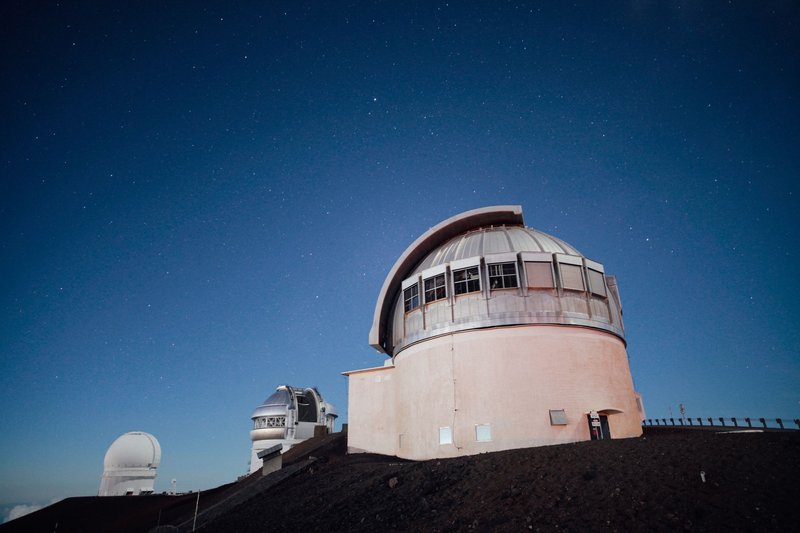
The asteroid is a footnote next to what he did afterward. Through the Japanese occupation, the Chinese Civil War, and the Cultural Revolution, Zhang kept training astronomers and building institutions — he helped found the Purple Mountain Observatory’s modern research program and later chaired Nanjing University’s astronomy department, producing most of the generation of Chinese astronomers who came after him. Modern Chinese astronomy doesn’t trace back to a single instrument or discovery the way the ancient dynasties do; it traces back to Zhang Yuzhe’s students.
Nan Rendong
1945–2017
Nan Rendong spent more than two decades on a single project: finding a natural karst depression in Guizhou province large enough and quiet enough to hold the largest radio telescope ever built, then getting it funded, designed, and constructed. The result, the Five-hundred-meter Aperture Spherical Telescope, known as FAST, started full operations in January 2020 with a dish nearly twice the collecting area of Puerto Rico’s since-collapsed Arecibo instrument — a scale China’s own Academy of Sciences describes as unmatched by any single-dish radio telescope on Earth.
Nan served as FAST’s chief scientist and chief engineer for the entire buildout, working through the site selection, the reflector panel design, and the technical problems that come with suspending a 30-ton receiver cabin over a half-kilometer dish on steel cables. He died of lung cancer in September 2017, ten days before FAST’s first operational anniversary, without seeing the telescope reach the pulsar discoveries and fast radio burst detections it’s now known for. The International Astronomical Union’s obituary for him credits FAST as reshaping what ground-based radio astronomy can do from a single site — which is a fair description of an instrument that’s still finding new pulsars faster than most observatories combined.
A rough timeline
| Astronomer | Era | Known for |
|---|---|---|
| Gan De & Shi Shen | 4th century BC | Oldest known star catalogue |
| Zhang Heng | 78–139 AD | Water-powered armillary sphere, 2,500-star catalogue |
| Shen Kuo | 1031–1095 | Eclipse experiments, magnetic declination |
| Su Song | 1020–1101 | Astronomical clock tower, oldest printed star maps |
| Guo Shoujing | 1231–1316 | 365.2425-day year, Shoushi calendar |
| Wang Zhenyi | 1764–1797 | Physical eclipse simulator |
| Zhang Yuzhe | 1902–1986 | Founder of modern Chinese astronomy |
| Nan Rendong | 1945–2017 | Chief scientist, FAST radio telescope |
Line them up and the gap is obvious: six centuries between Guo Shoujing and Wang Zhenyi, then another century-plus jump to Zhang Yuzhe. That’s not because nobody was doing astronomy in the Ming dynasty — it’s because the Ming court largely froze the Yuan calendar reforms in place and stopped funding the kind of instrument-building that produced Guo Shoujing’s results, and Qing-era astronomy leaned heavily on Jesuit missionary imports rather than homegrown observation. The field didn’t move in a straight line, and neither did the people who kept it going.
What connects Gan De’s star catalogue to Nan Rendong’s radio dish isn’t a continuous institution — it’s a pattern of individuals willing to build the instrument nobody else had built yet, because the existing ones weren’t good enough to answer the question they were actually asking.