Arizona doesn’t just have dark skies. It has the infrastructure to do something with them — a state where an amateur with a car and a free Friday night can stand under some of the darkest skies in North America and then, twenty minutes later, look through the same class of telescope astronomers use to hunt for exoplanets.
Most “observatories in Arizona” lists just alphabetize forty facilities and let you sort it out. That’s not useful when half of them require a reservation made months out and the other half don’t exist for public visits at all. This list is organized by where you’ll actually be standing — Flagstaff and the north, Tucson and the south, Phoenix and the center — with the hours, admission, and logistics you need to actually plan a trip, not just admire one.
Table of Contents
- Quick picks
- Comparison table
- Northern Arizona: Flagstaff and the Grand Canyon
- Southern Arizona: Tucson and the borderlands
- Phoenix and Central Arizona
- FAQ
Quick Picks {#quick-picks}
- Best overall for a first visit: Lowell Observatory in Flagstaff — historic, walkable, open most nights of the year.
- Best for serious dark-sky viewing: Kitt Peak National Observatory — more telescopes in one place than anywhere else on Earth.
- Best free option: Gilbert Rotary Centennial Observatory — free public viewing every Friday and Saturday night.
- Best for kids: Lowell Observatory or Gilbert Rotary Centennial Observatory — both run programs built for families, not researchers.
- Best all-day adventure (adults, plan ahead): Mount Graham International Observatory — a guided trip up a 10,700-foot sky island, reservations required.
Comparison Table {#comparison-table}
| Observatory | Region | Admission | Season / Hours | Best For |
|---|---|---|---|---|
| Lowell Observatory | Flagstaff | $35 adults / $30 seniors / $20 kids 6–17 | Wed–Sun, noon–10pm (extended summer hours) | Families, first-timers |
| Kitt Peak National Observatory | Tucson area | Visitor center free; nightly programs ticketed separately | Visitor center daily 9am–4pm; nightly programs year-round | Serious stargazers, photographers |
| Fred Lawrence Whipple Observatory | Amado | $10 adults / $5 kids 6–12 | Mon, Wed, Fri, mid-March–Nov, 8:30am–3pm (reservation required) | Adults, science-curious teens |
| Mount Graham International Observatory | Safford | Fee via tour operator | Mid-May–mid-Oct, 9am–5pm (advance reservation, kids 8+) | All-day trip, dedicated fans |
| Flandrau Science Center & Planetarium | Tucson | Museum admission fee | Tue–Sun, 10am–5pm | Rainy-day backup, planetarium shows |
| Gilbert Rotary Centennial Observatory | Gilbert | Free (donations welcome) | Fri–Sat, sunset–9:30pm | Free option, families near Phoenix |
| Kartchner Caverns star parties | Benson | Regular park admission | Seasonal star party dates | Combining with a cave tour |
| US Naval Observatory Flagstaff Station | Flagstaff | Free | Open house dates during Festival of Science | History buffs, Pluto trivia |
| Grand Canyon Star Party | Grand Canyon NP | Park entrance fee only | Annual, June | Free telescopes + the Grand Canyon |
Pricing and hours change — always confirm on the observatory’s own site before you drive out, especially for anything requiring a reservation.
Northern Arizona: Flagstaff and the Grand Canyon {#northern-arizona}
Flagstaff sits at 7,000 feet, which matters more than people expect — thinner air means less atmospheric distortion, and it’s exactly why Percival Lowell picked this hill in 1894. The city has also protected that advantage on purpose: Flagstaff was the world’s first International Dark Sky Place, and its lighting ordinances are stricter than most cities twice its size.
Lowell Observatory {#lowell-observatory}
Lowell is where Clyde Tombaugh found Pluto in 1930, using a blink comparator and a telescope that’s still on-site and still usable. That’s the detail that separates Lowell from a generic planetarium: you’re not looking at a replica, you’re standing next to the actual 13-inch Pluto Discovery Telescope.
General admission runs $35 for adults, $30 for seniors, and $20 for kids ages 6 to 17, with children under 5 free. That covers the historic campus, the Giovale Open Deck Observatory’s telescopes, exhibits, and a Universe theater show. Winter hours (Labor Day through Memorial Day) run Wednesday through Sunday, noon to 10pm; summer adds extra days and later closing on weekends. It’s closed Mondays and Tuesdays most of the year, which trips up a lot of first-time visitors mapping out a Flagstaff weekend.
This is the observatory to bring kids to. The pacing is built for a family evening — daytime exhibits if you arrive early, telescope viewing once the sun drops, no reservation gymnastics required.
US Naval Observatory Flagstaff Station {#us-naval-observatory}
Most visitors don’t know this one exists, which is exactly why it’s worth a mention: it’s a working military research station, not a tourist attraction, and it’s normally closed to the public. The exception is the annual Flagstaff Festival of Science, when NOFS opens its doors for a free open house — tours of the grounds and the historic 61-inch telescope that captured the images leading to the discovery of Pluto’s largest moon, Charon.
If your trip happens to line up with the festival, it’s a genuinely rare look inside a facility that otherwise keeps its gates shut. If it doesn’t, skip it and spend that evening at Lowell instead.
Grand Canyon Star Party {#grand-canyon-star-party}
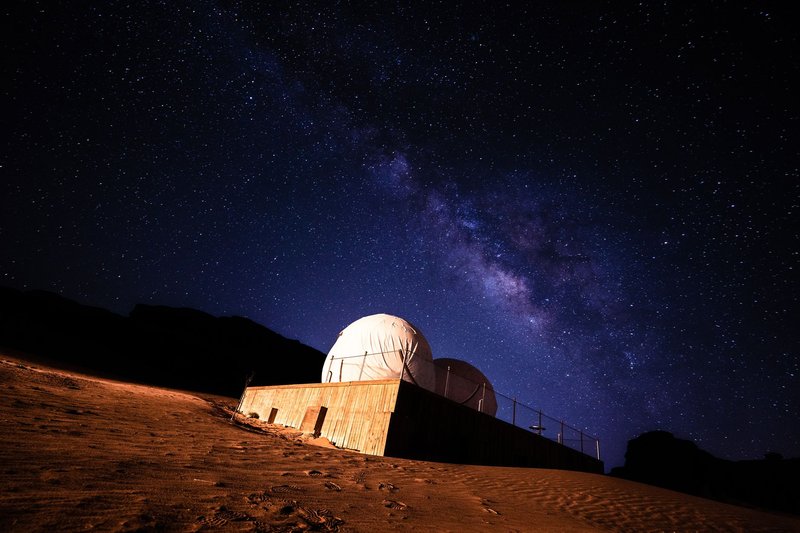
The Grand Canyon is a Gold Tier International Dark Sky Park, which is the top rating DarkSky International hands out — it means genuinely minimal light pollution, not just “better than a city.” Every June, the park hosts the Grand Canyon Star Party, where volunteer astronomy clubs set up dozens of telescopes along the rim for free public viewing, on top of the free ranger-led night sky programs that run more regularly.
You’re not paying for an observatory here — you’re paying the park entrance fee you’d pay anyway, and then getting professional-grade telescopes pointed at Saturn’s rings for the cost of showing up. For trip planning, check current dates on the National Park Service’s Grand Canyon site before you go, since the star party’s exact week shifts slightly year to year.
Southern Arizona: Tucson and the Borderlands {#southern-arizona}
Southern Arizona has a different relationship with astronomy than Flagstaff does — this is where the actual research infrastructure lives. Tucson passed some of the country’s earliest dark-sky lighting ordinances specifically to protect the observatories on the mountains surrounding it, and the University of Arizona’s astronomy program is why several of the world’s most advanced telescopes ended up on these particular peaks instead of somewhere else.
Kitt Peak National Observatory {#kitt-peak}
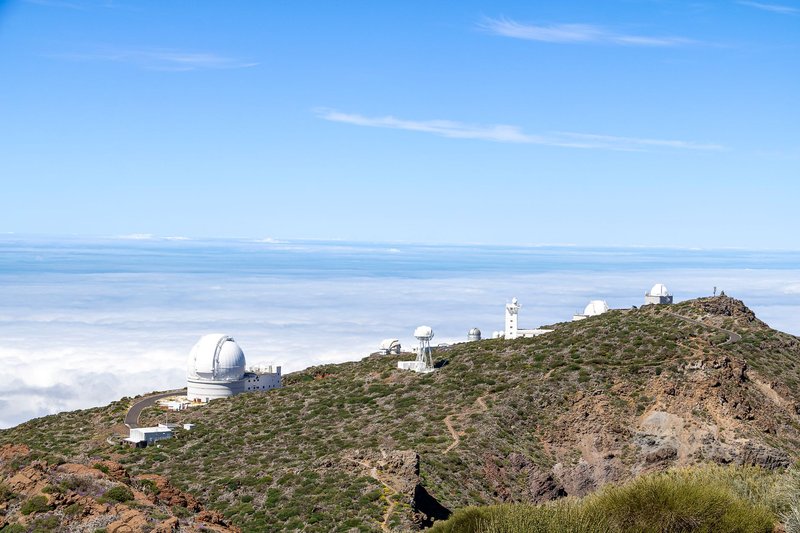
Kitt Peak, on the Quinlan Mountains southwest of Tucson, has more telescopes clustered on one site than anywhere else on the planet — more than twenty instruments belonging to multiple universities and institutions, all sharing one mountaintop. That density is the whole draw.
The visitor center is open daily from 9am to 4pm, and you don’t need a ticket just to walk in and look around during the day. What you do need to book ahead is the nightly programs: the Nightly Observing Program, which runs year-round and puts you behind eyepieces with a trained guide, and the more involved Overnight Telescope Observing Program, which gives up to four guests a full night as a visiting astronomer would experience it. Daytime guided tours also run throughout the week. Book through NOIRLab’s Kitt Peak site — dates fill fast, especially around new moons when the sky is darkest.
Best time to visit Kitt Peak: aim for the days around a new moon, and avoid Arizona’s monsoon season (roughly July through mid-September), when afternoon cloud buildup regularly cancels evening programs. October through May gives you the most reliably clear nights.
Fred Lawrence Whipple Observatory {#whipple-observatory}
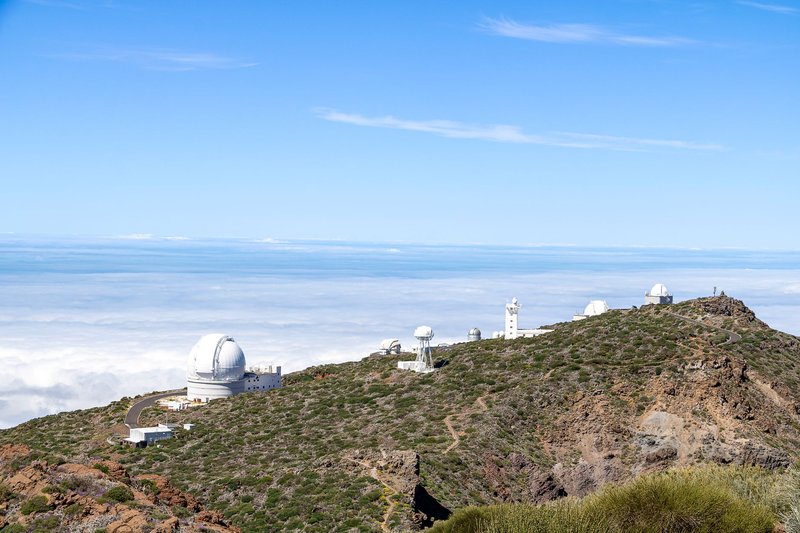
Whipple sits on Mount Hopkins near Amado, and it’s the Smithsonian’s largest field installation outside of its home base in Cambridge, Massachusetts — run by the Smithsonian Astrophysical Observatory. The centerpiece is the Multiple Mirror Telescope, which pioneered the idea of combining several mirrors to act as one much larger instrument, a design approach that shaped later giant telescopes.
Tours run Monday, Wednesday, and Friday from mid-March through November, starting at 8:30am at the visitor center and wrapping by around 3pm. That’s a real time commitment — closer to a half-day hike than a quick stop — and reservations are required by phone or mail in advance. Admission is $10 for adults and $5 for kids 6 to 12. This isn’t the pick for a toddler or a tight schedule, but for a science-curious teenager or an adult who wants the real infrastructure explained by people who work there, it delivers more depth than almost anywhere else on this list.
Mount Graham International Observatory {#mount-graham}
Mount Graham, near Safford, is home to the Large Binocular Telescope — one of the most powerful optical telescopes on Earth — alongside the Vatican Advanced Technology Telescope and the Heinrich Hertz Submillimeter Telescope. The mountain itself is a “sky island,” rising more than 10,700 feet out of the desert floor, cool and forested at the summit while the valley below bakes.
Public access only happens through Eastern Arizona College’s Discovery Park campus, which is the official tour operator. The season runs mid-May through mid-October, weather and road conditions permitting, and tours are genuinely all-day: departure around 9am, return around 5pm, with transportation, orientation, and access to all three major telescopes included. Kids need to be at least 8 years old. Book ahead — this isn’t a walk-up.
Flandrau Science Center & Planetarium {#flandrau}
On the University of Arizona campus in Tucson, Flandrau is the in-city fallback when you want an observatory experience without driving up a mountain. It’s open Tuesday through Sunday, 10am to 5pm, with a full-dome digital planetarium theater and a public telescope dome on-site. It’s not a substitute for Kitt Peak or Whipple, but it’s the right call when weather cancels your mountain plans or when you’re traveling with a kid too young for an all-day tour bus.
Kartchner Caverns Star Parties {#kartchner}
Kartchner Caverns, near Benson, is better known for its cave system, but the park runs seasonal star parties with volunteer astronomers from local clubs setting up telescopes in the parking area. Solar telescopes come out in the afternoon, there’s usually an evening talk in the Discovery Center, and stargazing continues after dark, weather permitting. You pay the park’s regular admission and nothing extra for the astronomy — check current dates on Arizona State Parks’ events page before planning a trip around one, since they’re occasional, not weekly.
Phoenix and Central Arizona {#phoenix-area}
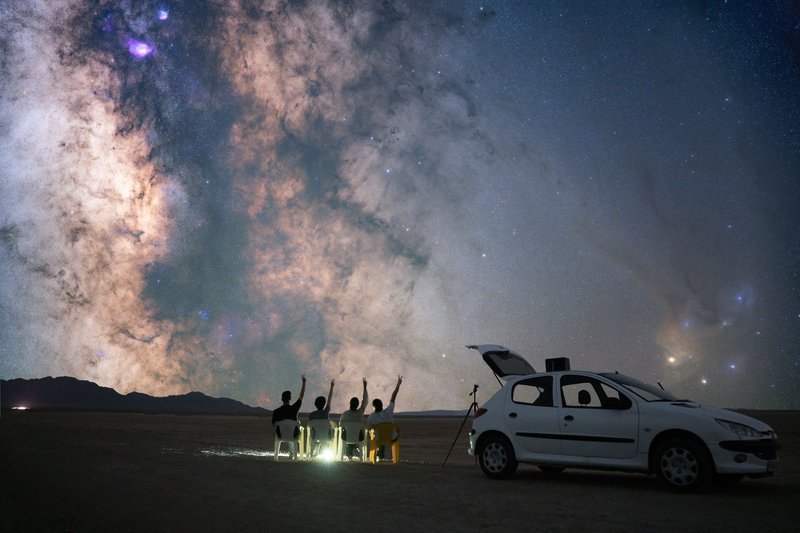
You don’t have to leave the Phoenix metro to look through a real telescope, which surprises people who assume city light pollution rules it out entirely.
Gilbert Rotary Centennial Observatory {#gilbert-observatory}
Inside the Gilbert Riparian Preserve, this observatory is run by the East Valley Astronomy Club and is free to the public every Friday and Saturday evening, from sunset until about 9:30pm, weather permitting. On the second Friday of each month, additional telescopes come out and there’s a related talk at the adjoining library at 7:30pm. Donations are welcome but never required.
For a Phoenix-area family that wants to try this out before committing to a Flagstaff or Tucson day trip, this is the lowest-friction way to do it — no reservation, no admission fee, no drive out of the valley.
Worth Watching: Fountain Hills’ Dark Sky Discovery Center
Fountain Hills is an International Dark Sky Community, and the town has been building the International Dark Sky Discovery Center — which will house what’s billed as the largest telescope in the greater Phoenix area — with a targeted opening in 2027. It’s not open for regular visits yet, so don’t build a trip around it this year, but it’s worth checking before your next Phoenix visit since that timeline can move up.
FAQ {#faq}
What’s the best time to visit Kitt Peak? Target the week around a new moon for the darkest skies, and plan your visit between October and May. Arizona’s monsoon season, roughly July through mid-September, brings afternoon thunderstorms that frequently cancel evening programs on short notice.
Is Lowell Observatory better than Kitt Peak? They’re not really competing for the same trip. Lowell is the better pick for a casual evening in town — walkable, family-paced, open most nights, no reservation scramble. Kitt Peak is farther from city lights, has far more telescope hardware on-site, and rewards people who want a genuinely dark-sky observing session over a quick visit.
Are there any free observatories in Arizona? Gilbert Rotary Centennial Observatory is free every Friday and Saturday night. The Grand Canyon’s ranger-led night sky programs and its annual Star Party are free beyond the park entrance fee. The US Naval Observatory Flagstaff Station opens for free during the Flagstaff Festival of Science, though only on specific dates.
Where do Arizona’s star parties happen? The Grand Canyon Star Party in June is the biggest annual event, drawing volunteer astronomy clubs from around the state. Kartchner Caverns State Park runs occasional seasonal star parties tied to its cave tours. Local astronomy clubs — including the ones behind Gilbert’s observatory — also run smaller public star parties throughout the year.
Does altitude or light pollution actually matter for a visit? Yes, more than most guides mention. Kitt Peak sits around 6,880 feet and Mount Graham tops 10,700 — bring a jacket even in summer, since desert heat doesn’t survive the climb. On light pollution: Tucson’s city lighting code exists specifically to protect the observatories on the mountains around it, which is part of why southern Arizona’s sites still deliver genuinely dark skies despite a metro area of a million people nearby.
Pick based on how much day you want to spend on it. An evening at Lowell or Gilbert gets you real telescope time with almost no planning. Kitt Peak, Whipple, and Mount Graham ask for a reservation and a chunk of your schedule — and pay it back with access to instruments that are actually doing research, not just pointed at the moon for a crowd.