Contents
- TLDR: which planetarium should you visit?
- Why the counts don’t agree
- Henderson State University, Arkadelphia
- Arkansas SkyDome, Greenbrier (portable)
- UA Little Rock, closed and being rebuilt
- The other university listings
- Pair a show with a dark sky
- Check before you go
- FAQ
TLDR: which planetarium should you visit?
Arkansas has few planetariums, and fewer of them take walk-ins. Here is the short version.
| Venue | City | Status | Best for | Cost and booking |
|---|---|---|---|---|
| Henderson State University (Reynolds Science Center) | Arkadelphia | Open for groups | Classes, scout troops, families who can form a group | $50 per group of up to 45, booked by email |
| Arkansas SkyDome | Greenbrier (travels) | Mobile | Schools, libraries, community events | Booked with the operator; the dome comes to you |
| UA Little Rock (future Shellam Flake Planetarium) | Little Rock | Closed, renovating | Waiting list: slated to reopen fall 2026 | Not bookable until it reopens |
| University of Arkansas, UCA, Pomeroy (UA Monticello) | Fayetteville, Conway, Monticello | Unconfirmed | Check directly | Unknown |
If you have a group and want a fixed dome, call Henderson State. If you can’t travel, book the SkyDome. If you’re near Little Rock, watch for the reopening announcement.
Why the counts don’t agree
Search for Arkansas planetariums and you’ll find two answers. A 2017 report counted two working planetariums in the state. The go-astronomy directory lists four: Pomeroy in Monticello, the University of Arkansas in Fayetteville, UA Little Rock, and the University of Central Arkansas in Conway.
Both can be right. A directory lists every dome that has ever been built. A working count only includes the ones that run shows. UA Little Rock’s dome sits in the first group and not the second, since it has been dark for nearly 20 years. Some of the other directory entries are university teaching facilities. They may exist without being open to the public.
So treat any single list with suspicion, including this one. The sections below separate what’s confirmed from what isn’t.
Henderson State University, Arkadelphia
Henderson State runs the most clearly documented planetarium in Arkansas, inside the Reynolds Science Center in Arkadelphia, about an hour southwest of Little Rock.
The dome is 8.2 meters across. That is mid-sized: enough for a school class with room to recline, too small for an auditorium crowd.
The booking model matters more than the dome. Henderson State does not sell individual tickets. You book a group of up to 45 people for $50 total, by email. That works out to a little over a dollar per head if you fill it. If you’re a family of four, find other families, a homeschool co-op, or a scout den, and book together.
What to settle in your email:
- Your group size and the ages of the kids, since that shapes the program.
- Preferred dates, with a backup or two.
- Whether you want a general sky tour or a specific topic.
Arkadelphia works as a half-day trip. Plan the show, then lunch in town.
Arkansas SkyDome, Greenbrier (portable)
Arkansas SkyDome is a portable inflatable dome based in Greenbrier, north of Conway. It doesn’t have a building. It travels to schools, libraries, and community groups, and the presenter runs a show inside the dome once it’s up.
That changes what you should ask. A fixed planetarium has a location. A mobile one has a service area, a minimum audience, and a setup requirement. Before you book, confirm:
- Floor space and ceiling height. Inflatable domes need a gym, cafeteria, or similar room.
- How many people fit per session, and how many sessions fit in a day.
- Which programs are available for your age group.
- Pricing, which isn’t listed on the pages we found.
For a school or library, this is the easiest option in the state. For a family, it’s useful only if you can get your child’s school or local library to book it.
UA Little Rock, closed and being rebuilt
UA Little Rock’s planetarium has been closed for nearly 20 years. That’s the longest gap on the list, and it is ending. The university announced a $1.2 million gift to renovate the facility, which will be renamed the Shellam Flake Planetarium and will seat 89.
At 89 seats, it would be the largest audience capacity of any confirmed dome in this guide. It’s also in Arkansas’s biggest metro area, which matters for public access if it opens to walk-in visitors.
The reopening was slated for fall 2026. We couldn’t confirm that it has opened, and we found no public schedule, ticket prices, or booking process. Until the university publishes those, don’t plan a trip around it. Search for “Shellam Flake Planetarium” or check the university’s news page for an opening date.
The other university listings
Three more venues show up in the go-astronomy directory:
- Pomeroy Planetarium, University of Arkansas at Monticello. Listed in the directory. We couldn’t confirm current show schedules or public access.
- University of Arkansas, Fayetteville. Listed in the directory. No current public programming turned up in our research.
- University of Central Arkansas, Conway. Listed in the directory. Same: no confirmed public schedule.
Listing doesn’t mean closed, and it doesn’t mean open. University domes often serve astronomy classes first and the public second, and many run shows only on request or on set nights. A short email to the physics or astronomy department will settle it faster than any directory.
Pair a show with a dark sky
A planetarium shows you the sky from a controlled room. Arkansas also has real skies worth seeing, and the two work well together on one trip.
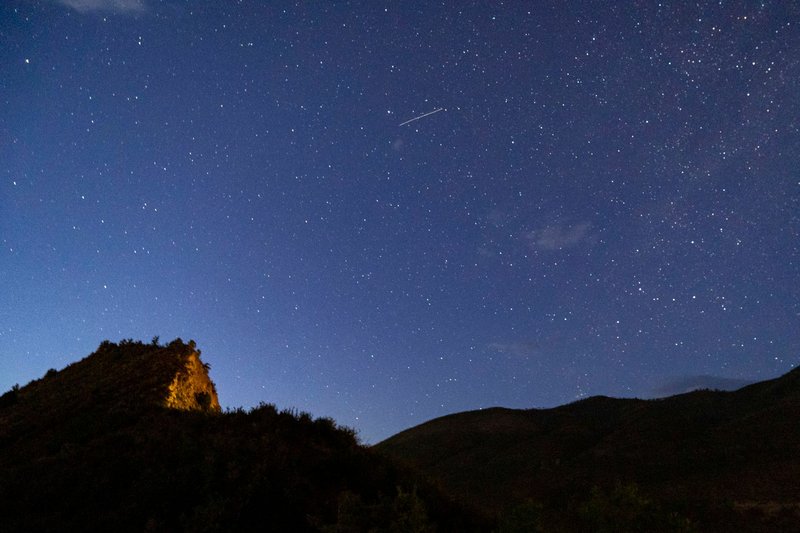
The Buffalo National River in the northern part of the state is the best-known dark-sky destination in Arkansas. A planetarium visit before a night out there helps: you learn to find the Summer Triangle or the Big Dipper under a dome, then do it outdoors with no screen.
Some practical rules for the outdoor half:
- Go near a new moon. A bright moon washes out the Milky Way.
- Give your eyes 20 to 30 minutes to adjust, and use a red flashlight.
- Check the forecast for clouds, not just rain. Arkansas humidity can haze the sky.
Observatory visits are a separate topic, since public observatory nights run on their own schedules. If you want to add one, look for open-house dates at university astronomy departments and local astronomy clubs.
Check before you go
Planetarium information goes stale quickly. Before you drive anywhere:
- Email or call the venue. Don’t rely on a directory or a blog post, including this one.
- Confirm the date, the group size, and the price in writing.
- Ask whether the program fits your audience. A show built for fourth graders will lose a room of adults, and the reverse is also true.
- For UA Little Rock, confirm the reopening has happened before you make plans.
FAQ
How many planetariums are in Arkansas?
It depends on what you count. A 2017 report found two working planetariums. The go-astronomy directory lists four university domes. Add the portable Arkansas SkyDome, and the confirmed options for the public are Henderson State and the SkyDome, with UA Little Rock set to rejoin the list.
Can I visit a planetarium in Arkansas without a group?
At Henderson State, no. It books groups of up to 45 for $50. If you’re a small party, assemble a group first. The SkyDome serves organizations rather than individuals.
Is the UA Little Rock planetarium open?
It was closed for nearly 20 years and is being renovated with a $1.2 million gift. The reopening was slated for fall 2026. Confirm with the university before you plan a visit.
How much does a planetarium show cost in Arkansas?
The one published price is Henderson State’s: $50 per group of up to 45 people. Other venues don’t list prices that we could find, so ask when you book.
Where can I see stars in Arkansas besides a planetarium?
The Buffalo National River is the standout dark-sky area. Away from city lights, most rural parts of the state give a far better view than a town does.