TLDR
May has quietly produced one of the densest clusters of astronaut birthdays on the calendar — Sally Ride, Scott Carpenter, Ellen Ochoa, Vance Brand, and Germany’s Alexander Gerst all share the month. Below is a complete, chronological rundown of May-born spacefarers across NASA, Roscosmos, ESA, and China’s space program, with their birth dates and the missions that made them worth remembering. Skip to Early May, Mid-May, or Late May if you already know your birthday’s in one of those windows.
Table of Contents
- Why May Keeps Producing Astronauts
- Early May (1–6)
- Mid-May (9–20)
- Late May (23–30)
- Which Birth Month Has Produced the Most Astronauts?
Why May Keeps Producing Astronauts
Astronaut corps skew toward a handful of birth months more than pure chance would predict, and May sits near the top of that list — trailing only August. Nobody has published a clean explanation for the pattern (school-year cutoffs and regional birth-rate cycles both get floated, neither proven), but the roster backs it up: two Mercury-era pilots, the first American woman in space, the first Latina in space, and a German ISS commander all happen to share May birthdays.
What follows is organized the way a birthday list should be — by date, not by fame — so you can find your own day and see who you’re sharing it with.
Early May (1–6)
Scott Carpenter — May 1, 1925. One of NASA’s original Mercury Seven, Carpenter became the second American to orbit Earth aboard Aurora 7 on May 24, 1962, circling the planet three times while running photography and balloon-drag experiments that mission planners were still arguing about afterward. He’s also the only person in history to have been both an astronaut and a U.S. Navy aquanaut, having led a team 205 feet down during the Sealab II experiment in 1965.
Kirill Peskov — May 1, 1990. One of Roscosmos’s newer cosmonauts, Peskov made his first spaceflight to the International Space Station in 2024, part of a younger generation of Russian crew replacing the Soviet-trained veterans who dominated the corps for decades.
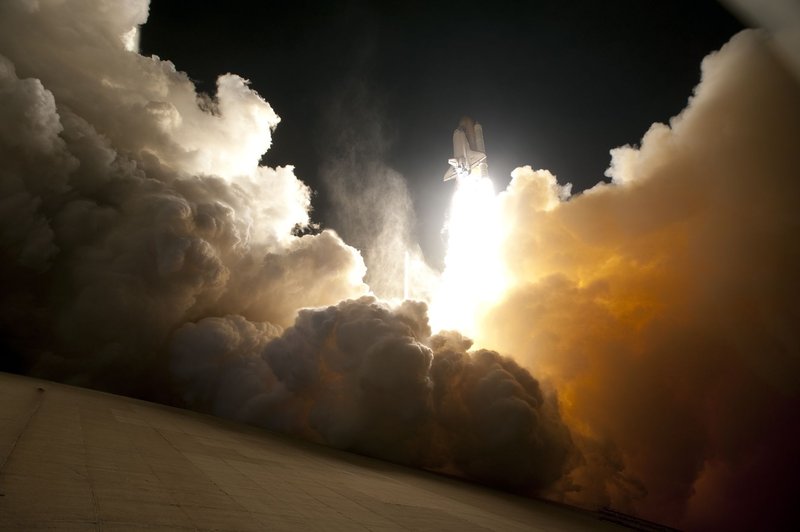
Dominic Gorie — May 2, 1957. A four-time shuttle flier, Gorie commanded STS-123 in 2008, the mission that delivered Japan’s Kibo laboratory module and the Canadian Dextre robotic arm to the ISS — two of the station’s most mechanically complex additions.
Dorothy Metcalf-Lindenburger — May 2, 1975. A former Denver public school teacher, Metcalf-Lindenburger was selected as part of NASA’s Educator Astronaut Corps and flew on STS-131 in 2010, a 15-day resupply mission that remains one of the longest shuttle flights to the station.
Alexander Gerst — May 3, 1976. A volcanologist by training, Gerst flew two long-duration ISS missions for ESA — Blue Dot in 2014 and Horizons in 2018 — and became the first German to command the International Space Station during the second. His crew ran more than 60 European experiments while he held the post.
Maurizio Cheli — May 4, 1959. An Italian Air Force pilot turned ESA astronaut, Cheli flew as a mission specialist on STS-75 in 1996, the flight that tested the Tethered Satellite System — a spacecraft connected to the shuttle by a 12-mile conducting cable designed to generate electricity from Earth’s magnetic field.
Fei Junlong — May 5, 1965. A taikonaut with China’s space program, Fei flew Shenzhou 6 in 2005 and later commanded Shenzhou 15 in 2022, spending six months aboard the Tiangong space station during its assembly phase.
Aleksandr Skvortsov — May 6, 1966. A Roscosmos veteran, Skvortsov has flown three long-duration missions to the ISS, logging more than 545 days in orbit across Soyuz TMA-18, TMA-12M, and MS-15S.
Mid-May (9–20)
Vance Brand — May 9, 1931. Brand commanded two of the most historically loaded missions NASA ever flew: the 1975 Apollo-Soyuz Test Project, the first joint U.S.-Soviet spaceflight, and STS-5 in 1982, the first shuttle mission NASA classified as fully operational rather than a test flight.
Ellen Ochoa — May 10, 1958. The first Hispanic woman to fly in space, Ochoa flew four shuttle missions between 1993 and 2002, logging nearly 1,000 hours in orbit, then went on to direct Johnson Space Center from 2013 to 2018 — the first Hispanic person and second woman to hold that post.
Jack Hathaway — May 10, 1982. A U.S. Navy commander selected in NASA’s 2021 astronaut candidate class, Hathaway is among astronauts from Connecticut and represents the newest wave of NASA astronauts training for Artemis-era missions rather than shuttle-era ones.
Aleksandr Kaleri — May 13, 1956. Among the most experienced cosmonauts ever to fly, Kaleri completed five spaceflights and logged more than 769 days in space — enough time that he’s spent over two full years of his life off the planet.
William Gregory — May 14, 1957. Gregory piloted and later commanded shuttle missions including STS-44 and STS-67, the latter a 16-day Spacelab flight dedicated almost entirely to ultraviolet astronomy.
Joseph Acaba — May 17, 1967. The first astronaut of Puerto Rican origin to fly in space, Acaba spent time as a hydrologist and middle school science teacher before joining NASA, then flew three separate ISS missions.
Don Lind — May 18, 1930. Selected as a NASA astronaut in 1966, Lind didn’t reach orbit until 1985 — a 19-year wait that stood as the longest gap between selection and first flight in NASA’s history for years afterward.
Francis “Dick” Scobee — May 19, 1939. Scobee commanded Space Shuttle Challenger’s STS-51-L mission, which broke apart 73 seconds after launch on January 28, 1986, killing all seven crew members. He’d previously flown as pilot on STS-41-C in 1984, a mission that repaired the Solar Maximum satellite in orbit.
David Walker — May 20, 1944. Walker commanded four shuttle missions, including STS-30 in 1989, which deployed the Magellan probe on its journey to map the surface of Venus with radar.
Late May (23–30)
Thomas Reiter — May 23, 1958. Reiter became the first non-American, non-Russian astronaut to fly a long-duration mission when he spent 179 days aboard Mir in 1995, then returned to the ISS a decade later as the first ESA astronaut to serve as a full station crew member rather than a short-stay visitor.
Ronald Parise — May 24, 1951. An astronomer who became an astronaut rather than the other way around, Parise flew as payload specialist on both Astro-1 and Astro-2, shuttle missions built around a suite of ultraviolet telescopes that couldn’t be flown any other way at the time.
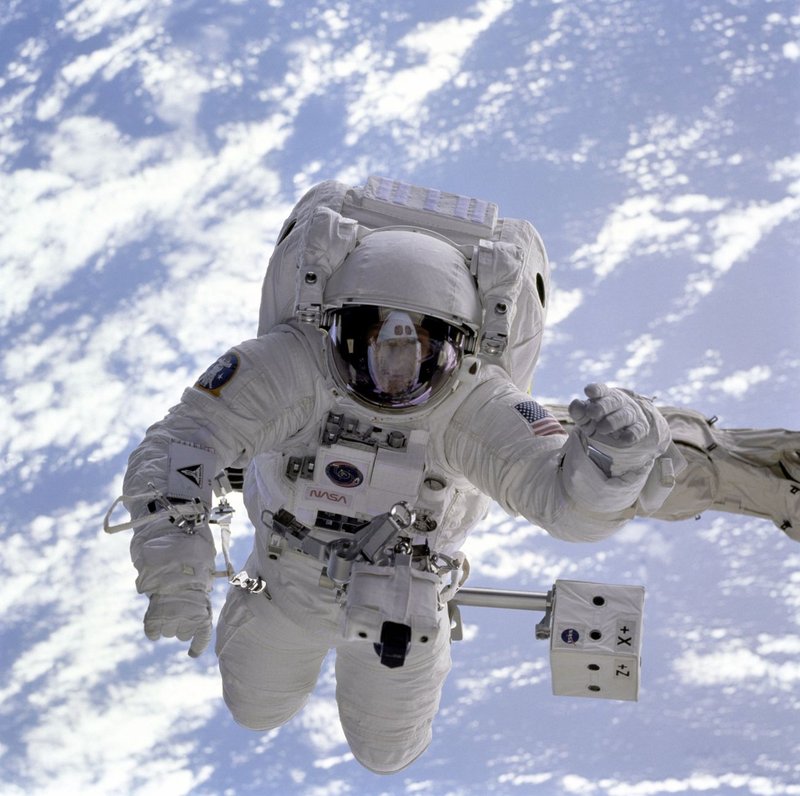
John Olivas — May 25, 1965. The first Mexican-American astronaut to perform a spacewalk, Olivas logged EVAs on both STS-117 and STS-128, work that included swapping out a damaged ISS gyroscope critical to keeping the station’s orientation stable.
Sally Ride — May 26, 1951. Ride became the first American woman in space aboard Challenger’s STS-7 mission in 1983, deploying and retrieving a satellite with the shuttle’s robotic arm. She flew again the following year and later served on the panel that investigated both the Challenger and Columbia disasters — one of the few people to sit on both boards.
Michael López-Alégria — May 30, 1958. The first Spanish-born NASA astronaut, López-Alégria held the American record for most career spacewalks — 10 — for years after commanding ISS Expedition 14. He later returned to orbit in 2022 as commander of Axiom Mission 1, the first fully private crew to visit the space station.
Which Birth Month Has Produced the Most Astronauts?
If you’re comparing notes with a friend born in a different month, August wins the birthday-trivia argument — more astronauts have been born in August than in any other month, with May a close runner-up. Nobody tracking the NASA Astronaut Fact Book has offered a firm explanation for the clustering, and it’s worth remembering the sample size is small — a few hundred people total across every space agency that’s ever flown a human being. Still, if you’re a May baby scanning this list for company, you’re in better company than most of the calendar.