
Pick any hundred-year stretch in the history of science and none of them do more damage to old certainties than the 1600s. At the start of the century, most educated Europeans still pictured a universe with Earth planted at the center and the stars fixed to a crystal sphere. By the end of it, Isaac Newton had shown that the same force pulling an apple to the ground also holds the Moon in orbit, a Dane had timed the speed of light using one of Jupiter’s moons, and a woman working from her kitchen in Silesia had rewritten Kepler’s math because his tables were too clumsy to use.
None of that happened in isolation. It happened because a Dutch spyglass got turned skyward around 1609, and for the first time, the sky answered back with detail nobody had planned for.
Contents
- TLDR
- Telescope Pioneers: The Instrument Made the Discovery
- Star Catalogers and Observatory Builders
- Women Who Mapped the Sky
- The Physics That Explained What the Telescopes Saw
TLDR
A dozen names carried 17th-century astronomy from guesswork to measurement:
- Telescope pioneers: Galileo Galilei, Christiaan Huygens, Giovanni Domenico Cassini
- Star catalogers and observatory builders: Johannes Kepler, Johannes Hevelius, Giovanni Battista Riccioli, John Flamsteed
- Women who mapped the sky: Maria Cunitz, Elisabetha Hevelius
- The physics behind it all: Isaac Newton, Edmond Halley, Ole Rømer
Galileo pointed the first serious telescope at Jupiter. Newton explained, mathematically, why everything the telescope revealed moved the way it did. Everyone on this list sits somewhere between those two moments.
Telescope Pioneers: The Instrument Made the Discovery
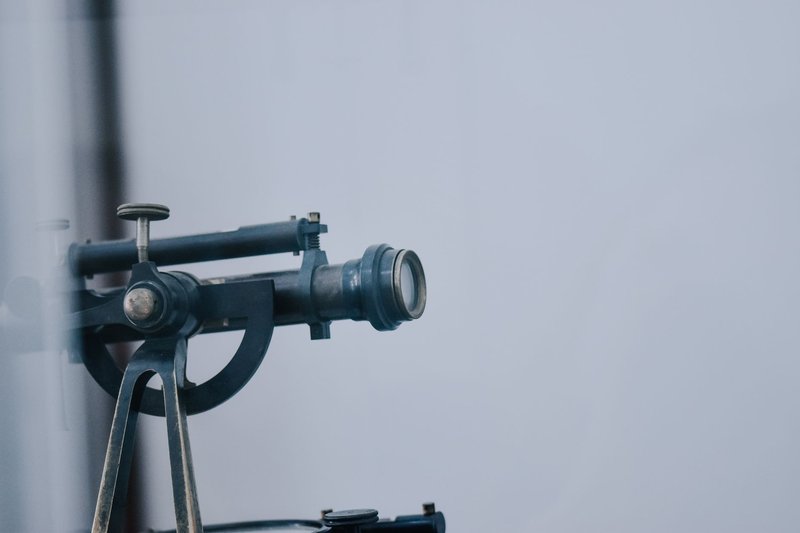
Before 1609, astronomy meant staring at points of light with a sextant and doing arithmetic. After it, astronomy meant building better glass. The three names below didn’t just use telescopes — each one pushed the instrument itself far enough to see something nobody had a theory for yet.
Galileo Galilei (1564-1642)
Galileo didn’t invent the telescope, but he was the first to turn a real one on the sky with any rigor, and what he found in January 1610 broke the tidy Earth-centered model in one week. Four points of light kept orbiting Jupiter instead of Earth — Io, Europa, Ganymede, and Callisto — proof that at least one other body in the heavens had its own satellites. He published the find within weeks in Sidereus Nuncius, then went further, tracking the phases of Venus and showing they only made sense if Venus circled the Sun. The Roman Inquisition tried him for it in 1633 and kept him under house arrest until his death, which tells you how threatening a moon count could be.
Christiaan Huygens (1629-1695)
Huygens took one look at Saturn through Galileo’s era of telescopes and thought the “handles” astronomers kept describing had to be something else. By 1655 he’d spotted Titan, Saturn’s largest moon, using a telescope he ground and built himself. Four years later, in Systema Saturnium, he proposed that Saturn wore a thin, flat ring rather than lopsided bulges — correct, and decades ahead of anyone else’s guess. He also built the first working pendulum clock in 1656, which mattered enormously for astronomy: timing an eclipse or a transit to the minute is useless if your clock drifts by ten.
Giovanni Domenico Cassini (1625-1712)
Cassini ran the newly built Paris Observatory starting in 1671 and used it to do what patient, well-funded telescope work does best: find the details everyone else missed. He discovered four of Saturn’s moons — Iapetus, Rhea, Tethys, and Dione — and in 1675 spotted the dark gap in Saturn’s rings still called the Cassini Division. NASA later named its Saturn orbiter after him, which is the kind of compliment that only happens three centuries late but still counts.
Star Catalogers and Observatory Builders
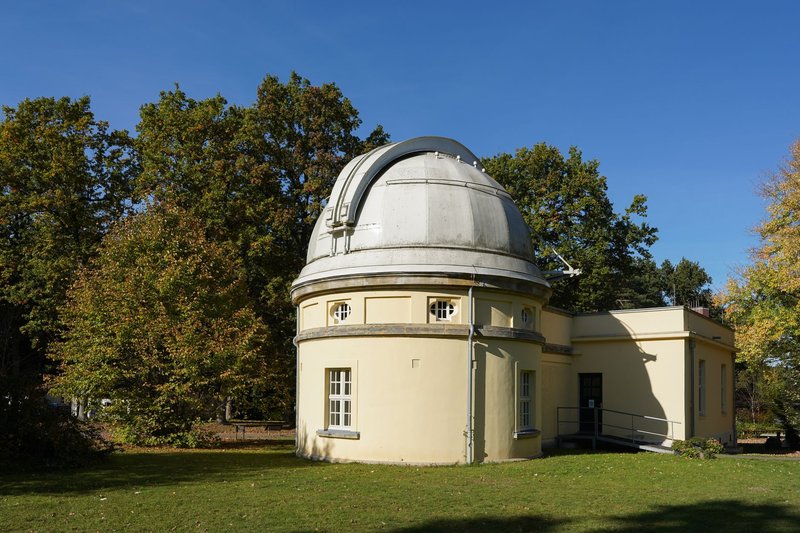
Telescopes generate data. Someone still has to catalog it, argue about what it means, and build a building stable enough to keep doing it every clear night for years. This group did the unglamorous work that made the discoveries usable.
Johannes Kepler (1571-1630)
Kepler inherited Tycho Brahe’s mountain of naked-eye observations and spent years forcing them into a shape that finally fit reality: orbits are ellipses, not circles, and planets sweep equal areas in equal time. His three laws, published between 1609 and 1619, gave astronomy its first real mathematical skeleton. The Rudolphine Tables he finished in 1627 let astronomers predict planetary positions with an accuracy nobody had managed before — and became the standard reference for the rest of the century, whether people liked using them or not.
Johannes Hevelius (1611-1687)
Working from a rooftop observatory in Danzig, Hevelius built some of the longest telescopes of the century, one reportedly stretching close to 150 feet, just to get sharper images. In 1647 he published Selenographia, a map of the Moon so detailed that many of his crater and feature names are still in use. He also kept using naked-eye sighting instruments for star positions long after telescopic sights existed, arguing his trained eye was more reliable — a stance that started a real fight with the Royal Society, which sent Halley to check his numbers. Hevelius came out looking better than the skeptics expected.
Giovanni Battista Riccioli (1598-1671)
Riccioli, an Italian Jesuit working in Bologna, produced the Almagestum Novum in 1651, a massive survey that weighed the evidence for and against the Copernican model — and in doing so, created the naming system for lunar craters still used today, honoring astronomers and scientists on the Moon’s surface. He remained publicly unconvinced by heliocentrism even while cataloging the observations that would eventually help settle the argument against him, which makes him one of the more interesting holdouts in the whole story.
John Flamsteed (1646-1719)
Charles II created the post of Astronomer Royal in 1675 specifically for Flamsteed, whose job was to fix the maddening problem of ships getting lost at sea by mapping the stars precisely enough for navigation. Working out of the newly built Royal Observatory at Greenwich, designed by Christopher Wren, he catalogued more than 3,000 stars with a precision well beyond Tycho Brahe’s older figures. He guarded his data so closely that Newton and Halley published parts of it without his consent in 1712 — a fight bitter enough that Flamsteed reportedly burned every copy he could buy back.
Women Who Mapped the Sky
Formal observatories didn’t admit women, and universities didn’t either, so the women who did serious astronomical work in this century did it from home, usually alongside a husband whose name ended up on the title page. Two got far enough to leave a paper trail anyway.
Maria Cunitz (1610-1664)
Cunitz never had formal schooling, but she taught herself seven languages and enough mathematics to notice that Kepler’s Rudolphine Tables — the era’s gold standard — were a nightmare to actually calculate with, buried in logarithms. In 1650 she published Urania Propitia, which corrected errors in Kepler’s tables and simplified the math into something astronomers could use without a headache. It’s considered, according to the Smithsonian’s account of her career, the earliest surviving scientific work by a woman operating at the field’s highest technical level, and it earned her a European reputation while she was still alive to enjoy it.
Elisabetha Hevelius (1647-1693)
Catherina Elisabeth Koopman Hevelius married Johannes Hevelius in 1663 and became his working observing partner, not just a household presence — contemporary illustrations from his own books show the two of them at the telescope together, tracking the same sightings. After a fire destroyed their observatory in 1679, she helped rebuild the star catalog from scratch, and the resulting Prodromus Astronomiae, published in 1690 after Johannes’s death, credits her contribution directly. Historians generally count her among the first women to do original observational astronomy, rather than simply assist with the arithmetic.
The Physics That Explained What the Telescopes Saw
By the century’s final decades, astronomy had a data problem in the good sense: more observations than existing theory could explain. This group supplied the explanations.
Isaac Newton (1642-1727)
Newton built the first practical reflecting telescope in 1668, sidestepping the color-blurring problem that plagued lens-based scopes of the time. But his real astronomical contribution came in 1687, with the Principia Mathematica: a single law of gravitation that predicted Kepler’s elliptical orbits as a mathematical consequence, rather than an empirical pattern someone had noticed. It’s the moment astronomy stopped being descriptive and became predictive — the same math that explains a falling apple also explains why the Moon doesn’t fall into us.
Edmond Halley (1656-1742)
Halley catalogued the southern sky from the island of St. Helena between 1676 and 1678, filling in stars no European observatory could see. But he’s remembered for a different move entirely: using Newton’s own gravitational math to calculate that the comets seen in 1531, 1607, and 1682 were the same object on a repeating orbit, and predicting its return in 1758. He didn’t live to see it, but the comet showed up on schedule and has carried his name ever since — arguably the single most convincing public proof that Newton’s laws actually worked.
Ole Rømer (1644-1710)
Rømer noticed something odd while timing the eclipses of Jupiter’s moon Io: the eclipses ran late when Earth was farther from Jupiter in its orbit, and early when it was closer. In September 1676 he used the pattern to predict, correctly, that a specific eclipse would arrive ten minutes behind schedule — proof, according to the American Museum of Natural History’s account, that light takes time to cross space rather than arriving instantly. His estimate landed at roughly 75% of the true value, which sounds like a miss until you remember he got there with a pocket watch and a moon nobody had timed that precisely before.
Line up all twelve and a pattern shows up on its own: the telescope builders handed the observatory builders more detail than existing theory could hold, and the theorists spent the rest of the century catching up. By 1700, nobody serious still argued for an Earth-centered universe, light had a measured speed, and gravity had a formula. The next century had somewhere to start.