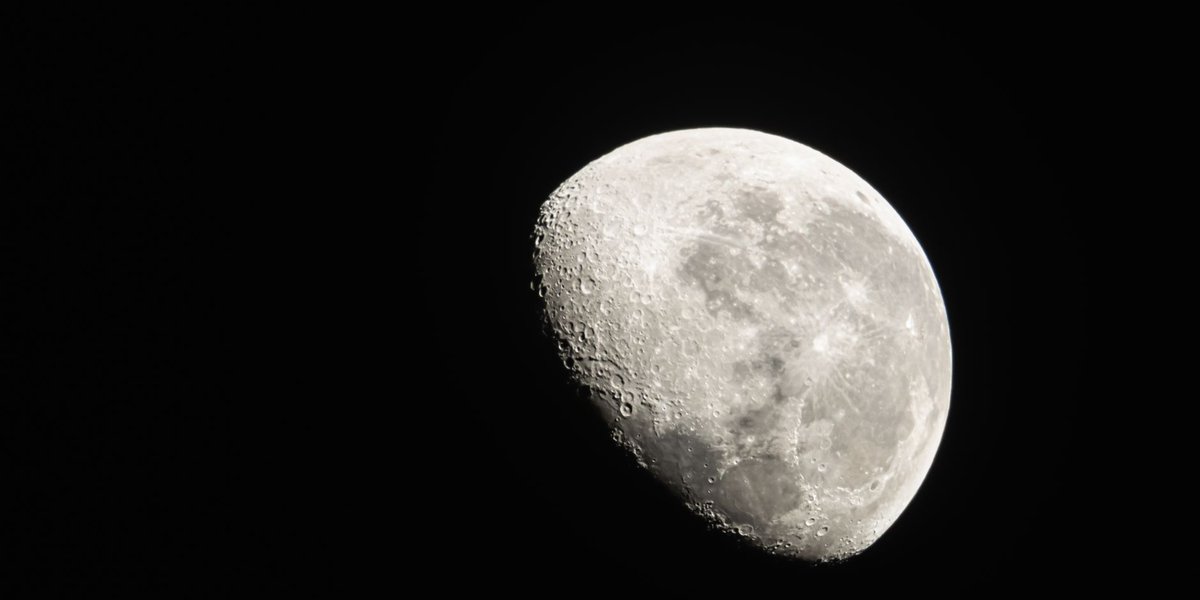
Before any human set foot on the Moon, seven robots had to prove it wouldn’t swallow them. That was the Surveyor program’s job. Between 1966 and 1968, NASA fired seven robotic landers at the lunar surface to answer one terrifying, very practical question: if you set a heavy spacecraft down on the Moon, does it stay on top of the dust, or does it sink out of sight?
The Surveyor missions get overshadowed by Apollo, which is fair — Apollo had the astronauts. But Surveyor is the reason Apollo astronauts felt safe stepping off the ladder. Five of the seven landers worked. The two that failed taught NASA almost as much as the ones that succeeded.
Here’s the whole program, mission by mission, plus the parts the textbooks tend to skip.
Table of Contents
- What the Surveyor missions were for
- The seven missions at a glance
- Surveyor 1: America’s first soft landing
- Surveyor 2: the tumble
- Surveyor 3: the one Apollo 12 visited
- Surveyor 4: silence at the last second
- Surveyor 5: the leaking lander that saved itself
- Surveyor 6: the first liftoff from another world
- Surveyor 7: the science mission
- Surveyor vs. Ranger: what’s the difference?
- The Luna 9 race
- Where are the Surveyors now?
- FAQ
What the Surveyor missions were for
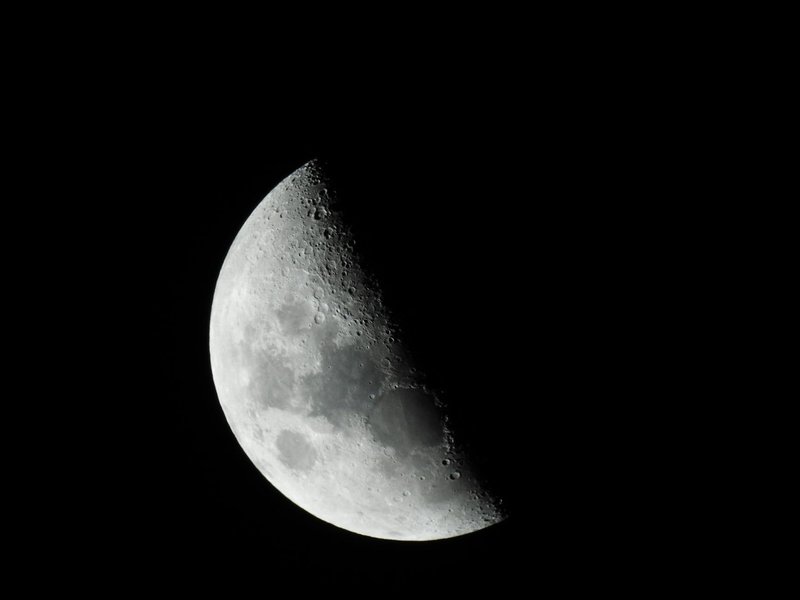
In the early 1960s, nobody knew what the Moon’s surface was actually like. One respected astronomer, Thomas Gold, argued the Moon might be covered in a deep layer of fine dust that had built up over billions of years — soft enough that a lander would simply disappear into it. This “dust theory” was taken seriously enough that it genuinely threatened to ground Apollo. You can’t land men on a surface that might behave like quicksand.
Surveyor existed to settle that and a short list of other engineering questions:
- Is the lunar surface firm enough to hold a spacecraft (and later, a Lunar Module)?
- Can we actually pull off a controlled soft landing using a rocket to slow down at the last moment?
- What is the soil made of, and how does it behave when you dig it?
- What do close-up photos of the surface reveal about future landing sites?
A “soft landing” sounds gentle, but the engineering is brutal. The spacecraft arrives traveling thousands of miles per hour and has to slow to a crawl using a large solid-fuel braking rocket, then smaller thrusters, then drop the last few meters onto three shock-absorbing legs. No atmosphere means no parachutes. It’s all done on rocket power, and the spacecraft has to judge its own altitude with radar and shut the engine off at exactly the right height. Get it wrong and you’ve made a crater.
The seven missions at a glance
| Mission | Launch | Outcome | Key achievement |
|---|---|---|---|
| Surveyor 1 | May 30, 1966 | Success | First US soft landing; 11,000+ photos |
| Surveyor 2 | Sep 20, 1966 | Failure | Thruster failed, spacecraft tumbled and crashed |
| Surveyor 3 | Apr 17, 1967 | Success | Dug the soil; later visited by Apollo 12 |
| Surveyor 4 | Jul 14, 1967 | Failure | Radio went silent ~2.5 min before landing |
| Surveyor 5 | Sep 8, 1967 | Success | First chemical analysis of lunar soil |
| Surveyor 6 | Nov 7, 1967 | Success | First liftoff and “hop” on another world |
| Surveyor 7 | Jan 7, 1968 | Success | Science mission to the rugged Tycho region |
Five successes, two failures. For a brand-new way of reaching another world, that’s a remarkable hit rate — especially compared to the program that came before it. The Surveyors were only one chapter in a much larger campaign, and seeing them alongside the full roster of NASA missions to the Moon makes clear just how many robotic flights it took to clear the way for a crew.
Surveyor 1: America’s first soft landing
Surveyor 1 worked on the first try, which almost nobody expected. Launched on May 30, 1966, it touched down in the Ocean of Storms three days later and became the first American spacecraft to make a controlled soft landing on the Moon. NASA had braced for the first few attempts to be sacrificial test flights. Instead, the debut was a clean hit.
And it didn’t just survive — it delivered. Surveyor 1 sent back more than 11,000 photographs of the surface, its own footpads, and the surrounding terrain. Those footpads were the headline. They pressed only a couple of centimeters into the soil. The ground held. Thomas Gold’s deep-dust nightmare was, if not dead, badly wounded by a single robotic photo of a footpad sitting calmly on solid lunar ground.
Surveyor 2: the tumble
Surveyor 2 is the first reminder that none of this was routine. During a mid-course correction, one of its three vernier thrusters failed to ignite. With uneven thrust, the spacecraft began to spin and couldn’t stabilize. Controllers tried repeatedly to restart the dead thruster and never got it back. The lander tumbled out of control and crashed near the crater Copernicus in September 1966. A single thruster turned a working spacecraft into scrap.
Surveyor 3: the one Apollo 12 visited
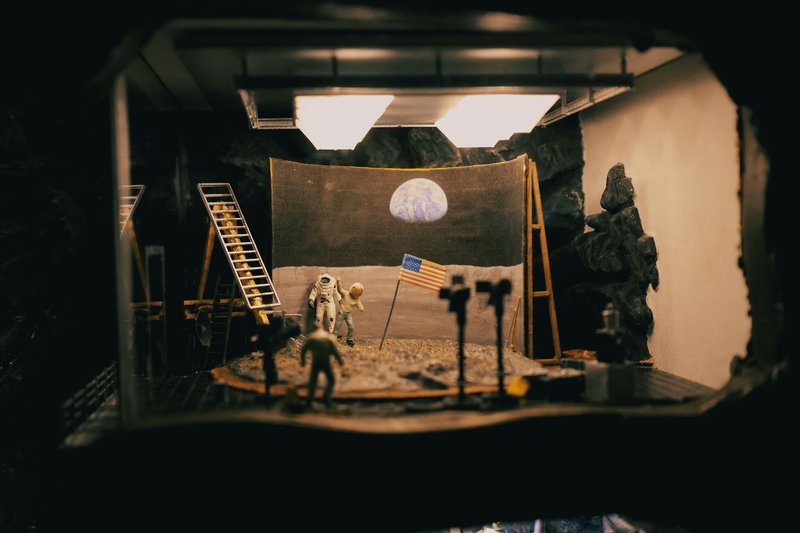
Surveyor 3 is the celebrity of the program, and for a reason that has nothing to do with its original mission. Launched in April 1967, it landed in the Ocean of Storms and carried something new: a small scoop on a motorized arm. For the first time, a spacecraft dug into another world. The scoop trenched the soil, pressed on it, and measured how it resisted — direct soil-mechanics data confirming the surface could bear weight.
The landing itself was a near-disaster. The descent radar got confused by reflections off the surface and didn’t shut the braking engine down on schedule, so Surveyor 3 actually bounced — twice — before finally settling. It survived anyway.
Then came the part that made it famous. In November 1969, Apollo 12 deliberately landed within walking distance of Surveyor 3 — about 180 meters away. Astronauts Pete Conrad and Alan Bean walked over, photographed the lander, and cut off pieces of it (including the TV camera and that famous scoop) to bring home. They were two of the astronauts who reached the Moon in 1969, and scientists wanted to know how 31 months of harsh lunar conditions had affected human-made hardware. It remains the only time people have visited a probe they’d sent to another world and brought parts of it back. NASA’s own Apollo 12 mission record documents the pinpoint landing that made the rendezvous possible.
Surveyor 4: silence at the last second
Surveyor 4 is the heartbreaker. Everything went right for the entire flight. The braking maneuver started on schedule. Then, roughly two and a half minutes before touchdown — with the spacecraft seemingly performing perfectly — the radio signal cut out completely and never returned. NASA never pinned down the exact cause; the leading suspect is that the solid-fuel braking rocket exploded. So close that the engineers had every reason to expect a fourth success, and then nothing.
Surveyor 5: the leaking lander that saved itself
Surveyor 5 should have died in space. During its approach a helium valve leaked, threatening the fuel system the lander needed to slow down. Mission controllers improvised an entirely new descent plan in real time, firing the engine differently to compensate, and talked a crippled spacecraft down to a safe landing in the Sea of Tranquility.
The payoff was the program’s biggest science result. Surveyor 5 carried an alpha-scattering instrument — a device that fires alpha particles at the soil and reads what bounces back to determine its chemical makeup. It produced the first on-site chemical analysis of the lunar surface, showing the soil resembled basalt, similar to volcanic rock on Earth. That single measurement told geologists more about the Moon’s composition than years of telescope observation.
Surveyor 6: the first liftoff from another world
Surveyor 6 landed cleanly and ran the same alpha-scattering analysis as Surveyor 5, confirming the results from a different site. Confirmation matters in science, but Surveyor 6 earned its place in history with a stunt.
After completing its work, controllers fired its thrusters again and made the spacecraft hop — it lifted about 3 to 4 meters off the surface, drifted sideways a couple of meters, and set back down. That was the first time any object had lifted off from the surface of another celestial body under its own power. It also gave engineers stereo “before and after” images of the disturbed soil and proved a rocket engine could fire safely off the lunar surface, a small but real preview of an Apollo Lunar Module taking off.
Surveyor 7: the science mission
By Surveyor 7, the engineering questions were answered. Apollo had its green light. So the last Surveyor was free to be pure science. Instead of a smooth equatorial plain near a future Apollo site, NASA aimed it at the rugged ejecta-strewn slopes near the crater Tycho — a more dangerous but far more geologically interesting target.
It landed safely in January 1968, ran the alpha-scattering instrument, used its scoop to dig and move rocks, and returned over 21,000 images. The soil near Tycho turned out to differ chemically from the mare sites the earlier landers had sampled — evidence that the Moon’s surface isn’t uniform. Surveyor 7 was the perfect closing act: the program had nothing left to prove, so it went somewhere hard just to learn something new.
Surveyor vs. Ranger: what’s the difference?
People mix these two up constantly. Both were NASA lunar programs run out of JPL in the 1960s, and both came before Apollo. The difference is in the ending.
Ranger spacecraft were never meant to survive. They were designed to fly straight at the Moon and transmit increasingly close-up photos right up until the instant they crashed into it — a deliberate kamikaze for science. Ranger answered “what does the surface look like up close?” Surveyor answered “can we actually land on it and stand there?” Ranger was the scout; Surveyor was the test landing. You needed Ranger’s photos to even pick where to point Surveyor.
The Luna 9 race
The US wasn’t first. The Soviet Union’s Luna 9 achieved the world’s first soft landing on the Moon in February 1966 — about four months before Surveyor 1. Luna 9 used a clever trick: it ejected a sealed, ball-shaped capsule that bounced across the surface and came to rest, then popped open petals to right itself and transmit the first photos taken from the lunar surface. It earns its spot among the most famous lunar landings for exactly that reason.
So Surveyor 1 wasn’t the first soft landing in history. It was the first American one, and a much more capable, longer-lived machine than the Soviet capsule. Luna 9 proved a soft landing was possible. The Surveyors proved it could be done repeatedly, with heavy scientific payloads, by the country that intended to send people next.
Where are the Surveyors now?
All seven are still on the Moon — there was never any plan to bring them back. Five sit roughly where they landed, slowly weathering under sunlight, micrometeorites, and 14-day temperature swings. The two that failed, Surveyors 2 and 4, are debris fields somewhere near Copernicus and the central region they were aiming for.
The exception is Surveyor 3, partly. The camera and scoop that Apollo 12 cut off and carried home are the only pieces of any Surveyor back on Earth. NASA’s Lunar Reconnaissance Orbiter has since photographed several of the landing sites from orbit, and you can make out the landers themselves and, around Surveyor 3, the tracks left by Conrad and Bean.
Why Surveyor still matters
The Surveyor program is the bridge nobody talks about. Ranger showed us the surface. Apollo put boots on it. But in between, seven robots had to physically prove the Moon would hold us up — that the dust wasn’t a trap, that a rocket could set a spacecraft down gently, that the soil was firm basalt and not a bottomless gray ocean. They answered the questions that would have killed Apollo astronauts if they’d been answered wrong.
Five worked, two didn’t, and one ended up with a human visit and a piece flown home. For a program most people have never heard of, the Surveyor missions did more to make the first Moon landing safe than almost anything else in the run-up to 1969.
FAQ
How many Surveyor missions were there? Seven, launched between May 1966 and January 1968. Five landed successfully (Surveyors 1, 3, 5, 6, and 7); two failed (Surveyors 2 and 4).
What was the main purpose of the Surveyor program? To prove a soft landing on the Moon was possible and to confirm the lunar surface was firm enough to support a crewed Apollo landing. The landers also analyzed the soil’s chemistry and returned tens of thousands of surface photos.
Which Surveyor did Apollo 12 visit? Surveyor 3. In November 1969, astronauts Pete Conrad and Alan Bean landed about 180 meters away, walked over, and removed parts — including the camera — to study how they’d held up after more than two years on the Moon.
Was Surveyor 1 the first soft landing on the Moon? No. The Soviet Union’s Luna 9 made the first soft landing in February 1966. Surveyor 1 was the first American soft landing, in June 1966.
What’s the difference between Surveyor and Ranger? Ranger spacecraft crashed into the Moon on purpose, sending photos until impact. Surveyor spacecraft were designed to land softly and survive, then study the surface they were sitting on.