Nebraska has seven working planetariums, and most of the lists online can’t agree on which ones they are. Some count campus domes that only run shows for students. Others miss the small-town museum that has been projecting stars onto a dome since the Eisenhower administration.
Here’s the actual count, organized by where you’d drive to see them. Each entry tells you what’s under the dome, when the public can get in, what it costs, and whether it’s worth the trip with kids. If you just want the short version, the table below sorts it out.
Table of Contents
- Quick comparison table
- Mueller Planetarium — Lincoln
- Mallory Kountze Planetarium — Omaha
- Fred G. Dale Planetarium — Wayne
- J.M. McDonald Planetarium — Hastings
- UNK Planetarium — Kearney
- Dr. Lois Veath Planetarium — Chadron
- Edgerton Explorit Center dome — Aurora
- Best dark-sky stargazing nearby
- Planning your visit
Quick comparison table

| Planetarium | City | Dome | Public shows | Adult price |
|---|---|---|---|---|
| Mueller | Lincoln | 30 ft fulldome | Fri–Sun | $12.50 (museum admission) |
| Mallory Kountze | Omaha | Renovated digital | Select Fri/Sat | Free / low cost |
| Fred G. Dale | Wayne | 30 ft Spitz SciDome | Fri & Sat | Low cost |
| J.M. McDonald | Hastings | Museum dome | Daily w/ museum | Museum admission |
| UNK | Kearney | 30 ft, Zeiss + digital | Select dates | Low / free |
| Dr. Lois Veath | Chadron | Digital (2021) | Public events | Low / free |
| Edgerton dome | Aurora | Portable/center dome | Center hours | Center admission |
Prices and schedules shift by season, so confirm with each venue before you go. Campus planetariums in particular run public shows in clusters, not every weekend.
Mueller Planetarium — Lincoln
This is the one with the history hook. Mueller opened in 1958 inside Morrill Hall at the University of Nebraska State Museum, funded by Cleveland industrialist and UNL alum Ralph S. Mueller. It was the first planetarium in Nebraska, and it didn’t sit quiet: more than 20,000 people came through in the first six months, right as Sputnik had the whole country looking up.
The original 31-foot dome has kept up with the times. Mueller brought the first laser light shows to Nebraska in 1977, and it was the first in the state to install fulldome digital projection back in 2007. Today you’re watching 360-degree fulldome shows, not a single mechanical star ball.
Public shows run Friday, Saturday, and Sunday — with the notable exception of Husker home football gamedays in Lincoln, when you will not be parking anywhere near campus. Planetarium tickets run $12.50 for adults and $6.75 for kids, and that’s on top of the planetarium admission structure tied to the museum. The museum recommends kids be at least 4 for a show; toddlers can handle a couple of the gentler ones. Buy tickets on site at Morrill Hall.
If you only visit one planetarium in the state, make it this one — it pairs with a genuinely good natural history museum, so the dome is half a day’s outing, not twenty minutes.
Mallory Kountze Planetarium — Omaha
Tucked into the Durham Science Center on UNO’s Dodge campus, Mallory Kountze is the Omaha-area dome, and it’s easy to miss — students have literally called it a hidden gem because you can walk past Durham for four years without knowing it’s in there.
It went through a renovation and came back with upgraded digital projection. Public shows are free or low cost and tend to run on select Friday and Saturday evenings during the academic semester, which is the catch with most campus domes: they’re not open every weekend year-round. Check the UNO planetarium public-shows page before you drive over, because dark-summer gaps are common. Email is unoplanetarium@unomaha.edu if you want to confirm a date.
Good for: Omaha-metro families who want a free or cheap astronomy night and don’t need the museum wraparound.
Fred G. Dale Planetarium — Wayne
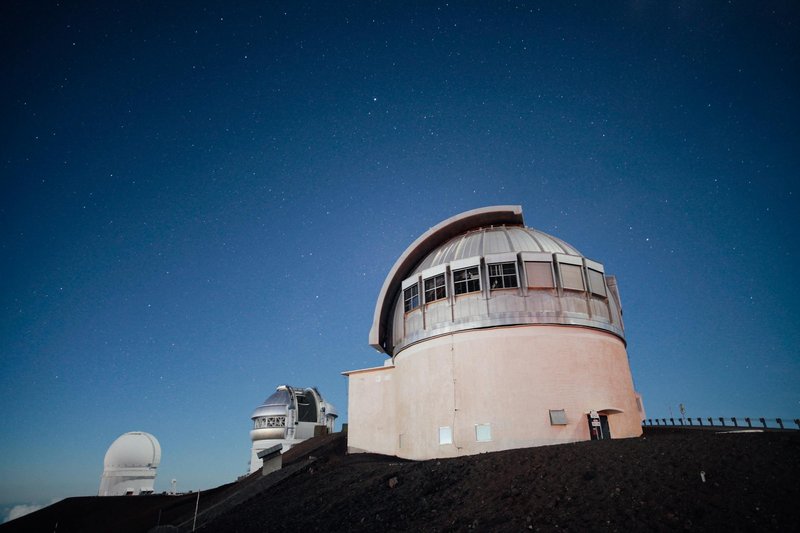
Don’t sleep on the small town in northeast Nebraska. The Fred G. Dale Planetarium at Wayne State College runs what the college calls the most technologically advanced dome in the state, and the specs back the bragging. Its Spitz SciDome system puts 3 million pixels on a 30-foot dome, renders up to 500 million stars, lets you view the sky from any point in the solar system, and scrubs 100,000 years forward or backward through time.
It’s in the lowest level of the Carhart Science Building — enter through the southwest doors, head to the stairs at the south end, and go all the way down. Public shows run Fridays and Saturdays during the school year.
For anyone living in the Norfolk–Sioux City corridor, this is a closer and arguably more impressive dome than driving to Lincoln or Omaha.
J.M. McDonald Planetarium — Hastings
The Hastings Museum has been a Nebraska institution since 1927, and its J.M. McDonald Planetarium was added in 1960. This is the dome that bundles cleanest with a full museum day: dinosaurs, a Coca-Cola history exhibit (Kool-Aid was invented in Hastings, and the museum leans into the town’s beverage heritage), and a planetarium under one roof.
Because it’s a museum planetarium rather than a campus one, show access generally runs with regular museum hours rather than only on weekend nights — which makes it the most reliable daytime option in central Nebraska. Admission is the museum’s general rate. Confirm the current show on the Hastings Museum planetarium page.
Good for: a road-trip stop off I-80 with kids who want more than a single dome show.
UNK Planetarium — Kearney
The University of Nebraska at Kearney runs a 60-seat planetarium under a 30-foot dome, rebuilt around 2008–2009. It’s a hybrid setup — a Zeiss star projector that can reproduce the sky from anywhere on Earth at any moment, paired with digital projection for fulldome shows.
UNK announces show lineups by semester (a “Tour of the Planets” type program, seasonal sky tours, and themed fulldome features), and seats fill because the room is small. Public shows are free or low cost but cluster on specific announced dates, so this is another check-the-calendar venue rather than a drop-in.
Sitting right on I-80 between Lincoln and the western half of the state, Kearney is the convenient mid-route dome.
Dr. Lois Veath Planetarium — Chadron
If you’re out in the Panhandle, the newest dome in the state is your move. The Dr. Lois Veath Planetarium opened in 2021 inside Chadron State College’s Math Science Center of Innovative Learning, a $32 million facility. It reported a strong first year of public programming and is the only modern planetarium in far northwest Nebraska.
Shows run as public events rather than a fixed weekend schedule, so book through the Chadron State planetarium page. The bonus out here is the sky itself — northwest Nebraska has some of the darkest skies in the state, so a planetarium show plus a night outside is a real one-two punch.
Edgerton Explorit Center dome — Aurora
Rounding out the seven is the dome programming at the Edgerton Explorit Center in Aurora, a hands-on science center named for stroboscope inventor and MIT engineer Harold “Doc” Edgerton, an Aurora native. It runs more like a science museum with a dome than a traditional fixed planetarium, with star shows folded into general center admission and hours.
It’s the most kid-forward stop on this list — the whole place is built around touching things — so for younger children it often beats sitting still through a 40-minute campus show.
Best dark-sky stargazing nearby
A dome is a great backup for a cloudy night, but Nebraska’s real advantage is its actual sky. Western Nebraska is genuinely dark, and a few spots pair well with the planetariums above:
- Merritt Reservoir / Snake River area near Valentine hosts the long-running Nebraska Star Party every summer and is widely considered the darkest accessible sky in the state.
- The Sandhills in general — most of the central and western Sandhills have minimal light pollution; pull off a county road and the Milky Way does the rest.
- Panhandle around Chadron and Scottsbluff — pair with the Dr. Lois Veath dome for a planetarium-then-stargazing night.
Pull up a dark-sky map before you go and aim away from the Lincoln–Omaha glow. A new moon weekend is worth planning around.
Planning your visit
A few things that save a wasted drive:
- Call ahead, every time. Campus planetariums (Omaha, Wayne, Kearney, Chadron) run public shows in semester clusters and go dark over summer and breaks. The two museum-attached domes (Lincoln’s Mueller, Hastings) are the most reliable for casual weekend visits.
- Watch the Lincoln football calendar. Mueller closes its public shows on Husker home gamedays, and you won’t find parking regardless.
- Mind the age floor. Most domes suggest age 4 and up. The dark room and reclined seats lose toddlers fast — Hastings and the Aurora science center are the friendlier picks for little kids.
- Make a day of it. Lincoln and Hastings each surround the dome with a full museum, so you get more than a single 40-minute show for the drive.
Seven domes spread from Omaha to the Panhandle means you’re rarely more than a couple hours from one. Pick the closest, check its schedule, and save the western drives for a clear, moonless night when you can see the real thing afterward.